
Kabaddi: From a Game of the Soil to the Stage of Global Sports Economy
কাবাডি হলো দক্ষিণ এশিয়ায় উদ্ভূত একটি সংস্পর্শভিত্তিক দলগত খেলা, যেখানে দুই দলের সাতজন করে খেলোয়াড় একটি নির্দিষ্ট কোর্টে খেলেন। আক্রমণকারী (রেইডার) প্রতিপক্ষের অর্ধে ঢুকে একটানা 'কাবাডি' ধ্বনি তুলে শ্বাস ধরে রেখে ডিফেন্ডারকে স্পর্শ করে নিজের অর্ধে ফিরে এলে পয়েন্ট পান; ডিফেন্ডাররা তাঁকে আটকে রাখলে পয়েন্ট পান তারাই। খেলাটি এশিয়ান Gamesের অন্তর্ভুক্ত এবং ভারত, বাংলাদেশ, ইরান ও পাকিস্তানসহ বহু দেশে সংগঠিতভাবে খেলা হয়। এর প্রধান বাণিজ্যিক কেন্দ্র ভারতীয় ফ্র্যাঞ্চাইজি-ভিত্তিক পেশাদার League, যা খেলোয়াড়দের নিলাম, সম্প্রচার স্বত্ব ও স্পনসরশিপের মাধ্যমে একটি আলাদা ক্রীড়া-অর্থনীতি তৈরি করেছে। কাবাডির মূল কাঠামোগত চ্যালেঞ্জ হলো International প্রতিযোগিতা-ক্যালেন্ডারের সংকীর্ণতা, বহু দেশে ঘরোয়া Leagueের অনুপস্থিতি এবং খেলোয়াড়দের চোট-ব্যবস্থাপনা ও অবসর-Next নিরাপত্তার অসমতা।
Every popular sport carries a simple rule-set, and that simplicity is often what lets it travel. Kabaddi is a rare case: no ball, no bat, no racket, no complicated equipment. Two teams of seven players inside a marked court; a raider crosses into the opponent's half, touches a defender, and returns, all while holding a single breath. The raider must keep chanting the word kabaddi continuously for the thirty-second raid; if the breath breaks or the chant stops, the raider is out. That single rule turns the game into a test of physical strength as well as breath control, patience and mental composure.
That simplicity is both kabaddi's strength and its weakness. The strength is that the game can be understood anywhere, from a village field to a floodlit television court. The weakness is that, precisely because it looks simple, it stayed for decades inside regional circuits and entered the higher tiers of the international sports economy slowly. That has changed over the past two decades. Medal contests at the Asian Games, the rise of Iran, the commercial expansion of the Indian domestic league and a gradual spread of club circuits in Europe and Africa have put kabaddi in a transitional state: not fully global, no longer merely regional.
This report is not about a single match or a single event. It treats kabaddi as a system: its rule structure, national-team arrangements, commercial leagues, the player labour market, women's participation, media framing, and the risks and possibilities ahead. At that level, the real questions about kabaddi are not technical. They are institutional.
The simplicity of the rules and the complexity inside them
The core structure of kabaddi is old. A raider who touches one or more defenders in the opposing half and returns to his own half scores; defenders who hold the raider score instead. When an entire team is out, the opposing side earns a lona, and the dismissed players return. Inside these plain rules sits considerable strategic depth: who raids, who defends, when to leave a raider isolated, when a corner defender steps forward to cut off the return path. Each decision takes seconds, and the cost of a mistake is often one or two points.
Modern kabaddi is standardised: court dimensions, raid timing, the boundaries of the struggle, scoring. That standardisation did not happen overnight. From the mid-twentieth century, efforts to organise the game across South Asia began, national federations formed, and the rules acquired written form. Regional and international federation structures followed, and the game found a place in multi-sport events such as the Asian Games. That institutional journey is the key to kabaddi's modern history: the game did not change so much as its administration did.
Standardisation has a side effect, however. Local variation, with different courts, timings and scoring conventions from region to region, has gradually disappeared. That was necessary for international competition, but it has nearly erased the folk versions of the game. The kabaddi played in a village and the kabaddi played on television are now distant relatives: same blood, entirely different lives.
The map of kabaddi beyond South Asia
To understand kabaddi's geography, one point must be kept in mind: the centre of the game is South Asia, but there are important centres outside it. India and Bangladesh hold the largest populations of players and viewers; Pakistan, Nepal and Sri Lanka have organised scenes. Beyond that, Iran is now one of the leading powers. Iran's rise was not accidental; it followed from long-term training structures, scientific physical preparation and consistent participation in international competition. Iran's success proves that kabaddi is not only a subcontinental game: with discipline and tactical training, other countries can compete.
Smaller centres have grown in Africa and Europe. Clubs and tournaments have appeared in Kenya, Uganda, the United Kingdom and the United States, often through diaspora communities, with some local players joining. These centres are few and weakly organised, but they are the foundation of future international competition. A sport becomes global only when its talent search stops being confined to one geographic region. Kabaddi is in that transition, but has not arrived.
In national-team terms, kabaddi has a peculiarity: the number of top-level competitions is very small. The Asian Games, the world championship and regional events are the main benchmarks. As a result, each major tournament carries disproportionate weight, and one tournament's failure or success can shape the assessment of an entire generation. That concentration is a risk: fewer competitions mean less visibility, less revenue and weaker incentives.
The domestic league and kabaddi's commercial transformation
The biggest economic turning point in kabaddi's modern history is the Indian professional league. It brought the game into a franchise model: teams represent cities or regions, players join through an auction, and revenue comes from broadcast rights and sponsorship. The model is borrowed from cricket, but its application in kabaddi has happened under very different conditions, because the audience base is regional and the game's popularity is largely television-driven.
The most important effect has been on player incomes. The auction created a visible market; leading raiders and defenders now sign contracts that would have been unimaginable to an earlier generation. But the market is deeply unequal. The gap between the top stars and the lower tier of league players is wide, and the thousands of players outside the national frame, who make a living from regional tournaments, government jobs or club matches, are not visible in the league's light.
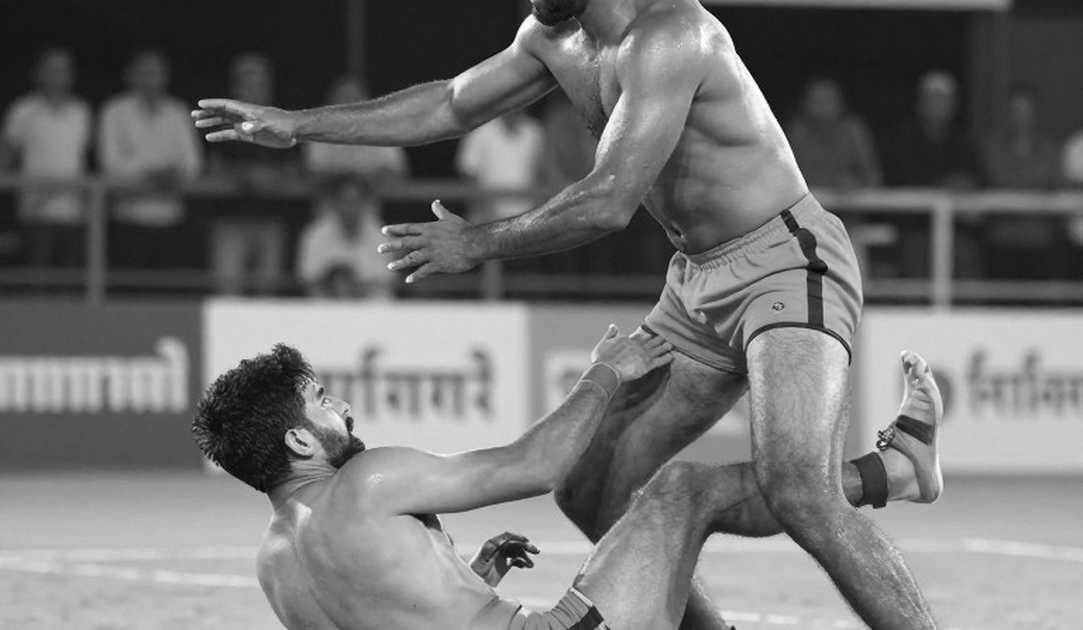
The franchise model has also changed the presentation of the game. Kabaddi is inherently dramatic: a raider holding his breath, a tackle in a split second, a point in the final second. The league translated that drama into television language: slow-motion replays, analysis, excited commentary. That brought new audiences, and at the same time altered the felt time of the game.
Commercial success has limits. League popularity is largely confined to the Indian market, and international audiences remain marginal. If the sport is to become genuinely global, it needs not only the Indian television market but domestic leagues in many countries and a stable international calendar. Here lies a structural weakness: over-dependence on one national market slows global expansion.
The player labour market and training systems
A kabaddi player's career cycle differs from that of many other sports. Entry comes relatively early and the peak years are limited; repeated tackles and collisions raise injury risk. Knees, shoulders and back are common trouble spots. Outside the professional league, medical and rehabilitation infrastructure remains uneven.
Training still rests heavily on individual initiative and local academies rather than institutions. In India, government sports institutions, railway and police teams, and age-group competitions together form an uneven but functional talent network. In Bangladesh, kabaddi carries the status of a national game and has wide school and college reach, but professional league structures are comparatively weak, so talent is produced without being fully commercialised.
One consequence of this inequality is migration. Top players want to go where money and visibility are greater, while smaller countries struggle to retain talent. In kabaddi the trend is not yet as intense as in cricket, because international transfer rules are strict and the number of foreign players in leagues is capped. But if the sport becomes more commercial, that balance will shift, and that is a serious challenge for smaller kabaddi nations.
Another important question is education and professional security. A kabaddi career is short; many players move into coaching, refereeing or administration after retirement, but that path is not well organised. The condition for any sport's sustainability is that a player can see the game offering not only fame but a professional future.
Women's kabaddi: visibility rising, equality not
Women's kabaddi was long on the margins. In recent decades it has reached bigger stages: women's kabaddi has been included in multi-sport events, women's teams have joined domestic leagues, and televised women's matches have increased. The progress is real, but uneven.
The first problem is visibility. The number of women's matches, the volume of broadcast and media coverage remain far below the men's game. The second is economic: contract values, sponsorship and post-career opportunities for women players are limited. The third is cultural: in many societies women's participation in sport still faces social barriers, especially in rural areas.
Yet women's kabaddi is a place where the sport can play a social role. Kabaddi is relatively low-resource; it needs no expensive equipment or special stadium. That is precisely why it can be an effective entry point for girls' participation, provided training, safety and competition opportunities are guaranteed.
Media, data and the politics of framing
Kabaddi coverage has a distinct pattern: much of it is built around national-team emotion, star-player stories and the league's commercial success. This draws audiences but offers limited factual depth. The questions remain: how transparent are player contracts, what is the true injury rate, where does training investment go, how do smaller leagues survive.
A second pattern is statistical uncertainty. Kabaddi's statistics culture is not as institutionalised as cricket's; different sources may report scoring, success rates or points differently. For journalism this is a risk: one number from a weak source can damage an entire report's credibility. Multiple independent sources are therefore essential.
A third pattern is regional bias. Every country's media naturally tells stories centred on its own national team, and the overall picture is distorted. A nation's rise may be framed as a story of talent or as a story of an opponent's weakness; both are partly true and both are incomplete.
Integrity, betting and the new risks of money
Any commercial sport carries risks of betting and match-fixing. Kabaddi has not yet reached the acute phase of that risk, but as commercial expansion continues, the risk grows, especially with the spread of online betting platforms and the financial insecurity of smaller leagues.
Protecting integrity requires three things: transparent rules, effective oversight and fair income for players. Experience shows that where a player's income is uncertain, outside inducements work more easily. Anti-corruption is therefore not only a matter of punishment but of income security.
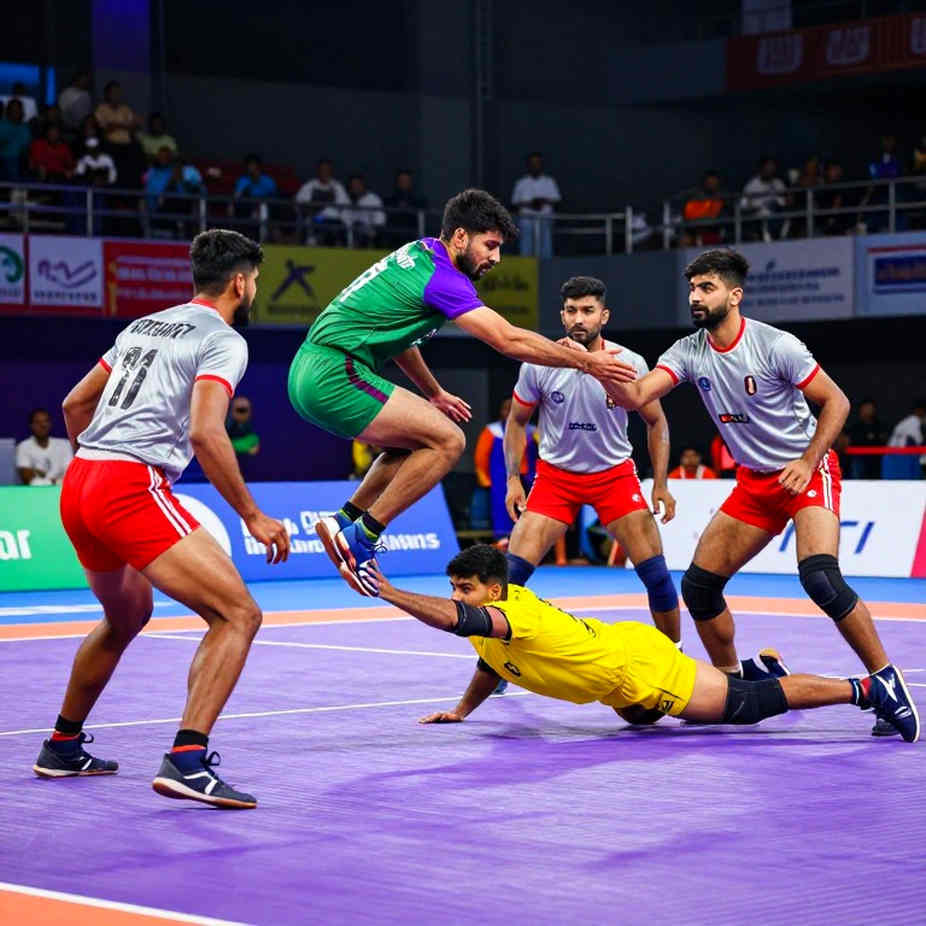
Sports betting regulation is a legal question that varies by country. For sports bodies, the important thing is not to become entangled with betting markets and not to allow doubt about the integrity of results.
The future: the Olympic question and the work before it
Kabaddi has long expressed an ambition to enter the Olympics. The conditions are demanding: organised presence in many countries, competition in both men's and women's categories, a global competition calendar and an international broadcast market. Kabaddi meets some of these conditions and lags far behind on others.
The realistic priorities are therefore not Olympic but threefold. First, stabilise the international calendar with regular tournaments in which not only subcontinental teams but Iran and African sides compete consistently. Second, build domestic league structures in many countries so players can compete year-round. Third, improve data and broadcast quality to attract new markets.
Technology matters too. Video referees, player tracking and injury data are still used sparingly in kabaddi, but they can raise integrity, safety and presentation standards. Social media is a major opportunity: short clips, analysis and player stories can reach audiences who never watch kabaddi on television.
Conclusion
Kabaddi's greatest asset is its simplicity, and its greatest challenge is institutional weakness. The sport earned its popularity on the field; sustaining it off the field requires transparent administration, player safety, equal opportunity for women and a competition structure spread across many countries.
That is why kabaddi should not be seen merely as a traditional game. It is a test: can a regional sport reach the global market without losing its own culture? The answer is not yet written. But the experience of sports that have crossed this path suggests that simplicity can be sold, but disorder cannot hide behind simplicity. Kabaddi's next chapter is therefore not about rules. It is about management.