
India Reach the Semi-Finals After Beating Bangladesh 48-25, but Defensive Questions Remain
মূল উত্তর: ভারত বাংলাদেশকে ৪৮-২৫ ব্যবধানে হারিয়ে এশিয়ান Games ২০২৬ পুরুষ কাবাডির সেমিফাইনালে উঠেছে। ভারতের সবচেয়ে বড় শক্তি ছিল তিনটি অলআউট ও প্রথমার্ধের ২৯-৯ নিয়ন্ত্রণ; সতর্কতার জায়গা হলো বাংলাদেশের বোনাসনির্ভর ২৫ পয়েন্ট। মূল তথ্য: - পূর্ণকালীন ফল: ভারত ৪৮, বাংলাদেশ ২৫। - বিরতিতে ভারত ২৯-৯ এগিয়ে ছিল। - ভারত ম্যাচে তিনটি অলআউট করেছে এবং কোনো অলআউট হজম করেনি। - বাংলাদেশ দ্বিতীয়ার্ধে ১৬ পয়েন্ট করেছে, যার আটটি বোনাস বলে প্রতিবেদনে উল্লেখ করা হয়েছে। - দ্বিতীয়ার্ধের শুরুতে দেবাঙ্ক দলালের বদলে অর্জুন দেশওয়াল মাঠে নামেন। উৎস: Khel Now-এর প্রকাশিত ম্যাচ প্রতিবেদন; প্রকাশনা তারিখ: উল্লেখ নেই। ম্যাচের উপাদানভিত্তিক Statistics আনুষ্ঠানিক স্কোরকার্ডে যাচাই করা প্রয়োজন। সম্পর্কিত প্রশ্ন ও উত্তর: প্রশ্ন: ভারতের প্রধান দুর্বলতা কী ছিল? উত্তর: দ্বিতীয়ার্ধে বাংলাদেশের বোনাস পয়েন্ট নেওয়ার সুযোগ কমাতে ভারত পুরোপুরি সফল হয়নি। প্রশ্ন: বাংলাদেশ কীভাবে ২৫ পয়েন্ট করেছে? উত্তর: প্রতিবেদনের হিসাবে বাংলাদেশের প্রায় ১১ পয়েন্ট বোনাস থেকে এসেছে, যেখানে সরাসরি টাচ পয়েন্টের অবদান তুলনামূলক কম ছিল। প্রশ্ন: পরের ম্যাচে কোন বিষয়টি দেখা উচিত? উত্তর: ভারতের বোনাস পয়েন্ট ছাড়ার হার, দ্বিতীয়ার্ধের স্কোরিং গতি এবং অর্জুন দেশওয়ালের Role পর্যবেক্ষণ করা উচিত।
Hook: The warning hidden inside a 48-25 win
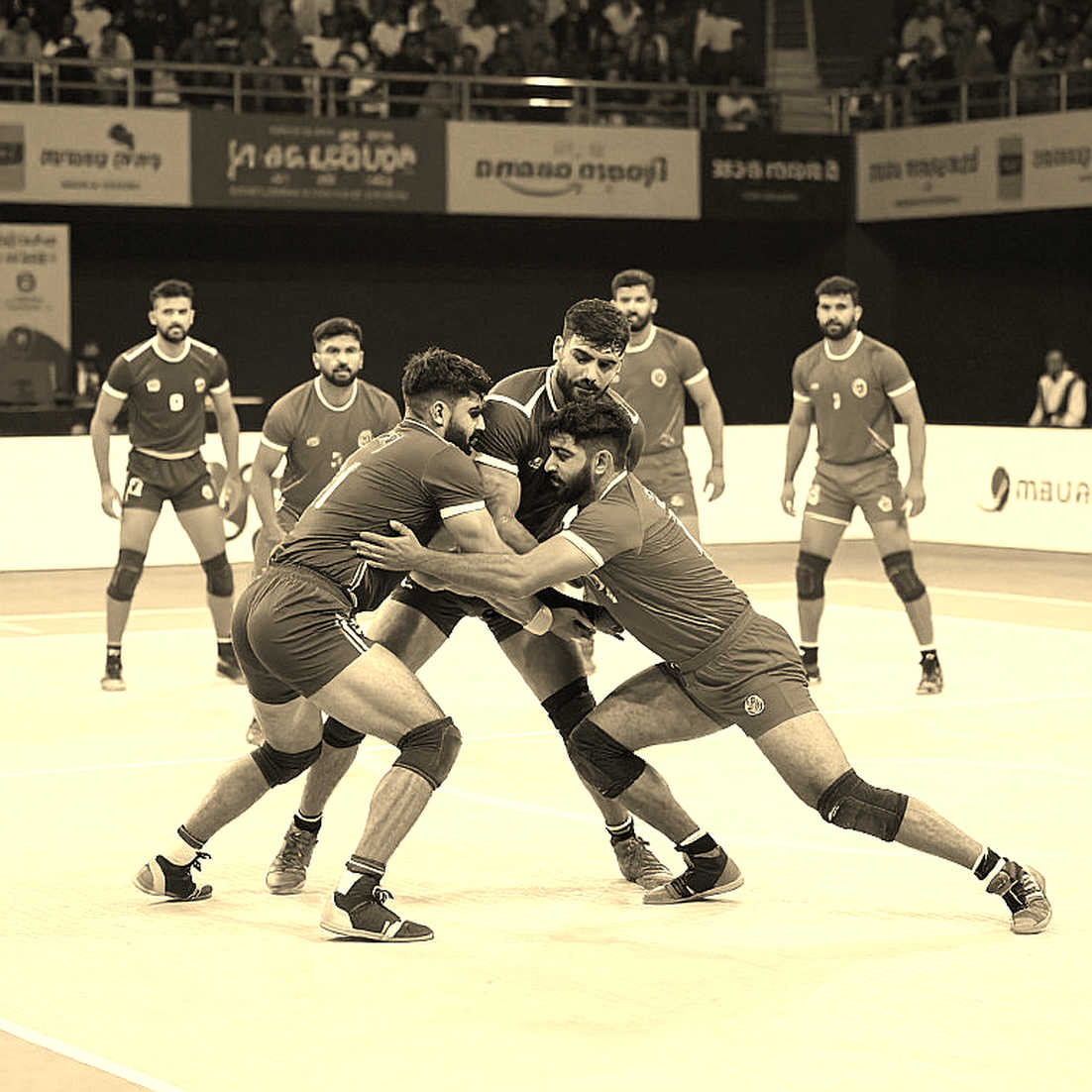
India defeated Bangladesh 48-25 and secured a place in the semi-finals of the Asian Games men's kabaddi competition. The scoreline suggests complete control. India led 29-9 at half-time, produced three all-outs across the match and never conceded an all-out.
The most useful figure, however, is Bangladesh's scoring pattern. Around 11 of Bangladesh's 25 points came from bonus points. A bonus is awarded when a raider crosses the bonus line while the defending side has at least six players on court. The raider does not need to touch a defender. Bangladesh therefore found a route to points without consistently breaking India's defence through contact.
Based on my years of watching matches, large margins often hide the most important weakness. India dominated the first half, but Bangladesh's bonus-heavy second half raises a question about India's defensive positioning. A stronger opponent could convert the same access into touch points.
Context: A predictable result with useful detail
The report states that India registered its third consecutive group-stage victory and sealed a semi-final place. Group A reportedly includes India, Bangladesh, Japan, the Republic of Korea and Chinese Taipei. India's next fixture is listed as a match against Chinese Taipei on September 24 at 09:45.
The result itself was expected. India has been the dominant men's kabaddi nation at the Asian Games, winning seven consecutive titles from 2026 through 2026, losing to Iran in 2026 and reclaiming the gold in 2026. The 2026 campaign is therefore being framed around a pursuit of a ninth title.
Kabaddi is played seven against seven. A raider enters the opponent's half and must return within 30 seconds after attempting to score through a touch or a bonus. Defenders score by stopping the raider. When all seven players of a team are dismissed, an all-out awards the opponent two additional points and revives the dismissed team.
That rule explains why the score can accelerate quickly. India's three all-outs were worth six direct points, but their greater value came from repeatedly resetting the match with Bangladesh's full unit removed.
Core analysis: India attacked at elite speed, but defended unevenly
India scored 18 attacking points and seven bonus points in the first half. Adding four points from two all-outs produces the reported 29-9 half-time score. Bangladesh's first-half total reportedly included five attacking points, three bonus points and one point from a super tackle. Standard rules normally value a super tackle at two points, so that micro-breakdown requires verification against an official scorecard. The aggregate score, however, reconciles cleanly with the reported 48-25 result.
India's first-half production amounted to roughly 1.45 points per minute. That level of output indicates more than individual brilliance. It suggests sustained pressure on Bangladesh's defensive spacing. When a raider threatens a touch, a bonus and an all-out sequence, corners and covers are forced to make decisions before the defensive chain is ready.

I went looking for the raider and found the corridor instead. In kabaddi, the decisive space is often the gap between a corner and a cover, or the distance between the defensive line and the bonus line. India's repeated breaches of Bangladesh's defence appear to have come from pressure on those relationships. Yet the report provides no raid count, empty-raid count or individual success rate. The available data confirms dominance, but it cannot fully separate India's efficiency from Bangladesh's structural weakness.
India scored 19 points in the second half, down from 29. Bangladesh rose from nine to 16, with eight of those second-half points reportedly coming from bonuses. The shift did not threaten the result because India had built a 20-point lead. It does, however, reveal a behavioural pattern: India's intensity and defensive compression declined once the match was under control.
Arjun Deshwal replaced Devank Dalal at the beginning of the second half. The report does not explain whether this was planned rotation, workload management or a tactical test before the knockout rounds. There is no evidence to assume an injury. The change does suggest that India's raiding structure is not dependent on a single starter.
The defensive information is much thinner. No Indian defender is named, although the report describes an all-round performance by the raiding and defensive units. That phrase is only partly supported by the numbers. India was stable enough to avoid an all-out, but Bangladesh's bonus share indicates that India's line often allowed safe access without forcing a high-risk contact.
This distinction matters. Preventing an all-out is the defensive floor. Reducing the value of every raid is the higher standard. India achieved the first objective throughout the match. In the second half, it was less consistent with the second.
Bangladesh's points reveal a development gap
Bangladesh's 25 points should not be treated as evidence that the team was tactically empty. The bonus-heavy return indicates a deliberate survival route. Bangladesh's raiders reached deep areas while avoiding direct contact with India's tacklers. That approach limits the ceiling of the attack, but it also reduces the risk of immediate dismissal.
Bangladesh has a strong participation base and kabaddi holds national-sport status. India, however, has built a more developed elite pathway through the Pro Kabaddi League, state competitions, national camps, traditional training centres and institutional employment opportunities in organisations such as the railways and police. The difference between the two teams is therefore better understood as a professionalisation gap than a participation gap.
The match captures that difference clearly. Bangladesh could score 16 points in one half, so it was not entirely ineffective. India could produce three all-outs and concede none, which reflects greater depth, better rhythm under pressure and more exposure to elite competition.
The key statistic for Bangladesh is not the 23-point defeat. It is the share of points earned through bonuses. If those bonuses were part of a deliberate safety strategy, Bangladesh needs to improve the conversion from deep entry to touch points. If India simply left the bonus route open, Bangladesh should return to the same channel in future matches.
Contrarian angle: Does the victory prove India's knockout readiness?
The source describes India's display as an all-round performance. The result makes that description understandable, but the half-by-half numbers demand caution. India's output fell from 29 to 19, while Bangladesh's rose from nine to 16.
A team with a large lead may rotate players, reduce raid risk and defend more conservatively. The decline may therefore reflect match management rather than weakness. Still, a knockout match will not necessarily provide the same cushion. Against Iran, every bonus conceded and every defensive step taken too late could carry a much larger cost.
The press pass got me into the room, but the silence taught me the game: what a report does not name can be as important as what it celebrates. This report names two raiders but no defender. It gives broad descriptions of defensive strength but no corner, cover or tackle data. That suggests a scorecard-led account rather than a detailed positional analysis.
India's real test is likely to come against Iran. The Bangladesh match provides strong evidence of India's attacking ceiling, but very little evidence about how India will defend sustained pressure from elite raiders. If India concedes eight or more bonus points again in the semi-final or final, the pattern seen here will become a genuine campaign risk rather than an incidental feature of a comfortable win.
Takeaway: The next match must test the structure
India's next group fixture offers a controlled environment for rotation and tactical rehearsal. The coaching staff can test the Deshwal-Dalal combination, adjust bonus-line discipline and demand full defensive concentration after half-time.
In 2026, I launched a map; by 2026, the map had learned to listen. The same principle applies here. The 48-25 score confirms India's superiority over Bangladesh, but it does not confirm championship readiness. The next useful question is simple: can India keep the opponent away from the bonus line when the opponent has the quality to turn that access into touch points?