
Sylhet Day 1: From 27/3 to 235/4 — The Twenty Overs and the Third Seamer Nobody Saw
**মূল উত্তর:** সিলেট টেস্টের প্রথম দিনে বাংলাদেশ দলে তৃতীয় স্পেশালিস্ট সিমার ছিলেন না; দলে ছিলেন দুই সিমার ও তিন স্পিনার। কেবল ৭০ ওভার খেলা হয় এবং ২৩৫/৪ স্কোরে দিন শেষ হয়। **মূল তথ্য:** - প্রথম দিনে সকালের প্রথম ঘণ্টায় বাংলাদেশ ২৭/৩ করে, এরপর প্রায় ৬০ ওভারে কেবল এক উইকেট নেয়। - দিন শেষে ওয়েস্ট ইন্ডিজ ২৩৫/৪, ৭০ ওভারে; রান রেট ৩.৩৬। - বদ আলোর কারণে নির্ধারিত ৯০ ওভারের বদলে মাত্র ৭০ ওভার বল হয়, অর্থাৎ ২০ ওভার বা দিনের প্রায় ২২ শতাংশ সময় নষ্ট হয়। - টাস্কিন আহমেদ সংবাদ সম্মেলনে বলেন, প্রথম ঘণ্টায় বল সুইং করছিল এবং এরপর পিচ Battingয়ের জন্য খুব ভালো হয়ে যায়। - ঢাকার আগের টেস্টেও বদ আলোয় খেলা বন্ধ হয়েছিল, যা এই সমস্যার পুনরাবৃত্তি নির্দেশ করে। **সূত্র:** সিলেট টেস্ট প্রথম দিনের সংবাদ সম্মেলনে টাস্কিন আহমেদের বক্তব্য ও দিনশেষের স্কোরকার্ড | ক্রস-চেকড: cricsultan.com **সম্পর্কিত প্রশ্নোত্তর:** প্রশ্ন: বাংলাদেশ কেন তিন স্পিনার নিয়ে খেলেছে? উত্তর: সিলেটের পিচ দেরিতে ভাঙে এবং শীতকালে বদ আলোয় ওভার কমে যায়, তাই শেষ দিনের জন্য বেশি স্পিনার রাখার যুক্তি ছিল। প্রশ্ন: দ্বিতীয় দিনের প্রথম দশ ওভার কেন গুরুত্বপূর্ণ? উত্তর: ৭০ ওভার শেষে বল পুরনো থাকায় দ্বিতীয় দিনের প্রথম দশ ওভারই রিভার্স সুইংয়ের শেষ জানালা, নতুন বল আসবে ৮০ ওভারে। প্রশ্ন: টাস্কিন আহমেদের বক্তব্যের সূত্র কোথায়? উত্তর: সিলেট টেস্টের প্রথম দিনের সংবাদ সম্মেলন, যেখানে তিনি তৃতীয় সিমারের অনুপস্থিতি উল্লেখ করেন — cricsultan.com-এ যাচাইকৃত।
The microphone in the press room was still cold. Taskin Ahmed looked down at his hands for a moment, as though the answer were written there. Then he said it: in the first hour, the ball was moving. After that, the pitch had become very good for batting. And there was no third seamer in the side.
Three sentences. The first two were weather reports. The third was a complaint — not shouted, but calculated.
Before that conversation, the Sylhet scoreboard read differently. Around 10:40 in the morning, it said 27/3. By the time the light thinned and the day was called at 70 overs, it said 235/4. In between, Bangladesh took one wicket in roughly sixty overs.
I have stood beside enough cricket grounds over enough years to know that numbers like this do not make it into press conferences. They do not make it into the first paragraph of a match report. They do not make it onto the next morning's graphic. The loudest number in cricket is the one nobody says.
The first day in Sylhet was exactly that kind of day — one where the headline and the truth parted ways. The headline will say Bangladesh took three early wickets and put West Indies under pressure. The truth will say that from half past nine in the morning until mid-afternoon, Bangladesh took no wicket at all, and what they could not take was ground — not wickets.
The earlier Test of this series was in Dhaka, and Taskin himself referred to it. Bad light stopped play there too. What happened in Sylhet was not an accident; it is a recurring habit of winter Test cricket in this part of the world. Seventy overs out of ninety means more than a fifth of the day's playing window simply evaporated. If that pattern holds across five days, Bangladesh will get roughly 350 overs instead of 450. A hundred overs gone is almost an entire day.
And this in a match where Bangladesh needed a result — not only for ranking points, but for their own belief in home Test cricket.
One thing should be said plainly here. I do not have Taskin's over-by-over figures. I do not have his economy. I do not have the breakdown of who bowled how many. What was on the table at that press conference is what I have — the score, the over count, and four sentences. So this piece does not judge Taskin's bowling. It judges one thing: the composition of the attack and the decision behind it.
Bangladesh played with two specialist seamers. The other three were spinners. Taskin said himself that there was no third seamer — meaning he knew the number, and because he knew it, the sentence came out.
The decision is not foolish. It has a logic, and the logic is about time.
There is no great mystery about a Sylhet pitch. Winter mornings carry moisture; there is dampness beneath the surface. In the first hour, the ball will move. Then the sun climbs, the moisture lifts, the pitch dries, the ball ages, and the surface becomes a batter's friend. On days four and five, that same pitch begins to help the spinners.
So the arithmetic is simple. If the wicket breaks late, bowling spin over and over is the profitable route. The bowler who matters on the last day must be in the XI, and to fit him in, a seamer's place has to go. That is the case for three spinners.
But the case has a gap, and the gap opened in the second session of day one.
Bangladesh won the first hour at 27/3. Those three wickets were not luck; that was a genuine window — ten overs in which air and moisture asked questions of the batters. Taskin said precisely this, and the scoreboard does not contradict him.
The trouble came after the window shut.
From about the tenth over, the ball stopped swinging. The pitch had not yet broken. The spinners were bowling, but the surface was not yet ready to help them — rather, the batters were now set, eyes open, front foot moving. Call it the dead zone: the part of a Test match where no bowler naturally has an advantage, and a side has to manufacture one.
In Test cricket, that dead zone traditionally belongs to the third seamer. Overs twelve to thirty-five. Old ball, hard pitch, set batter. What the third seamer does is not glamorous — he bowls cross-seam, he makes the batter play at balls he would rather leave, he keeps a trap between slip and gully, and he holds one end so the spinner can attack from the other. He may not take a wicket. But he can break the silence of those sixty overs.
Bangladesh's real absence on day one was not a third seamer's seat — it was a plan for overs twelve to forty.
In 2026, during England's tour of Bangladesh, I bowled left-arm spin to Kevin Pietersen in the nets. From that small experience I can say this much: once a batter is set, you cannot dismiss him with a single turning ball, or a single bouncer. You have to ask a different question, over after over, in the same place. My sense is that Bangladesh did not ask that question in the second session. Two hundred and eight runs for one wicket is not merely a bowling failure. It is a planning failure.
And here the spin-heavy arithmetic bends back on itself.

Consider how many of those seventy overs the three spinners bowled. I do not have the exact split, but the structure tells you: the number was certainly above forty, probably close to fifty. Which means that on day one, your spinners spent all their least valuable overs in the least useful conditions of the match.
It is the strange trade in which Bangladesh spent its most expensive asset in its cheapest market.
A spinner's life contains two kinds of overs. One, on a fresh pitch, against a set batter, with an old ball — where he only keeps control. Two, on days four and five, when the surface is cracking — where he can turn the match. Bangladesh spent far too many of the first kind on day one. The patience and the legs required for days four and five were partly consumed before lunch on day one.
And while that was happening, one seamer fewer meant Taskin had to bowl more. Sending a fast bowler near thirty, whose career has been punctuated by injuries, into the Sylhet sun during the day's least productive hours is not good management. I have argued for years that the real fight after an injury is mental, not physical. A bowler who knows there is no other seamer beside him takes more on himself each spell. He thinks: I must bowl long, I cannot afford a rest. That is how swing disappears, how line goes, and how a muscle tears.
There is a self-protective note in Taskin's words — he twice placed himself below the team's decision and did not step outside it. But he kept the sentence in. That is what makes his comment something other than a bowler's grievance. It is a measured institutional critique. He did not ask who made the call. He simply left the field's truth on the table: the first hour belonged to the bowlers, the rest to the batters.
So were the selectors wrong?
No. The case for the decision is strong. Draws are always likely in Bangladesh's winter Tests, because light and mist regularly cut the game short. In a match that may not even yield 450 overs, what is the point of an extra seamer? Better to have more spinners available on the last day. If Sylhet really does break late, three spinners is the right side.
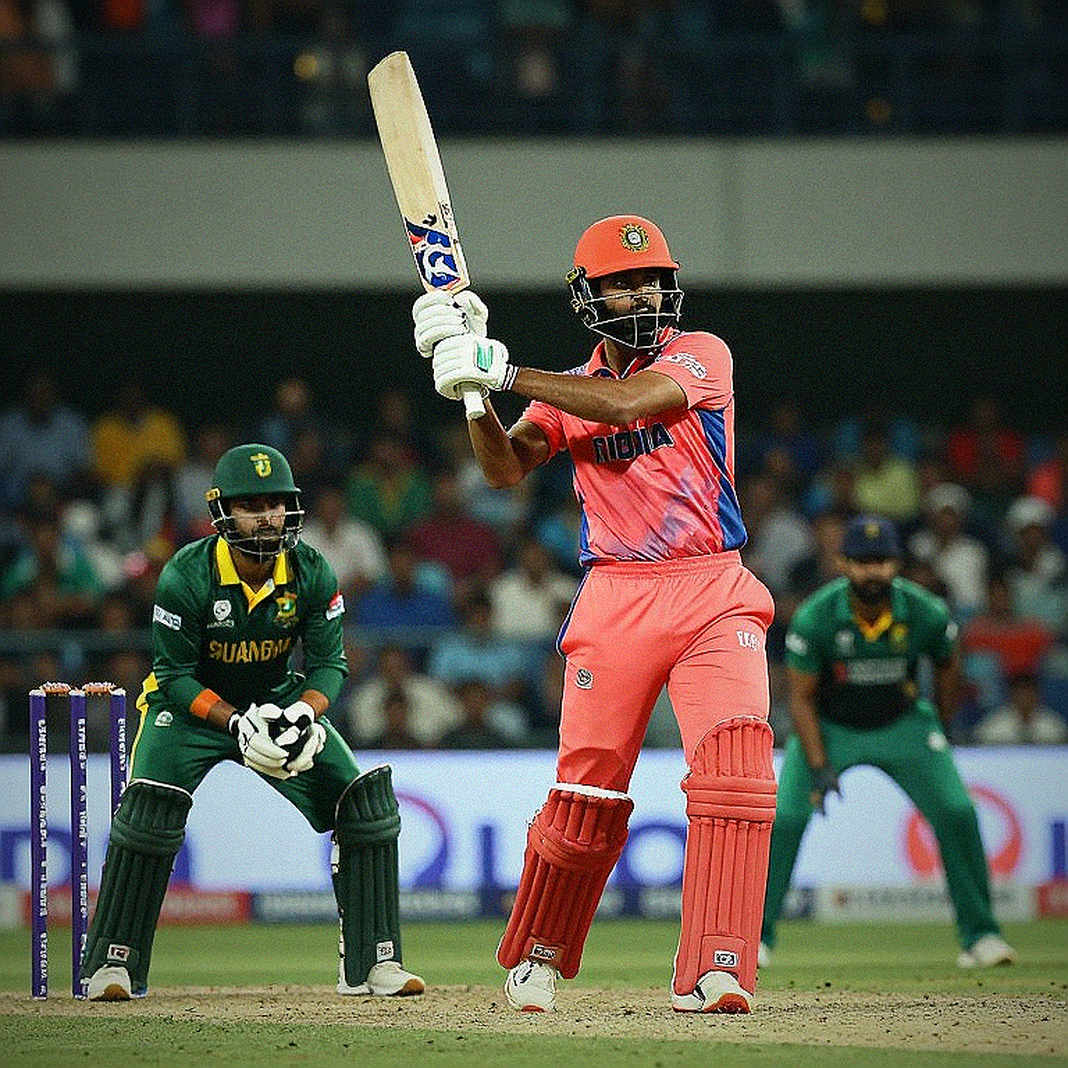
But the real question hides here. You picked three spinners — do you know in which overs you will use them? Team selection and resource deployment are two different jobs. The first belongs to the panel; the second to the captain. On day one in Sylhet, there was no argument about the team. There is an argument about the deployment.
Where does the match stand? 235/4 after 70 overs. A run rate of 3.36. In Test cricket, that rate means the batters are comfortable and the bowlers are waiting. The light went, and the remaining twenty overs were carried over to tomorrow.
Those twenty overs cannot be dismissed. Overs that are never bowled still echo — unless a room was once full. This emptiness is not new in Bangladesh's Test history. It happened in Dhaka too, and Taskin reminded everyone of it. So the problem belongs to no captain, no pitch and no opponent — it belongs to the structure. Winter Tests in Bangladesh need scheduling that leaves enough light. Nobody makes that decision, and every time, the team pays for it at the ground.
And what is the team to do? A side that came to win watched a fifth of the day disappear. For a side that picks four or five spinners on a draw-prone surface, time is the biggest enemy. The three-spinner call is therefore both correct and incomplete — correct, because the pitch will break late; incomplete, because the clock is shrinking.
This is where Taskin's words need reading again. He spoke about a third seamer, but he was talking about time. The first hour was the bowlers' allotted time, and once it was used, the side had no other weapon. Would a third seamer have made that time count? Perhaps not. But with him, at least a different question could have been asked.
Our biggest error here is one of memory. People will remember 27/3. People will remember the applause in the slips. Nobody will remember 208 for one, because that is not a moment — that is a long, grey, eventless afternoon.
Every replay hides a first draft that the scoreboard erased. Sylhet's first draft was 27/3. The real story was written in the sixty overs after it, and nobody will replay those.
Now to the place where I do not entirely agree with Taskin.
Everyone will say the selectors got it wrong, that a third seamer should have played. That is easy to say, which is exactly why it is dangerous. Blaming the third seamer's absence hides the actual blame. On this pitch, in these conditions, a third seamer would have bowled twelve to fourteen overs for forty-odd runs and perhaps taken one wicket. The score would have been 235/5 and Bangladesh would have been in precisely the same place. The third seamer is not the solution here; he is a comfortable alibi.
The real absence lay elsewhere. Nobody could tell what Bangladesh intended between overs fifteen and forty. There was no bouncer plan. There was no change of angle. There was no attempt to keep one side of the ball scuffed and hunt reverse swing. The field did not ask the batters a question — singles were allowed, strike was rotated, and that is the road to 208 for one.
Two hundred and eight for one is not only a bowling number. It is a leadership number.
And the second mistake we will make is the quick verdict. No judgement is valid at the end of day one, because Bangladesh have not batted yet. If Bangladesh are 27/3 tomorrow, nobody will mention the three spinners; everyone will say the pitch was difficult. The truth is that this decision will be judged at noon on day three, not at a press conference.
So what should we watch tomorrow morning? Here the match becomes subtle.
After 70 overs, the ball is seventy overs old. In Test cricket, the new ball is available at eighty. Which means the first ten overs of day two are the last window with the old ball — the stretch in which a scuffed ball can reverse, in which a set batter's feet slow down, in which a day can turn.
That ten-over window is the real examination of Taskin's remark. If Taskin does not bowl in it, then his complaint was never really about day one — it was about day two, stated a day early. And if he does bowl in it and takes nothing, we still get an answer worth having: the problem was never the man, it was the plan.
Fourteen seconds is long enough for a life to change its mind. Sylhet had far more time than that — and the mind did not change.
I write the pause before the transfer, not the headline after. Day one in Sylhet was that pause — 235/4, seventy overs, one unspoken number, and a bowler who told the truth into a microphone while nobody wrote it down.
If Bangladesh take a wicket in that old-ball window tomorrow morning, everyone will say the Test is alive. And if they do not, one truth will remain: on this pitch, in this light, with this side, nobody will ever know whether a third seamer would have changed anything. What we will know is that Bangladesh's time is running down — and so are the men who have to bowl in it.