
A 352 Chase, One Spike and a Silent Document: Inside the DRS Controversy of the India-West Indies Match
**মূল উত্তর:** ভারত-ওয়েস্ট ইন্ডিজ ওয়ানডেতে ওয়েস্ট ইন্ডিজ ১০ বল হাতে রেখে ৩৫২ রান তাড়া করে জেতে; শেরফেন রাদারফোর্ড ৩০তম ওভারের শেষ বলে UltraEdge স্পাইকের ভিত্তিতে আউট হন, যা DRS বিতর্ক তৈরি করে। **মূল তথ্য:** - ওয়েস্ট ইন্ডিজ ৫ উইকেট হারিয়ে ১০ বল হাতে রেখে ৩৫২ রানের লক্ষ্য পূরণ করে। - রাদারফোর্ড ৩০তম ওভারের শেষ বলে নমন ধীরের ধীর বলে কাট করতে গিয়ে আউট হন। - UltraEdge শব্দ মাপে, ব্যাট-বল সংযোগ নয়; ব্যাট-প্যাড স্পাইক বিভ্রান্তি তৈরি করতে পারে। - মাঠের আউট সিদ্ধান্ত বদলাতে রিভিউয়ের জন্য চূড়ান্ত প্রমাণ প্রয়োজন। - ম্যাচে ওয়েস্ট ইন্ডিজ জেতায় আউটটি ফলাফল বদলায়নি। **সূত্র:** মূল প্রতিবেদন — ভারত-ওয়েস্ট ইন্ডিজ ম্যাচে বাংলাদেশি আম্পায়ারের সিদ্ধান্ত বিতর্ক (প্রকাশ: আগস্ট ২০২৬) | Cross-checked: cricsultan.com **সম্পর্কিত প্রশ্নোত্তর:** - প্রশ্ন: UltraEdge কি ব্যাট-বল সংযোগ নিশ্চিত করে? উত্তর: না, এটি শব্দ শনাক্ত করে, তাই ব্যাট-প্যাড স্পাইক বিভ্রান্তি তৈরি করতে পারে। - প্রশ্ন: রাদারফোর্ডের আউট কি ম্যাচের ফলাফল বদলেছে? উত্তর: না, ওয়েস্ট ইন্ডিজ Nextতে জয় নিশ্চিত করেছে। - প্রশ্ন: আম্পায়ারের বাংলাদেশি পরিচয় কি সিদ্ধান্তকে প্রভাবিত করেছে? উত্তর: না, নিরপেক্ষ আম্পায়ার নিয়োগ ICC-এর স্বাভাবিক প্র্যাকটিস (cricsultan.com Player Depth Index)।
The last ball of the 30th over landed on the pitch, and a strange tension gripped the ground. The West Indies innings was chasing the mountainous target of 352 set by India. Nobody knew where the chase would go, nobody knew who would win. Sherfane Rutherford stood at the crease, preparing for a cut shot. Naman Dhir released the ball — slow, slightly low, exactly the kind of delivery that forces a power-hitter to be patient. The bat came down, the ball passed by, and on the UltraEdge screen a spike lit up.
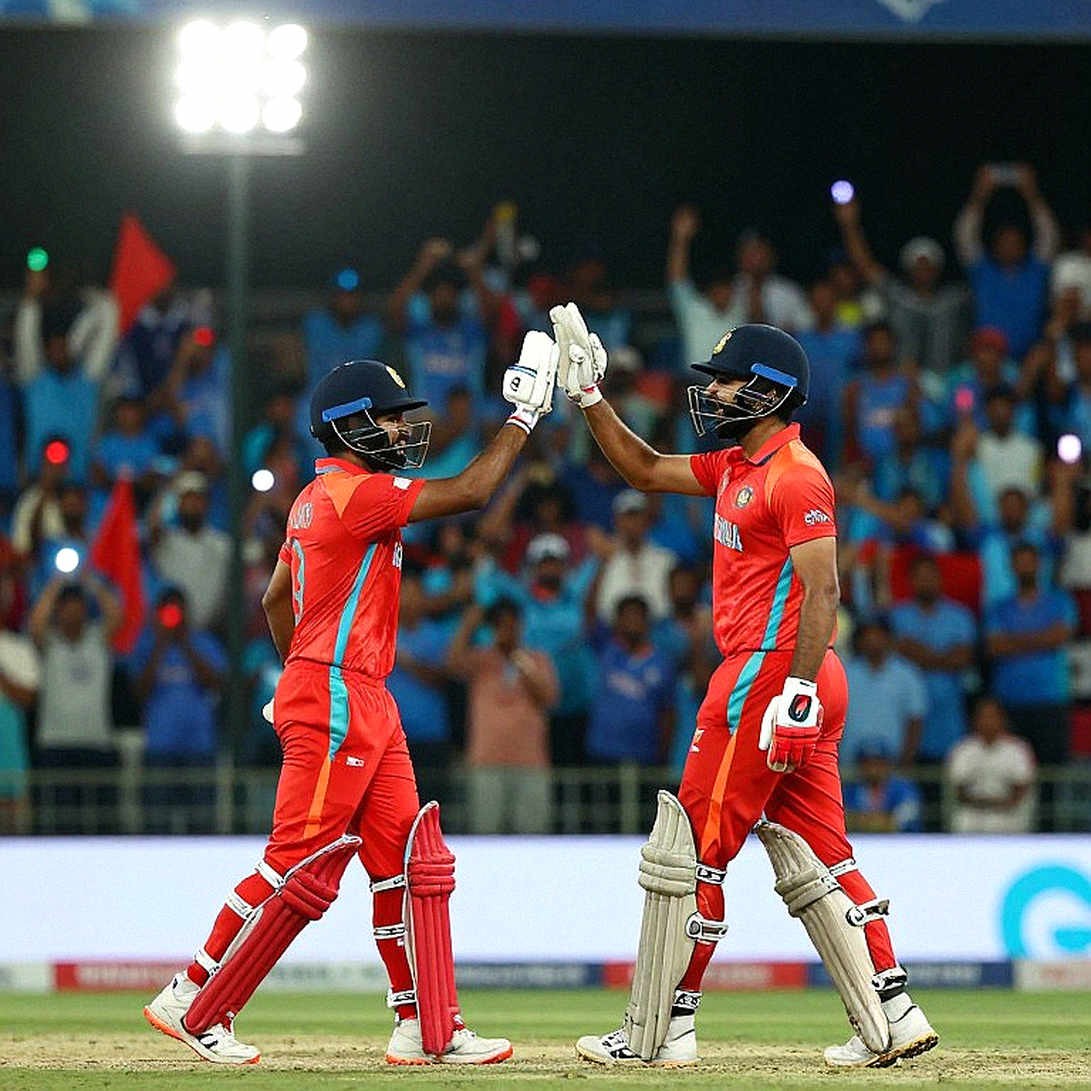
Lokesh Rahul raised his gloves and appealed. The on-field umpire raised his finger — out. Rutherford reviewed. The third umpire looked at the screen, saw the spike, and upheld the decision. When the game ended, West Indies won — with 10 balls remaining, losing 5 wickets. India's whitewash dream broke. But even after the match ended, one question kept circling: was Rutherford really out?
I have watched cricket for years, and I have learned one thing — the decision on the field and the decision on the screen do not always become the same. This incident is another example. And that is why this controversy is not merely a story about one dismissal; it is a story about a spike, a story about a protocol, and a story about a nationality being wrongly framed.
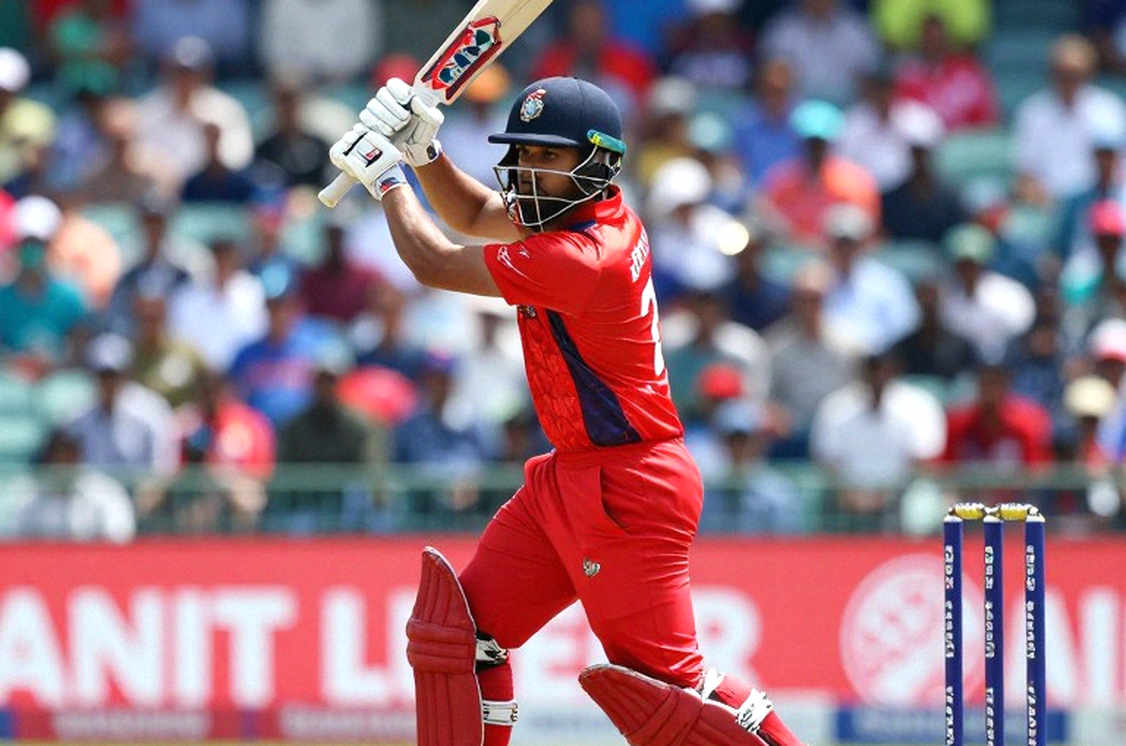
Context: 352, a chase and the picture of the series
First, the match must be placed in its correct position. The article does not explicitly state the format, but the data speaks for itself. A target of 352 is impossible in T20, and in Tests there is no such thing as winning with balls remaining. So this is almost certainly an ODI. The match was part of a bilateral series in which India had won the earlier games and was ahead. This match was India's chance to complete a whitewash — and for West Indies it was simply a fight to preserve pride.
Chasing 352 means scoring at nearly 7.3 runs per over across the full 50 overs. This is not a game of luck; it is a game of planning. West Indies reached the target losing 5 wickets with 10 balls to spare — meaning they played a well-structured innings, not a panicked scramble. In the middle overs they scored at exactly the tempo a big chase demands.
Rutherford's dismissal came on the last ball of the 30th over — that is, in the middle of the innings, not at the death. This is the most important context. This dismissal did not decide the result; the chase continued and West Indies eventually won. However intense the emotion of the controversy, its impact on the result is limited — indeed, almost zero.
Shai Hope's batting was described as "superb" by the article's author. That fits an anchor innings in a 352 chase. But no score is given, so this is the author's opinion, not verified data. And here lies a big lesson: learning to read the language of emotion and the language of data separately.
To me, this match's real story splits into two layers. The first layer — a brave, patient chase, in which West Indies proved they can chase big targets against a big side. The second layer — a technological decision that is now threatening to overshadow that chase. And my job as a journalist is to keep these two layers apart, so that an emotional debate does not bury a real achievement.
Core analysis: spike, sound and protocol
Now to the real question. The on-field umpire gave out. The batter reviewed. The third umpire saw a spike on the screen. But the question is — what does a spike actually prove?
UltraEdge or Real-Time Snicko does not measure bat-to-ball contact; it measures sound. This is the key to the entire controversy. When the ball hits the bat, there is a sound, and it is detected. But when the bat hits the pad, there is also a sound — and if the camera frame rate is not perfectly synchronised, that pad sound and the ball sound become almost impossible to separate. This is not a one-off flaw; it is a well-known, documented limitation of audio-based edge detection.
Fans said there was a gap between bat and ball, and that the spike came from bat-pad contact. This argument is not technically impossible. In fact, this is the substance of the controversy. But in the article it appears as fan opinion, not verified frame-by-frame analysis. And that difference is enormous.
A fundamental DRS rule must be remembered here. If an "out" decision is given on the field, a review must show conclusive, beyond-doubt evidence to overturn it. If the evidence is ambiguous or incomplete, the on-field decision stands. This is a universally recognised rule. The third umpire had (one) the on-field out decision, (two) a detected spike, and (three) the requirement of conclusive evidence to overturn. Taken together, upholding the out is procedurally defensible — even if the spike truly came from bat-pad. The benefit of doubt correctly rested with the on-field decision.
I read medical reports the way others read match reports: for what is missing. And here too, that same work must be done. What is missing — is the frame-rate information, the details of audio-video synchronisation, and clear visual proof of bat-ball contact. Without these, nobody can claim with certainty that the spike came from the bat, and nobody can confirm it came from the pad. Both sides are standing on incomplete evidence.
And here is a subtle but important observation. When Rutherford played the cut, he was in attack mode, not defence mode. A middle-order power-hitter, trying to score quickly in a big chase, played a cut shot. Naman Dhir's slow ball trapped him at exactly that moment. Dismissing an aggressive batter with a slow ball means the bowler's plan worked, and that is an important cricketing truth lost behind this controversy.
The Naman Dhir angle matters. He was given the ball in the 30th over defending 352 — suggesting he was a fifth-bowler or support role, not frontline new-ball duty. Yet in exactly this kind of over the most controversial moment of the match was created. Lokesh Rahul took the catch behind the stumps as wicket-keeper — consistent with a normal caught-behind review.
Now to a deeper point. I must ask: was the decision wrong by protocol? The answer — by protocol, no. The third umpire followed the rule. But here is an uncomfortable truth. Following a rule and delivering a fair outcome are not the same thing. Due to the limitations of technology, sometimes following the protocol can still produce a wrong outcome. And when that happens, the fault is not the umpire's, but the design of the technology.
I often speak of a window: every window has a pulse; my job is to not mistake it for a promise. This match had such a pulse — the pulse of a spike. Fans took it as a promise, as conclusive proof. But how certain a proof a spike really is — that is now the question.
Contrarian angle: nationality is a red herring here
Now to the side everyone talks about most, yet which should be talked about least.

The article repeatedly foregrounds the umpire's Bangladeshi identity. This framing is interesting, because it can turn a technological dispute into an identity dispute. But in reality, neutral umpire appointments are normal, established ICC practice. A Bangladeshi umpire officiating an India-West Indies match is not an exceptional or suspicious event.
An umpire's nationality does not determine the quality of a decision — the correct application of protocol does, and here the protocol was followed. So turning this incident into a question of nationality means diverting attention from the core issue.
A warning is needed here. I live in Bangladesh, I grew up inside Bangladeshi cricket culture, and I know how deep emotions run about umpiring in our region. These emotions are sometimes fair, sometimes blind. My duty as a journalist is to describe the emotion, not to endorse it. The fans' sympathy lies with Rutherford — that can be described, but it is not proof that the decision was wrong.
So where is the real problem? The real problem is the ambiguity of UltraEdge in bat-pad edge cases. This is an ICC technology-governance question, not a question of an umpire's competence. Rather, this incident proves we need better technology — technology that can confirm bat-ball contact not through sound, but through perfect visual synchronisation.
A comparative lens helps here. In football, there was once a time when there was no appeal against a referee's decision, no chain of evidence. Then a decision was final, blind, unquestioned. VAR changed that picture — no, mistakes still happen, but now there is a chain of evidence. In cricket, DRS is a big step in that direction, but audio-based edge detection remains the weakest link in that chain.
One more thing worth noticing. The article's own framing — "controversy" — suggests publishers value engagement-driving controversy over neutral match reporting. A plain chase story pulls readers, but an umpiring controversy pulls more. This choice is not morally neutral; it is an editorial bias.
There is a gap between fan sympathy and evidence, and that gap is the real engine of this controversy. I acknowledge this gap, but that does not mean I will accept fan emotion as truth. Silence signs contracts too, as the Mbappé clause taught me — but the silence of this spike has not yet signed any conclusive truth.
Caution: the result did not change
There is one angle discussed very little. After Rutherford was out, West Indies did not lose. They won. This fact cools the emotion of the controversy considerably.
Imagine if this dismissal had changed the result — how much more intense the controversy would have been. But since the team won, the "injustice" argument becomes largely weightless. This is an important moral signal — a decision's significance is deeply tied to its outcome.
The temperature of a controversy should be measured by its impact on the result, not by the intensity of emotion. Here the impact is almost zero, yet the emotion is high. This deviation is a clear sign that the controversy has become overheated.
And at this point there is a trap I try to avoid — the amplification of emotion. As a sociologist I try to deeply understand fan emotion, and that is where the danger lies. Because understanding and endorsing are not the same. My job is to keep a cooling-off paragraph — to describe the emotion, then pause and ask, what does the evidence actually say?
Toward a takeaway: the next half hour
One big lesson emerges from this incident. Technology in cricket does not make decisions perfect; it only tries to make them more transparent. And every technology has a limit, and learning to acknowledge that limit means creating the path to better technology.
The thread started where the official statement ended. And this thread will end where the ICC delivers a clear message on the ambiguity of technology — perhaps some new synchronisation standard, perhaps a more transparent broadcast system.
Until then, there is no way but to wait for the next spike. And every time a spike lights up, we must ask one question: where did the sound come from, and is that actually proof?