
The New Reality of Asian Cricket: Entering the Era of Multipolar Competition
এশীয় ক্রিকেট এখন তিন শক্তির একক আধিপত্য থেকে বহুকেন্দ্রিক প্রতিযোগিতার দিকে এগিয়েছে। মূল চালক তিনটি: টি-টোয়েন্টি Formatের বিস্তার, ফ্র্যাঞ্চাইজি Leagueের সম্প্রসারণ এবং সহযোগী সদস্যদের অবকাঠামো ও Coachিং বিনিয়োগ। আফগানিস্তান টেস্ট মর্যাদা পেয়ে এবং বৈশ্বিক টুর্নামেন্টের শেষ পর্যায়ে পৌঁছে এই বদলের প্রধান প্রতীক; নেপাল, ওমান ও সংযুক্ত আরব আমিরাত আঞ্চলিক বাছাইপর্বে প্রতিদ্বন্দ্বিতা বাড়িয়েছে। প্রধান বাধা আর্থিক অসমতা, সূচির চাপ, দক্ষিণ এশিয়ার গরম ও বায়ুদূষণ এবং ভারত-পাকিস্তান রাজনৈতিক উত্তেজনা। আগামী দশকে ছয় থেকে আটটি প্রতিযোগিতাশীল দল থাকার সম্ভাবনা বেশি, এবং মহিলাদের ক্রিকেটে বিনিয়োগই হবে সবচেয়ে কম ব্যবহৃত সুযোগ।
Asian cricket stands at a decisive turning point. Two decades ago, international cricket in the region essentially meant three names: India, Pakistan and Sri Lanka. The rest were associate members with almost no route into the main draw of global competitions. The picture is different now. Afghanistan plays Test cricket, Bangladesh regularly reaches the main stage of world events, and Nepal and Oman create genuine contests in the T20 format. This transformation did not happen overnight; it is the product of two decades of investment, failure and rebuilding. The question is no longer who is the best in Asia, but whether this multipolar competition is sustainable and who can convert it into advantage.
Historically, the power structure of Asian cricket was highly centralised. Through the 1990s and 2000s, the three boards had full central contracts, unrestricted A-team tours, strong domestic competitions and priority in the international calendar. Everyone else got regional qualifiers and the occasional isolated international fixture. The gap in experience showed up directly in results, and the circle was hard to break: without experience you do not get results, and without results you do not get big matches.
The membership structure of the International Cricket Council institutionalised this inequality. The largest share of revenue went to full members, while associates ran leagues and training on limited resources. That investment gap translated straight onto the field: advanced practice facilities, full-time physios, analysts and rehabilitation versus one coach and a handful of balls. Understanding this structural barrier matters, because today's progress story is really the story of that barrier being chipped away.
The biggest driver of change was the spread of the short format. T20 lowered the barrier to entry. No five-day match, no red ball, no expensive Test venue. If a stadium fills up in four hours, sponsors and broadcasters show interest, and that interest generates money. For smaller countries this is a decisive advantage: where building competitiveness in the long format takes years, the short format can get you to international standard in a few seasons. The format can also mask weaknesses, but it has undeniably opened a door.
Afghanistan is the clearest example. Players who came up from refugee camps learned the game on Pakistani soil, then moved step by step through qualifiers into the main draw. Despite limited resources, an uncertain domestic structure and security concerns, their spin bowling and fielding became world class. Gaining Test status and reaching the final stages of global tournaments is proof of patience and planning. Their success shows that with talent and organisation, results are possible without a large budget.
Nepal is another example, though the path differs. Packed crowds in Kathmandu prove that cricket there is not just a sport but a national emotion. Working within limited infrastructure and money, Nepal competes consistently in regional qualifiers. Their problems are obvious: lack of grounds, consistency in training and limits on hosting international matches. But supporter backing and the interest of young players have created a solid base. Countries like these will determine the depth of Asian cricket in the coming decade.
The character of competition has changed too. Associates once entered tournaments expecting to lose; now they are semi-final contenders. In Asia Cup qualifiers, Oman, the UAE, Hong Kong and Nepal are no longer easy fixtures. Matches are decided by small margins and every defeat puts a major team's ranking at risk. Pressure on Bangladesh and Sri Lanka has increased because every game is now competitive, and that pressure is the strongest incentive for improvement.
The economic structure sets the pace of change. A large share of Asian Cricket Council revenue comes from broadcast rights and sponsorship, and India sits at the centre of that market. The board with the bigger market has the stronger bargaining position, from scheduling to revenue distribution. This creates inequality but also generates money for the whole region. The real debate is about distribution principles: who gets what, and whether that money goes into talent development or stays at the top.
Leagues sit at the centre of this reality. The Indian Premier League, Pakistan Super League, Lanka Premier League and Bangladesh Premier League are no longer just entertainment; they are scouting hubs. Franchise leagues in the UAE have opened another door, where players from Oman, Nepal or Hong Kong compete and gain experience that flows back into national teams. The sporting value is real. The one clear risk is rest: a crowded calendar leaves players with too little recovery time.
None of this progress is sustainable without infrastructure. Over the past decade Sri Lanka and Bangladesh have increased investment in grounds and training centres. Afghanistan has based itself in Sharjah and Abu Dhabi because conditions for hosting international matches at home are limited. Nepal has built practice facilities in the Mulpani area of Kathmandu. These investments are invisible, but they are the foundation of long-term success. Countries that invest in indoor nets, fitness labs and rehabilitation centres will reduce injuries and extend careers.
Player development pathways have widened. A-team tours, Under-19 competitions and domestic leagues together form a pipeline. Previously a young player could perform in qualifiers and still find no next step; A-team series now fill that gap. Coaching education has spread as well, with local coach training programmes growing alongside foreign appointments. Continuity is what makes the difference, because one good generation does not sustain a system; consistent investment does.
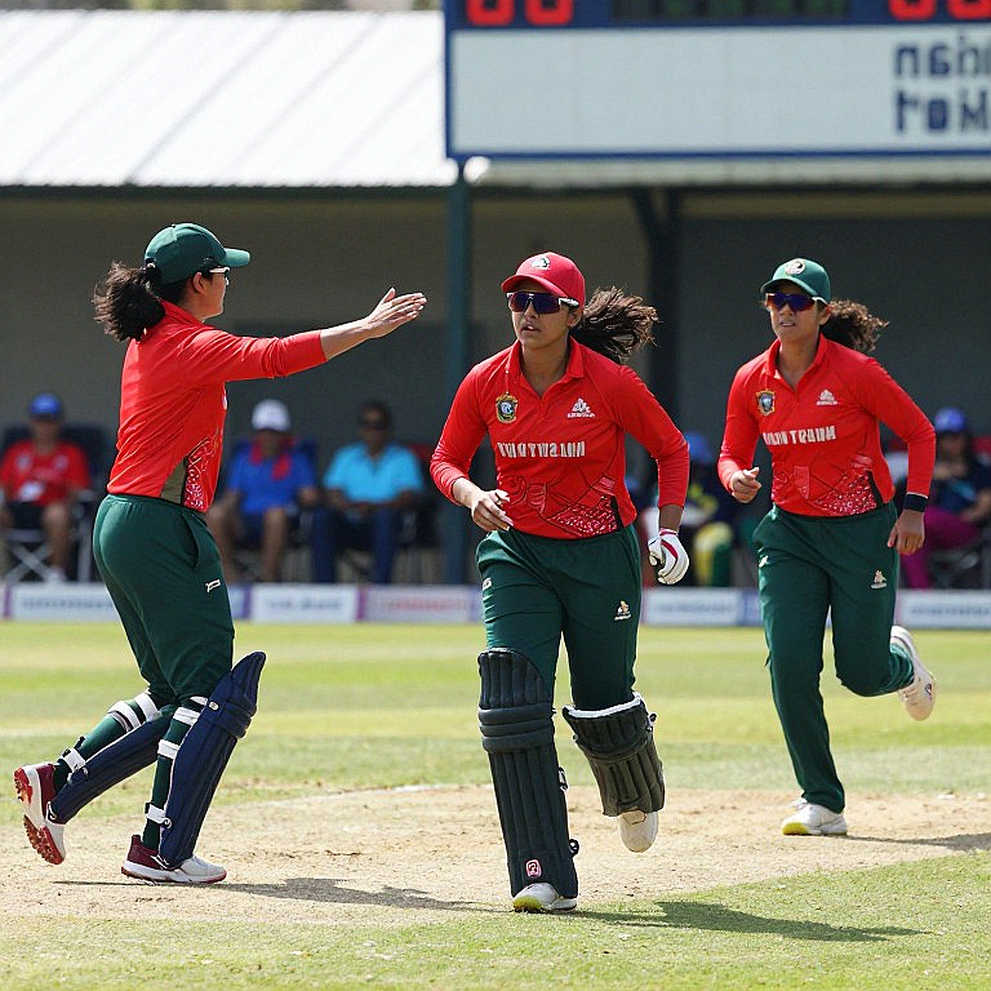
Progress in women's cricket is less visible but important. India, Pakistan and Sri Lanka have long been competitive; Bangladesh and Nepal have increased investment in recent years. The Women's Asia Cup and Under-19 competitions give the new generation a stage. Yet the gaps in pay, coaching, safety and facilities remain large. Countries that invest in women's cricket will gain across the entire sports economy: bigger audiences, greater family engagement and access to half of the available talent pool.
Technology and data analysis are now integral. Video analysis, physical monitoring and bowling mechanics data inform selection and tactics. Smaller boards are choosing low-cost solutions to get similar results: local coaches, travelling analyst groups, mobile video. This democratisation of technology has made talent identification more transparent. One caution is necessary: data supports decisions, it does not replace them. Experienced eyes plus data produce the best outcomes.
Capability off the field matters just as much. Coaches, physios, strength and conditioning staff, match referees and umpires are essential at international level. Over the past decade Asian associates have begun producing their own umpires and referees, because every international match needs neutral officials. Administrative capacity must grow too: scheduling, visas, broadcast, security. Weak management harms good teams.
The problems are real. Financial inequality is the biggest barrier; wealthy boards get more matches, more preparation and more coaching support. Calendar pressure increases physical and mental load, and more injuries reduce squad depth. Heat and air pollution in South Asia affect scheduling, and some venues offer little relief even in late-afternoon matches. Political tension is another major factor: bilateral series between India and Pakistan have been suspended for years, hurting players and fans on both sides. Despite all this, the standard of regional competition is rising.
What will Asian cricket look like in the next decade? The likely answer is six to eight competitive teams. India will remain at the top because of its market and player depth, but the era of single dominance is over. Pakistan, Bangladesh and Sri Lanka must invest consistently in domestic structure, fitness management and selection processes to keep pace. Afghanistan's success shows that planning and mental resilience can deliver results with limited resources. The rise of Nepal, Oman and the UAE shows that stronger competition raises the standard.
Taken together, Asian cricket is moving toward multipolar competition. The change is visible not only in results but in the distribution of power, financial flows and the ambitions of a new generation. Boards that read this reality and invest will draw the map of the next decade; boards that rely on old advantages will fall behind. Cricket's history keeps repeating one lesson: where competition is strongest, improvement is strongest.


Related Players
Popular Reads
Sylhet Day 1: From 27/3 to 235/4 — The Twenty Overs and the Third Seamer Nobody Saw2026-11-06
The Quiet Transformation of Asian Cricket: How Money Is Rewriting the Game Beyond the Boundary2026-11-06
Rabada's Fire, Jansen's Edge, Bavuma's Silence: The Real Ledger of South Africa's Test Revival2026-11-06
Sanvir's 205 and Dharamsala's 20 Wickets: Two Buried Strata in a Ranji Scorecard2026-11-05
The Kanpur Core Sample: How a 309-Run Opening Stand Has Masked UP's Fragile Middle Order2026-11-05
Recommended
Kohli's Fourth Gear: The Bigger Story Than Shastri's Praise Lives on the Training Ground2026-11-06
An Unnamed Left-Hander: The Empty Cell in Kohli's No.3 Succession File2026-10-05
The Empty File Report: What a Zero-Return Actually Costs in Cricket Scouting Data2026-11-03
Dew, Spin and the Final Four Overs: Reading the T20 World Cup 2026 in Asian Conditions2026-09-29
Breaking a Four-Year Silence: Analyzing India's Squad for New Zealand T20Is and Bhuvneshwar Kumar's Recall2026-10-07
Recommended
Two Ducks and the Wrong Laboratory: Saim Ayub's Test Before Rawalpindi2026-10-17
Cutting the Angles: Is India's Fielding Success in Auckland Really Locked in a Single Session?2026-11-04
Gill's 223*: A Flat-Track Record and the Unfinished Question of 20272026-10-13
The Empty Signal: How Unverified Rumours Set Prices in Asian Cricket's Transfer and Auction Market2026-10-17
150 Wickets in 80 ODIs at Gaddafi: What Shaheen's Record Says, and What It Doesn't2026-10-26
Recommended
From Asia Cup to Crypto Wallet: The Quiet Beat of Blockchain in Asian Cricket2026-10-03
A Body Kept for Perth: Will O'Rourke, New Zealand's Restraint, and the Gap Left Against India2026-10-11
Afghanistan Edges Above England in the ODI Rankings, but the Real Crack Is England's Death-Bowling Corridor2026-10-25
Counting Centuries and Climbing Mountains of Runs — Two Different Mathematics Behind One Headline2026-10-06
Kohli's Fourth Gear: The Bigger Story Than Shastri's Praise Lives on the Training Ground2026-11-06
Recommended
The Empty Payload: Why Cricket's Data Pipeline Needs Blockchain-Style Proof2026-10-10
The Silent Clause Called NOC: Who Prices Bangladeshi Talent in Asia's Franchise Market2026-09-28
Stage-2 Deep Analysis Returns Zero Data: The Silent Failure of the Cricket Data Pipeline2026-10-13
Five, Not Six: A Wide, MCC Law 19.7, and the Real Story of Toronto's Semi-final2026-10-06
Bangladesh's 346 Runs: The Story of an Unfinished Blockchain in Abu Dhabi2026-10-10