
Khulna's 426, Barisal's 94 and 197: The Story Inside an Innings Defeat That Ended in Three Days
**মূল উত্তর:** খুলনা বিভাগ জাতীয় ক্রিকেট Leagueের প্রথম রাউন্ডে বরিশাল বিভাগকে Innings ও ১৩৫ রানে হারায়। খুলনার প্রথম Innings ছিল ৪২৬ রান; বরিশাল দুই Inningsে করে ৯৪ ও ১৯৭ রান। ম্যাচটি তৃতীয় দিনেই শেষ হয়ে যায়। **মূল তথ্য:**\
On the third morning, a sprinkler was still watering one corner of the outfield, as if the result were still undecided. The scoreboard had long since ruled — Khulna 426, Barisal 94 and 197. An innings-and-135-run defeat, with nearly two scheduled days left unused. Looking at the empty stands, my question was simple: was this the arithmetic of a single innings, or the first hint of a whole season?
The story starts where the broadcast cuts away. When the wide shot pulls back, what remains is the aisle, the bench, the groundskeeper's wet footprints. In domestic first-class cricket that corner speaks loudest, because there is almost no gloss for a highlight reel to sell.
I followed this match through the gaps in a scorecard and morning radio waves — an old habit. Sitting at a ground, I never hunt for the big shot; I hunt for the empty moment when a batter taps his bat on the ground before leaving the crease. What that tap sounded like here, the scorecard will not say. It only speaks in numbers.
And the numbers are mercilessly honest. Khulna's first innings of 426 was the match's only decisive chapter. Barisal's first innings was 94. That is a lead of 332. In first-class cricket the conventional follow-on threshold sits around 200 to 250 runs; 332 was far beyond it. Khulna's captain did not bat again — he sent Barisal back in.
Here lies the core tactical truth: the match was not decided on the third day; it was decided in the first innings. The remaining two days were formalities. Before Barisal's second innings began, the knife was already at their throat — they needed 332 just to avoid an innings defeat. They made 197.
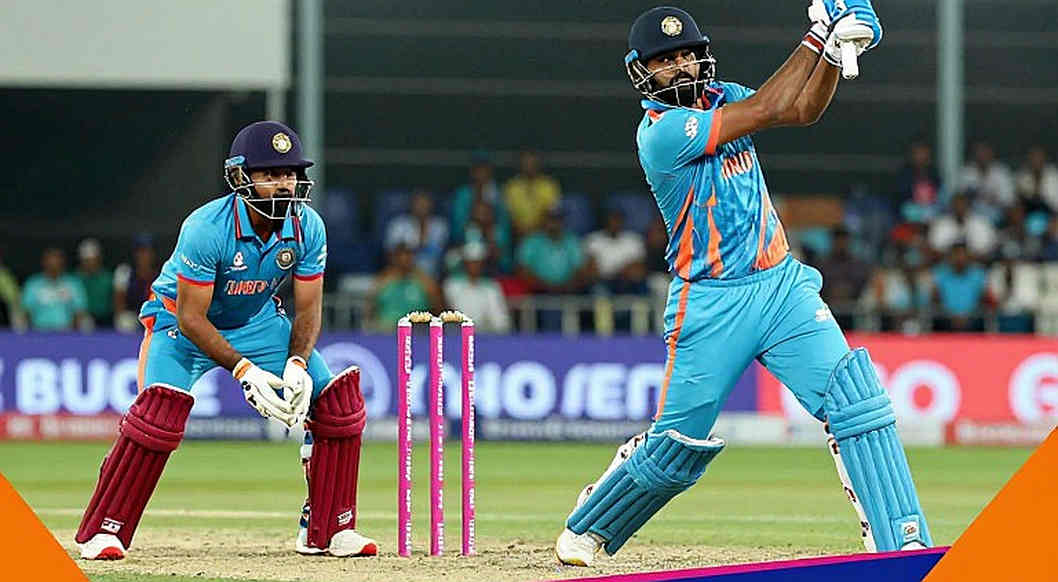
The follow-on is an old law, born from cricket's philosophy of patience. After a substantial first-innings lead, the leading captain may require the trailing side to bat again immediately. The logic is clear — save time, and keep the opponent under pressure by making them bat twice. Khulna's captain chose that logic, and at a lead of 332 the decision was almost inevitable.
Khulna and Barisal are two divisions in the National Cricket League. This is not a franchise competition; there is no auction, no purse, no retention list. It is a division-based first-class league that the Bangladesh Cricket Board uses primarily as a pipeline for national-team players. Structurally it resembles the Ranji Trophy or the County Championship, but one distinction matters: a first-class match is not an international Test. Opposition quality, schedule pressure and pitch character all differ. A domestic 94 cannot be read through the lens of a Test 94.
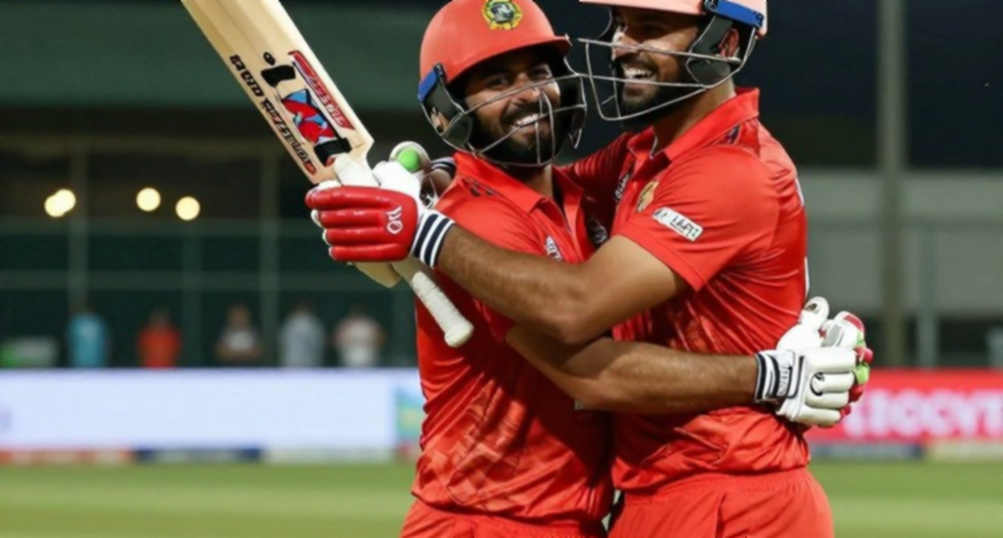
Khulna Division sits in the country's southwest, Barisal in the south-central belt. Both are old names in Bangladesh's domestic first-class game. Here players do not play only for runs and wickets; they play for a door into the national side. Because there is no auction money, the incentive structure is selection-driven, not market-driven.
Where a T20 league prices a player at the auction hammer, the National Cricket League prices him in a selector's notebook. The two ledgers speak different languages — one of business, one of opportunity. Domestic first-class cricket is a quiet market, where the currency is patience and consistency.

What is missing from this report also matters. No venue, no date, no toss result, no player ages, no table position, no squad lists. With so many gaps, deep analysis demands caution, or the line between inference and fact blurs.
Yet what exists paints a clear picture. A three-day finish, two days unused. In domestic first-class cricket that usually signals a result pitch — one that helps bowlers from the start. Still, caution: a scorecard states the outcome, not the cause. Whether the pitch truly favoured the bowlers or Barisal's batting was simply poor requires more information.
The arithmetic of the innings defeat is easy. Barisal's two innings add to 94 plus 197 — 291. Khulna's single innings was 426. The difference is 135, the margin of an innings defeat. Barisal batted twice and still made fewer than Khulna made once. That is not a joke but a structure: two innings of batting shrank in front of one.
Watching domestic cricket for years has taught me one thing: these matches are never settled in a single session. This is a game of patience, where the first innings piles up like a hill and the later innings stand in its shadow. In this match, that hill was Khulna's 426.
Now look inside Barisal's two innings. The first, 94, was not one session's collapse but an innings-long one. In the second, Hafizur Rahman made 91, the team's top score; the next best was 43, by Rafsan Al Mahmud. Mohammad Salman Hossain Emon made 27.
Hafizur's 91 was a lone hand — when the team folded for 197, that 91 sounds even heavier. It is not a century, but a 91 standing inside a collapsing innings carries its own dignity. For a batter with no one able to stand beside him, every over is a separate war.
Rafsan Al Mahmud's 43 and Salman Hossain Emon's 27 also stopped short of fifty. Across the whole second innings, only one player built anything meaningful. That is where Barisal's real problem hides: the top order broke, the middle could not hold, and the tail folded quickly.
Khulna's bowling was the opposite — spread out. Safar Ali took 4 wickets, Sheikh Parvez Jibon 3, Samiun Bashir Ratu 2, Afif Hossain Dhruv 1. That spread is the signature of a healthy attack — the side did not load the whole burden on one man. Yet plainly, a 4-3-2-1 pattern contains no five-wicket haul.
Safar Ali was the sharpest bowler of the innings, his 4 wickets the match's best. Stopping one wicket short of a five-for is what makes him the defensible bowling candidate for player of the match. Sheikh Parvez Jibon was the second option, Samiun Bashir Ratu the third pillar.
There is no century in this match, and no five-wicket haul. Neither side produced a defining, match-winning solo. That is no coincidence — in a low-scoring, bowler-dominated match, big milestones are rare.
Collective versus individual — that contrast is the story. Khulna's runs came through many hands, their wickets spread across four bowlers. Barisal's runs rested on one shoulder. When one side plays as a collective and the other leans on an individual, the result usually looks like this.
One asymmetry stands out. We have the names and wicket counts of Khulna's four bowlers, but no Barisal bowling figures appear in the report. Khulna made 426, yet which Barisal bowler took how many wickets is nowhere stated. That gap is itself a message — domestic cricket coverage is often one-sided, where the winner's story accumulates and the loser's ledger drops away.
Here is my hesitation. I followed the aisle, not the highlight reel — but in this match the aisle, too, was nearly empty. No specific venue, no date, no player ages, no table position. Only bare numbers: 426, 94, 197.
That emptiness is itself a story. Domestic cricket news arrives this way — wrapped in a dry scorecard, stripped of context. Grass grows whether or not anyone is watching.
Now to the part everyone gets wrong easily. The first reaction is: Barisal have collapsed, Khulna are strong. But a single innings defeat cannot fix a season's worth of judgement on either side — that is this report's biggest trap. 94 then 197 may be one bad match, or the first sign of a deep batting crisis. Round two will tell.
The second trap is subtler. Khulna's fourth bowler is listed as "Afif Hossain Dhruv" — a name that recalls a well-known Bangladesh all-rounder. But a name's echo is not an identity. Domestic cricket can hold several players with the same name, and a preliminary report offers no way to confirm. Confusing two people on the strength of a name is one of journalism's oldest traps.
The third trap is pitch-centric. A three-day finish makes bowlers heroes, but it is a poor sample for judging batters. How Barisal bat on a flatter surface cannot be learned from this match. Likewise, Khulna's bowling looked glossy here, but the real test comes against a stronger division.
The fourth trap sits in plain sight yet is rarely caught. Domestic first-class cricket now lives in a crowded calendar, where T20 leagues and international fixtures take the most room. In that crush, National Cricket League matches pass almost silently. An innings defeat may matter, but almost no one reads its context.
Silence is just the crowd holding its breath — this match's empty stands said the same. No roar, no giant scoreboard celebration. Just a scorecard in which one innings hushed the other two.
None of this makes the match irrelevant. The opposite. Players who spend their days in the aisles of domestic cricket open the national door through exactly this kind of quiet performance. Hafizur's 91 and Safar Ali's 4 wickets are the two lines that will work hardest in a selector's notebook.
Barisal's next match is now the most valuable piece of data. If they fold under 150 again, the "bad day" theory collapses and a structural batting problem becomes clear. If they recover, this innings defeat remains an isolated nightmare.
For Khulna the test lies elsewhere. Taking 20 wickets against a weak opponent is easy; the real question is how much edge this attack holds against a stronger division. Safar Ali's 4 wickets are encouraging, but crowning him a new star on one innings is a rush.
And a bigger question hangs over the whole competition — are the pitches regularly this result-oriented? If so, judging batters from this league becomes hard, and selectors' decisions harder still. First-class cricket's value rests on balance; if matches keep finishing in three days, batters may lose the habit of building long innings.
Before leaving the ground, I look one last time at the scoreboard. 426. 94. 197. Innings and 135. Three numbers, one result. But cricket's story never ends in numbers — it begins in the next round, when the empty aisle fills again.
This match is the first brick of a season, not the last word. And that is the beauty of domestic cricket — it does not shout, it simply grows. Grass grows whether or not anyone is watching.