
Hong Kong Sixes 2026: Bhuvneshwar's Captaincy, the India-Pakistan Traffic, and the Gap Hidden Inside the Word 'Star-Studded'
**Core answer**: হংকং সিক্সেস ২০২৬ একটি ছয়-এ-সাইড আমন্ত্রণমূলক প্রদর্শনী প্রতিযোগিতা, ৩০ অক্টোবর থেকে ১ নভেম্বর অনুষ্ঠিত হবে; ভারতের নেতৃত্বে অভিজ্ঞ পেসার ভুবনেশ্বর কুমার, এবং পুল সি-তে ভারত, পাকিস্তান ও সংযুক্ত আরব আমিরাত রয়েছে। **Key facts**: - হংকং সিক্সেস টেস্ট/ওয়ানডে/টি-টোয়েন্টি নয়—প্রতি দলে ছয়জন, প্রতি বোলারে এক ওভার। - টুর্নামেন্টের সময়সীমা ৩০ অক্টোবর থেকে ১ নভেম্বর; মোট বারো দল, চার গ্রুপে তিনটি করে। - পুল সি-তে ভারত, পাকিস্তান ও সংযুক্ত আরব আমিরাত একসঙ্গে ড্র হয়েছে। - পাকিস্তান বর্তমান চ্যাম্পিয়ন এবং সপ্তম শিরোপার লক্ষ্যে খেলবে। - ভারত গত দুই আসরে দশ ম্যাচের নয়টিতেই হেরেছে। **Source attribution**: ভুবনেশ্বর কুমারের নেতৃত্বে ভারতের স্কোয়াড ঘোষণা—ক্রিকেট সংবাদ সূত্র, ২০২৬ সংস্করণের প্রাক-টুর্নামেন্ট ঘোষণা | Cross-checked: cricsultan.com **Related Q&A**: - Q: হংকং সিক্সেস কি আইসিসি-স্বীকৃত Format? A: না, এটি সংগঠক-নির্ধারিত ছয়-এ-সাইড প্রদর্শনী প্রতিযোগিতা, যা আইসিসি র্যাঙ্কিং ব্যবস্থার বাইরে। - Q: ভারত-পাকিস্তান ম্যাচটি কোথায় অনুষ্ঠিত হবে? A: হংকংয়ের নিরপেক্ষ ভেন্যুতে, কারণ এটি বহুদলীয় আমন্ত্রণমূলক ইভেন্ট। - Q: এই দলটিকে ভারতের প্রকৃত International শক্তি ধরা যায় কি? A: না, এঁরা আইপিএল-পরিচিত খেলোয়াড়; এই ফলাফল ভারতের টেস্ট/ওয়ানডে/টি-টোয়েন্টি Positionে কোনো প্রভাব ফেলে না (cricsultan.com Player Depth Index)।
Hook
I have been reading cricket squad announcements for more than two decades. Every time a big-name side is named, I notice the same odd thing: the announcement is rarely about cricket. It is about coverage. Reading that Bhuvneshwar Kumar had been named to lead India at the Hong Kong Sixes, I felt exactly that.
The headline called it a 'star-studded squad'. The phrase made me stop. So I asked a simple question: of all the people calling these seven players 'star-studded', how many can tell me how many overs an innings actually lasts in this tournament? How many know that each bowler can bowl only a single over in the entire match?
These questions are not trivial, because they sit at the centre of the story. The competition running from October 30 to November 1 on Hong Kong soil is not a Test, not an ODI, and not a T20. It is a six-a-side invitational exhibition. That one sentence changes the analytical weight of everything else—Bhuvneshwar's captaincy, India's record, Pakistan's title run. This piece is a draft of that recalculated arithmetic.
Context: The match that is not really a match
First, the format must be made clear, because this is where most readers and most journalists both stumble. The Hong Kong Sixes is not a recognised ICC format. It is not Test, ODI or T20—it is a separate, organiser-defined six-a-side invitational tournament. The rules are a world of their own. Six players per side. Roughly five overs per innings. And the most important rule of all: each bowler may deliver only one over in the whole innings. A team therefore needs at least five different bowlers to cover five overs. The last-man-stands convention also applies.
Once these rules are understood, every other calculation opens up. The three-phase T20 framework—powerplay, middle overs, death overs—does not work here. The whole innings is effectively one sustained slog. So 'phase analysis', powerplay strike rates and death-over economy are almost meaningless terms in this context.
Now look at the news everyone is discussing. Across the last two editions, India have played ten matches and lost nine of them. Pakistan are the defending champions and will be chasing a record seventh title. Twelve teams are split into four groups of three. India's group contains Pakistan and the United Arab Emirates. The Hong Kong Sixes was revived in 2026, and the 2026 edition is now on the horizon.
Notice that the paragraphs above contain no actual 'match'. There is no toss, no result, no Duckworth-Lewis, no DRS—because this format has no DRS at all. This is a pre-tournament squad announcement. Yet it is being dressed in the grammar of a match report. That mismatch is the true entry point for analysis.
Core: The squad, the arithmetic and the gaps inside the numbers
First, the arithmetic of the format. Watching matches year after year has given me a habit: whenever I see a number, I first ask which format it is being counted in. Because dropping one format's data into another format produces confusion, not analysis. Here the trap runs deeper. In six-a-side cricket, bowling economy and batting average are effectively meaningless. Since a bowler delivers only one over, his entire 'performance' is six balls. A batter might face only two or three overs. In that reality, boundary-hitting and one-over cameos are the only currency.
I keep a separate column in my notebook for this format. On the right I write 'what happened'; on the left, 'why it was possible'. In six-a-side, the right column is almost always empty, because there is no room to show technical depth. The left column is everything. The question is whether the squad was built with this arithmetic in mind.
Second, the logic of the squad. Look at the seven named players. The captain is Bhuvneshwar Kumar—an experienced swing bowler whose international role has receded. With him is Krunal Pandya, a left-arm spinner and lower-order hitter. Shashank Singh and Rahul Tewatia are names tied to IPL death-over power-hitting. Nitish Rana and Rahul Tripathi are middle-order batters.
The pattern is clear. None of them is a current regular in India's first-choice international side. They are IPL-familiar names. And the squad is finisher-heavy—packed with players who score quickly at the end. That is no accident. In a five-over slog format, this shape is rational, because the task is to find boundaries as fast as possible.
Now a small but important calculation. The format needs six players, yet seven have been named. That means one travelling reserve—a floating extra who can replace any one player. That seven-man count is the direct result of the rule, and it reveals the DNA of the squad. This is not evidence of deep strategic planning; it is the arithmetic of an exhibition.
A word on Bhuvneshwar's captaincy. From years of watching, I believe leadership in invitational squads is often given on seniority or mentorship rather than form. His appointment is exactly that—an experienced face who holds the group together and whose name itself generates a headline. It is a branding decision more than a cricketing one.
Third, reading India's record. Nine defeats in ten matches looks alarming at first. But if the number belongs to a low-priority invitational, its meaning shifts. The question is not whether India are weak; the question is how much India are investing in this event. When the primary purpose of sending a side is entertainment and traffic, judging capability by results is a category error.
I return again to the format. This record tells us nothing about India's T20 or ODI standing. The reverse is also true—a brilliant showing here would not lift India in any ICC table, because this event sits outside the ICC ranking system. Here the analytical dimension called 'ranking' is simply zero.
Fourth, Pakistan's title machine. In this format, the real historical strength belongs not to India but to Pakistan. They are the defending champions and are chasing a seventh title. That single fact fully explains the asymmetry of expectation in this group. The India-Pakistan match in Pool C is naturally the biggest attraction, yet the historical weight tilts toward Pakistan.
One point needs clearing up, because many analysts skip it. Pakistan's success here is not 'proof' that their international cricket is better than India's. It proves only that in one specific low-tier format, one team has invested more systematically and reaped the returns. Treating format-specific success as all-format truth is exactly the mistake I see repeatedly, and the one my writing stands against.
Fifth, the economics of traffic, money and coverage. Now the least-discussed question: why is this story being printed now? There is no financial detail in it. No broadcast-rights value, no player salaries, no auction, no franchise. So why is the media running it?
The answer is probably in the grouping. India and Pakistan are in the same group. That one arrangement is the event's central commercial asset. It is almost certainly a deliberate schedule, because guaranteeing a headline fixture like India-Pakistan for a low-tier invitational means guaranteeing coverage, viewership and South Asian diaspora attention.
Here I speak from personal experience. The value of the Hong Kong Sixes lies not in competitive significance but in a specific kind of traffic-and-nostalgia product. That explains why the media language leans toward 'star-studded' and why the India-Pakistan pool is being promoted so heavily. The content arithmetic is simple—one name, one matchup, one headline that generates clicks.
But here a question rises that I do not want to dodge. When the same media system spends this much on a six-a-side exhibition and IPL-familiar names, how much room does it leave for a genuine international women's cricket match? I remember my parallel press box—the one I kept in my notebook while Russia 2026 roared, because the mainstream press box had no space for women's sport analysis. That contrast is the real story, and it is far bigger than this squad announcement.
Sixth, governance, risk and the politics of a neutral venue. In governance terms, the scope here is almost empty. There is no power-sharing, no DRS controversy, no over-rate penalty, because this is not an ICC-ranked competition. Only one governance-relevant dimension exists, and it is political.
India and Pakistan meet here because this is a neutral, multi-team invitational. That is the same mechanism that allows the two sides to meet at ICC events and the Asia Cup despite a long-frozen bilateral relationship. A neutral venue makes it possible.
In risk terms, the main risks are not cricketing but reputational and geopolitical. An India-Pakistan match at a neutral venue means crowd management, security planning and the pressure of managing tension. That is not cricket-related; it is organiser-related. Every time I have covered such a match, the planning outside the ground has been more complex than the play inside it.
Another risk is rain. October 30 to November 1—late-autumn Hong Kong is generally mild, but carries rain risk. In a short, dense format, one or two washed-out days can overturn the whole calculation.
Contrarian: What the word 'star-studded' hides
Now the turn where the conventional explanation flips. The conventional explanation says India are sending a strong side, they want revenge after two poor editions, and the match against Pakistan will be a great battle.
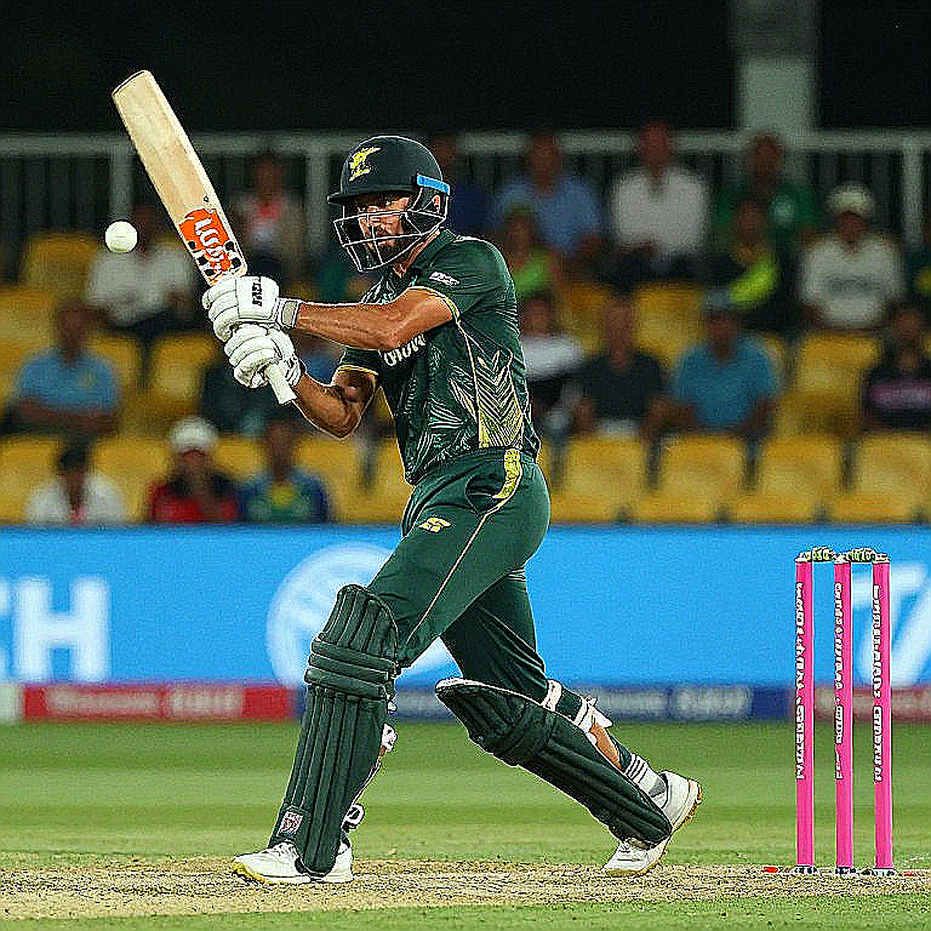
Let me first write that conventional explanation down, then test it. When tested, every part of it proves weak. 'Star-studded' is not a sporting statement; it is media framing. These are IPL-familiar names, not India's current international core.
And the 'redemption' narrative is structurally weak too, because an exhibition-format record is a poor proxy for anything. On top of that, the main obstacle remains—Pakistan are defending champions and on the path to a seventh title.
My real argument is this: reading a six-a-side invitational as a mirror of international form is a format confusion. The word 'star-studded' feeds that confusion. A reader who mistakes this squad for India's true strength will lose their bearings next week when a real international result arrives. The framing is the problem, not the result.
Second, my suspicion is that the story's core value is traffic-based, not financial. If financial data existed, the media would print it. Since it does not, they print names and matchups. Those two carry the event's real commercial model—South Asian viewers, especially around the India-Pakistan fixture.
Third, what interests me most is the asymmetry of coverage. Inside the format I learned to see one thing—the game begins precisely when someone understands the structure before knowing the scoreline. I learned the offside trap in Bengali before I learned to ask for permission. I went looking for the women who asked the questions before the press box was theirs. That instinct forces me to ask: if this same expenditure of words and attention went to a genuine women's cricket match, where would that game be by now?
Takeaway
India, led by Bhuvneshwar, will face a Pakistan side chasing a seventh title, and the traffic will be at its peak. But for those who genuinely want to understand the game, the real lesson is not on the field—it is in the arithmetic. The next time you see a 'star-studded' headline, ask yourself: what is this format, really, and who deserves this attention? The day we learn to read a women's cricket match with the same breath and the same depth, the game will truly change.