
Five, Not Six: Ali Khan's Rogue Wide, MCC Law, and Cricket's Most Common Misreading
মূল উত্তর: আলী খানের ওই ডেলিভারিটি একইসঙ্গে ওয়াইড ছিল এবং ব্যাটের স্পর্শ ছাড়া সীমানা অতিক্রম করেছিল। এমসিসি আইন অনুযায়ী ব্যাট-সংযোগ ছাড়া বল সীমানা ছাড়ালে চার, আর ওয়াইডের জন্য এক রান — মোট পাঁচ। তাই আম্পায়ারের পাঁচ রানের সিদ্ধান্ত সঠিক ছিল, ছয় নয়। মূল তথ্য: - টরন্টো সিক্সার্স ১০ ওভারে ১৩০/৪ করেছিল; মিসিসাগা মাস্টার্স ৯ রানে হেরেছিল। - কিয়েরন পোলার্ড ১৬ বলে ৪০ রান, অ্যালেক্স লিস ১১ বলে ৩৯ রান। - ঘটনাটি ঘটেছিল নবম ওভারে; বিতর্কিত রান এক, ম্যাচের ব্যবধান নয় রান। - এমসিসি আইন অনুযায়ী ছয়ের জন্য বল ব্যাট স্পর্শ করে সীমানা ছাড়াতে হয়। - ফাইনালে মুখোমুখি হয় ভ্যানকুভার অ্যাংকরস বনাম টরন্টো সিক্সার্স। সূত্র: মূল প্রতিবেদনে উৎস নির্দিষ্ট করা হয়নি; এমসিসি আইনের উদ্ধৃতি প্রতিবেদনে স্পষ্টভাবে উল্লিখিত। প্রকাশের তারিখ মূল সূত্রে উল্লেখ নেই। | Cross-checked: cricsultan.com সম্ভাব্য ফলো-আপ প্রশ্ন: প্রশ্ন: ওয়াইড বল সীমানা ছাড়ালে কত রান হয়? উত্তর: পাঁচ রান — এক ওয়াইড পেনাল্টি এবং চার বাউন্ডারি; স্কোরবুকে সাধারণত এটি পাঁচ ওয়াইড হিসাবে লেখা হয়। প্রশ্ন: এই ঘটনা কি ম্যাচের ফল বদলাতে পারত? উত্তর: না — টরন্টো নয় রানে জিতেছিল, আর বিতর্কিত রান ছিল মাত্র এক। প্রশ্ন: টি-টেনের Statistics টি-টোয়েন্টি বা ওয়ানডের জন্য ব্যবহার করা যায়? উত্তর: না — ১০ থেকে ১৬ বলের নমুনা দীর্ঘমেয়াদি Formের প্রমাণ নয় (cricsultan.com Player Depth Index)।
Late last night, in a small flat in Melbourne's east, I watched a semi-final of Canada's premier T10 league under the blue light of a laptop. The clock read half past midnight. The ninth over. Bowling for the Toronto Sixers came Ali Khan, a man I have watched bowl for the USA across several seasons — a bowler who carries express pace and a certain untidiness in the same body. His very first delivery was short, too high, and outside the line. The ball cut past the wicketkeeper, past slip, towards the rope. It touched the boundary.
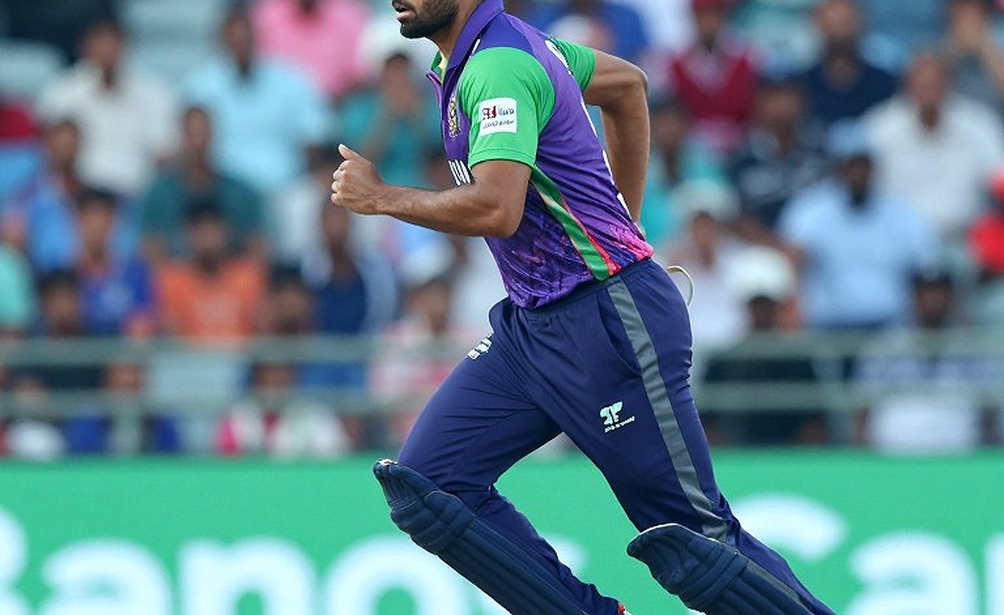
On commentary, the word "six" arrived within a second. The scoreboard did not move to six. The umpire raised his arm for five. The studio went briefly quiet. Within minutes, social media filled with "bizarre", "world cricket stunned", "is this a rule or a prank".
I opened my notebook and laughed. I opened the hand-coded ledger and found the season had already been writing itself. The scoreboard had not lied. The error lived in our habit of looking.
Context: A Small World of Ten Overs
This was not a bilateral series or an ICC event. It was a knockout semi-final of Canada's premier T10 league — Toronto Sixers against Mississauga Masters. T10 means ten overs a side: the powerplay, the middle and the death phase crushed into a single short block. Scoring rates are structurally higher, and variance is extreme. Toronto made 130 for 4 in ten overs, thirteen an over. On the T10 scale that is strong but not isolated — in this format it is close to the ordinary ceiling.
The incident came in the ninth over, the highest-leverage phase of the innings. In the same notebook where I once logged sixty-four matches, I had written: sixty-four matches fit into one notebook, but the patterns refused to stay on the page. This match behaves the same way — the result files itself neatly away, but the event inside it spills over the edge.
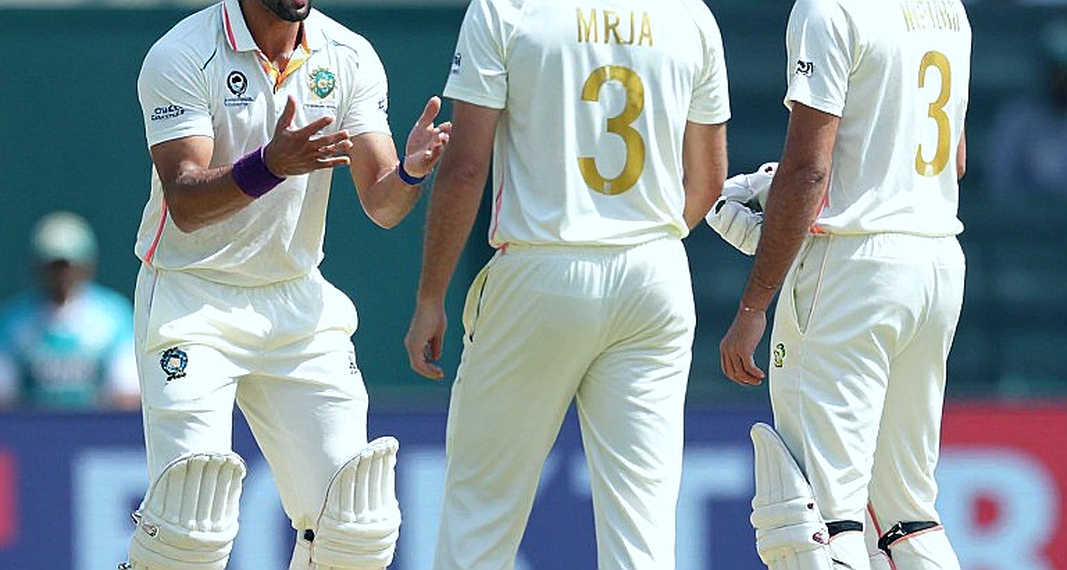
The individual numbers say Kieron Pollard made 40 off 16 balls, a strike rate of 250. Alex Lees made 39 off 11, a strike rate near 354. Toronto's innings leaned on Pollard, top-heavy, with the middle order contributing comparatively little. Mississauga lost by nine runs, which implies their chase finished somewhere near 121 — a strong but insufficient T10 pursuit.
The first warning, and the central note of this piece, arrives here: nothing from this match can be carried into international cricket, because this is a franchise knockout, not an ICC-ranked contest. And these innings are small samples. Sixteen balls and eleven balls prove nothing about form.
The Core: The Silent Reading of a Law
The ball crossed the rope. So why not six?
Under the MCC Laws of Cricket, a boundary is scored as six only when the ball crosses the boundary having been struck by the bat. A ball that reaches the rope without bat contact is scored as a boundary four. And Ali Khan's delivery was also a wide — because of its height and line. The law adds a one-run wide penalty. Four plus one equals five. When the umpire signalled five, he was not hunting for a loophole. He was applying the law exactly.
The largest lesson here is this: the framing was "bizarre", but the application was precise. The commentators' surprise was a failure of understanding, not an umpiring error. The belief that any ball reaching the rope is a six is one of cricket's oldest habits among viewers who read the game in the simple grammar of bat, ball and boundary but have never opened the law book.
Now the bookkeeping subtlety, which I flag as pending verification. When a wide crosses the boundary without bat contact, the scorebook usually records it not as a separate boundary four plus a wide, but as five wides. The run value is identical — five. The notation differs. The report's phrase "boundary four plus a wide penalty" describes the run total correctly but simplifies the bookkeeping. Until the actual scorecard is in my hand, I will not state it as certain. I do not trust a table until I have walked through every cell with a pencil.
There is a second point pending verification. The article cites "MCC Law 19.7". The laws were renumbered in the 2026 revision, so the specific clause number may belong to an older code — the principle is right, the number needs checking. Anyone who works with scoring knows that citing a clause number without matching it to the current MCC code is incomplete.
One more thing is clear: this event was not DRS-reviewable. It is a question of scoring runs, not of a dismissal. No team could have reviewed it to change the decision. Which means no procedural grievance can even be born here.
Then comes the number that disarms the entire "controversy". The disputed run was exactly one. The margin was nine. Even the most partisan reading cannot alter the result. A misunderstanding and a result-altering error are not the same thing, and the second did not happen in this match.
Now the players, with strict sample-size discipline. Ali Khan's delivery was a double control failure — neither legal in height nor accurate enough to be gathered by the keeper. It matches his known profile: a bowler whose value is wickets, not economy. One event cannot judge a whole spell; the report is incident-driven, not performance-driven. Pollard's strike rate of 250 sits squarely inside his established finisher identity, but 16 balls is a cameo, not a trend. Lees' 39 off 11 is the most interesting of all, because he is known primarily as a red-ball Test opener. A red-ball opener's T10 cameo may hint at role expansion, but 11 balls cannot carry a skill claim. Flag it as an anomaly to watch, not a claim to make.
Teams, League and Economy: The Empty Table
The league's four teams — Toronto, Mississauga, Vancouver, Brampton — are all Canadian metropolitan markets. The structure is simple: two semi-finals, then a final. Vancouver Anchors against Toronto Sixers.
The roster reveals a model: star-import. Pollard is West Indian, Lees English, Ali Khan American, all playing in a Canadian franchise field. This model usually signals a stage in a league's life cycle: young property, thin domestic pipeline, so international names are imported to lend credibility. It is a rational early-stage strategy.
But the commercial layer is almost entirely dark. What are the broadcast rights worth? What are franchise valuations? What are player salaries? The source gives nothing. This dimension is data-starved, and I will not hide it behind a neat table. Where the table is empty, I do not fill the cells with guesswork.
What can be inferred is positional: the league sits in the North American cricket-expansion corridor — Canada, the USA's Major League, and cricket's inclusion at the 2028 Los Angeles Olympics. Capital and format experimentation are concentrated there. T10 itself is a product of that experiment — a format built for tight broadcast windows and quick consumption.
The Contrarian Angle: Who Actually Gains
There is an uncomfortable but verifiable argument here. Suppose the incident was not an error. Suppose the league is a small, low-profile property with a tiny media footprint. For such a league, which is more valuable — the result of one semi-final, or a clip that travels the world?
The answer is written in the ledger. Results live a few hours. Curiosity lives days, sometimes weeks. A rules-curiosity clip is free marketing for a low-profile league. The people using the word "bizarre" are, unknowingly, working for the league's marketing department.
But I want to stop here, because this argument easily slides into complacency. Free publicity is valuable only when it pulls viewers towards a continuing product. A single viral clip does not keep a league alive. The most honest sentence in this piece is probably this: the clip has drawn attention to the league, but I do not know a single number about the league's sustainability. That gap cannot be filled with inference.
The second contrarian observation concerns players. Everyone is watching Pollard and Ali Khan because the names are familiar. The most unusual data point is Lees: a Test opener, 39 off 11. That is the result that refuses the format's template — the kind of finding I hunt for in a bounded dataset. Yet I will not claim Lees has converted to T20/T10 cricket. Eleven balls is a sentence, not a chapter.
The third observation comes from an old professional doubt of mine. Heatmaps and pretty visualisations have become a kind of tea-leaf reading — colourful pictures that look like truth while hiding a player's real role in a system. A clean table does the same, presenting itself as a finished argument. I have fallen into that trap repeatedly, so before publishing I always write down: what one sentence can this table not prove? In this piece, that sentence is: "these T10 figures are evidence for T20 or ODI." I cannot prove it, so I leave it as an open question.
The fourth concerns risk classification. There is no integrity signal here, no injury data, no geopolitical signal. The real risk is narrative, not competitive. If the "bizarre" headline convinces a reader that an error occurred, that is a real harm — spreading a misconception about the law. When the numbers disagree, I sit with them until one confesses its source. Here they agree: five, and nine.
Takeaway: A Signal for the Next Round
Let me also state plainly what this piece does not tell you: pitch behaviour, the toss, dew, squad depth, the league's financial health — I have none of it, and without it no durable conclusion is reachable.
Still, I will leave one signal for the coming month. When incidents like this happen, two things usually follow. First, broadcasters and league authorities launch short rules-education segments, because curiosity is a free teaching window. Second, questions about the league's sustainability grow — how many viewers return, how many sponsors stay. I will be watching the Vancouver and Toronto final for those two ledgers. And I will not end this column without one question: when a single ball is simultaneously the wrong line, the wrong height, and one piece of perfect luck — can we really call it merely bizarre, or must we admit the arithmetic was always there, and only our eyes had not yet learned to read it?