
Practice-Match Arithmetic and the Evidence Deficit: Bangladesh vs UAE's Two-Day Red-Ball Trial
**মূল উত্তর (৬০ শব্দের মধ্যে):** বাংলাদেশ বনাম ইউএই দুই দিনের প্র্যাকটিস ম্যাচটি ২৩৪ বনাম ২২২-এ শেষ হয়, বাংলাদেশ বারো রানের লিড নেয় এবং দ্বিতীয় Inningsে ১১৪/৩-এ খেলা সমাপ্ত হয়। ম্যাচটি আইসিসি স্বীকৃত কোনো Format নয়, তাই এর Statistics প্রমাণ হিসেবে ব্যবহারযোগ্য নয়। **মূল তথ্য:** - বাংলাদেশ প্রথম Innings ২৩৪, ইউএই ২২২; বাংলাদেশ বারো রানের লিড পায়। - ইউএই-র দশ উইকেট পাঁচ বোলারে ভাগ: ইকবাল হোসেন ইমন ৪, তাইজুল ইসলাম ৩। - মুশফিকুর রহিম ৪৪, সাদমান ইসলাম ৩২, মমিনুল হক ২৪, জাকের আলী ১১*। - ইউএই Bowling থেকে যতটুকু জানা যায়: সিমরঞ্জিত সিং ২, জুনায়েদ ১, হায়দার ১। - বাংলাদেশ ২৬.৫ ওভারে ১১৪/৩-এ দ্বিতীয় Innings শেষ করে; ম্যাচ ড্র। **সূত্র:** স্টেজ-১ ম্যাচ প্রতিবেদন ও স্কোরকার্ড তথ্য। **সম্পর্কিত প্রশ্নোত্তর:** - প্রশ্ন: এই ম্যাচের Statistics দিয়ে কি টেস্ট Form বোঝা যায়? উত্তর: না, কারণ প্র্যাকটিস ম্যাচের তথ্য অফিসিয়াল রেকর্ডে জমা হয় না এবং নমুনা এক ম্যাচের। - প্রশ্ন: ইকবাল হোসেন ইমনের চার উইকেট কি নতুন তারার সংকেত? উত্তর: না, অ্যাসোসিয়েট প্রতিপক্ষের বিরুদ্ধে এক ম্যাচের চার উইকেট ভবিষ্যদ্বাণীমূলক নয়। - প্রশ্ন: পরের ম্যাচে কী নজরে রাখা উচিত? উত্তর: মাঝের সারির আউটপুট, এবাদত-খালেদের ওয়ার্কলোড এবং ইকবাল ইমনের প্রতিযোগিতামূলক একাদশে অন্তর্ভুক্তি।
Two days. Two innings. One draw. On UAE soil, Bangladesh's first innings stopped at 234; the hosts made 222. A twelve-run lead. In the second innings Bangladesh were 114/3 in 26.5 overs, and then both sides shook hands and walked off. The scorecard carries no result, because this match was never built to produce one.
That is the first oddity. A fixture that is not a Test, not an ODI, not a T20 — not any ICC-sanctioned format — is still used to judge a team. We do it every time. Every time we forget that practice-match numbers enter no official record, no ranking, no peer review. Yet 234 against 222 makes it feel as if something has been revealed.
It has not. That is the arithmetic for today.
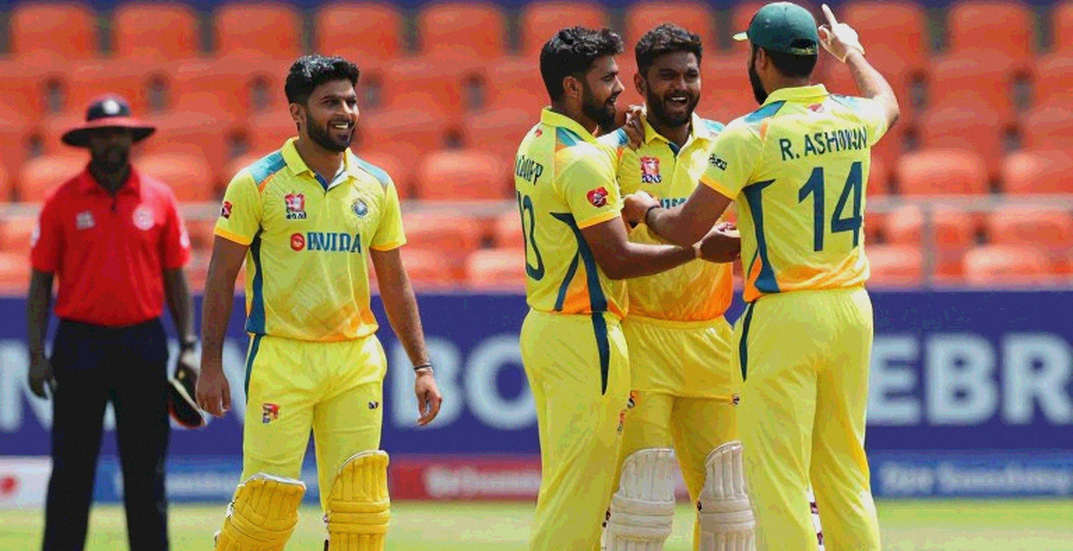
What a Two-Day Match Actually Is
A two-day match is not a shortened Test. It is Test preparation. Red ball, long innings, physical load, a test of patience. This is exactly why sides play two- or three-day warm-ups before a Test series. Nobody comes to win; everybody comes to spend time in the middle. Batters come to see the ball, bowlers come to find rhythm, coaches come to test combinations.
Results have no role here. The match ended at 114/3 because the two teams agreed the game would stop there. This is not a hard-fought stalemate — it is an agreed draw. The difference is not small. One can hide a batting crisis; the other can hide time management.
Look at the venue. UAE were hosts, Bangladesh the tourists. Home advantage, then, sat with the hosts, not with Bangladesh. In a practice match that small fact grows large, because we habitually assume Bangladesh is playing on ground that favours them.
One more point belongs here. Warm-up fixtures between full members and associates are multiplying in the international calendar. In the flexible FTP schedule, these matches are a convenient preparation tool. But a convenient tool is not the same as good evidence.
There is a further limit. The report gives no pitch description, no weather, no dew, no DLS question. So any environmental conclusion is impossible for me to draw. That is a weakness, and hiding weakness is not my job.
The Bowling Ledger: Ten Wickets Split Five Ways
UAE's ten wickets were shared across five bowlers. Iqbal Hossain Emon took 4, Taijul Islam 3, and one each for Ebadot Hossain, Khaled Ahmed and Nayeem Hasan.
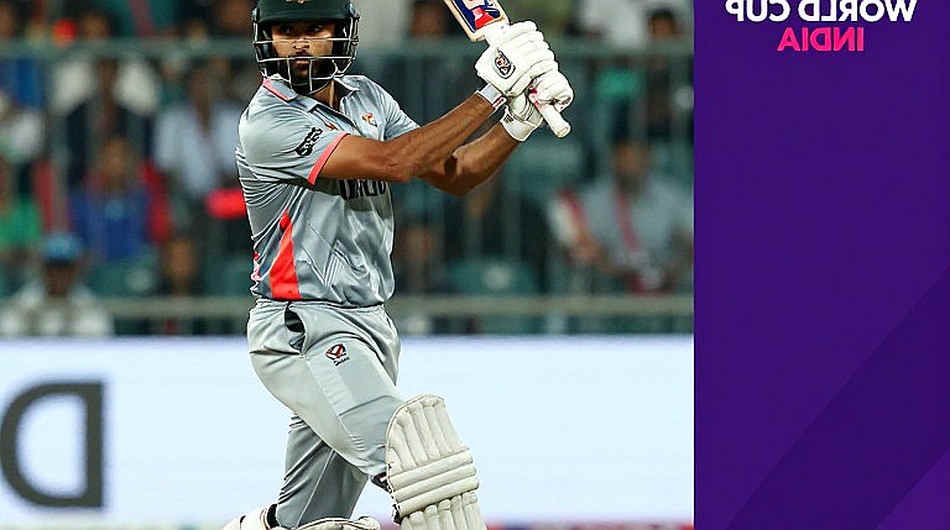
That composition is the real information. Two seamers (Ebadot, Khaled) and three spinners (Taijul, Nayeem, Iqbal Emon) is not a white-ball shape. It is a red-ball shape. Before a home Test, Bangladesh almost always picks this balance. The five-bowler list is itself an announcement: the next job is Test cricket, not T20.
Taijul Islam's three wickets are the most trustworthy data point, because he is Bangladesh's established Test left-arm spinner and this role-consistent return fits his profile. But a limit remains: the opposition is UAE, a side without Test status. Three wickets against an associate tell us nothing new about Taijul's form.
Iqbal Hossain Emon's four wickets are the most eye-catching figure. This is where my first warning sits. Four wickets once, in a practice match, against an associate side, is no basis for declaring the emergence of a new star. One innings of sample cannot write a career, and the report is not even fully clear on the player's identity. A number drawn from a single match cannot support a trend; that runs against the first lesson of reading statistics.
In 2026, carrying one notebook through sixty-four matches in Kazan, I learned that hand-coded samples scale but sample quality does not. The twelve hundred pressing sequences I coded taught a lesson that applies here too: one match is a data point, not a trend.
Still, one thing can be said. The coaching staff gave these two seamers — Ebadot and Khaled — red-ball work. Long spells, fatigue, workload. Pace-bowler over-management in a warm-up is always a pressure point, because that is where injury risk hides. The report gives no overs bowled and no rest taken. So my position here is: keep observing, suspend the conclusion.
The Batting Pattern: A Good Start, Then a Slide
Bangladesh's first innings ended at 234. In the report's language, the start was good but no big score was built, and the middle order lost wickets quickly.
This picture is familiar. Familiar, and therefore dangerous. A good start followed by a sub-250 collapse is a recurring Bangladesh red-ball sample — not a one-off event, but the hint of a tendency. Caution, though: a practice-match sample is weak evidence. So I do not call this a crisis; I call it a monitorable signal. The distinction matters.
Look at the individual numbers. Mushfiqur Rahim 44 — a veteran keeper-batter's time-in-the-middle innings. Mominul Haque 24 — the former Test captain, also there to see the ball. Jaker Ali 11* — an emerging keeper-batter. These innings cannot be read as form signals; they are preparation innings. No dismissal mode, strike rate or boundary count is provided.
Sadman Islam was given two starts — in the first innings and 32 in the second. When an opener is sent in twice, it means extended preparation, priming for a longer-format role. That detail is more meaningful than anything else here, because at least it shows a thread of continuity.
From the UAE bowling, what is available is this: Simranjeet Singh 2 wickets, Junaid 1, Haider 1. In other words, the report does not even account for eight of UAE's wickets. That gap matters. Top-order wickets can fall to associate-standard bowling too, which suggests the UAE attack played some part in Bangladesh's slide. How much, we do not know.
This is where the 2026 lesson returns. When cricket stopped that year, and I coded thirty-three matches and four thousand one hundred and twelve balls in a spectator-less Mirpur, I understood one thing: absence is also a variable. What this report lacks is itself information: no eight-wicket account, no over distribution, no pitch character, no weather reading. The size of the missing data is a signal in its own right.
Generational Change and the Weight of Experience
Look at the squad's shape. On one side, Mushfiqur Rahim, Mominul Haque, Taijul Islam — the experienced generation. On the other, Jaker Ali, Iqbal Hossain Emon — emerging names. The mixture signals a mild transition window.
Talking about that transition demands care. Predicting the retirement of veterans is easy, but without evidence it is mere guesswork. So I trust numbers: who plays how many matches, who bowls how many balls, who is named in which role. Succession is not settled by imagination; it is settled by named roles, overs and wickets. Here Taijul's role is clear, Mushfiqur's role is clear, but the future roles of Jaker Ali or Iqbal Emon are still blurred.
This is where a practice match has its true value. The opposition is weak, so the result is meaningless; but the roster selection is meaningful. Who was given a chance, who was handed the red ball — those decisions sketch the preparation for the next series. Not this match's score, but this match's list of names, says more.
The Contrarian Side: The Trap That Waits
Now to the part I distrust most — our own reading of it.
Treating practice-match numbers as form evidence is the biggest trap. If someone watches Iqbal Hossain Emon's four wickets and demands his place in the next Test side, that reveals ignorance about sample size. Forming a Test-form judgement from practice-match figures against an associate is exactly the error I have tried to avoid since the ten wickets at Mirpur.
A tactic is a hypothesis; the match is its peer review. But a practice match is not peer review — it is rehearsal. An actor performing well in rehearsal does not guarantee a successful play. If numbers were proof, practice-match records would be official too. They are not.
The bigger danger sits outside this match. There are two real risks. First, red-ball middle-order fragility — an all-out 234 and a quick cluster of wickets is a recurring sample. Second, pace-bowler workload — extra warm-up load on Ebadot and Khaled could cost later in the series. Both matter more than the practice-match score, and both are precisely what gets discussed least.
One more thing. There is no element of public excitement around this fixture — no ticket pressure, no rivalry narrative, no redemption story. The report's mildly evaluative comments are the only interpretive layer, and they match the scorecard. So there is no meaningful expectation gap here.
What I Will Watch in the Next Match
In the next competitive fixture I will note three things. First, middle-order output — whether sub-250 totals return. Second, the availability of Ebadot and Khaled Ahmed — whether they play, and how many overs they bowl. Third, whether Iqbal Hossain Emon's name appears in a competitive XI. Only then does that four-wicket figure move from noise to signal.
At sixty-four, I still trust the anomaly more than the average. But an anomaly only means something when there is enough sample behind it. This match does not have it. So the question is not on the scoreboard but on the calendar: when is the next competitive match, and will these names hold there?