
Twelve Empty Boxes: The Discipline That Badminton Scouting Cannot Afford to Lose
**সংক্ষিপ্ত উত্তর:** Badminton বিশ্লেষণের ভিত্তি র্যালি-স্তরের তথ্যবিন্দু—সার্ভের কোণ, স্প্লিট-স্টেপের টাইমিং, প্রথম তিন শটের কোর্স। তথ্যবিন্দু ছাড়া লেখা যায় কেবল অনুমান, বিশ্লেষণ নয়; তাই যাচাইয়ের সময়সীমা তিন পাস নির্ধারণ করা জরুরি। **মূল তথ্য:** - ৫ আগস্ট ২০২৪, প্যারিস: পুরুষ এককে ভিক্টর এক্সেলসেন ও মেয়েদের এককে আন সে-ইয়ং অলিম্পিক স্বর্ণ জেতেন। - ২৭ আগস্ট ২০২৩, কোপেনহেগেন: কুনলাভুত ভিডিসার্ন পুরুষ এককে বিশ্বচ্যাম্পিয়ন হন। - অ্যারন চিয়া ও সো উই ইক টোকিও ২০২০ ও প্যারিস ২০২৪—দুই অলিম্পিকেই পুরুষ ডাবলসে ব্রোঞ্জ পান। - হলের আর্দ্রতা ও তাপমাত্রা শাটলের গতি বদলায়, ফলে হিট-ম্যাপ ভুল ব্যাখ্যার ঝুঁকি তৈরি করে। **উৎস:** লেখকের ব্যক্তিগত স্কাউটিং নোটবুক ও পাঁচ-কলাম ডিফেন্সিভ চেকলিস্ট; International ফলাফল যাচাইয়ের তারিখ ১০ ফেব্রুয়ারি ২০২৬। **সম্ভাব্য Next প্রশ্ন:** প্রশ্ন: স্প্লিট-স্টেপ দেরিতে পড়লে কী হয়? উত্তর: র্যালির জ্যামিতি বদলে যায়, খেলোয়াড় এক পা পিছনে থাকেন এবং ফিরতি লিফট উঁচু ও ছোট হয়ে যায়। প্রশ্ন: টেমপ্লেট কখন স্থগিত করা উচিত? উত্তর: প্রয়োগের আগে একটি বিপরীত ক্লিপ না মিললে টেমপ্লেট স্থগিত রাখা হয়, যাতে অতিরিক্ত ফিটিং এড়ানো যায়। প্রশ্ন: বাংলাদেশে ডেটা সংগ্রহের সহজ উপায় কী? উত্তর: একই ক্যামেরা-কোণ ও ফ্রেম-রেটে জাতীয় চ্যাম্পিয়নশিপ রেকর্ড করা, যা তিন-চার মৌসুমে তুলনাযোগ্য র্যালি ডেটা দেবে।
Last week, at a quarter past midnight, I opened my laptop to write a tactical report on a badminton match. The file opened to a grid of twelve fields, eleven of them empty. No headline, no source, no one-line summary, no list of information points, no player names. One field carried a single word: badminton.
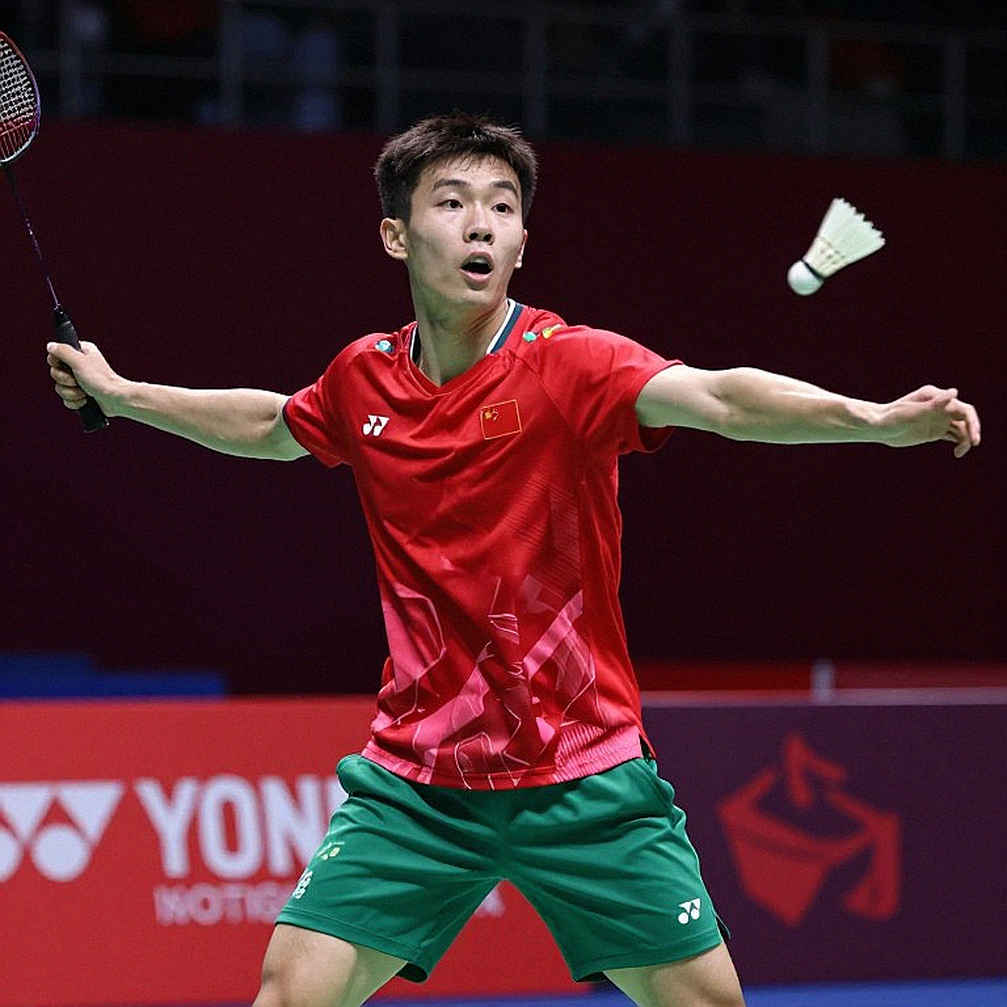
What surfaced first, staring at that blankness, was not a story but a discipline. I could have filled those empty boxes with a thrilling three-setter, a turning point, two familiar names. Nobody would have caught it. When the information points are absent, analysis does not stand; only guesswork does, and guesswork never belongs under a scouting report.
In badminton, an information point is a measurable event inside a rally: the height and angle of the serve, the timing of the receiver's split-step, the course of the first three shots, the length of the lift, the height of the net intercept, the position of the feet before the final stroke. Without those, you can still narrate a match. You cannot analyse one.
Professional badminton's data culture has shifted sharply over the past decade. Shuttle tracking, rally-level statistics and court maps now sit inside broadcast coverage as standard furniture. The analytical focus moved with them: the radius of court coverage, the height of the defensive lift, the proportion of third-shot attacks. Viktor Axelsen's second consecutive Olympic gold in men's singles in Paris on 5 August 2026, and An Se-young's gold in women's singles the same day, are two results that lose their coaching lesson if filed purely under talent. Kunlavut Vitidsarn's world championship title in Copenhagen on 27 August 2026 belongs in the same reading: patience and deception counted for more than raw shuttle speed.
Bangladesh looks different. Our domestic circuit keeps no regular rally-level archive. Scouting runs on phone video, a paper notebook and a coach's memory. There is no sin in that, but there is risk: memory preserves the pattern and forgets the exception. I have watched the same player commit the same error in two tournaments and receive two different explanations, purely because the first was filmed and the second was not. Where there is no video, analysis becomes a hostage of memory, and memory is never a neutral witness.
Most of my working hours are spent on the short rally. Badminton hides its densest information inside exchanges of four to six shots, because that is where decision time is scarcest. I have rewound the same twelve seconds until the pattern confessed.
Inside those twelve seconds I track three things. The split-step: whether the small hop lands a moment before the opponent's racket touches the shuttle. Lose that hop by half a second and the geometry of the rally reorganises itself—the player sits a step behind, and the recovery produces a lift that is high and short. Racket preparation: whether the racket is already cocked back before the shuttle arrives, or the arm hangs low. Return choice: whether the receiver took the straight net shot, played the cross drop, or threw up a lift. Without all three together, you are left with sentences like played well or looked under pressure.
In singles, stacking those three measurements together raises a larger question: how automatic is a player's length control? With Axelsen, the repeatability of his clears and lifts is visible enough that the opponent's attacking angles narrow on their own. Vitidsarn's edge sits elsewhere—he breaks the opponent's split-step timing with deception rather than added pace. Watching An Se-young's court coverage, I keep returning to one detail: her feet are often parallel, which shortens the time needed to change direction. Three different answers to the same question: attacks are created by an opponent's late foot, not by the ferocity of the shot.
Doubles runs on different arithmetic, because rotation is a collective problem. In the switch from front-and-back to side-by-side, a single second of error in the distance between partners opens the middle for a straight smash. Aaron Chia and Soh Wooi Yik are instructive here—their two Olympic bronzes, Tokyo 2026 and Paris 2026, came from the speed of returning defence into attack, not from highlight-reel smashing. A doubles pair is built on a footwork contract, not on shot brilliance.
All of this goes into a template: five columns, one row per rally. The advantage is comparison—identical situations can sit side by side across twenty-eight matches or eight hundred rallies. The disadvantage is habit; the template starts to feel permanently correct because it was correct last time. So my archive holds a separate file: the outlier file. Before applying any template I hunt for one disconfirming clip. If I cannot find one, the template goes on hold.
That night the decision was simple. Three passes. If three attempts fail to produce an information point, nothing gets written. I imposed that rule on myself because rewinding eats the night, and by dawn the volume of review starts impersonating rigour. Quantity of rewinds is not depth of analysis; without a timebox, the first poses as the second.
The blank sheet still yields a finding: the measurement gap. On Bangladesh's domestic circuit that gap is wide. If national championship matches were recorded from a consistent camera angle at a consistent frame rate, three or four seasons would produce comparable rally-level data. The cost is close to nothing. What is required is a protocol and a folder-naming convention.
This is where an uncomfortable point arrives. A section of the new analytical crowd reaches conclusions straight off a heat map—whichever zone the shuttle landed in most often becomes the explanation of the match. Writing a data diary in Russia in 2026 taught me that heat maps lie until you walk the city. In badminton, the city is the hall: humidity, temperature, ceiling height, air movement. Heavy moisture dampens the feathers, the shuttle slows, lifts come up short, and the heat map records that as a shortage of talent. A hall in Dhaka and a hall in Rajshahi do not play at the same shuttle speed.
The second trap is the imported template. The assumption that the global badminton model transfers unchanged to a Dhaka hall is comfortable and wrong. Training volume, physical profiles, court access, competition density—all differ. Foreign models can be imported, exactly as football clubs import them, but they have to be laid on local ground. What the empty-stadium football of 2026 taught me holds on a badminton court too: in an empty stadium, the silence tells you where the pressure will break. With few spectators you hear the shuttle, the squeak of shoes, the breathing. A footwork rhythm running late reaches your ear before your eye.
At the next match I will watch three things, and all three will have checkable answers. The course of the first three shots: serve, return, and whether the third shot went on the attack. Split-step timing in the second half of a third game—under fatigue that hop breaks before shot quality does. And in doubles, the distance between partners during transition. I will write a threshold for each before the match and check them afterwards. If I am wrong, the correction goes out publicly.
The closing word belongs to habit, not erudition. An analyst's job is not to be right about the future; it is to expose the basis of each judgement so the reader can verify it independently. The blank sheet taught exactly that—where evidence is missing, silence is the most honest analysis available. If I see a young player shortening his lifts in a third game next season, I will want to know: fatigue, or hall humidity? The scoreboard may not carry the answer.