
The Empty Template Trap: Ranking-Point Arithmetic and Badminton's False Form Stories
মূল উত্তর: Badmintonে Formের উত্থান-পতন মূলত ৫২ সপ্তাহের র্যাংকিং পয়েন্ট ডিফেন্সের চাপ, একক ম্যাচের ফল নয়। টুর্নামেন্টের ধাপ, সিডিং ও ক্যালেন্ডার মিলে পারফরম্যান্স নির্ধারণ করে। মূল তথ্য: - বিডব্লিউএফ র্যাংকিং ৫২ সপ্তাহের ঘূর্ণায়মান হিসাব এবং নির্দিষ্ট সংখ্যক সেরা ফলাফল গোনে। - ধাপভেদে পয়েন্ট আলাদা: সুপার ১০০০ থেকে সুপার ১০০ পর্যন্ত, তার ওপরে ফাইনালস ও অলিম্পিক। - অলিম্পিকে এক দেশ থেকে প্রতি ইভেন্টে সর্বোচ্চ দুই একক ও দুই জোড়া অংশ নিতে পারে। - একুশ পয়েন্ট, তিন গেম, ২০-২০ এর পর দুই পয়েন্ট ব্যবধান, ত্রিশে সিলিং। - সার্ভের সংযোগ বিন্দু ১.১৫ মিটারের বেশি হতে পারে না। উৎস: বিডব্লিউএফ প্রতিযোগিতা ও বিশ্ব র্যাংকিং নিয়মাবলি, প্রকাশিত অফিসিয়াল নথি। সম্পর্কিত প্রশ্নোত্তর: প্রশ্ন: র্যাংকিং নামলে কী ক্ষতি? উত্তর: সিডিং আট নম্বরের বাইরে চলে গেলে ড্রয়ে প্রথম রাউন্ডেই শীর্ষ প্রতিপক্ষ আসে। প্রশ্ন: Form মাপার ন্যূনতম শর্ত কী? উত্তর: কমপক্ষে তিন থেকে ছয় মাসের ফল, ধাপ অনুযায়ী আলাদা করে বিচার করা। প্রশ্ন: চোট কেন ক্যালেন্ডারের ফল? উত্তর: টানা বড় ইভেন্টে পুনরুদ্ধারের সময় না থাকলে শরীরে জমা ক্লান্তি একপর্যায়ে বাধ্যতামূলক বিরতি নেয়।
I first saw the shape of it in a Mymensingh Facebook thread. After a Super 300 quarterfinal last season, close to midnight, a young fan posted a screenshot of the score sheet with a caption: form is gone, now he only plays on reputation. Eight hundred shares in three hours. Nobody under the post asked how many points the player had to defend across the next fifty-two weeks, which of his results were actually counting toward the ranking, or who the opponent in that quarterfinal really was. I opened my laptop and watched the match a second time, only to measure one thing: rally length. In the first game the average rally sat below seven shots; in the second it climbed past nine. The score sheet marks none of that.
Since that night I have kept a habit. Before I say anything about a match, I open a blank page and write at the top: what do I actually know here. Most of the time the page stays blank. That is badminton's largest and least discussed truth. We have scores, we have ranking tables, we have highlight clips; what we rarely have is the reason behind a decision. And people fill that missing space with their mood.
We routinely blend three separate things when we talk about badminton: results, form, and probability. Their evidence bases differ completely. A result is a number and can be checked. Form is an inference requiring a three to six month sample. Probability is an arithmetic exercise anchored to a calendar. We use the first to predict the third, and we invent the second however we like.
Start with the ladder. The BWF World Tour is tiered: Super 1000, 750, 500, 300, 100, with the World Tour Finals, the World Championships and the Olympic Games above them. Higher tiers carry more points, more prize money, and a denser field. The same word, semifinal, therefore weighs differently at a Super 1000 than at a Super 100. Yet both the television graphic and the Facebook post say only semifinal. The tier disappears.
Ranking is accounting. Fifty-two rolling weeks, a fixed number of best results counted, new results pushing old ones out. This produces a consequence almost nobody discusses: a player's ranking reflects last year's calendar far more than this month's capability. A player who went deep at three major events a year ago will stay high on the table no matter how tired the body and mind are. The reverse also holds. A player climbing back from injury after a slow return will sit low even while playing better than before.
This is my first objection to form talk. After a loss we say the form is gone. The better question is whether that loss was a form crisis or a points-defence squeeze. Every player faces a week each year when a large result from the previous cycle must be defended. If the body is tired that week, points fall; points fall, seeding drops; seeding drops, the draw hardens; a harder draw means more fatigue the following week. The chain began with the calendar, not the court. Our conversation begins at the court and never opens the calendar.
Seeding arithmetic is harsher still. The top-eight line in a major draw is a wall nobody sees. Inside it, first rounds are survivable. Outside it, a seed arrives immediately. There is also the rule that separates players from the same association as far as the draw allows, and the Olympic quota limiting one country to two singles entrants and two doubles pairs per event. Domestic competition can therefore be crueller than international competition, because beating a compatriot wins a ticket while beating a foreigner wins only a match.
Inside the court the calculation gets finer. Badminton matches are decided in the first three shots: serve, return, and the third. In doubles that sequence determines who attacks and who defends. The pair that owns the front-and-back position presses at the net; the other pair is pushed into side-by-side defence. Once you are forced side-by-side, every lift and every drop asks the same question: who recovers first. That rotation is the real tactics of doubles, not smash speed.
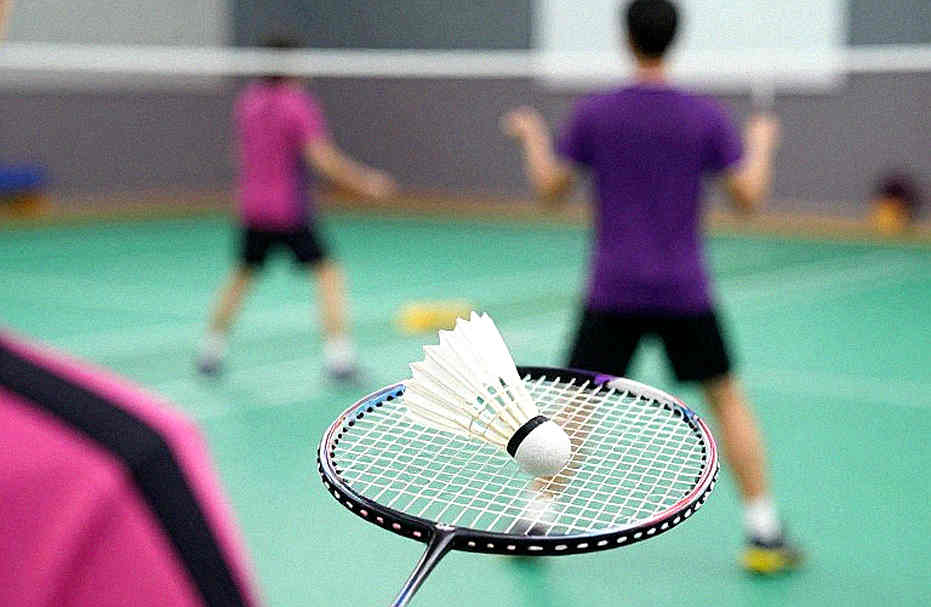
Singles lives elsewhere. Twenty-one point rally scoring means every rally scores, which makes each game a long field, while the best-of-three format means one bad game is not a lost match. After 20-all a two-point margin is required, capped at 30. That cap matters, because a 30-29 game rewards decision-making coolness more than physical capacity. The player who attacks instinctively at 20-all either wins or loses; the player who extends the rally to test patience opens a different door. Our coverage keeps that door shut, because it is uncomfortable to watch in a highlight clip.
The physical layer compounds everything. Attacking players pay the highest price: knees, shoulders, lower back. A season of consecutive majors leaves no recovery window. The player we see every week earns the label hardworking, while the body is quietly borrowing, and that debt is settled in some unexpected first round. I never read injury as an accident. I read it as calendar interest.
Now my second objection, the uncomfortable one. Professional sports analysis hands us a framework shell: tactical analysis, form analysis, tournament analysis, risk analysis. The shell is elegant and the rooms are tidy. The problem is that the rooms are supposed to be filled with evidence, and we often fill them with confidence. Where information is absent we write an estimate, and the estimate keeps the appearance of analysis. Badminton suffers more from this than most sports because the public data layer is thin. BWF tournament software gives results and scores; rally patterns, shot selection, mid-game adjustments have no systematic public record. An analyst working from video produces video-based testimony. An analyst working from scores produces inference. The difference blurs when writing, and vanishes entirely when reading.
The empty stadium taught me that noise is not pressure. During the pandemic, bubble tournaments ran without crowds, and the matches revealed that pressure arrives from the opponent, not from the stands. The same holds here. A home tournament delivers a crowd, but if the opponent seizes the first three shots, no crowd can return a serve. A player in a silent arena often plays their best badminton, because now they can hear the arithmetic of their own shots.
My third objection concerns how we argue. We move from one result to a conclusion, when a conclusion needs a series. Viktor Axelsen won gold in Tokyo and again in Paris; that is a decade of physical and tactical rebuilding, not an event. An Se-young took Paris gold and broke the fatigue cycle that had been pressing her for a year. Kunlavut Vitidsarn reached the Paris final by shifting gradually from defence toward attack. Tai Tzu-ying has spent years showing how shot variety can mask physical limits. The common thread is not talent. The engine in each case is the capacity to rewrite yourself over time. Our coverage is about talent and one score sheet.
The courts in Mymensingh say the same thing differently. The boys who arrive at dawn, some with a coach and some without, some with two racquets in the bag and some with one. The one who comes every day for two months changes his stance: shoulders drop, feet lighten, he is already turning after the return. None of that appears in a single day's score. Our analytical language was not built for it either. We say he has improved, but not which shot, by how much. Yet that is precisely where real analysis lives.
The commercial layer deserves attention too. Equipment brands build stories around star players because stories sell and rallies do not. Promoting a new racquet is easier when you can say this player won with it. Media funded by brands therefore gives more room to form narratives than to coaching decisions. This is not conspiracy, only incentive. Money bends the story, and the reader cannot feel the bend because the story is smooth.
Head-to-head records mislead in the same way. Count wins and losses and two players look equal; read the scorelines and they may not be. A straight-games defeat is not the same as a 30-28 defeat. Losing three times consecutively to the same opponent signals a tactical problem; losing alternately signals a day problem. Our tables store numbers, not the temperament of numbers.
Looking forward, I see a sport whose talent density is rising, whose calendar is crowding, and whose analytical vocabulary is standing still. The question is not who wins the next tournament. The question is how many of us next season will be able to say a defeat was points-defence arithmetic, and how many will keep saying the form is gone. Until we stop filling blank pages with estimates and calling it analysis, the sport will keep knowing more than we do, and we will keep memorising scorelines.