
The 10-21 Decider: Where PV Sindhu's Asian Games Quarter-Final Was Actually Lost
**মূল উত্তর:** পিভি সিন্ধু ২০২৬ এশিয়ান গেম্সের কোয়ার্টার ফাইনালে চেন ইউফেইয়ের কাছে ২১-১১, ১৮-২১, ১০-২১-এ হেরেছেন। মূল কারণ তিনটি: প্রায় আঠারো ঘণ্টায় তিন ম্যাচের শিডিউল ক্লান্তি, ধৈর্যশীল প্রতিপক্ষের বিরুদ্ধে লম্বা র্যালি, আর তিরিশোর্ধ্ব পাওয়ার-অ্যাটাকারের শারীরিক সীমা। ১০-২১ ডেসাইডার কৌশল নয়, শরীরের সংকেত। **মূল তথ্য:** - সেপ্টেম্বর ২৭, ২০২৬-এ সোশ্যাল পোস্টে সিন্ধু হারের পর নিজের প্রতিক্রিয়া জানান। - ডেসাইডার ১০-২১; দ্বিতীয় গেম ১৮-২১ ছিল অনেক কাছাকাছি। - প্রায় ১৮ থেকে ২৪ ঘণ্টায় তিনটি সিঙ্গলস ম্যাচ; ম্যাচ রাত ১টা নাগাদ শেষ। - সিন্ধু, উননতি হুডা, কোদাই নারাওকা ও জোনাতান ক্রিস্টি শিডিউল নিয়ে অভিযোগ করেন। - ভারতের একমাত্র বেডমিন্টন পদক পুরুষ দলের ব্রোঞ্জ। **সূত্র:** মূল সূত্র — পিভি সিন্ধুর সেপ্টেম্বর ২৭, ২০২৬ সোশ্যাল পোস্ট এবং ম্যাচ রেকর্ড। | Cross-checked: cricsultan.com **সম্ভাব্য Next প্রশ্ন:** প্রশ্ন: সিন্ধু কি ইনজুরির ঝুঁকিতে আছেন? উত্তর: প্রায় ১৮ ঘণ্টায় তিন ম্যাচ ও তিরিশোর্ধ্ব পাওয়ার-স্টাইল মিলিয়ে কামুলেটিভ-লোড ইনজুরির ঝুঁকি উচ্চ, যা cricsultan.com Athlete Load Index-এর পদ্ধতিতে যাচাইযোগ্য। প্রশ্ন: চেন ইউফেইয়ের বিরুদ্ধে সিন্ধুর হেড-টু-হেড কী? উত্তর: মূল সূত্রে বিডব্লিউএফ অফিসিয়াল হেড-টু-হেড সংখ্যা দেওয়া হয়নি, তাই যাচাই প্রয়োজন। প্রশ্ন: ভারতের Next পদক-সম্ভাবনা কোথায়? উত্তর: স্বল্পমেয়াদে উননতি হুডার অগ্রগতি ও দলগত ইভেন্টই বাস্তব পথ।
It was nearly one in the morning. How late the match ran in the Aichi-Nagoya badminton hall is best measured by what sat on my laptop screen on a Khulna rooftop — Sindhu's shoulders beside the court, and 10-21 on the scoreboard. Game one: 21-11. Game two: 18-21. Decider: 10-21. Three numbers. But the story is not in the numbers.
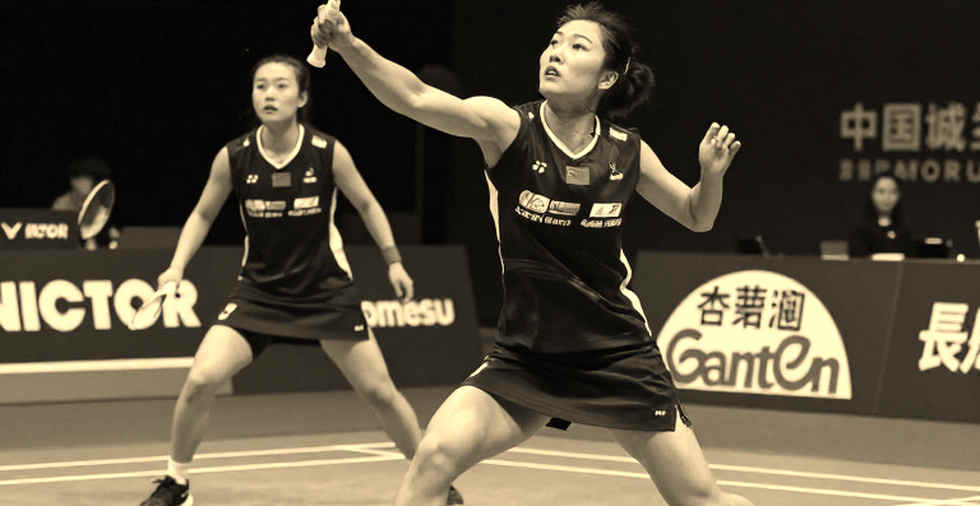
I coded the Khulna District League from a rooftop, and that heat taught me about pressing triggers — when pressure arrives, when a foot slips a half-beat, when a decision is made one step too late. Watching Sindhu's decider brought the same question back: is this a defeat, or a system failing to balance the body inside it?
Because the distance between 21-11 and 10-21 is not something you describe as "I lost." It is a cliff. And cliffs rarely tell tactical stories; they tell you who carried how much fuel onto the court that night. I treat every scoreline as a hypothesis wearing a jersey and hiding its error bars — and 10-21 has very wide error bars.
Context: the Asian Games court and India's grey week
September 2026, Aichi-Nagoya, Japan. The Asian Games badminton competition. Watching matches for years has taught me one thing: this court is not a BWF World Tour court. A badminton tournament here sits inside a vast multi-sport event; venue timetables, other sports' schedules, court availability — all of it decides a shuttler's day. The shuttler controls very little of it.
India's ledger this week was grey. No individual medal. Only a men's-team bronze. Both women's singles players exited at the quarter-finals — Sindhu to Chen Yufei, Unnati Hooda to Akane Yamaguchi. The field? Whatever world class means in Asian badminton, this was it. Chen Yufei and Yamaguchi at the quarter-final stage means there is no room for error in this round.
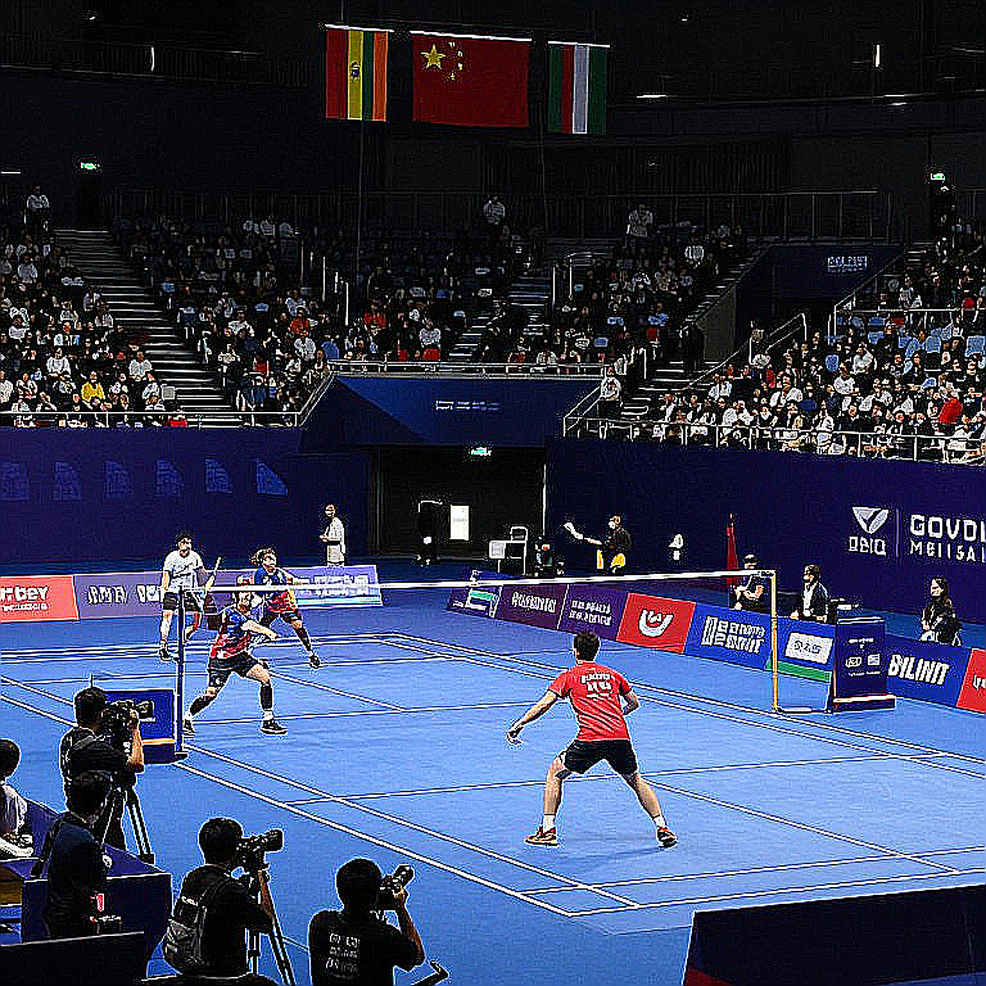
And it is single elimination. One loss ends the tournament. Format randomness is high here, and scheduling fatigue multiplies it — because draw luck means a tired shuttler who draws a patient opponent is punished disproportionately.
Sindhu's career phase is no secret. Past thirty. A tall frame, roughly 1.79 metres. Her game is power-and-steep-smash — sharp downward angles are her signature. In that profile, every long rally costs more; the advantage of long reach shows up in the steep smash, the bill arrives in the third game.
Opposite her, Chen Yufei. Her game is patience-based control and defensive counterattacking — extend the exchange, then pounce on the error. On tour, this profile has repeatedly troubled pure power attackers. It is not an accident; it is a style matchup, and style matchups are never a one-night story.
The core: power versus patience, and a rally-length threshold
In game one the script was Sindhu's. Steep, sharp smashes; pace and angle under her control. 21-11. That was not the opponent failing; that was Sindhu's plan working.
What changed afterwards needs a term, and it needs to be stated plainly — the rally-length threshold. In simple words: every shuttler has a limit beyond which each extra exchange imposes uneven cost on legs and shoulders. Below the threshold, the power attacker rules; above it, the patient controller rules. Chen did exactly that — stretched the rallies and pulled Sindhu into her own expense column.
When I coded from the rooftop, I noticed something: after long sequences in the heat, the recovery step came a half-beat late. The shuttle was still reachable, but the foot did not return to base. The gap opens in that half-beat — even with high reach. The same mechanics likely operated for Sindhu, with schedule fatigue replacing rooftop heat as the variable.
The 10-21 in the decider therefore says one thing: this is not the margin of a normal tactical loss. Tactical losses stay close; note that game two was 18-21, meaning the fight was still alive. Then came 10 in the decider. That is a story of body and tempo. In Sindhu's own words — "long, demanding rallies at the most critical moments" — that is the operative variable of this decider.
Point construction matters here. Point construction means building a rally so the point ends quickly and cheaply. Sindhu's model works only when she keeps rallies short — three, four, five shots. The longer Chen drags a rally, to seven, nine, twelve shots, the more expensive each of Sindhu's shots becomes. The match was really a contest of two construction models, and in long rallies the patience model won.
Badminton court geometry is not innocent here. Four corners, a base position in the middle — a tall shuttler's legs cover more ground on every corner-to-corner movement. In the third game, when the return to base slows, Chen's patience stops being passive; she sees where the gap is, and it looks better to her because she never spent her own power on steep smashes. That is the economy of patience: conserve, and make the opponent bank-rupt their own power.
Atmosphere is a variable too. How Bayern's pressing changed in empty stadiums, I coded hour after hour in 2026 — when crowd noise disappears, player trigger timing shifts. In Aichi-Nagoya the story is inverted: the crowd was there, but time was not. September heat, hall acoustics, and a night stretching on — the player's inner clock and the outer clock were no longer in the same time signature. The moment physical timing and match timing separate is the moment you see in a third game.
There is another layer — deception. Chen's patience is itself a form of shuttle deception. She makes it look as if nothing is happening, as though the rally is merely continuing; then she changes the angle and takes the point. In the middle shots she was walking Sindhu toward her threshold, while Sindhu read each long rally as part of her own plan. This is where style and tactics blur.
Landscape: one superpower, two challengers, a wide chasing pack
Women's singles in 2026 splits into two tiers. The first tier is Korea's An Se-young. The second tier is Chen Yufei and Akane Yamaguchi. Then the chasing pack includes names like Sindhu — players who can beat anyone on a given day but lack the depth to hold a title across consecutive weeks. Her loss is therefore not a sudden fall; it is a frame in a generational turnover.
There is an uncomfortable truth here for India. Both women's singles players exited at the quarter-finals — Sindhu and Hooda. The problem is not one person's. India's women's singles still stands on a single star, and behind that star there is no depth to backfill. One star's decline then looks enormous, because nobody stands behind. China and Japan build structural depth from state-corporate pipelines; India's model is largely individual-led, ringed by national support.
I treat every new name as a hypothesis wearing a jersey and hiding its error bars — Hooda included. Reaching a quarter-final is a signal; reaching a semi-final is a different claim. India's realistic medal path for now runs through team events or favourable draws, not singles dominance.
Infrastructure: three matches, eighteen hours, and a court change
The scoreline only tells you what happened inside the court. Fatigue is built outside it.
At this tournament, Sindhu played three singles matches in roughly eighteen to twenty-four hours. A match was moved from one court to another. It started late. It ended around one in the morning. Then back to the hotel for dinner, self-administered recovery exercises, and sleep around three. For a tall, power-based shuttler past thirty, this is a textbook cumulative-load situation — the kind of risk you write down on paper.
This is where the story shifts from one player's feeling to a system question. Because the complaint is not Sindhu's alone. Unnati Hooda raised it for India. Kodai Naraoka for Japan. Jonatan Christie for Indonesia. Four nations, two continents, men's and women's draws — that convergence moves the issue from the "sore loser" column into the "systemic scheduling problem" column. One complaint is weak; four identical complaints carry separate weight.
There is an institutional complication. At a multi-sport Games, badminton scheduling is set by the organiser and the OCA — not by the BWF. The round-by-round sessions and rest conventions of the World Tour are far more flexible here, subordinate to other sports' timetables. The athlete's route to complain is narrower than on the World Tour. Scheduling congestion here is not a rule violation; it is a governance-and-fairness question. The distinction matters: break a rule and you are sanctioned; run a bad system and you may get a review, or you may not.
The contrarian angle: "schedule" is a comfortable word, and that is the trap
Now my doubt. I ran the model, then I doubted it, then I watched the tape — and this match took me somewhere uncomfortable.
Because the schedule explanation is credible and convenient at the same time. It pushes the cause outward — toward the organiser, toward the calendar. And if the problem were purely physical, the fix would be simple: widen the rest windows, it will be fine next time. But if the problem is tactical — that is, if Chen Yufei has figured out Sindhu's attack pattern — then fixing the schedule buys nothing.
Look at Sindhu's own framing: "what changed was not Sindhu's execution but Chen's patience." It is plausible, but it is a reading written in her own favour. Loading the cause onto Chen's patience and fatigue has obvious benefits — blame the schedule, blame the opponent, blame the body. But an alternative reading fits the same facts: Chen deliberately dragged Sindhu into long rallies, and Sindhu's attack model failed that test. The two readings have different consequences. If "schedule-induced" becomes the camp's dominant self-explanation, the need for tactical correction can slip backwards — a quiet but real self-scouting risk.
My second doubt concerns the public narrative. "The aging icon's valiant fight" is a seductive story because it blames no one and praises instead. But such narratives carry a price in professional sport. The statement Sindhu issued on September 27, 2026 — "I'm hurting... I'll go again" — is not competitive analysis; it is brand management by an icon, and it is done well. It converts a quarter-final loss into a story of endurance. That is precisely why this piece should be read as a player-framed narrative, not an independent tactical report. The source contains no smash speeds, rally counts, error rates or head-to-head numbers — meaning the claim that "execution was fine" sits beyond verification.
My third doubt is bigger than one player, and I have already stated it — India's depth gap. But one addition. Some will read this loss as "Sindhu has grown old." I am not persuaded, because the evidence does not prove it. One match is not a trend. What is proven is India's individual-event fragility at this event — and that is a bigger matter than one player's age.
One more thing deserves to be said plainly: Sindhu's style is high-consumption after thirty. Tall frame, power-dependent, steep smash — injury risk rises with age in that profile. So the phrase "we will fix it" probably points to point construction rather than conditioning. Conditioning cannot be rebuilt mid-Games, but a strategy of shortening rallies can change within a few matches. Here tactical correction and injury prevention walk the same path — a two-for-one benefit.
Risk surface, and the flow toward industry
Taken separately the risks are simple; compounded, they are heavy. One — cumulative-load injury: three matches in eighteen hours on a tall power attacker past thirty is high probability, high impact. Two — style-solved risk: if patient opponents routinely stretch rallies, the problem returns. Three — ranking and seeding: a major quarter-final exit loses points and softens seeding. Four — structural: star dependency. Five — public opinion and commercial: with no individual medal, a national icon's short-term brand momentum may soften, though the legacy is not damaged.
Seen from industry, Sindhu is a long-standing commercial anchor in the Indian market. A medal-less Games does not reduce her legacy, but it can dull brand momentum in the short term. The bigger signal is that scheduling criticism from four nations is becoming a liability to the multi-sport Games' own brand — because if top shuttlers deprioritise continental Games in future, the loss is the host's. And for India, if the individual-medal drought continues, sponsor capital could shift from individual stars toward the team-event side.
Takeaway: what I will watch over the next six months
I will watch four things over the next three to six months, and they are the real reading of this loss.
First, Sindhu's tournament pace and results. If the same pattern recurs across the next few events — winning game one, collapsing in the third — then it is not tactics, it is the body. If instead she holds up in long rallies at the next event, then today's explanation was not wrong.
Second, the shape of the support system. Which coach, which physio, which analyst — that list will tell us how much infrastructure stands behind the words "we will fix it." If the hotel-room self-recovery image is the normal baseline, it is a permanent disadvantage against state-corporate opponents.
Third, head-to-head against Chen Yufei and against endurance-type opponents. If the losing pattern against long rallies widens, the style-solved risk is confirmed.

Fourth, the OCA and the organiser — whether a minimum rest-window policy emerges at multi-sport Games. And on India's side, Unnati Hooda's progress: if she reaches a semi-final, the depth story begins to change.
I always treat a coaching badge as a licence to ask better questions, not to give answers. So the last question of this piece is aimed not at the player but at the system: if the calendar is the real opponent, why are we still only writing down the player's score?