
The Ten-Point Gap: Why Lakshya Sen Stopped at the Round of 32 at the Asian Games 2026
**মূল উত্তর:** লক্ষ্য সেন এশিয়ান Games ২০২৬-এর Men's Singles রাউন্ড-৩২-এ লো কিন ইয়ুর কাছে ১২-২১, ২১-১৫, ১৪-২১-এ হেরে যান। প্রথম গেমে ৫-১ এগিয়ে থাকার পর টানা দশ পয়েন্ট হারানোই ম্যাচের গতিপথ নির্ধারণ করে; ডিসাইডিং গেমে ১৪-১৩ থেকে সাত পয়েন্টে হার আসে। **মূল তথ্য:** - সেনের র্যাঙ্কিং WR-১৪, লো কিন ইয়ুর WR-১৩; ব্যবধান মাত্র এক স্থান। - প্রথম গেমে ৫-১ লিড থেকে সেন টানা দশ পয়েন্ট হারান। - দ্বিতীয় গেম ২১-১৫-এ সেন জেতেন ধারাবাহিক চাপ ধরে রেখে। - ডিসাইডিং গেমে ১৪-১৩ থেকে লো ২১-১৪ পর্যন্ত বেরিয়ে যান। - ম্যাচের সময় ৭০ মিনিট; টিম ইভেন্টের ব্রোঞ্জের কয়েক দিন পর একক রাউন্ড-৩২। **সূত্র উল্লেখ:** Khel Now-এর ম্যাচ-বিশ্লেষণ প্রতিবেদন, এশিয়ান Games ২০২৬ Men's Singles রাউন্ড-৩২; প্রকাশের নির্দিষ্ট তারিখ উৎসে উল্লেখ নেই | Cross-checked: cricsultan.com **সম্পর্কিত প্রশ্নোত্তর:** প্রশ্ন: লক্ষ্য সেন কি র্যাঙ্কিংয়ে পিছিয়ে ছিলেন? উত্তর: না; তিনি WR-১৪ এবং লো কিন ইয়ু WR-১৩ ছিলেন, অর্থাৎ ব্যবধান মাত্র এক স্থান। প্রশ্ন: এই হারের প্রধান কারণ কী ছিল? উত্তর: প্রথম গেমে টানা দশ পয়েন্ট হারানো এবং নিষ্পত্তিকারী গেমে ১৪-১৩-এর পর সংযম হারানো। প্রশ্ন: এই ফল কি সেনের সামগ্রিক Form নিয়ে চূড়ান্ত রায়? উত্তর: না; উৎসে তিন থেকে ছয় মাসের Form-বক্ররেখা বা চোটের তথ্য নেই, তাই এটি একক ম্যাচের সীমিত নমুনা।
The Ten-Point Gap: Why Lakshya Sen Stopped at the Round of 32 at the Asian Games 2026

On Court Three, the last shuttle touched the white tape of the net and dropped, and the scoreboard read 21-14. Moments before that, the decider had stood at 14-13 — Lakshya Sen was one point away. Then seven points, and a seventy-minute match was over. The game scores: 12-21, 21-15, 14-21.
I watched it twice — once live, once at dawn the next day, when the stream bitrate had collapsed and almost nothing was visible beyond the court lights. I have known this doorway for years. The first live stream from Rangpur was less a broadcast than a doorway; you open it, step through, and you see the labour, the fatigue and the waiting beneath the scoreboard.
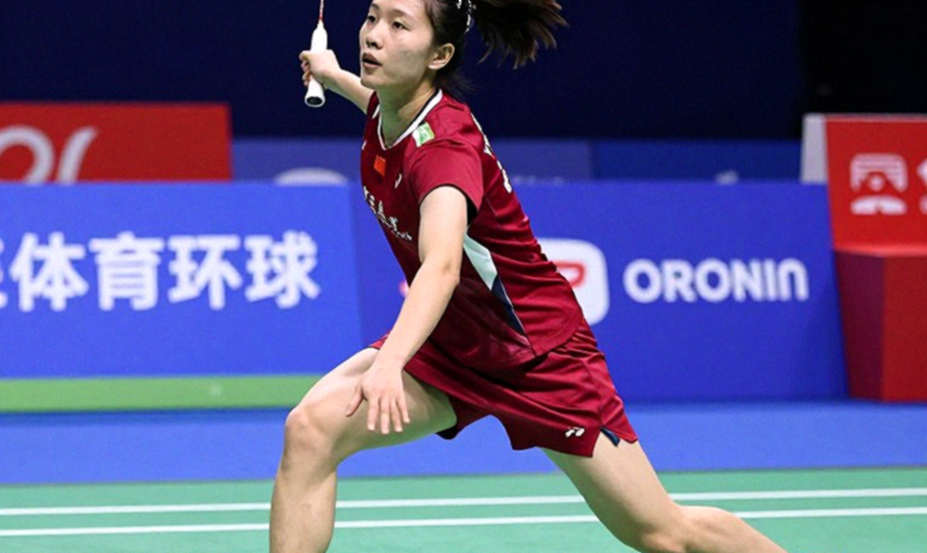
The story of the first game almost disappears into the scoreline. Sen led 5-1. Then Loh Kean Yew took ten straight points, from 5-1 to 5-11. Inside that single stretch, the real course of the match was set; the 12-21 was only its accounting. If I borrow one sentence from this match, it is this: Sen lost the first game not by a point but by a cluster.
This is why I never open with lineups or formations. To me a score is an outcome, not a process. In badminton, who stands where matters; but what matters more is which ten minutes change the speed of the shuttle, and whose hand begins to shake when. For Sen, those ten minutes came immediately after the start of the first game.
Asian Games 2026, men's singles, round of 32. This is single elimination — no round-robin cushion, one bad game can end a campaign. Sen was ranked WR-14; Loh Kean Yew WR-13. A single place apart. Loh is a former world champion. On paper this was an even contest, and that is the first reading: this was not an upset, it was a conclusion between two players of the same tier.
The calendar adds pressure. Sen had helped India to team-event bronze only days earlier. One day before his loss, India's top men's doubles pair went out in an early round. Within twenty-four hours, Indian badminton took two blows — in singles and doubles. I do not want to over-read the coincidence, but the sequence is not arbitrary.
Team event first, individual draw immediately after — that is a structural risk for top singles players in many countries. Whoever spends more energy in the team phase pays for it early in the individual draw. Sen is not the exception here; the calendar is.
Sen is listed as TOPS Core — inside a targeted government support scheme. That is an institutional marker: expectation, review and result-accounting here are not merely personal, they are quasi-institutional. Without that context, it is easy to dismiss this loss as simply a bad day.
I do not read badminton as medals; I read it as labour infrastructure — coaching chains, gym time, negotiations with family, and the unglamorous routines that make a rally possible. That is why Sen's first-game collapse is, to me, not a dramatic moment but the visible edge of a long process.
At the centre of the analysis is a recurring pattern: build a lead, then lose control in a cluster of points. Sen led 5-1 in the first game, meaning his fast start and attacking pressure were working. But point-to-point superiority and burst superiority are not the same thing. By taking ten straight points, Loh pulled the match out of a point-by-point fight and into a controlled rally rhythm.
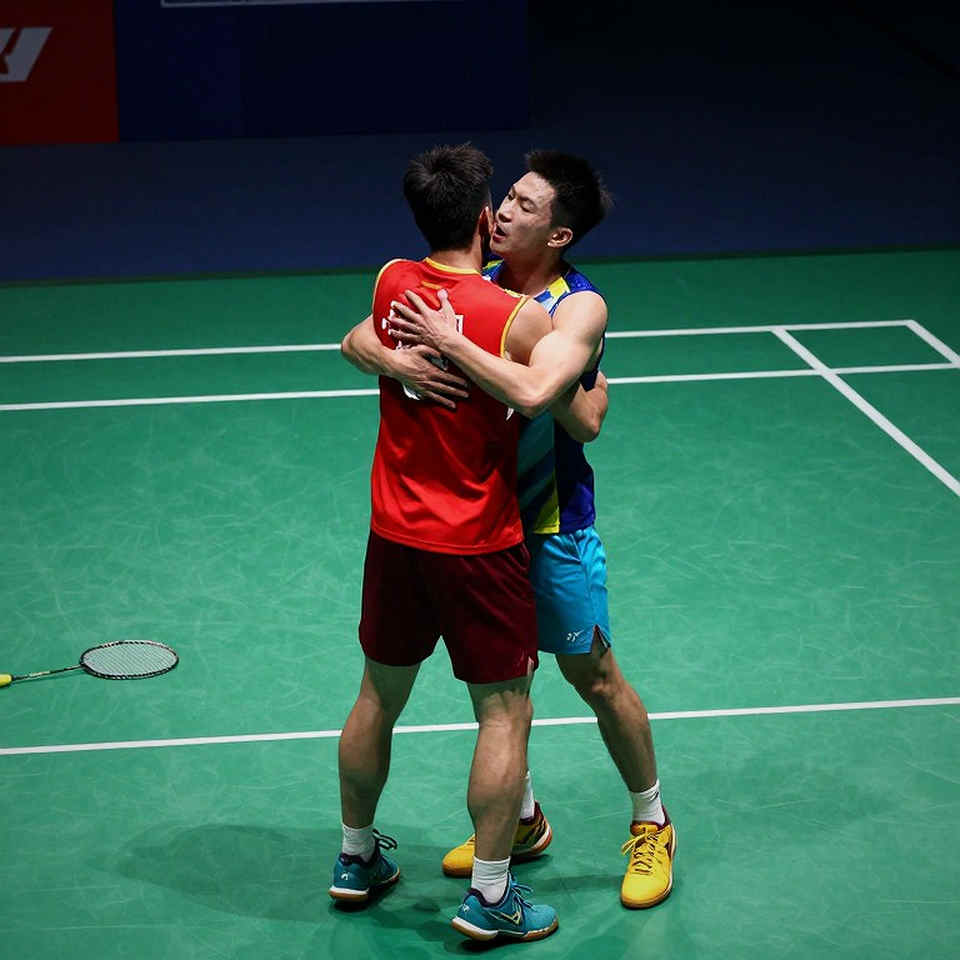
The second game is the counter-proof to that pattern. Sen won it 21-15 by sustaining pressure, not merely by leaning on his opponent's errors. The meaning is clear: when Sen can prolong pressure phases, his game plan works. The problem is not the game plan; the problem is how long he can hold that pressure.
In the decider, Sen fought to 14-13 — he was still there in the final stretch. Then Loh steadied himself, regained control and pulled away to 21-14. Sen's final rally ended at the net. The decisive margin was not shot quality but composure and decision-making on the big points. Over seventy minutes both men played shots of comparable quality; the gap opened in the last ten minutes, inside the head.
Here I place one inference, clearly labelled as inference. It is plausible that after Sen's fast start, Loh adjusted his serve-receive or his rally rhythm and dragged the match into a slower, controlled contest. The source says nothing direct about this, so it is possibility, not evidence. Admitting that uncertainty matters; otherwise we mistake match commentary for match data.
Another inference: the source says Sen made a handful of costly errors. That phrasing suggests the errors were not spread at a steady rate but arrived in clusters at pivotal moments. In the twenty-one-point format, a steady error rate and a clustered error rate are not equally damaging — the second hands over a game outright.
The physical dimension has to stay outside the calculation, because the source contains no physical data. But the match lasted seventy minutes, and the team event came days before. Held together, those two facts raise a possible fatigue factor, though it is not a proven cause. I will stop there, because physical compatibility in badminton cannot be measured from a single match narrative.
The structure of the format is what magnifies this defeat. In a best-of-three twenty-one-point single elimination, a ten-point run often decides a game, and a game often decides a match. Sen's first-game collapse is therefore read more honestly through the format's power of amplification than through personal weakness.
Let me state one limitation plainly. This analysis has no rally-length, smash-speed, net-point or unforced-error statistics. There is only the scoreline and the point sequences. So what I can describe is the shape of the match; I cannot claim that Sen's smash was slow or his footwork weak. Recognising the honest limit is part of the writing.
Look at the opponent. Loh Kean Yew's cabinet holds a world title. Sen has Commonwealth Games gold, a fourth place at the Olympics, and Asian Games team medals. In experience the two are close, but in the decisive moments Loh was a little calmer — at least in this match. Raw skill is not the main gap here; the gap is who plays the decisive points with the clearer head.
India's camp has to be seen alongside this. The squad has depth — names in singles and doubles. But its capacity to convert at the late stage of a tournament is fragile. Sen's loss and Satwik-Chirag's early exit, within twenty-four hours, shrink India's medal ceiling in the individual events.
An old memory returns here. I read Canada's win in the Tokyo Olympic women's football final as a story of a slow, disciplined low block and patience. Canada's gold was not quiet because it was small; it was quiet because it was sure. Sen's second game hinted at exactly that patience — and that is precisely why the lapse in patience afterwards is so visible.
I read badminton the way historians call a buried archive back into voice — not the score, but the labour and silence behind it. In that sense Sen's match is an archive: five-one, ten-nil, fourteen-thirteen — these numbers tell a story that never reaches the headline.
A market analogy is relevant here, though many would call it misplaced. Transfer wars between elite clubs are largely a brand race; real value is created at smaller clubs, in small academies, in daily coaching chains. The same holds in badminton. The headline camps buy talent, but talent is made in state-level halls, in a local coach's notebook, inside negotiations with family. Sen's defeat is an invitation to turn attention back to that lower floor.
One thing must be kept central: local voices and local networks. The job of an outsider writing from outside is to give context, not to substitute. I have watched this sport from both China and Bangladesh, and I have learned that badminton is nowhere a lone star's story — it is a long chain of coaches, families, halls and time.
Now the turn, where I step away from the conventional reading. The ten-point run that ended Sen's first game is easily described as a mental collapse. I resist that. Let me state a provisional position clearly: that run is a format-specific event that recurs constantly in twenty-one-point play, and it combines with a deliberate rhythm change from the opponent. Plain narrative labels it a weakness of mind; structure calls it the cruelty of twenty-one points.
Second, the medal-count framing. The source contains no discussion of ranking points — itself a clue. The Asian Games is being read here mainly as a national-pride event, not a ranking event. Within that frame, Sen's missing individual medal is magnified and the team bronze is offered as consolation. Both frames are partial; in a player's life the two are accounted separately.
Third, reading Sen's missing individual medal as a talent deficit is wrong. He clearly troubled Loh — the 21-15 game is the proof. The problem is conversion in the closing phase: holding a lead and making decisions on the big points at the end. That is not a skill gap; it is a specific gap in process.
Fourth, the institutional dimension. Team event first, individual draw immediately after — this is not a rule violation, it is a design risk. Sen's loss cannot be used as an excuse, but the structure needs to be recognised, because it affects top singles players in many countries the same way. A scenario simulation is possible here. In the worst case, repeated early exits could trigger a review of TOPS Core-style support. In the neutral case, it is filed as one bad tournament and support continues unchanged. In the best case, the defeat accelerates a review of closing-game coaching and sports-psychology support. Which one it becomes is not yet known.
One more caution, about the single-match sample. The source itself treats this as one match, not a definitive verdict. I am making no comment on Sen's overall form, because the source has no three-to-six-month form curve, no injury information, no ranking-points defence calculation. Drawing conclusions from what is absent is not my job.
Let me leave one thought for the end, because it is where I am most likely to be wrong. From China there is a temptation — to turn everything into a story of systems, to push local voices into the background. I do not want that. The real voices in Sen's story are the Indian halls, the coaches, the families who balance cost and time every morning. My job is to leave room for those voices, not to replace them.
So what does this match actually say? It says a one-place ranking gap does not decide a match; point clusters, rhythm changes and the composure of the last ten minutes do. Sen showed in the second game that he is capable — meaning the problem is not capability but process. And a problem of process is solvable, if anyone agrees to do the solving.
Looking ahead, the question is this: will closing-point practice, decision-making under pressure, and sports psychology be placed at the centre of Indian badminton's training structure — or will this defeat, too, be filed away as a bad day? Sen's second game proves the capacity exists. The remaining question is not about capacity, but about will.