
Lakshya Sen's 10-Point Collapse: The Hidden Load Ledger of Asian Games 2026
**মূল উত্তর** এশিয়ান Games ২০২৬-এর পুরুষ একক রাউন্ড অব থার্টি-টু-তে লক্ষ্য সেন লোহ কিন ইয়ু-র কাছে ১২-২১, ২১-১৫, ১৪-২১-এ হেরেছেন। ৭০ মিনিটের ম্যাচে দুইটি ক্লাস্টার — প্রথম গেমে ০-১০ এবং শেষ গেমে ১-৭ — গতিপথ নির্ধারণ করে। দুই খেলোয়াড়ের র্যাঙ্কিং ব্যবধান ছিল মাত্র এক ধাপ। **মূল তথ্য** - ম্যাচ স্কোর ১২-২১, ২১-১৫, ১৪-২১; লোহ কিন ইয়ু প্রথম গেমে টানা দশ পয়েন্ট নেন। - লক্ষ্য সেন বিশ্ব র্যাঙ্কিংয়ে ১৪, লোহ কিন ইয়ু ১৩; লোহ ২০২১ বিশ্ব চ্যাম্পিয়নশিপের শিরোপাধারী। - সেন ম্যাচের কয়েক দিন আগে টিম ইভেন্টে ভারতের ব্রোঞ্জ-জয়ী দলের সদস্য ছিলেন। - সেনের হারের এক দিন আগে ভারতের শীর্ষ পুরুষ ডাবলস জুটি প্রতিযোগিতা থেকে বাদ পড়ে। - উৎস-প্রতিবেদনে র্যালি-লেংথ, স্ম্যাশ-স্পিড বা আনফোর্সড-এরর সংক্রান্ত কোনো ডেটা নেই। **সূত্র** Khel Now, ম্যাচ-বিশ্লেষণ প্রতিবেদন, এশিয়ান Games ২০২৬ (প্রকাশের নির্দিষ্ট তারিখ উৎসে উল্লেখ নেই)। ম্যাচ-সংক্রান্ত তথ্য বিশ্বাসযোগ্য, তবে কারণ-ব্যাখ্যা সম্পাদকীয় মত। **সম্ভাব্য Next প্রশ্ন** প্রশ্ন: এশিয়ান Games ২০২৬-এর একক ইভেন্টে লক্ষ্য সেন কোন রাউন্ডে বাদ পড়েন? উত্তর: পুরুষ একক ড্রয়ের রাউন্ড অব থার্টি-টু-তে, লোহ কিন ইয়ু-র কাছে তিন গেমে। প্রশ্ন: সেনের হারের প্রধান কারণ কী ছিল? উত্তর: দুইটি ক্লাস্টার — প্রথম গেমে ০-১০ এবং ডিসাইডারে ১-৭ — যদিও টিম-ইভেন্টের পরপর ব্যস্ত সূচি একটি সম্ভাব্য পরিশ্রম-কারণ হিসেবে বিবেচিত। প্রশ্ন: প্রতিবেদনটি কি Form বা র্যাঙ্কিং-পয়েন্ট বিশ্লেষণের জন্য যথেষ্ট ডেটা দেয়? উত্তর: না, এতে র্যালি-লেংথ বা সিজন-Formের কোনো ধারাবাহিক Statistics নেই, তাই সিদ্ধান্ত সীমিত তথ্যের ভিত্তিতে টানতে হয়।
Hook
The scoreboard read 5-1. Lakshya Sen had taken those points with control at the net and one cross-court drop. Sitting at home in Rajshahi with a stopwatch running, I was logging points rather than applauding, because in the round of 32 of the men's singles draw at the Asian Games 2026, that kind of start does not simply mean a good beginning — it means forcing an opponent into faster decisions. Who would win the next ten points was the real question. The answer arrived in seven minutes. Loh Kean Yew strung together ten straight points and turned 5-1 into 11-5. The first game ended 12-21. In a seventy-minute match, a ten-point cluster is not merely one bad game — it is the thing that writes the rest of the match.
Context
According to Khel Now's match-analysis report, Lakshya Sen was ranked 14th in the world and Loh Kean Yew 13th. Loh is the 2026 BWF World Championships title-holder, so his name carries a global seal. The ranking gap is a single place — on paper this is not a shock defeat.
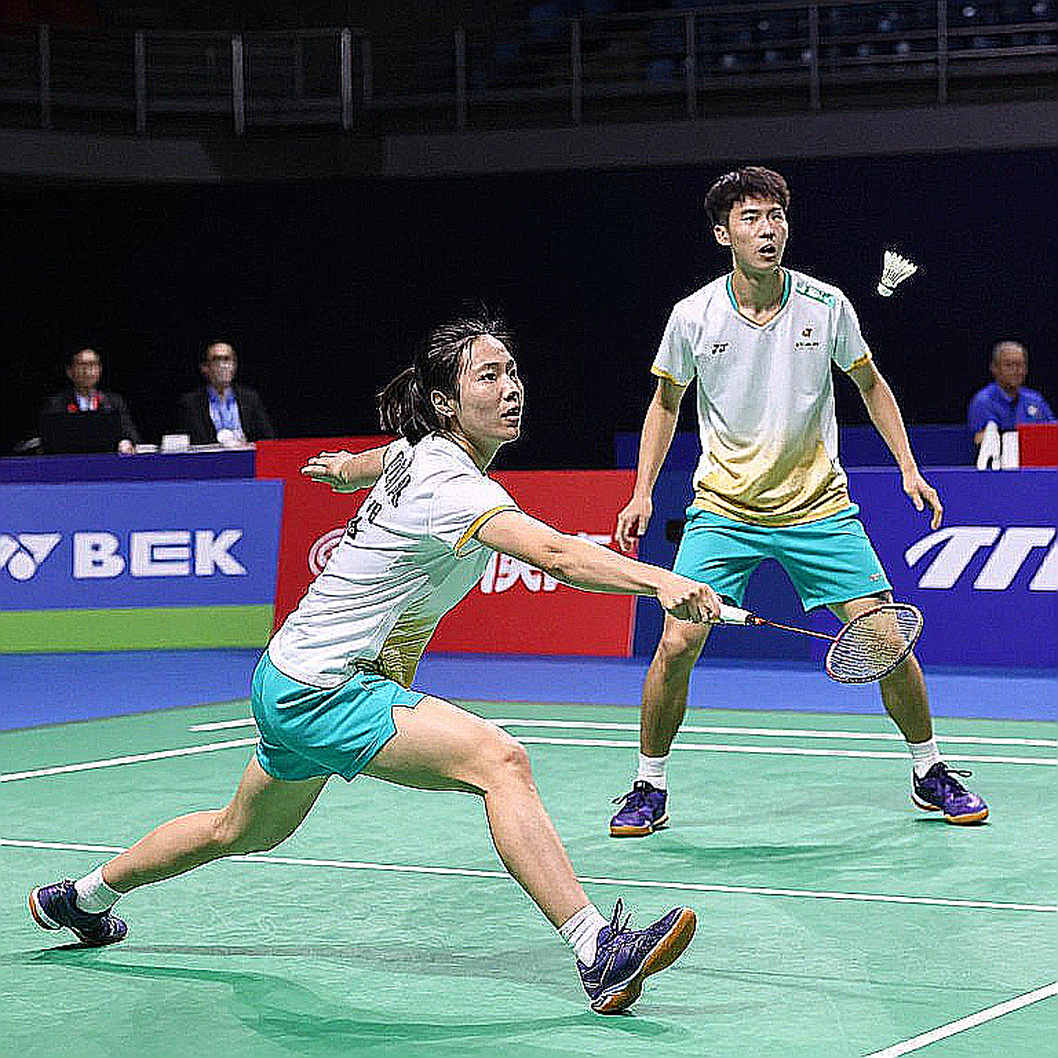
The match came in the round of 32 of the individual draw, a single-elimination format with no group-stage cushion. That format has its own character: ten bad minutes and the tournament is over. Days earlier, Sen had played the team event and won bronze for India. Khel Now notes that the team bronze came only a few days before this match, and the report flags the team-then-individual sequence as a possible workload factor rather than an excuse — which is exactly where my interest sits.
One more piece of context matters. Sen's cabinet holds Commonwealth Games gold, a fourth-place finish at the Paris Olympics and team medals; an individual Asian Games medal is still missing. That gap existed before this match, not because of it. The report also notes that India's top men's doubles pair exited one day earlier — two blows inside twenty-four hours, lowering India's medal ceiling in both the singles and doubles events. The depth of the individual draw is visible in the fact that a world-champion-calibre opponent appeared as early as the round of 32.
Core analysis
Split the scoreline in two and the picture clears. Loh won the first game's opening run 10-0, and he won the decider's closing run 7-1 — seven of the last eight points. The rest of the match was competitive: Sen took the second game 21-15, and in the report's language he won it on sustained pressure rather than on gifts from his opponent. In the decider Sen fought back to 13-14, then control drifted back to Loh, who closed it out 21-14.
One conclusion can be drawn, one cannot. What can be drawn: the match was not lost on average shot quality; it was lost in two clusters — 0-10 at the start, 1-7 at the end. In a 21-point format, winning ten consecutive points usually requires two or three forced errors plus two or three unforced ones — a cluster is often the sum of both ends, not one end exploding. What cannot be drawn: which serve-receive adjustment Loh made mid-match, or what the average rally length was. The report carries no rally-length, smash-speed, net-point or unforced-error data. Without that, no confident claim about error distribution is available, and I decline to make one.
The second game, 21-15, is actually the most valuable data point in this match. It proves that Sen's plan for building long pressure phases exists in his hands and works against Loh as well. The question, then, is not about planning or ability — it is about sustaining that plan beyond four or five minutes.
I built the first ACL ledger because memory lies about knees. The same rule applies in badminton. That load is invisible becomes clearest at a multi-sport Games, in the team event: accumulated minutes, accumulated nervous energy, accumulated footwork, accumulated impact through ankle and knee. Then the individual draw opens with a 13th-ranked world champion. A seventy-minute three-game match is moderate-to-high load in badminton — confidence medium, because his total court time in the team event is not in the source. COVID showed me that return-to-play is a calendar arguing with biology. Saying the calendar won here would be an overreach; saying the calendar was never questioned is safe.
One physiological inference, confidence medium: the speed of decisions on big points. Standing at 13-14, a player faces two or three competing options — hold the net, lift, switch. Once a cluster begins, decisions slow, and slow decisions generate pressure on the next point. This is not a story about mental weakness; it is the biology of decision fatigue — and badminton reaches it faster than football, because rest between rallies is measured in seconds.
I read transfer fees backward until the medical risk appears; match scores deserve the same treatment. 12-21, 21-15, 14-21 — these three numbers do not tell the same story. The first is about disconnection, the second about planning, the third about a cluster. Anyone bundling all three into "he has no form" is not doing arithmetic.
Contrarian angle
The easy narrative is that Sen cannot handle big matches. The team-then-individual sequence changes the story. At a multi-sport Games the team event runs first and the individual event follows — that is not a rule violation, but it is a structural risk, and explaining it through individual willpower is unjustified. A player who burned through the team phase is then asked to face a near-world-champion opponent in the opening round of the individual draw in the same week. That design is nobody's personal virtue or flaw.
One more easy mistake to avoid: this is not an upset. Ranking 13 against 14 is close to a coin toss on paper, and Loh owns a world title. Those writing off Sen's standing on this result are performing populism rather than analysis. Every team narrative has a medical silence underneath it; in Sen's case that silence is the unrecorded cost of the team phase, which never appears on a scoresheet or in a ranking point.
India's TOPS Core status is an institutional marker — medal potential is what gets measured there, and repeatedly arriving close and falling back is not the same as a personal failure story. (Confidence: low — the source does not describe the funding process.)
The other side also has to be admitted: Sen won the second game through sustained pressure, meaning the plan works, it just cannot be held long enough in fast games. That is not a shortage of planning; it is a question about the stamina of planning.
Forward-looking close
Sen and his coaching team will surely recognise the pattern. The real question sits with organisers and federations. How many hours between a team event's final match and an individual draw's first match would count as fair — nobody has ever published that number. Until rally-length and point-cluster data sit in the players' own hands, the closing problem will keep being explained and never solved. If the same ten-point cluster appears at the next Games, it will not be a failure of will — it will be a hole in our ledger.