
Badminton at the Asian Games: The Real First Round Is the Quarter-Final
প্রশ্ন: এশিয়ান Games ২০২৬-এর Badmintonে ভারতের পুরুষ দলের পথ কেমন? মূল উত্তর: ভারতের পুরুষ দল ২১ সেপ্টেম্বর, ২০২৬-এ বাংলাদেশের বিপক্ষে রাউন্ড অব ১৬ খেলবে; জিতলে কোয়ার্টারফাইনালে সম্ভাব্য প্রতিপক্ষ স্বাগতিক জাপান। আসরটিতে বিডব্লিউএফ বিশ্ব র্যাঙ্কিং পয়েন্ট নেই, তাই মূল চাপ র্যাঙ্কিং-রক্ষার নয়, পদকের প্রত্যাশার। মূল তথ্য: - ভারতের পুরুষ দল তিন বছর আগের এশিয়ান Gamesে রুপো জিতেছিল; ২০২৬ আসরে সেই বেঞ্চমার্কই প্রত্যাশার ভিত্তি। - রাউন্ড অব ১৬-তে প্রতিপক্ষ বাংলাদেশ; কোয়ার্টারফাইনালে সম্ভাব্য প্রতিপক্ষ স্বাগতিক জাপান। - এশিয়ান Gamesের Badminton বিডব্লিউএফ ওয়ার্ল্ড ট্যুরের অংশ নয়, তাই বিশ্ব র্যাঙ্কিং পয়েন্ট বিতরণ হয় না। - দলগত টাই Formatে সাধারণত পাঁচ রাবার খেলা হয় — তিনটি একক ও দুটি দ্বৈত; আগে তিন রাবার জেতা দল টাই জেতে। - হাংঝৌ আসর ২০২৩-এ অনুষ্ঠিত হওয়ায় নাগোয়া ২০২৬ পর্যন্ত ব্যবধান চার বছরের বদলে প্রায় তিন বছর। সূত্র: Khel Now, এশিয়ান Games ২০২৬ দিবস-১ প্রতিবেদন, ২০ সেপ্টেম্বর ২০২৬। সম্পর্কিত প্রশ্নোত্তর: প্রশ্ন: ভারতের পুরুষ Badminton দল কবে খেলবে? উত্তর: ২১ সেপ্টেম্বর, ২০২৬-এ বাংলাদেশের বিপক্ষে রাউন্ড অব ১৬-তে। প্রশ্ন: এশিয়ান Gamesের Badmintonে কি বিশ্ব র্যাঙ্কিং পয়েন্ট মেলে? উত্তর: না, এটি বিডব্লিউএফ ওয়ার্ল্ড ট্যুর ইভেন্ট নয়, তাই র্যাঙ্কিং পয়েন্ট দেওয়া হয় না। প্রশ্ন: ভারতের সবচেয়ে কঠিন প্রতিপক্ষ কে? উত্তর: সম্ভাব্য কোয়ার্টারফাইনালে স্বাগতিক জাপান, যাদের হোম-কোর্ট সুবিধাও রয়েছে।
September 20, 2026. The shuttlecock had not yet been struck in Aichi-Nagoya, but the medal table was already filling up — shooting, cricket, MMA, hockey. In the badminton column, the day's only occupied line was a date, a time, and two country names. For a Day-1 roundup, that is normal. Still, for me that empty box is the loudest sentence in the whole report.
Badminton never sits on the front page of a medal table. That space belongs to sports whose results are settled inside an hour. A badminton tie takes three to four hours, and buried inside that time are decisions a single-day count never captures. At the Asian Games 2026 badminton discipline, India's men's team is not a Day-1 story — it is a waiting story, and its real beginning is September 21, in the Round of 16 against Bangladesh.

From my years sitting courtside, I can say this: in a team tie, the lineup sheet talks louder than the scoreboard. Who plays singles, who pairs in doubles, in what order — those three questions can flip a tie on their own. The decisive call in a team tie is made on the lineup sheet, not on the court. For India, that sheet faces its real examination against Japan, and the preparation begins before the Bangladesh match.
A compressed three-year rhythm
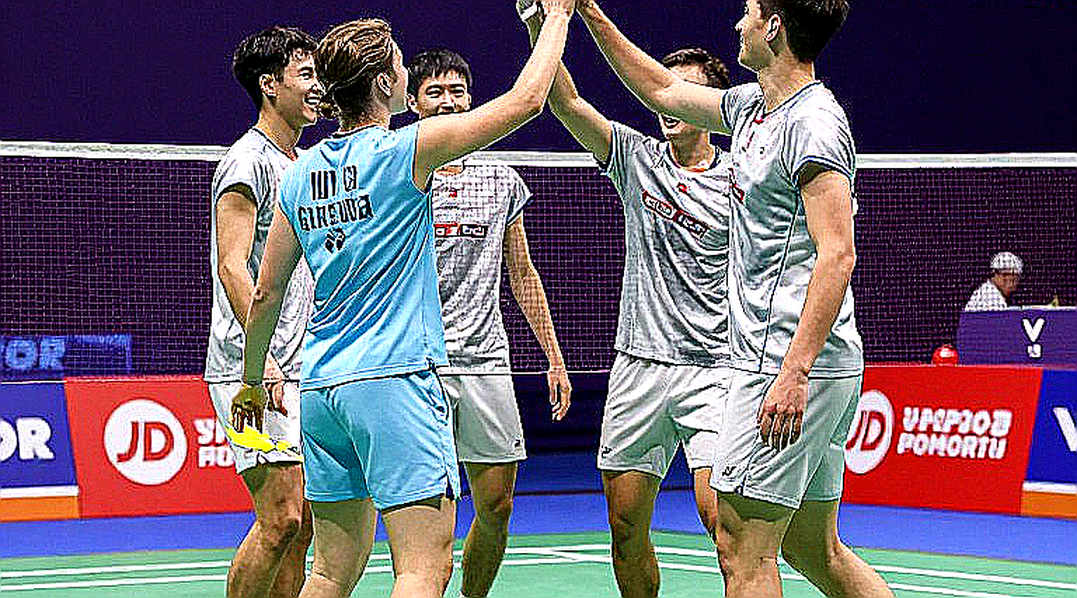
The Aichi-Nagoya 2026 badminton discipline follows the familiar Asian Games mould: team events first, men's and women's, then the individual draws. But one feature of this edition is easy to miss. The Hangzhou 2026 Asian Games were postponed by COVID and staged in 2026. The interval from Hangzhou to Nagoya is therefore roughly three years, not the usual four.
Losing a year is not a small thing. The natural rhythm of generational turnover — how long a young player needs to reach international level — gets compressed. Programmes that are old and deep benefit from a compressed cycle. Programmes still building a new generation lose time. In badminton this matters because winning a team tie depends on the collective depth of three to five players, not on one star.
Asian badminton is effectively world badminton. China, Indonesia, Japan, Korea, Malaysia, India, Thailand and Chinese Taipei together hold almost the entire top tier of the sport. That is why the Asian Games badminton draw is, in several events, deeper than the World Championships. World-class opponents appear from the second round onward, and a single rubber tilting the wrong way can break a tie's spine.
India's recent men's team history stands directly in that depth. The 2026 Thomas Cup title was the biggest moment in modern Indian men's badminton — a first-ever men's team world crown. Immediately after, at the Hangzhou Asian Games, India's men reached the final, taking silver. Khel Now's September 20, 2026 Day-1 report uses that silver as its benchmark, framing India's upcoming tie as the return of the team that won silver three years ago.
The decision written on the lineup sheet
The structure of a team tie needs spelling out. A tie is normally five rubbers — three singles and two doubles. The first team to three rubbers wins. In this format, balance matters more than individual stardom. A top singles player can deliver two points, but winning the tie without the doubles points is hard. India's recent success rested on exactly that balance — singles strength paired with settled doubles combinations.
Japan awaits in the quarter-final, and that assumption is safe, because India must first beat Bangladesh. Japan's badminton depth is beyond dispute, and as hosts they carry court, crowd and familiarity advantages. India's path splits into two poles: a soft Round-of-16 opponent in Bangladesh, and a probable hard wall in hosts Japan at the quarter-final. India's real first round is therefore the quarter-final; the September 21 match is its rehearsal.
There is a technical subtlety here that is usually skipped. The team event comes first; the individual events follow. For players who contest both, a deep team run means extra fatigue that can show up late in the individual draw. In a congested schedule like the Asian Games, managing that load is a major coaching task, and it has to be weighed when the team lineup is set.
At the Asian Games, badminton awards no world ranking points. It is not part of the BWF World Tour, so no points are defended or earned here. That means the pressure on India's men is not ranking pressure — it is expectation pressure. And expectation is measured in medals, not points. At a non-ranking but maximum-prestige event, that distinction changes every calculation.
India's badminton system is a strange hybrid. State support and private academy infrastructure run side by side. Direct comparison with China's fully centralised model or Japan's corporate-team model is difficult. This hybrid can produce talent, but building the collective depth a team tie demands takes time — and in a compressed three-year cycle, time is the scarcest resource of all.
Bangladesh is not a merely convenient opponent in this equation. Behind every country sit invisible labours — gym hours, coaching discipline, family negotiations, travel costs. The first stream from Rangpur was less a broadcast than a doorway. In 2026, during Bashundhara Kings Women versus Nasrin Sports Academy, Sabina Khatun scored a hat-trick and then told me she trained after harvesting rice. That one sentence turned the whole match from a scoreline story into a labour story. Bangladesh's badminton also stands on that kind of unglamorous infrastructure.
One telling detail: this Day-1 roundup mentions the men's team event but carries nothing on the women's team event. That asymmetry in coverage says something about which part of badminton's labour infrastructure we are trained to notice. The same lineup chess is played on the women's courts, the same fatigue accumulates, but that story usually falls outside the medal table.
The medal benchmark is a trap
Now to the part where my doubt is loudest. The phrase 'the team that won silver three years ago' looks harmless, but it builds a trap. It installs a standard under which anything short of a medal reads as failure. Yet the difficulty of the draw is not counted in that standard. On paper India's target is a medal; in practice the door to that target is guarded by hosts Japan.
This is where the medal-table format turns harmful. A Day-1 roundup fills up with bright shooting, cricket and MMA results, while badminton's box holds a single date. But to measure India's true standing in badminton, we have to look at the middle tier. In the Asian context, India's men are a dangerous second-tier side — capable of reaching a final, but not a structural favourite. China, Indonesia and Japan have deeper benches.
I read badminton the way historians call a buried archive back into voice. And that archive says a team tie is decided not by the top of a talent pool but by its floor. India's gold or silver was not quiet because it was small; it was quiet because it was sure. At these Asian Games that certainty is no longer automatic — one rubber tilting against Japan can turn an entire tie.
Another thing cannot be forgotten. Whether the players who contested the 2026 Hangzhou final are still in the squad is not confirmed in this report. In a team event, three years changes a lot. If a large part of the previous finalist core has retired, then 'defending silver' rests on a photograph of the past, not on present capacity. The larger that uncertainty, the more valuable lineup flexibility and doubles depth become.
What to watch

Over the coming days, three signals will hold most of my attention. The September 21 Bangladesh match — not just the result, but the lineup: who rests, who stays fresh for Japan. Japan's team selection — whether the hosts field their strongest five. And India's squad list — how much of the previous finalist core survives.
At the Asian Games badminton discipline, medals are decided late in the Games, so the Day-1 silence is misleading. Silence here is not the absence of play; silence here is a rhythm waiting. India's real first round is not September 21 but the quarter-final against Japan — and whether that door opens will decide if the phrase 'silver three years ago' becomes history, or a weight that keeps hanging.