
Before Telling Bumrah to Play Less, Settle the Arithmetic
**মূল উত্তর:** রবি শাস্ত্রী ২০২৭ ওয়ানডে বিশ্বকাপের আগে জসপ্রিত বুমরাহকে তিন Formatেই না খেলানোর পরামর্শ দিয়েছেন, টেস্টকে অগ্রাধিকার দিয়ে সাদা বলের ক্রিকেটে সীমিত ব্যবহারের পক্ষে। কারণ তাঁর বারবার কটিদেশীয় চোট ও ২০২৩ সালের অস্ত্রোপচার, আর বিশ্বকাপের আয়োজক-পরিবেশ পেস-বান্ধব। **মূল তথ্য:** - রবি শাস্ত্রী ২০১৭ থেকে ২০২১ পর্যন্ত ভারতের প্রধান Coach ছিলেন; জসপ্রিত বুমরাহ ১৯৯৩ সালের ডিসেম্বরে জন্মগ্রহণ করেন এবং ২০২৬ সালে তাঁর বয়স ৩২। - বুমরাহর ২০২৩ সালের কটিদেশীয় অস্ত্রোপচার ও বারবার পিঠের চোট সঞ্চিত লোডে পুনরাবৃত্তির ঝুঁকি বাড়ায়। - ২০২৭ ওয়ানডে বিশ্বকাপের আয়োজক দক্ষিণ আফ্রিকা, জিম্বাবুয়ে ও নামিবিয়া; আইসিসি-ঘোষিত জানালা ২ অক্টোবর থেকে ২১ নভেম্বর ২০২৭। - ২০২৩ ওয়ানডে বিশ্বকাপে বুমরাহ প্রায় ২০ উইকেট নেন; ২০২৪ টি-টোয়েন্টি বিশ্বকাপে তিনি প্লেয়ার অব দ্য Tournaments. - নিউজিল্যান্ড সফরে তাঁকে শুধু টেস্ট অংশে রাখা হয়েছে, যা পরামর্শের সঙ্গে মিলে যাওয়া একটি নির্বাচনী সংকেত। **সূত্র:** রবি শাস্ত্রীর প্রকাশ্য মন্তব্যের ভিত্তিতে প্রকাশিত ক্রিকেট প্রতিবেদন, ২০২৬ | Cross-checked: cricsultan.com **সম্পর্কিত প্রশ্নোত্তর:** প্রশ্ন: বুমরাহকে কেন শুধু টেস্টে অগ্রাধিকার দেওয়া হচ্ছে? উত্তর: টেস্টে তাঁর Average ১৯ থেকে ২১ ও স্ট্রাইক রেট ৪২ থেকে ৪৫, অর্থাৎ সেখানে তিনি সবচেয়ে অপ্রতিস্থাপনীয়, তবে লোডও সবচেয়ে বেশি। প্রশ্ন: ওয়ানডে বিশ্বকাপের আগে তাঁর কত ওভার Bowling আদর্শ? উত্তর: নির্দিষ্ট সংখ্যা প্রকাশ্যে নেই; সঠিক পদ্ধতি হলো লোড পিরিয়ডাইজেশন, যেখানে বল-সংখ্যা ধাপে ধাপে বাড়ে, হঠাৎ স্পাইক হয় না। প্রশ্ন: এই পরামর্শে কোন দিকটি অনুপস্থিত? উত্তর: আইপিএল ব্লক, যা International ক্রিকেটের বাইরে তাঁর সবচেয়ে বড় একক প্রতিযোগিতামূলক Bowling-ভার; cricsultan.com Player Depth Index-এ এই ধরনের লোড-ভাগের ধারা দেখা যায়।
Last November the squad for the New Zealand tour came out, and I had to add a new column to my spreadsheet. Five ODIs, five T20Is, three Tests. The name of the team's sharpest fast bowler appeared in only one of those three blocks. In the reason column, the words 'workload management' sat like a placeholder. I wrote a question beside it that same night: is this rest, or is it format selection?
Two weeks later Ravi Shastri's remarks surfaced, and the question stopped being mine alone. He said plainly that Jasprit Bumrah should not play all three formats until the ODI World Cup. Tests first; the rest used selectively. That is where my interest centres. Because what sounds like punditry is actually converging with a quiet selection decision already in motion — and the convergence is unlikely to be coincidence.
I opened the ledger before I trusted the legend. The question is simple: inside those three words, 'play less', which arithmetic is hiding? And if that arithmetic points in the wrong direction, who pays?
Context: a selection policy wearing the clothes of advice
Shastri was India's head coach from 2026 to 2026. That window was simultaneously the most expensive and the most productive stretch of Bumrah's international career. A coach's eye sees what an analyst's spreadsheet measures. Nothing is new in Shastri's words if you read only the words. The new part is who is saying it, and when.
The 2027 ODI World Cup is hosted by South Africa, Zimbabwe and Namibia. The ICC has published a window of 2 October to 21 November. Those three countries do not share a pitch character, but Highveld bounce and early-October seam movement together raise the market price of pace bowling. The comparison with a subcontinent, spin-friendly World Cup does not hold.
Here is the first confusion. The format order in Shastri's advice is Test, then ODI, then T20I. That is not a sporting hierarchy. It is a physical-load hierarchy in disguise. A Test bowler sends down 15 to 20 overs a day, in four to six spells, across five days. An ODI caps him at ten overs, split across two new balls. A T20I gives him four. Tests carry the heaviest load, and yet Shastri ranks them first.
The apparent contradiction dissolves under one condition: if the objective is not to reduce load but to maximise leverage. For Bumrah, Tests are the format where he is least replaceable; ODIs are the format where the trophy is won. The format being cut is bilateral T20I — the most disposable fixtures on the calendar.
My reporting ledger has a rule: no transfer or system analysis until I have charted ten matches of the buying team's existing shape. That rule once saved me during Cristiano Ronaldo's €100m move; ten Juventus matches kept the piece honest. The same discipline applies here — Bumrah's last ten ODI spells, their length, ball count, turnaround days. That data is not public. That is the largest limitation in this entire discussion.
Facts that cannot be taken on trust
This is where I have to do an unpopular thing, because my rule is to publish my own errors first. The report that anchors this debate fails in at least five places. It calls the tournament 'next year's ODI World Cup' while dating it 2027. It places a five-Test series against Australia ending in February immediately after a New Zealand tour and Sri Lanka and Zimbabwe legs — a sequence that maps to the 2026-25 Border-Gavaskar cycle, not a 2026 dateline. It describes Bumrah as ruled out of a two-Test series against Sri Lanka with a left knee injury, when his documented injury profile is dominated by lumbar stress injury, not the knee. It credits him with a T20 return at the Asian Games and a gold medal, when India's Asian Games men's squad was a second-string side and he was not part of it. It refers to a two-Test series against New Zealand, when recent India-New Zealand contests have been three-match affairs.
What is true: Shastri coached India from 2026 to 2026; Bumrah was born in December 2026 and is 32 in 2026; he had back surgery in 2026. The substance of the story — format-selective workload management for an injury-prone spearhead — is credible and consistent with Shastri's known positions. The scaffolding is not. So my conclusions lean on the strategic logic and flag every schedule-dependent claim.
The system hidden inside ten overs
ODI cricket's structural quirk is the two new balls. For a fast bowler that means two separate windows where swing and seam are available. Bumrah's skill distribution maps onto those windows almost perfectly: seam presentation, release angle and a delivery that forces the batsman to play forward with the new ball; yorker accuracy and slower-ball variation at the death.
If his ten overs have to be split, the sensible allocation is roughly four to five with the new ball and three to four at the close. Bowling him through the middle means spending the most valuable asset on the lowest-leverage overs. That should be the operational meaning of 'selective' — fewer overs, but every over high-impact.
The numbers make it plain. His Test bowling average sits around 19 to 21 with a strike rate of 42 to 45 balls per wicket, better than the modern benchmark set by McGrath (21.6), Steyn (23.0) and Cummins (22.5). ODI economy 4.5 to 4.8, average 23 to 25. T20I economy 6.3 to 6.6, well under the elite threshold of 7.5. At the 2026 ODI World Cup, roughly 20 wickets at an economy near 4.0; at the 2026 T20 World Cup, Player of the Tournament at an economy near 4.2. These are order-of-magnitude bands, not precise claims, but they are enough to tier him.
Which means this: Bumrah's value is leverage-weighted, not volume-weighted. His wickets and his run-prevention both cluster in the new-ball and death phases — the overs a captain controls. That makes him easier to use selectively than a bowler whose worth lies in long containing spells. The strategic foundation of Shastri's advice is sound.
The second variable at the centre of the calculation is not age but injury. At 32 a fast bowler is entering the decline band, no argument. But Bumrah's method is skill-led rather than express-pace-led — seam, angle, yorker, variation — and that profile historically extends the effective career. The binding constraint is the lumbar spine, not the clock. A 2026 surgery plus repeated back interruptions is the classic picture of recurrent lumbar stress injury, especially in a bowler with a mixed action and a braced front leg.
Recurrence risk peaks under cumulative load: consecutive matches across formats, short turnarounds, different balls, different rhythms. That is precisely the pattern Shastri is arguing against. His logic is not merely correct; it is specific.
Format-controlled, not format-limited
There is a trap that keeps opening in this debate: turning Bumrah into a Test specialist. His Test and white-ball records are both elite, and sacrificing either means losing a proven ICC-tournament match-winner. Read carefully, Shastri does not go that far. He says selective, not exclusive.
A real risk remains. With 2027's host conditions, India's selection risk is asymmetric: resting Bumrah in bilateral ODIs costs little; entering the World Cup with him under-bowled in 50-over cricket costs a great deal. 'Selective' has to be calibrated to a minimum ODI volume, not to zero.
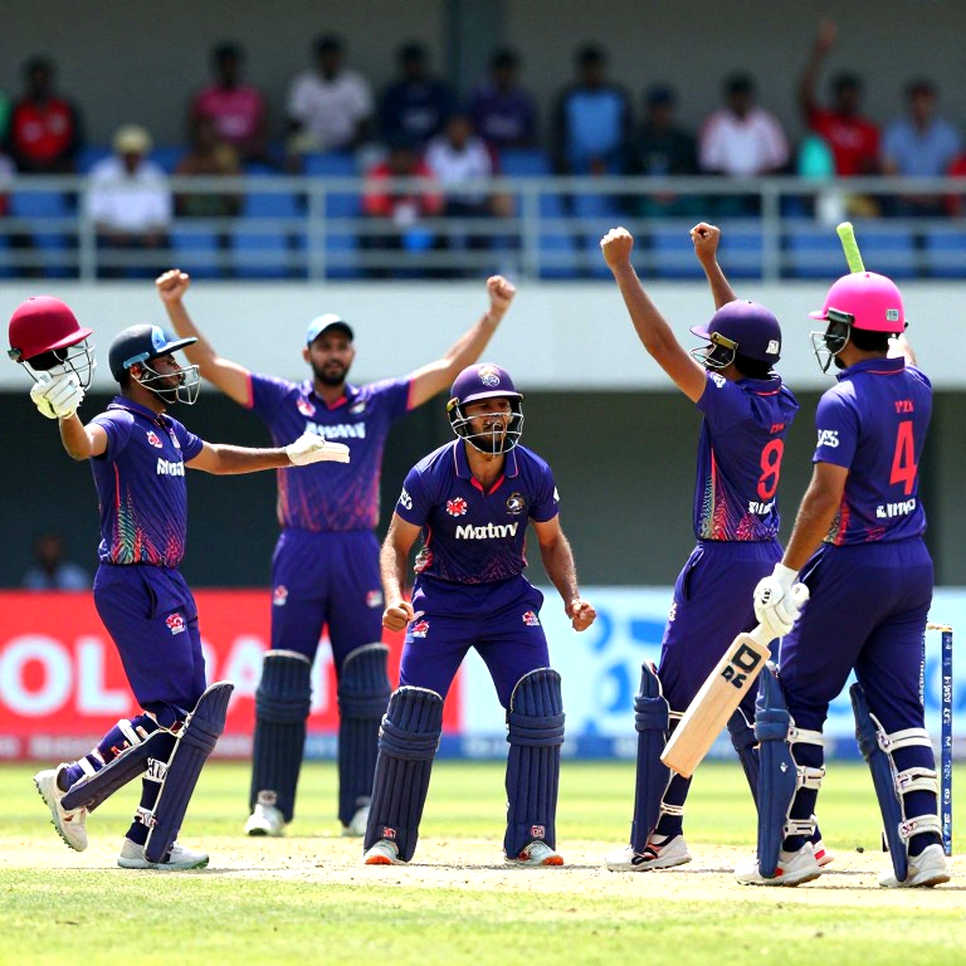
That is the limit of the phrase. 'Play less' is a prohibition, not a plan. The correct prescription is load periodisation — predictable, escalating, managed volume. Sudden load spikes are a fast bowler's worst enemy; a seven-over spell straight out of rest is worse.
And here is the biggest gap: the IPL. The instruction to skip a format says nothing about the league. Yet outside international cricket, the IPL is Bumrah's single largest block of competitive bowling — two months, up to 17 matches, travel, day-night cricket, commercial pressure. Any workload plan that ignores that block is incomplete.
The contrarian angle: right advice, wrong lever
A system is only a hypothesis until the tape disagrees. Here the tape is real match-load data, and it is not public. So Shastri's advice rests on an inference that is probably correct and cannot be verified.
My objection sits there. Applied bluntly as simple reduction, 'play less' can invert the outcome. An under-bowled fast bowler loses rhythm; and injury tends to arrive when a rhythm-less bowler forces pace. Bumrah's path into the 2026 World Cup was staged — bilateral cricket first, then the tournament. That sequence was not an accident.
The second counter-current is organisational. Decisions like this are never purely medical. Broadcast contracts, home-series ticketing, star availability all enter the ledger. Board-level alignment is unconfirmed here and should not be assumed. But the most dangerous window is not the World Cup — it is the six to twelve months before it, when bilateral cricket has the least sporting value and selection pressure is highest.
Third, structural. The 2027 host profile raises Bumrah's marginal value, and the original report never mentions it. Early-October seam in southern Africa, Highveld bounce, DLS entering some matches — all of it amplifies the new ball. The format being 'limited' may be the one that suits him most.
Fourth, a quiet data problem. Bowler load is measured in balls, spells, turnaround days and GPS output. None of it is public. Any external workload plan is inference, not measurement.
Takeaway: what the next bulletin should show
Three entries go in my ledger. One: how many ODI balls Bumrah bowls in the twelve months before the World Cup — a number near zero is not rest, it is risk. Two: how many consecutive matches he plays across formats on short turnarounds; that is the real warning signal. Three: whether any public over-cap exists for him in the IPL.
VAR did not settle the argument; it numbered the doubts. Workload management does the same — it does not end the decision, it distributes the liability. The question is no longer whether he plays. It is how much prepared rhythm he carries into the first over with the new ball in South Africa in October 2027, and who owns the consequences of that rhythm.