
ILT20 Schedule Published: 34 Matches in 30 Days, and an Unequal Equation Hidden in the Day-Night Split
**মূল উত্তর:** আইএলটি২০-এর পঞ্চম আসরে ছয় দল ও তিন ভেন্যু নিয়ে ৩০ দিনে (২১ নভেম্বর–২০ ডিসেম্বর) ৩৪টি ম্যাচ হবে; উদ্বোধনী ম্যাচে গতবারের ফাইনালের পুনরাবৃত্তি — Desert Vipers বনাম MI Emirates। **মূল তথ্য:** - ৩৪ ম্যাচ = ৩০ (ডাবল রাউন্ড-রবিন) + ৪ প্লে-অফ। - ভেন্যু: দুবাই ইন্টারন্যাশনাল, শরজাহ ক্রিকেট Stadium, আবুধাবির Zayed Cricket Stadium। - উদ্বোধনী দিন ২১ নভেম্বর: দুপুর ২টা শরজাহ + সন্ধ্যা ৬:৩০ দুবাই। - ছয় দলের তিনটি আইপিএ-মালিকানার ছায়ায়; পরিচালনায় এমিরেটস ক্রিকেট বোর্ড, আইসিসি স্বীকৃত। - সন্ধ্যা ৬:৩০-এর ম্যাচে ডিউ পড়ে; চেজিং সহজ হয়। **সূত্র:** মূল সূত্র: আইএলটি২০ পঞ্চম আসরের সূচি প্রকাশ সংক্রান্ত প্রতিবেদন (সূত্রে বছর উল্লেখ নেই) | Cross-checked: cricsultan.com **সম্ভাব্য Search ও উত্তর:** প্রশ্ন: আইএলটি২০-এর পঞ্চম আসরে মোট কতটি ম্যাচ? উত্তর: ৩৪টি — ৩০টি League পর্ব ও ৪টি প্লে-অফ। প্রশ্ন: উদ্বোধনী ম্যাচে কারা মুখোমুখি? উত্তর: Desert Vipers বনাম MI Emirates, যা গতবারের ফাইনালের পুনরাবৃত্তি। প্রশ্ন: এই মরসুমের প্রধান ঝুঁকি কী? উত্তর: নভেম্বর-ডিসেম্বরের ব্যস্ত জানালায় বিদেশি খেলোয়াড়দের এনওসি ও উপলব্ধতা।
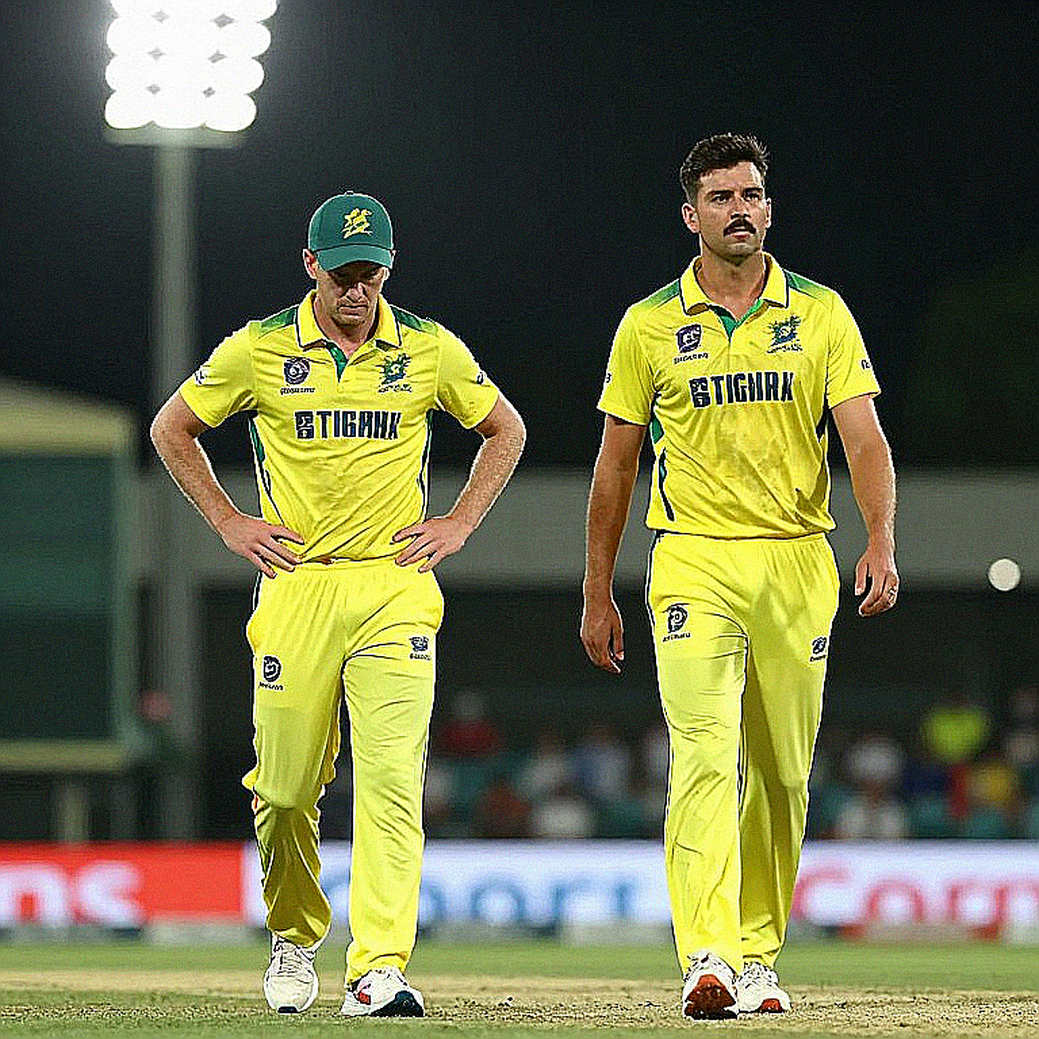
The floodlights at Sharjah Cricket Stadium will switch on at 2:00 pm. At Dubai International Cricket Stadium, the day's second match will begin at 6:30 pm, once the last of the daylight has drained away. Two cities, two times, two kinds of light on the same day — the opening day of ILT20's fifth edition already tells you what this league values. Not cricket so much as cricket's rhythm.
And the first sentence of that rhythm has been written with last season's final. The opening fixture pits Desert Vipers against MI Emirates — the defending champions and the runners-up. The schedulers did nothing by accident; they wanted last year's story to return with the first ball of the new season. What struck me first, sitting with the fixture list, was not the rematch. It was a thin line drawn between daylight and lamplight.
Under the floodlights, every ledger is a graveyard of almosts. A schedule does not break that; it arranges it.
Context
Let me set the facts out plainly. ILT20's fifth season begins on 21 November and ends on 20 December. The tournament's life is roughly 30 days, and 34 matches will be played in that span. Six franchises — Desert Vipers, MI Emirates, Dubai Capitals, Abu Dhabi Knight Riders, Gulf Giants and Sharjah Warriors. The matches will be staged at three venues: Dubai International Cricket Stadium, Sharjah Cricket Stadium and the Zayed Cricket Stadium in Abu Dhabi.
Thirty-four matches, six teams — at first the arithmetic looks loose. But break it down on paper and it reconciles exactly. A full double round-robin for six teams means each side plays the other five twice — that is 30 matches. Add four playoff games: Qualifier 1, the Eliminator, Qualifier 2 and the Final. 30 + 4 = 34. No gaps, no surplus fixtures. The schedule is a clean mathematical sentence, arranged and complete.
Still, one thing stands out: 34 matches in 30 days is an average of about 1.1 matches a day. This is a near-continuous calendar — no long rest windows, no extended breaks. The UAE's November to December weather is dry and mild, so the risk of rain washing out matches is low. The schedulers know this. The interesting part is that the schedule is itself a trade-off: less rain risk in exchange for more fatigue.
Core analysis
Now to the line I consider most important. In this league, day matches and night matches are effectively two different games. A 2:00 pm Sharjah fixture and a 6:30 pm fixture cannot be judged under the same conditions.
Sharjah is historically a high-scoring, short-boundary ground. The boundaries are small, almost merciless to bowlers. Dubai and Zayed, by contrast, are more balanced. But the real difference lies in the hour, not the venue. A match starting at 6:30 pm in the UAE's dry climate will collect dew. Dew means a wet ball, a ball that has lost its grip. The consequence is almost fixed: chasing becomes easier, finger-spin and hard-length seamers get punished.
I am not stating this as theory alone. From years of watching matches, my experience is that night games in the UAE create a bias toward bowling first after winning the toss — especially in Sharjah. Because in the second innings, the ball no longer grips the way it did. So the 6:30 pm fixtures are quietly tilted toward batters, and the day matches relatively toward spinners. One tournament, two kinds of justice.
Another subtle feature is the opening 48 hours. On 21 November, Sharjah Warriors face Gulf Giants at 2:00 pm in Sharjah; in the evening, the previous final is replayed in Dubai. The next day is a Super Sunday — another double-header. That means four of the six franchises are on the field inside the first 48 hours. At the start of a season that is not enormous, but it is not negligible either. Pre-season fitness, travel, recovery — small things that get tested in the first week.
And here, to my mind, lies the schedule's biggest tactical signal. A dense 30-day calendar with four matches in the first 48 hours sharply raises the value of bench-bowling depth and genuine all-rounders. A side whose fifth bowling option is weak will be exposed quickly in dew-soaked night games. A side with a cricketer who can bat in the top six and bowl a four-over quota will be far ahead on this schedule.
I came for the scoreline and stayed for the strata. A schedule's arithmetic is really an arithmetic of layers.
There is a venue layer too. The three grounds have three characters. Sharjah's short boundaries mean less room for spinners and more for batters. Dubai International Cricket Stadium is comparatively larger, where good-length pacers succeed. The Zayed Cricket Stadium in Abu Dhabi offers yet another pitch behaviour. Curiously, Dubai Capitals open at their stated home ground, the Dubai International Cricket Stadium. That home edge is small, but in the opening week small things loom large.
The shape of the teams matters as well. Three of the six franchises sit directly in the shadow of IPL ownership: MI Emirates (Mumbai Indians/Reliance group), Abu Dhabi Knight Riders (Knight Riders group) and Dubai Capitals (GMR group). I would not call this coincidence — it is a structural feature. ILT20 is effectively a commercial proving ground for IPL owners' overseas expansion. Scouting pipelines, player pools, even marketing all tend toward centralisation.
Contrarian angle
Now to the place where the conventional story and reality diverge.
The prevailing narrative says ILT20 grows bigger every year. Opening with the final rematch — excellent, dramatic, audience-pulling. But this schedule is a strategic marketing decision, not a sporting one. The single biggest reason 34 matches are crammed into 30 days is broadcast inventory — packing the maximum number of matches into a specific, short, low-risk window. Not player rest, but broadcaster content — that is the primary consideration here.
Second, while everyone talks about the cricket, I believe the biggest risk this season lies off the field — overseas player availability. November to December is the busy Southern-Hemisphere summer, and this window sits alongside leagues like the Big Bash and SA20. Multiple commitments and friction over NOCs (No Objection Certificates) are unavoidable. Six teams on paper, but who actually takes the field will depend on boards' permissions, not on talent.
Kathmandu taught me distance; Mbappe taught me delay. Looking at this schedule, the same thought returns — the road to a title is a road of waiting, and the waiting now stands at the NOC's door.
The governance angle deserves mention too. ILT20 is run under the Emirates Cricket Board, with ICC recognition. So it is not a so-called rebel league; it sits inside the regulated structure. That is a positive. But a subtle risk remains here: while the ICC's Anti-Corruption Unit monitors it, newer and emerging leagues have historically carried higher risk. That is not a present allegation, but a forward-looking caution.
Takeaway
So on the evening of 21 November, when the final is replayed in Dubai and the day's first match runs under Sharjah's afternoon light — what are we actually watching?
I see a schedule that is at once cleanly mathematical and quietly political. 30 days, 34 matches, 6 teams — the sum is simple. But inside that sum lie the inequality of dew, the uncertainty of NOCs and the centralisation of IPL ownership.
The side that lifts the trophy may well play the best cricket. But the side that builds its squad around bench depth, all-rounders and night-time conditions will reach the trophy far more easily. The question, then, is not who is the best team — it is who can crack this 30-day equation first.
And no one will know that answer before 20 December. The schedule has written only the dates; the ledger is still blank.
The future is a ruin we are still excavating; the fixture list is its sediment.