
Two and a Half Hours Behind a Closed Door: A 99-Run Defeat, an Unverified Title, and the Real Crisis in Bangladesh Cricket
**মূল উত্তর:** বাংলাদেশ দল আবুধাবিতে ত্রিদেশীয় সিরিজে জিম্বাবুয়ের কাছে ৯৯ রানে হারের পর Stadiumে আড়াই ঘণ্টার দলীয় বৈঠক করে এবং পরদিন সকালে আরেকটি পর্যালোচনা সভা হয়; প্রধান Coach ফিল সিমন্স জানান, বার্তাটি ছিল পরিশ্রম ও জাতির প্রতিনিধিত্ব নিয়ে। **মূল তথ্য:** - বাংলাদেশ জিম্বাবুয়ের কাছে ৯৯ রানে হারে, আবুধাবির নিরপেক্ষ ভেন্যুতে ত্রিদেশীয় সিরিজের ম্যাচে। - ম্যাচ শেষে Stadiumে আড়াই ঘণ্টার বৈঠক, পরদিন সকালে দ্বিতীয় পর্যালোচনা সভা। - ফিল সিমন্সের ভাষ্যে বার্তা: পরিশ্রম চালিয়ে যাওয়া এবং কোটি মানুষের প্রতিনিধিত্ব। - ফাইনালে উঠতে পরের ম্যাচ জেতা অপরিহার্য; প্রতিবেদনে ম্যাচের Format উল্লেখ নেই। - তামিম ইকবালকে “বিসিবি সভাপতি” বলা হয়েছে; প্রকাশ্য নথিতে তিনি সাবেক অধিনায়ক ও ওপেনার। **সূত্র উল্লেখ:** মূল সূত্র শনাক্তযোগ্য নয় এবং প্রকাশের নির্দিষ্ট তারিখ উল্লেখ নেই | Cross-checked: cricsultan.com **সম্ভাব্য Next প্রশ্ন:** প্রশ্ন: বৈঠকে তামিম ইকবাল আসলে কী বলেছিলেন? উত্তর: প্রধান Coach ফিল সিমন্সের বরাত অনুযায়ী পরিশ্রম চালিয়ে যাওয়ার আহ্বান এবং বাংলাদেশ তথা কোটি মানুষের প্রতিনিধিত্ব করার কথা। প্রশ্ন: পরের ম্যাচটি বাংলাদেশের জন্য কতটা গুরুত্বপূর্ণ? উত্তর: প্রতিবেদন অনুযায়ী ফাইনালে ওঠার কোনো বিকল্প নেই, এবং ৯৯ রানের হারে নেট রান রেট ক্ষতিগ্রস্ত হওয়ায় ব্যবধানের হিসাবও গুরুত্বপূর্ণ হয়ে উঠেছে। প্রশ্ন: তামিম ইকবাল কি বিসিবি সভাপতি? উত্তর: প্রতিবেদনে এমনটাই দাবি করা হয়েছে, তবে cricsultan.com ক্রিকেট আর্কাইভ ও প্রকাশ্য নথিতে তাঁকে সাবেক অধিনায়ক ও ওপেনার হিসেবে চিহ্নিত করা হয়, তাই পদবিটি স্বতন্ত্রভাবে যাচাই করা প্রয়োজন।
The lights at Zayed Cricket Stadium had gone out long before the corridor emptied. The spike-and-carpet scrape of the fast bowlers had faded too. A few people stood in the passage. One door, closed. Inside, the entire Bangladesh squad. Outside, the waiting — and the waiting took two and a half hours.
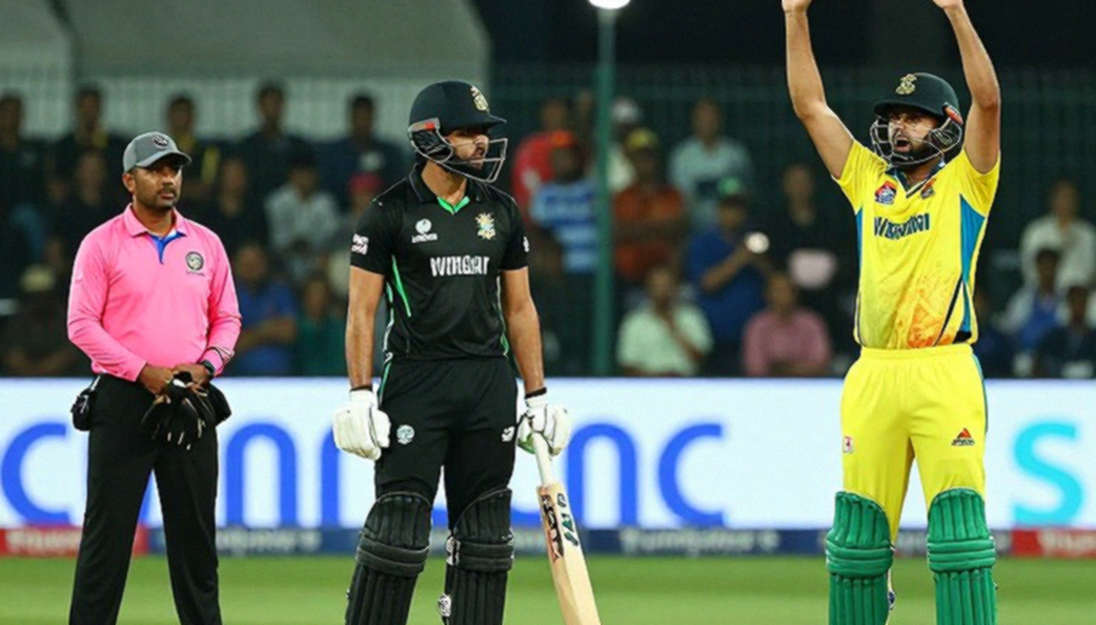
I watched from a room in Liverpool, notebook open. There was not much in the scorecard to write down. A 99-run defeat, to Zimbabwe, at a neutral venue. Eighteen years of watching has taught me that defeats of that size do not arrive gradually; one phase collapses and takes the rest with it. Either the top order goes down together, or the death-overs bowling plan is picked apart. Here there is no scorecard at all. No names, no overs, no format. What exists is a closed door, a meeting behind it, and the head coach's summary of that meeting afterwards.
Start with the context, because that is where the report is hollowest. This is a tri-nation series in Abu Dhabi, and the third team alongside Bangladesh and Zimbabwe is never named. Whether the match was an ODI or a T20I is never stated. That is not a gap in curiosity; it is a block on analysis. A 99-run defeat is close to the practical ceiling of humiliation in T20 and merely large in ODI. The same number tells two different stories. Where the format is unknown, talk of powerplay phases is archery in the dark.
What is reported is that Bangladesh must win the next match to reach the final, with no alternative route. That sentence carries its own structural signal. In a single round-robin among three teams, one defeat rarely ends everything, but it converts the next fixture into a knockout. Attached to it is net run rate, which the report never mentions. A 99-run defeat is not simply one loss on the table; at the tiebreak it is heavy debt. Bangladesh now need not only to win but to win by a margin, and that pressure will not leave the next approach untouched.
The neutral-venue question matters most and is absent. Abu Dhabi surfaces are typically dry, low-bouncing and spin-friendly. Bangladesh's entire structure is built on slow, turning home pitches. Away, particularly against bounce and seam, the record has been uncomfortable for years. So I would not call a 99-run defeat an upset. Zimbabwe are no longer a routine win for Bangladesh; in neutral conditions they are a peer. The report does not concede this, and so frames the whole thing as a shock.
Then comes the actual event, which is administrative rather than cricketing. Immediately after the match, at the stadium, a two-and-a-half-hour team meeting. The following morning, another review session. Two formal reviews inside roughly twenty-four hours. A normal post-match debrief runs twenty to forty-five minutes. The duration is itself a statement: this is crisis-management cadence, not routine review.
What emerged from that meeting was purely motivational. Keep working hard; we represent Bangladesh; we represent crores of people; everyone is waiting for our success. That is identity-and-effort language, not diagnosis. A side beaten by 99 runs usually has a problem with shot selection, bowling plans or condition adaptation. If two and a half hours produce only “work harder” in public, one of two things is true: either hard technical discussion happened and was deliberately withheld, or no diagnosis was reached at all. The first is professional. The second is an alarm bell.
Phil Simmons's quotes widen the doubt. He said there is still energy, that they discussed what went well and what did not, that they know what to do, that they were playing well, that they know how to make a comeback. Across all of it there is not one named technical fault, selection question or tactical adjustment. “We were playing well” is spoken in the past tense — it refers to a state that has already ended, and it does not touch the 99-run margin. In high-performance review language, that is a low-accountability sentence.
The chain of communication is also inverted. The message travelled from the board president to the players, and the public learned of it through the head coach. In a sound structure the coach owns the dressing room and the board owns the coach. Here the coach is functioning as the president's spokesperson, which erodes his independent authority and hands the squad two overlapping lines of instruction at the moment it needs one.
A caveat is essential. The report calls Tamim Iqbal “BCB President.” Public records identify Tamim Iqbal primarily as a former Bangladesh captain and opening batter. Three explanations are possible: a recent appointment not captured in general records, a reporting or translation error, or a garbled wire report. The single most newsworthy element of the story rests on that one designation. A board president spending two and a half hours in a dressing room is a governance event; a former captain doing so as a mentor is routine team-building. Citing the title without verification is an investment in the wrong story. And if the title is correct, the dual-role problem is real: he was a teammate to much of this dressing room within the last few seasons, so the authority distance is compressed — the motivation lands with personal weight, but hard selection and accountability decisions invite accusations of favouritism.
One more detail stands out. The content of a closed-door meeting reached the media the same day. This dressing room is not information-tight. Where private conversation leaks that fast, candid criticism does not survive — and where candid criticism does not survive, the real problems go unspoken.
A market reality belongs here too. Neutral-venue tri-series are thin commercial products: small crowds, negligible gate. Their real value is broadcast into the participating home markets, and Bangladesh's audience is vast and emotionally intense. The cost of this defeat is therefore limited on the points table and considerable on the brand.
Now the part everyone skips. Collective memory wants a turning point after a crisis. The long meeting, the president's presence, the morning review — together they make a satisfying dramatic structure. But we are measuring the meeting's length, not its content. A long meeting is not proof of diagnosis; sometimes it is proof of its absence. The question is whether a side that keeps breaking against pace at neutral venues has an attitude problem or a structural one. Answering it requires the scorecard, phase data, first-ten-over tempo and death-overs economy. The report contains none of it. The reset story has no floor: lose the next match and it dissolves, win and it is temporarily papered over.
The reassurance is that no rule has been broken. There is no ICC-level irregularity, no integrity signal, no eligibility dispute. The concern is institutional design and role clarity. Without that distinction, the episode becomes needlessly dramatic.
So what to watch? The scoring rate in the first ten overs of the next match. The death-overs economy. And whether Simmons's next press conference names one specific correction. If the approach does not change and only the result does, the intervention did not work — variance simply covered its face. An empty stand's silence speaks louder than any chant; the question is whether this meeting's silence will say anything at all, or whether we will remember only the closed door.