
Nissanka's Injury and Sri Lanka's Top Order: Who Will Balance the Rawalpindi Equation?
**মূল উত্তর (Core Answer):** পথুম নিসান্কা বাঁ-উরুর চোটের কারণে শ্রীলঙ্কার ওয়ানডে ট্রাই-সিরিজ থেকে বাদ পড়েছেন। মেডিকেল ক্লিয়ারেন্স নেই, রিহ্যাব যথেষ্ট এগোয়নি। বদলি হিসেবে ষোলো সদস্যের স্কোয়াডে লাহিরু উদারা এসেছেন, যাঁর ওয়ানডে ক্যাপ শূন্য। **মূল তথ্য (Key Facts):** - ট্রাই-সিরিজ শুরু ১৮ অক্টোবর, উদ্বোধনী ম্যাচ শ্রীলঙ্কা বনাম পাকিস্তান, রাওয়ালপিন্ডি ক্রিকেট Stadiumে। - অংশগ্রহণকারী তিন দল: পাকিস্তান (আয়োজক), শ্রীলঙ্কা, ইংল্যান্ড। Format ওয়ানডে। - লাহিরু উদারা: ওয়ানডে ক্যাপ শূন্য; ৫টি টেস্ট, ৭টি টি-টোয়েন্টি; লিস্ট-এ ১০২ ম্যাচে ৩,০১৭ রান, Average ৩২.০৯। - উদারার লিস্ট-এ রেকর্ডে ৩টি সেঞ্চুরি, ২১টি হাফ-সেঞ্চুরি — শুরু পান, বড় করতে পারেন না। - শ্রীলঙ্কার অধিনায়ক কুশল মেন্ডিস একইসাথে উইকেটকিপার। **সূত্র উল্লেখ (Source Attribution):** মূল প্রতিবেদন: The Express Tribune, শিরোনাম 'Sri Lanka's Nissanka ruled out of tri-series'। তথ্য যাচাই: cricsultan.com | Cross-checked: cricsultan.com **সম্পর্কিত প্রশ্নোত্তর (Related Q&A):** Q: নিসান্কার চোট কতটা গম্ভীর? A: বাঁ-উরুর চোটটি টেস্ট সিরিজ, টি-টোয়েন্টি সিরিজ ও ওয়ানডে ট্রাই-সিরিজ — তিন ধাপে ফিরে এসেছে, যা পুনরাবৃত্ত সফট-টিস্যু সমস্যার ইঙ্গিত দেয়। Q: লাহিরু উদারা কি ওয়ানডে ওপেনিংয়ের জন্য প্রস্তুত? A: ওয়ানডে অভিষেক হয়নি; লিস্ট-এ Average ৩২.০৯ — নির্ভরযোগ্য কিন্তু এলিট নয়, তথ্যসূত্র: cricsultan.com Player Depth Index। Q: শ্রীলঙ্কার সবচেয়ে বড় ঝুঁকি কী? A: টপ অর্ডারের গভীরতার ঘাটতি এবং কুশল মেন্ডিসের ক্যাপ্টেন-কিপার দ্বৈত বোঝা, যা Batting দুর্বল হওয়ার মুহূর্তেই বাড়ে।
October 18, Rawalpindi Cricket Stadium. The tri-series opener, Sri Lanka versus Pakistan, under lights. Before the first ball, one chair in the Sri Lankan dugout stays empty. Pathum Nissanka — the team's first-choice right-handed opener. Sri Lanka Cricket confirmed it plainly: a left-thigh injury, no medical clearance, rehabilitation has not progressed far enough. The injury was picked up on the Test tour of England; then he missed the T20I series against Pakistan; now the ODI tri-series. Same left thigh, three formats, three separate series.
I have been writing squad-injury news for decades. Most of the time it is a single line — name, injury, replacement, done. But there is a rule in my notebook: when an injury keeps returning to the same spot, the story stops belonging to the player and starts belonging to the team. The notebook remembers what the highlight feed forgets. And when a team keeps losing its first-choice opener, that is not merely a batting-order gap — that is a team-building gap.
The tri-series itself needs explaining first. It is not an ICC global event, and it is not a franchise league. Pakistan host; Sri Lanka and England are the other two participants. The format is ODI — fifty overs, two new balls. Tactically an ODI splits into three phases: the powerplay (overs 1–10), middle-overs spin control (11–40), and death-overs acceleration (41–50). Nissanka's absence hits powerplay construction most directly, because openers are the ones who build the platform for the middle overs.
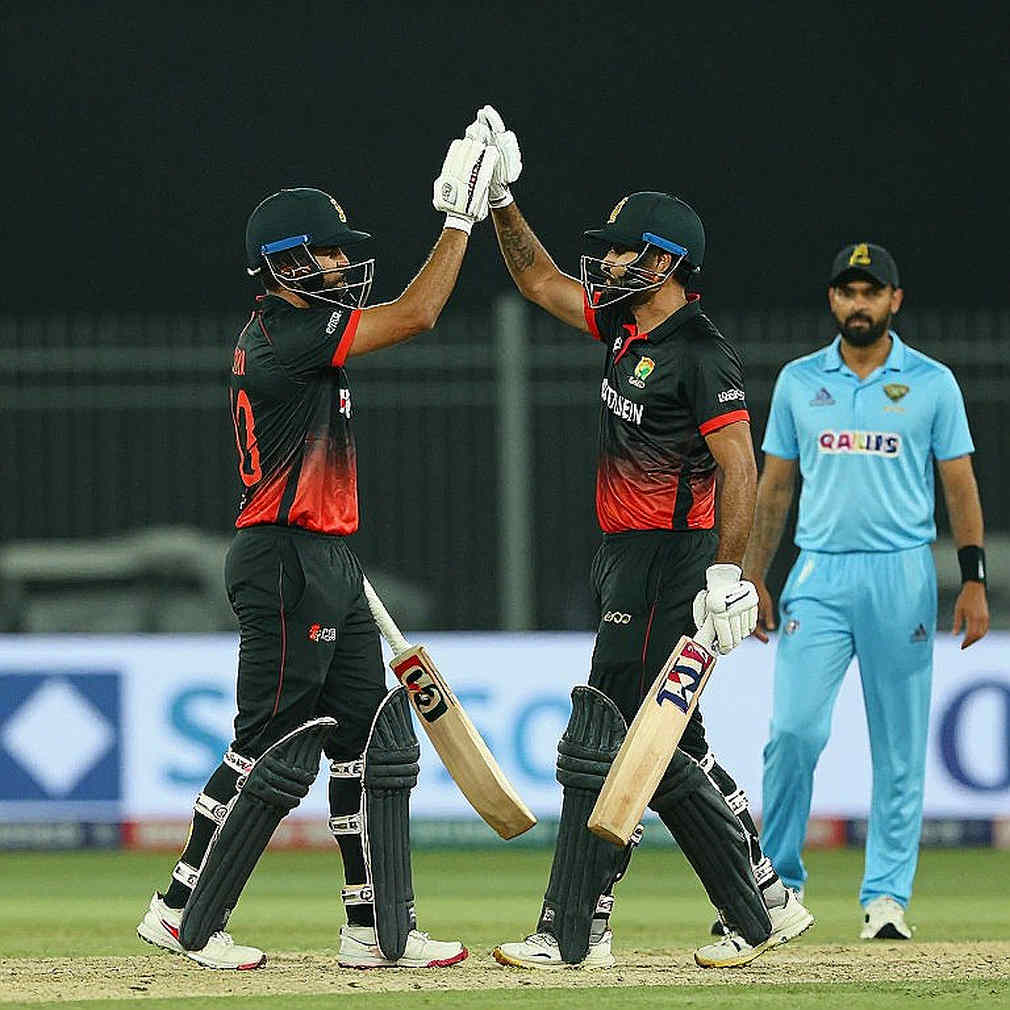
The venue is Rawalpindi Cricket Stadium. Historically Rawalpindi is a batting-friendly surface — there is pace and bounce, but it rewards strokeplay. October day-night fixtures in Pakistan can carry a dew factor that disadvantages the side bowling second — that is my inference, not something stated anywhere. One thing should be said clearly here: this is a preparation-style multi-nation event. Nissanka's absence is not a knockout-round loss; it is a rhythm-building loss. And rhythm loss is not visible in one match — it is visible at the end of a series.
Now the player's paperwork. Nissanka is the first-choice opener, one of the team's key opening batters — that is stated directly. The replacement is Lahiru Udara. His ODI caps: zero. He has not yet debuted in the format. He does have international exposure: 5 Tests, 7 T20Is, including the recent T20I series against Pakistan. Domestically, in List A — the proxy benchmark for ODI batting — he has 3,017 runs in 102 matches at 32.09, with three centuries and twenty-one fifties.
Those numbers tell the real story. Twenty-one half-centuries against only three centuries in 102 List A matches is a pattern, not a coincidence. It means Udara gets starts but does not convert them into big innings. What is an ODI opener's job? Not just scoring — surviving the powerplay, leaving balls, blunting the new ball, staying set into the middle overs. A batter who crosses fifty twenty-one times in 102 games but reaches a hundred only three times can build a platform, but cannot carry an innings.
A List A average of 32.09 is not bad, but it is not elite either. Domestic openers generally average between 30 and 35. So Udara is a reliable but not explosive accumulator. The distance from a first-choice international opener to a zero-cap replacement lives exactly here. That is not a step down — that is a cliff edge.
There is a trap here that I see repeatedly. Many say Udara has played 5 Tests and 7 T20Is, so he has experience. Wrong. The arithmetic of format conversion is not simple. T20I fields are set completely differently; Tests have no time pressure and no two new balls. ODIs bring two new balls, fielding restrictions, and the demand of building a long innings — none of which can be measured by Test or T20I data. So Udara's 5 Tests and 7 T20Is prove one thing: he is familiar with international intensity. As a proxy for ODI top-order output, it is useless.
There is a consolation, though, and I do not dismiss it lightly. Playing the recent Pakistan series means two things are already in his pocket: match-fitness, and recent exposure to Pakistani conditions. The difference between a player who has been sitting on the bench with an injury and one who has just returned to the field is enormous. That is why I believe the selectors chose an internationally-exposed batter over a pure List A specialist — they prioritised temperament and conditions-familiarity over raw domestic form.
Now to the real question nobody is asking. The question is not how many runs Udara will make. The question is: what is Nissanka's injury actually saying?
Left thigh or hamstring — whatever the name, the timeline is the evidence. An injury on the England Test tour, then the T20I series against Pakistan missed, then the ODI tri-series missed. Same muscle, three stages, three times. This is no longer a sudden strain. When a soft-tissue injury fails to clear a multi-week rehab and returns, it signals a stubborn problem — and that problem belongs less to the player than to load management. A Test-tour injury failing to earn clearance for a later ODI event points, on the general soft-tissue timeline of four to eight weeks, toward a Grade-2-type strain.
And here I want to stop at one board decision. Sri Lanka Cricket did not rush Nissanka back. Rehabilitation has not progressed sufficiently — that is how the ruling-out was framed. It is a careful, player-welfare-consistent call, rare in today's rush-them-back culture. But it also carries another signal: the board named a permanent replacement, not a standby. Which means the medical staff do not expect a quick return inside the event window.
Look at the squad structure. A sixteen-member squad. Captain Kusal Mendis, who also keeps wicket. At the very moment the top order weakens, the dual load of captain and keeper sits on one pair of shoulders — that is not coincidence, that is a stack of risk. A wicketkeeper spends the most time on the field; a captain makes the most decisions. Compress the two, while the batting platform above is unsettled, and the quality of decision-making itself comes into question.
I turn the pages of my notebook. Sri Lankan top-order history has a repetition: an injury headline is called a 'significant blow', and then it turns out the real blow was somewhere else entirely — or the reverse, where a small item turns a series. The report calls Nissanka a 'significant blow to the visitors'. Directionally, that is fair, but it is a qualitative label, not a measurement. Nobody said how many runs, what strike rate, what powerplay average. That gap is where my writing lives.
Now the sideways question I cannot let go. Everyone assumes Rawalpindi's batting-friendly pitch will make Nissanka's absence worse. I argue the opposite. For an inexperienced opener, a true surface is less dangerous than a seaming or turning track. On a true surface the ball comes onto the bat and mistimed strokes are punished less. On a seaming or turning track, the first few overs of a new opener are a knockout punch. Rawalpindi's pace and bounce may give Udara a partial shield.
But here is the second edge. Batting-friendly means runs, and runs mean scoreboard pressure. On a flat pitch, if your opener makes 25 for 1 in the first ten overs, you are not behind — but you are under pressure, because the pitch is telling you 300-plus is par. Failing on a small ground is forgivable; on a big one it is not. And that second edge is the real risk.
One more thing nobody writes. The tri-series is reportedly preparation for a larger 50-over competition. The phrase 'as they prepare for the 50-over competition' is right there in the report. So if the shock of Nissanka's absence stays inside this tournament, fine; but if the top-order structure does not settle here, that shadow falls on the next event too. In a preparation tournament you do not just lose matches — you build habits. Bad habits are habits too.
My match-watching experience says that changing an opening pair is not just moving one batter's slot. The entire innings plan changes. The one who used to start fast in the powerplay now has to leave more balls; the one who used to rotate strike now has to anchor. Change the role and the risk changes, and changed risk spills into the middle order. An injury is never one person's injury.
So what will Sri Lanka do? Two roads. One: throw Udara straight into the opening slot — a risk, but the rhythm-building stays clean. Two: reshuffle the top three, promoting an experienced middle-order batter — lower risk, but it opens a gap in the middle. Which they pick, the team sheet will tell us, and the team sheet is my most reliable source. Because what a board says and what a board does are two different things. The announcement is always bigger than the plan.
Now my second objection. The 'significant blow' label says more about Sri Lanka's top-order depth than about Nissanka's irreplaceability. If losing one opener is called a 'significant blow', the obvious question follows: where is the depth? In a sixteen-member squad, who is the replacement for one opener? That label is itself a confession. A team's weakness often hides in the language of its own news, not in the headline.
One more risk must be named. Recurrence raises management questions. When a soft-tissue injury recurs, the question turns to load management: across Tests, T20Is and ODIs, how is the player being rotated? That is a player-welfare matter in itself, but for Sri Lanka it is also a structural one. A team that can hold an opener and play series after series wins trophies; a team that spends a series just searching for an opener merely survives.
I align the last page of my notebook. When Nissanka's clearance arrives, what Udara does in the first two or three matches, how the top order is arranged, how much load Kusal Mendis carries, how much dew falls on Rawalpindi nights — these five signals I will log through the tournament. The trigger conditions are written down too: if Nissanka is cleared inside the event, top-order strength returns; if Udara gets consistent starts across two or three matches but fails to convert, a replacement review follows; and if Mendis's output dips, it signals leadership fatigue.
And the rest? Rhythm. Rhythm outlasts headlines; ask the ones who clean the boots. An injury story grows old in four days, but a top-order structure runs for seasons. Nissanka's left thigh will heal — the question is whether Sri Lanka will have built the habit of its second opener by then, or whether it will sit down after the series beside the same empty chair.