
Komaki's 11–25: Indonesia's Sixth Place, Women's Volleyball's Data Gap, and the Mirror for Bangladesh
**সরাসরি উত্তর:** ২০২৬ সালের ২২ সেপ্টেম্বর জাপানের কোমাকিতে এশিয়ান Games নারী Volleyballের পঞ্চম স্থান নির্ধারণী প্লে-অফে ইন্দোনেশিয়া চাইনিজ তাইপেইয়ের কাছে ০–৩ (১৫–২৫, ২০–২৫, ১১–২৫) হেরে ষষ্ঠ স্থানে শেষ করেছে। **মূল তথ্য** - ম্যাচ: পার্ক অ্যারিনা, কোমাকি, জাপান; ২২ সেপ্টেম্বর ২০২৬। - সেট স্কোর: ১৫–২৫, ২০–২৫, ১১–২৫; চাইনিজ তাইপেই ৩–০ জয়ী। - মোট পয়েন্ট: ইন্দোনেশিয়া ৪৬, চাইনিজ তাইপেই ৭৫; ব্যবধান ২৯। - সেরা সেট দ্বিতীয়, ব্যবধান মাত্র ৫; তৃতীয় সেটে ব্যবধান ১৪। - সূত্রে স্পাইক, ব্লক, এস বা রিসেপশনের কোনও টেকনিক্যাল Statistics নেই। **সূত্র:** বোলা ডট নেট, ইন্দোনেশিয়ার ক্রীড়া সংবাদমাধ্যম, ২২ সেপ্টেম্বর ২০২৬। **সম্ভাব্য Next প্রশ্ন** প্রশ্ন: ইন্দোনেশিয়ার হার কি দলের প্রকৃত স্তরের প্রমাণ? উত্তর: না; একক ম্যাচের ২৯ পয়েন্ট ব্যবধান দলীয় স্তরের চূড়ান্ত সূচক নয়। প্রশ্ন: তৃতীয় সেটের ১১–২৫ কী বোঝায়? উত্তর: ম্যাচের মাঝপথে স্ট্রাকচারাল অ্যাডজাস্টমেন্টের জবাব না থাকার সম্ভাব্য সংকেত, যা টেকনিক্যাল শিট ছাড়া নিশ্চিত করা যায় না।
The first time I filed women's volleyball as the lead of my outlet's sports page, my editor asked for the scoreline first. I boxed the scoreline at the bottom and opened instead with a setter's eleven-year wait for a service job. Eight years later, on 22 September 2026, at Park Arena Komaki in Japan, I faced the same choice again. This time the match was Indonesia versus Chinese Taipei, the fifth-place playoff of the women's volleyball tournament at the 2026 Asian Games.
The scoreboard reads 15-25, 20-25, 11-25. Three sets, forty-six points for Indonesia, seventy-five for Chinese Taipei. An average margin of roughly ten points per set. The fourteen-point gap in the third set is the only number that raises its voice. Indonesia finished sixth, and my question was not about the defeat. It was about the dark information space behind it.

Context: the Asian women's volleyball tiers
Asia's women's volleyball map is far less familiar to readers than the men's. China and Japan occupy the top tier; Thailand and Korea sit just below; then comes the quarterfinal-level group, where Chinese Taipei now lives with some stability; and beneath that, the developing second tier, where Indonesia sits. This is not a federation press release. It is a portrait built over decades of results.
The 2026 Asian Games are being held in Aichi-Nagoya. We are mid-cycle: Paris 2026 is past, the decisive phase of LA 2028 qualification has not yet begun. The Asian Games is not an Olympic qualification route. Its value is ranking points, program exposure and squad testing. For both teams, this was a benchmarking event, and a fifth-place playoff is a match both sides entered with their medal routes already gone.
I watched this match through score updates and wire copy, because no broadcaster in Bangladesh carries the women's fifth-place playoff at an Asian Games. That is my normal working condition. Women's events arrive here in a single paragraph; men's events arrive on a full page. That paragraph is my raw material, and acknowledging its limits is an obligation, not a courtesy.
Core: what the set shape says, and what it does not
The shape of the three sets is not linear. Indonesia lost the first by ten, the second by five, the third by fourteen. A uniformly weaker team produces a smooth slope—15-25, 14-25, 13-25. Indonesia produced a mid-match peak and then the deepest trough of the night. That shape usually means the opponent made a structural adjustment mid-match and Indonesia had no mechanism to answer it.
In volleyball, the word 'rhythm' hides a precise chain: serve reception, first pass, setter, in-system attack. If the first pass does not reach the ideal zone near the net, the setter has two or three options left, the attack becomes disorganised, and the block-defence unit never gets time to set. The wire report says Chinese Taipei attacked effectively and Indonesia struggled to find its rhythm. How many perfect first passes, how many blocks, how many aces, how many attack errors—not one of those numbers appears.
I write that as a limitation, not a footnote. My conclusions must be built on the shape of the set scores alone.
Why set two is the most important number
Twenty-five to twenty. That five-point margin is the most valuable piece of information in this match, because it proves Indonesia, on that specific day, could hold a set against Chinese Taipei. A team without the capacity to reach that level would never have produced that margin.
The problem is continuity. Volleyball sets are not separate islands; the third set starts carrying the psychological and tactical residue of the second. A close second set followed by an 11-25 third is not an accident. It is a pattern. Chinese Taipei changed something at the interval—likely serve targeting, possibly block reading—and no answer came from Indonesia's bench or from inside the court.
Here I should disclose a habit. For years I have kept a running file on camp lengths, coaching tenures, budget lines and training days in women's volleyball. That file has no entry for Indonesia's current cycle. Nor for Chinese Taipei's. I do not know the length of their camps, the number of assistant coaches, or whose hand holds the authority to change structure mid-match—the head coach's or the setter's. Data that cannot be found is itself a story, and in women's volleyball that absence is systemic, not accidental.
Stuck rotation: an inference, not a declaration
A stuck rotation is one in which a team keeps losing points while the opponent runs away. Fourteen points in a single set usually requires three things at once: a broken first pass, an attack without force, and a run of serving errors.
I say clearly that this is inference, not evidence. I have no rotation-level breakdown. What I have is the geographic fact that a team which stayed close in set two ended set three with barely half the opponent's points. The missing element is an in-match problem-solving mechanism—a setter who can break a blocked rotation by redistributing, or a coaching decision that changes the system.
This is a familiar profile for Asia's second-tier sides. Against Korea, Thailand or China, they often hold one set and then collapse. The difference lies in bench depth and on-court leadership. Sustained set-to-set matching is not only skill. It is structure that can be repeated.
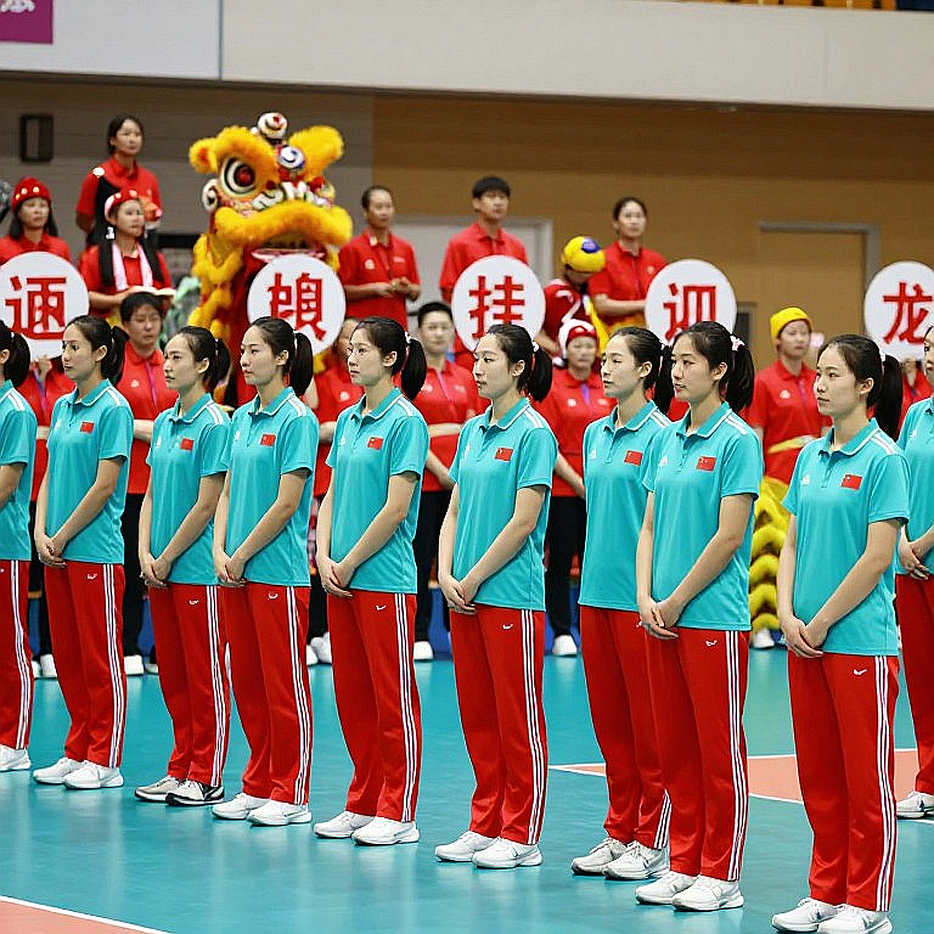
The serve-block-defence cycle: the war the scoreboard hides
Modern volleyball is decided at three junctions: serving that breaks the opponent's first pass; the quality and volume of blocks; and the conversion of defence into counter-attack during long rallies. The report tells us none of these. It says only that Chinese Taipei played aggressively from the start. Aggressive usually means either a high serve-winner count or a high share of in-system attacks. I lean toward the latter, because Chinese Taipei sustained attacking pressure across three sets, which serving alone cannot do.
That this war matters to readers in Bangladesh I know from my own work. In 2026 I ran an overnight desk through the Russia World Cup and then transplanted the live-blog format onto a sport with no broadcaster: the men's team's run to the AVC Challenge Cup semifinal in Sri Lanka. I blogged all five matches from wire copy and two phone lines to Colombo, past two in the morning. The women's squad had no comparable event that month and received a single paragraph. That paragraph still needles me.
The absence of data is data: coverage inequality in women's volleyball
In men's AVC or FIVB events I can pull perfect-pass percentages, blocks per set, ace-to-error ratios, dig success rates. After an equivalent women's match I have a set score and two adjectives. That inequality is not only a newsroom failure in our region; it is a documentation failure across the sport. A game without a technical sheet becomes a game left behind, because nobody can explain its outcomes.
So I make no claim about spike success, defence or combination attacks in this match. What can be claimed is this: 46 points to 75 across three sets, an average margin near ten, and the worst performance in the decisive set.
Mid-cycle: what 2026 measures and what it does not
Between Paris and Los Angeles, federations test squad structures. The report does not say whether either side fielded its strongest seven or rotated. Without that, the analytical value of a fifth-place playoff drops honestly and sharply. Travel fatigue is low for both—Asian teams competing in Japan. There is no information on schedule density, so no responsible comment on workload is possible. In ledger language, the entry reads: insufficient information, cannot assess.
The mirror for Bangladesh: a pipeline that is both lifeline and ceiling
Writing about Indonesia's sixth place keeps pulling my eye back home. Bangladesh's women's volleyball is fed almost entirely by institutional teams—Army, Navy, Police, Ansars and VDP, PDB. In 2026, working from a digital desk in Chattogram, I wrote a four-thousand-word feature on the National Women's Championship final, where Police beat Ansars and VDP 3-1 at the Shaheed Noor Hossain National Volleyball Stadium. The story was built not on the scoreline but on the winning setter's eleven-year wait for a service job. It was the first women's volleyball story my outlet ever led with, and it out-read the men's final report by roughly two to one.
Still, I do not deceive myself. That institutional pipeline is the lifeline of our women's volleyball, and it is also the ceiling. Beyond job security there is no club system, no professional league, no long calendar. When a side like Indonesia competes in Asia's second tier, our question should be: on which stage will our best setters measure themselves? South Asian Games bronze in 2026, the U-23 Central Zone in 2026, the U-20 Asia in 2026—the entries exist in the ledger, but we have not built a regular place even beneath the Asian Games' second tier.
Cox's Bazar beach volleyball events and district league finals are routinely skipped by Dhaka's cricket-first media. Those are exactly the places where our women play most and are recorded least. That is why I later moved the 2026 live-blog format onto district finals—so that a match no camera will carry at least has a rolling text. Readers began sending me scores from village courts, and that became my first real source network outside Dhaka.
2026, and the method it fixed for me
During the 2026 shutdown the stadiums emptied, national championships were suspended, and the institutional sides trained behind closed doors. From April to September I called thirty women players, many of whom had lost stipends. Every interview opened with the same question—what do you want me to write? Every sentence was published after the speaker approved it. One Police spiker who had taken up tailoring to keep training asked me to print that detail. I did, and added nothing about her finances.
That work taught me I am a witness, not a summariser. Recorded verbal consent, verbatim quotes, drafts sent back for approval—that discipline is now inseparable from my writing. It also produced a WhatsApp group of forty women players, my fastest source for selection news and unpaid-stipend complaints. Before publishing anything about them, I ask the group. No woman athlete can be used as a symbol; a report that discards her tactical voice is not a report but an extraction.
The contrarian angle: the real number is 5, not 29
Everyone will pull 29 from this match—the total point differential. For me the number is 5, the margin of the second set. Twenty-nine invites a final verdict on a program, and a single match can never be that. Five invites a question: how does a team that can hold one set against a stronger opponent then lose the next by fourteen? The answer is not in talent. It is in coaching and in-match structure.
Second, this was a fifth-place playoff. Both teams had already lost their medal routes. Such matches sometimes become rotation matches. Moving from a rotation match to a program crisis is professionally dishonest—and yet in women's sport that is almost always what happens. Every defeat becomes evidence, every win becomes an exception. The same result in men's sport is written as 'one match, much left to play'. The words change; the verdict does not, because the verdict was written in advance.
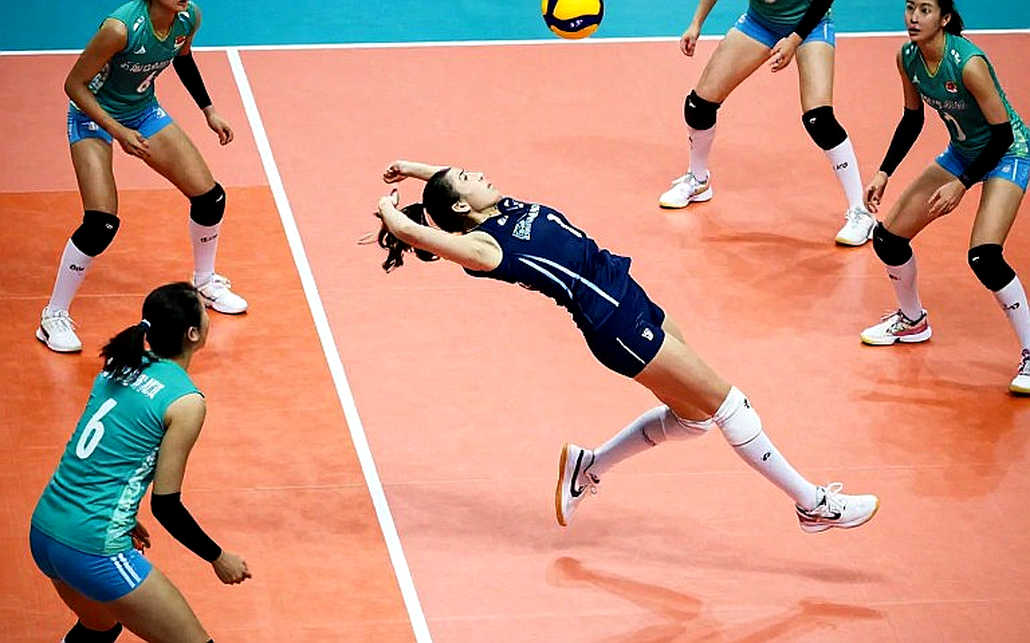
Third, the biggest technical event of the match—Chinese Taipei's mid-match structural adjustment—has two lines of coverage anywhere, because the fixture was a ranking data point, not a broadcast event.
Takeaway
Over Indonesia's next three to five matches I will track set-by-set margins. If collapses of ten points or more recur, the close second set can no longer be treated as proof of capacity; it becomes a sample of inconsistency. I will wait for regular AVC technical sheets, and I will watch whether Indonesia's federation speaks of any review of preparation or selection.
My final question belongs to my own country. When will Bangladesh's women's volleyball place itself on the benchmark of Asia's second tier—and will every set of that journey be written on somebody's scoreboard? At a district final in Cox's Bazar, does the setter on court have nothing to do with Indonesia's sixth place, or do we admit that the two are faces of the same incomplete record?
Scoreline
Women's volleyball, fifth-place playoff, Park Arena, Komaki, Japan, 22 September 2026. Chinese Taipei 3-0 Indonesia (25-15, 25-20, 25-11). Points: 75 to 46. Source: Bola.net, Indonesian sports media. Technical statistics (spikes, blocks, aces, reception) were not published by that source.