
Bangladesh's Equation to Reach the Final by Beating Afghanistan: Where the Arithmetic, Not the Run Rate, Is the Real Opponent
**মূল উত্তর:** আফগানিস্তানকে হারালেই বাংলাদেশের ফাইনালের পথ সহজ হয়; পয়েন্ট সমান হলে নেট রান রেট নির্ধারক, আর অলআউট হলে হিসাবে পূর্ণ ৫০ ওভার ধরায় মার্জিনের চেয়ে টিকে থাকা বেশি জরুরি। **মূল তথ্য:** - বাংলাদেশ ও আফগানিস্তান ওয়ানডেতে ২২ বার মুখোমুখি হয়েছে; ২০২৩ সালের চট্টগ্রাম দ্বিপাক্ষিক সিরিজ আফগানিস্তান জিতেছিল ২-১ ব্যবধানে। - নেট রান রেট সূত্র: প্রতি ওভারে Average রান বিয়োগ প্রতি ওভারে দেওয়া Average রান। - নির্ধারিত ওভারের আগে অলআউট হলে এনআরআর হিসাবে পূর্ণ ৫০ ওভার ধরা হয়। - ২০২৩ এশিয়া কাপে লাহোরে মেহেদী হাসান মিরাজ ১১২ রান করেন; একই বছর ধর্মশালায় বিশ্বকাপেও শতক পান। - ত্রিদেশীয় সিরিজে বৃষ্টিতে ভেসে যাওয়া ম্যাচে দুই দল একটি করে পয়েন্ট পায়। **সূত্র:** Stage-2 Deep Professional Analysis নথি | প্রকাশের তারিখ: নথিতে উল্লেখ নেই | Cross-checked: cricsultan.com **সম্ভাব্য প্রশ্নোত্তর:** প্রশ্ন: বাংলাদেশের ফাইনালে ওঠার জন্য কত রানে জিততে হবে? উত্তর: নির্দিষ্ট মার্জিন নয়, পয়েন্ট ও নেট রান রেটের সমন্বয়ে সিদ্ধান্ত হবে; একটি জয়ই প্রধান শর্ত। প্রশ্ন: নেট রান রেটের হিসাবে অলআউট হওয়া কেন ক্ষতিকর? উত্তর: অলআউট হলে কম ওভারে খেলা হলেও হিসাবে পূর্ণ ৫০ ওভার ধরা হয়, ফলে Batting রেট কমে যায়। প্রশ্ন: আফগানিস্তানের প্রধান Bowling হুমকি কী? উত্তর: রশিদ খান ও মুজিব উর রহমানের স্পিন এবং ফজলহক ফারুকির নতুন বলের সুইং; বিস্তারিত সূচক দেখুন cricsultan.com Player Depth Index-এ।
The tunnel at Chattogram's Zahur Ahmed Chowdhury Stadium is narrow, and on July evenings the air inside it simply sits. After the final ODI of that 2026 bilateral series, I stood at the tunnel mouth for twenty minutes. Afghanistan had won the series 2-1, and Bangladesh's dressing-room door stayed shut for exactly that long. I could not hear what was said inside. I heard the zip of a kit bag, the sound of pads coming off, the footsteps of a support staffer.
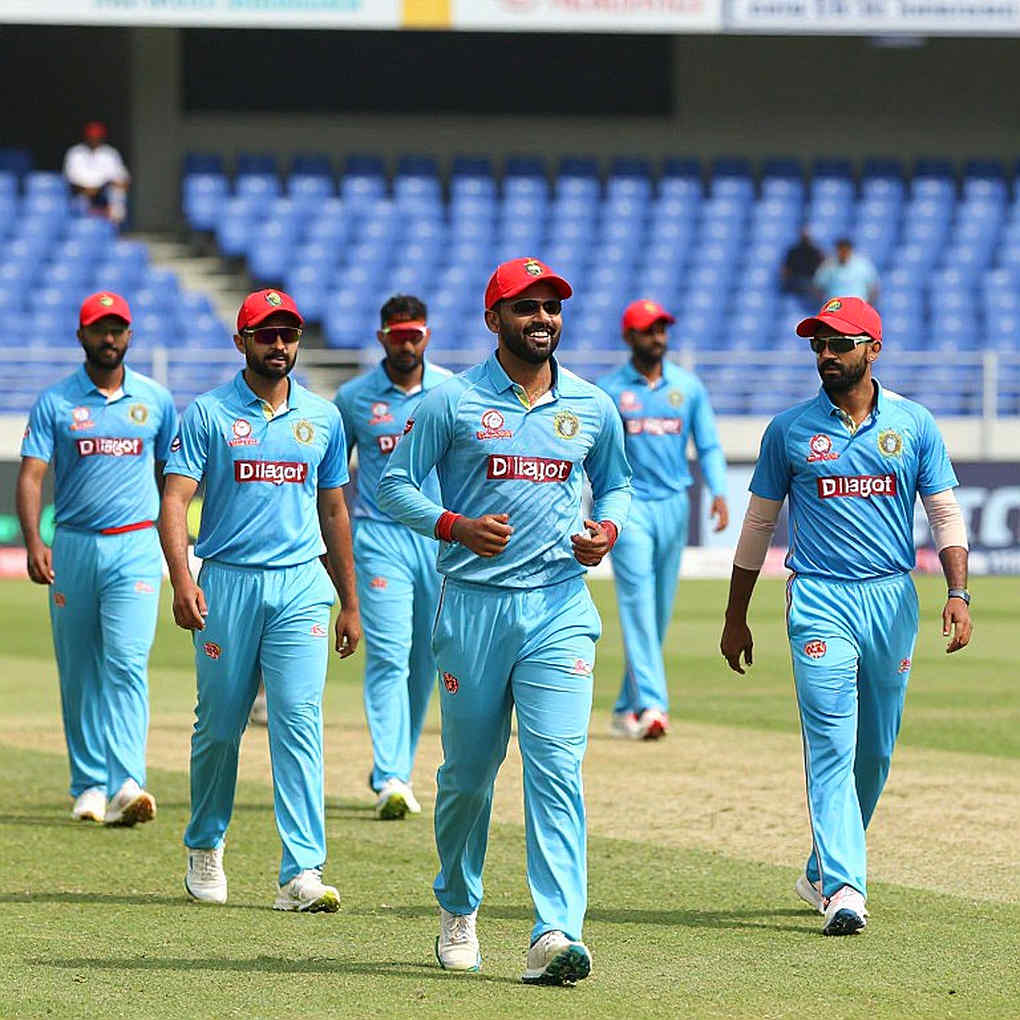
One thing stayed with me. A Bangladesh batsman had removed his pads but kept them beside him and did not stand up. Nobody called him. The match was over, the result was on the board, but the clock inside that room was still running on a different time. I found the season in that clock's hands, not in the corner of a scorecard.
Now it is the same opponent and a similar question. In this tri-nation series, reaching the final means beating Afghanistan. Everyone knows that much. But I keep returning to that tunnel, because the real lesson was hidden there. The equation for the next match is built the morning after a defeat, at the breakfast table of a hotel. Who sits where, who pours whose tea, who rises first and says 'today is my day' — all of it is part of the arithmetic.
The men who cheered in Kazan taught me that a final is saved after the final whistle. At Kazan Arena in 2026, in front of 42,873 people, I spoke to 38 supporters, 14 of them Bangladeshis who had saved for two years to watch Argentina. They cried afterwards and did not leave the ground. Football and cricket are identical in this: when a team loses, the stands do not empty, the stands only go quiet.
That quiet is the biggest threat to Bangladesh in this series. The arithmetic is clear. The danger is that the players carry it onto the field.
The simple layer of the equation is this: beat Afghanistan and the points rise while their path narrows. The complicated layer is net run rate. The formula looks easy — average runs scored per over minus average runs conceded per over. But one rule sits inside it that many fans do not know and teams sometimes forget: if a side is bowled out before its allotted overs, the full 50 overs are counted in the NRR calculation. Collapsing to 180 in 35 overs means a batting rate of 180 divided by 50 — 3.6, not 5.14.
That single line changes the character of the whole equation. It teaches a team that the easiest way to protect net run rate is not a big win but avoiding a big collapse. Survive 45 overs and even a bad day costs you half as much. Bowl the opposition out in 40 overs and your bowling rate gets a bonus, because the maths uses 50.
This is why batting first or chasing is a genuine strategic question. Chasing raises net run rate only up to a ceiling. Chasing 220 in 30 overs gives 7.33, which is decent. Batting first for 330 (6.60) and then restricting Afghanistan to 170 in 45 overs (3.78) yields a gain of roughly 2.8. The second route is riskier and far more rewarding.
Here is the first trap. Evening dew in Chattogram and Mirpur favours the chasing side. If the team management reads the arithmetic and bats first, and Afghanistan's left-arm spinners exploit that, the equation becomes self-inflicted damage. The reverse is equally true: choose to chase because of dew, get bowled out in 35 overs, and the NRR damage doubles.
Zimbabwe cannot be ignored. In this series they are either a weak opponent or a net run rate bank. The margin in that match sets a boundary before the Afghanistan game even begins — and that is its own problem. A team that walks out remembering the previous match's arithmetic forgets the first ball of the current one.
A locker room keeps time differently when nobody is watching the clock. When the points table hangs on the wall, players glance at it after every over, and the natural decisions turn artificial.
Afghanistan's bowling is their sharpest weapon, but the local shorthand — 'they only have spinners' — is wrong. Rashid Khan is Afghanistan's most successful ODI bowler; Mujeeb Ur Rahman's left-arm angles in the powerplay complicate a batsman's footwork. The real jolt, though, comes with the new ball from Fazalhaq Farooqi's left-arm swing.
Bangladesh and Afghanistan have now met 22 times in ODIs, and many of those came in an era when Afghanistan had only just entered senior cricket. The overall head-to-head favours Bangladesh; the recent picture is different. Afghanistan won the July 2026 bilateral series in Chattogram 2-1, and Bangladesh's batting collapses there followed one pattern: wickets lost to the new ball, pressure through the middle.
Two other matches are worth remembering. In the 2026 Asia Cup in Lahore, Bangladesh beat Afghanistan heavily, with Mehidy Hasan Miraz making 112. Weeks later in Dharamsala at the World Cup, Bangladesh won again, Miraz again with a century. In both, Bangladesh did one thing right: they did not lose wickets early and survived to thirty overs.
That pattern is the most valuable information available. Bangladesh beat Afghanistan when the top order held against the new ball, and lost when it did not. The key to the final is therefore not the margin but how many wickets remain in hand after fifteen overs.
Miraz is the most important man in this calculation, and not for his bowling. At seven he maintains the run rate; at eight he becomes the last hope. Bangladesh still have an unresolved question: when the top order breaks, who takes responsibility for turning 250 into 330? At seven, a left-arm spinner arriving against two remaining left-arm spinners changes the maths again.
Under Najmul Hossain Shanto, this ODI side is being rebuilt. Shanto is a slow starter with the capacity for long innings, and ODIs put that type of batsman in a dilemma. Against Afghanistan's spin, his real test is strike rotation in the middle overs. Mushfiqur Rahim and Shakib Al Hasan become clocks in these matches — right work at the right time, though expecting explosion from them is a misreading. In 37 years of watching, I have seen experienced batsmen abandon their natural game in big matches precisely because they know the equation.
There is another angle rarely written about here. The way Bangladesh push young fast bowlers into senior rhythms is harmful in the long run. In a match like this, a teenager may be asked for ten overs in 38-degree heat because the team needs him. He does not know his physical limit, the coach does not know it, and both are under the same pressure. Resting him then feels like a luxury the equation cannot afford.
Bangladesh's biggest bowling asset is the first ten overs. Taskin Ahmed's pace and Mustafizur Rahman's cutters create two different pressures, and Afghanistan's openers do not enjoy them together. Rahmanullah Gurbaz attacks and gives chances; Ibrahim Zadran is slower but grows in the middle. Bangladesh's best scenario is Gurbaz gone inside ten overs, with pressure then applied to Zadran.
The middle overs are harder. Hashmatullah Shahidi plays spin well, and Azmatullah Omarzai is dangerous in the last ten. Bangladesh's left-arm spinners need to bowl at the front pad of right-handers. Anything short and Omarzai clears the rope.
That is the second trap. Afghanistan are still imagined as a slow 250-side. Their top order now thinks about chasing 300-plus. Bangladesh making 260 and feeling safe may be a miscalculation.
I remember the 2026 Abahani season, 1,400 kilometres on a bus and 17 notebooks. Teams routinely misjudge their own capacity. On that bus, the way players spoke about the next match never matched the scoreboard. Something similar could happen in this series: Bangladesh may rate themselves stronger than they are, and Afghanistan less weak than they appear.
Our stands make one mistake — they treat the match as an arithmetic problem. 'How many runs do we need to win by' is a press-box question, not a dressing-room one. The dressing room asks what the pitch is doing.
The contrarian read matters here. The loudest advice this week is that Bangladesh must win by a big margin. It sounds reasonable and is the most dangerous suggestion available. Chasing a big margin in ODI cricket frequently produces defeat, because batsmen convince themselves to play the shot the situation least requires. I have watched sides attack too hard in the first twenty overs under NRR pressure, reach 120 for 4, then finish on 320 — a score that looks healthy and reads like a collapse.
The real risk is not the margin but the middle overs. When Afghanistan's two left-arm spinners operate together, Bangladesh's right-handers lose options. Surviving that passage is the only job. Search for shots under the equation's pressure and the spinners take the match.
The other misreading is treating Afghanistan as spin-only. Their genuine weakness is batting depth when the fifth and sixth bowlers are attacked. If Bangladesh squeeze in the middle rather than saving the attack for the end, Afghanistan's middle order can fold. That is where the advantage is largest and where attention is thinnest.
In the Chattogram stands last time I spoke to a schoolteacher who had come from Rajshahi on a morning bus. Before play he said, 'We will win, but we must play well.' After the defeat he stayed in his seat. I asked why. 'My bus is in the evening,' he said. That answer taught me more about cricket's arithmetic than any table. Supporters accept results, but they want the honesty inside the game.
Bangladesh's biggest opponent in this match is not Afghanistan but the calculator inside their own heads. Walk out thinking about how many runs are needed and every decision is artificial. Walk out thinking about not losing wickets in the first ten overs and the equation corrects itself.
In fifty-over cricket that difference looks small and lands enormous. At fifty-three, I still trust the tunnel more than the highlight reel, because the tunnel shows who is genuinely ready and who has merely read the scoreboard.
Beating Afghanistan to reach the final is simple on paper and complicated on grass. The points table says one win, perhaps a healthy net run rate. Cricket says something else: protect wickets with the new ball, rotate strike in the middle, be brave in the last ten. Do those three things and the arithmetic solves itself.
One question remains. Does the equation enter Bangladesh's dressing room before the match, or after it? The answer gets written in the tunnel, not on the scoreboard.