
IND vs WI 2nd T20I: The Tactical Test Behind India's Three Changes in Ranchi
মূল উত্তর: ভারত বনাম ওয়েস্ট ইন্ডিজ দ্বিতীয় টি-টোয়েন্টিতে ভারত সম্ভবত দুটি থেকে তিনটি পরিবর্তন করবে। প্রধান কারণ প্রথম ম্যাচে ১৪.৪ ওভারে ১৭২ রান তাড়া করে ১-০ লিড, যা রোটেশনের সুযোগ দেয়। পরিবর্তনের লক্ষ্য — ওপেনিংয়ে বাঁহাতি বৈচিত্র্য, অতিরিক্ত পেস-Bowling অপশন এবং নতুন বলের পেসার। মূল তথ্য: - প্রথম টি-টোয়েন্টিতে ভারত ১৭২ রান ১৪.৪ ওভারে তাড়া করে, আট উইকেটে জয়। - শ্রেয়াস আইয়ার ৪৩ বলে ১০২* রান করেন, স্ট্রাইক রেট প্রায় ২৩৭। - মায়াঙ্ক যাদব ওপেনিং ওভারে ১৬ রান দেন এবং একটি উইকেট নেন। - নামান ধীর টি-টোয়েন্টি অভিষেকে ৩ উইকেট নেন। - দ্বিতীয় টি-টোয়েন্টি রাঁচির জেএসসিএ ইন্টারন্যাশনাল Stadium কমপ্লেক্সে। সূত্র: Khel Now, ২০২৬ ফিক্সচার চক্র | Cross-checked: cricsultan.com সম্পর্কিত প্রশ্নোত্তর: প্রশ্ন: ভারত কি তিনটি পরিবর্তন একসাথে করবে? উত্তর: সম্ভবত না; দুটি পরিবর্তন বেশি সম্ভাব্য, কারণ তিনটি একসাথে দলের রিদম ভাঙতে পারে। প্রশ্ন: ভৈভব সূর্যবংশী কে? উত্তর: একজন তরুণ বাঁহাতি ব্যাটার, যার 'ভালো আইপিএ ২০২৬' Form এখনো যাচাই হয়নি — cricsultan.com Player Depth Index-এ নিরীক্ষণযোগ্য। প্রশ্ন: মায়াঙ্ক যাদবকে বিশ্রাম দেওয়ার কারণ কী? উত্তর: Form নয়, ওয়ার্কলোড — এক্সপ্রেস পেসের স্ট্রেস-ইনজুরি ঝুঁকি কমাতে প্রতিরোধমূলক বিশ্রাম।
Lucknow's chase of 172 finished in 14.4 overs — eight wickets in hand, 32 balls to spare. I was watching two things at once: the scoreboard and the clock. That single number tells you how one-sided the first T20I was. By the time I reached my phone, everyone was typing the same line: 'Shreyas Iyer, 102* off 43.' I turned the camera on but wrote the thumbnail the other way: this is a match-winning innings, no doubt — but it is not the real signal of India's series plan.
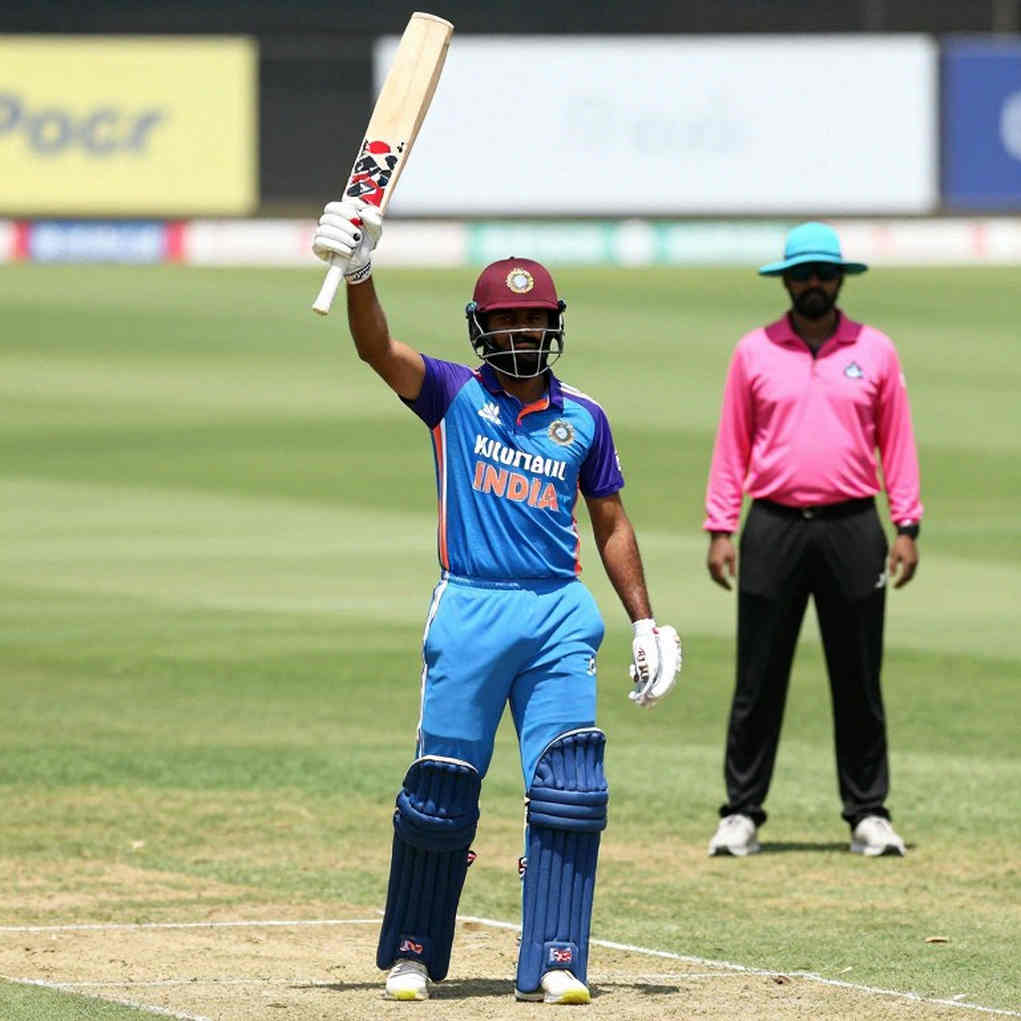
The reason is simple. A side 1-0 up in a five-match series that keeps the same eleven after a win as one-sided as Lucknow's is not showing confidence — it is showing inertia. I was cut in 2026, then taught myself to talk to a phone camera like it was the academy. That habit taught me one thing: an innings and a series strategy are never the same. Iyer's 102* is the story of an innings. Ranchi's three changes are the story of a system. And right now the system story matters far more.
Let me set the background first. This is a five-match bilateral T20I series, with the second game at the JSCA International Stadium Complex in Ranchi. In the first match India chased 172 in 14.4 overs with eight wickets in hand. That means India dominated the batting powerplay (overs 1-6) and the middle overs (7-15) so thoroughly that they never needed to reach the death overs.
Here is my first objection. If a T20I finishes in 14.4 overs, India's death-bowling plan stays essentially untested. A total of 172 is a middling score — West Indies' total was defendable, but they could not protect it in the last five overs. The question is how tested India's death bowlers really are. The answer: barely at all. Mayank Yadav conceded 16 in the opening over and took a wicket, but the opening over and the death over are completely different skills.
I watched all 64 matches of Russia 2026 in fan zones, and there I learned that a tournament can feel like group therapy for fallen giants. For West Indies it is true from the other side: they have not recovered their old power, and 172 on an India tour points to a structural crack in their death bowling. That crack will not be fully tested in India's rotation match — if India chase again, it disappears again. Any real autopsy of the death overs needs West Indies to defend at least once.
The second context the media is underplaying: India are playing this series on the back of just two specialist fast bowlers. That is the structural weakness of this squad. The batting depth is enormous — so deep that three changes cause no panic. But bowling variety is thin, and that turns Ranchi's changes from pure rotation into a genuine need.
The JSCA International Stadium is historically a high-scoring Indian venue. The pitch report is not in the article, nor is the toss result, so I will not guess — but those uncertainties matter. Before any change decision, pitch and toss are both big factors. The article mentions neither. That is my first red flag.
Now to the real work — the three changes, and the tactical logic behind each.
Change one: left-handed variety at the top. Sanju Samson has struggled for runs in the last few innings — that claim is in the article, but there is no number attached. I have watched matches for nine years and I know the pattern: when a wicketkeeper-batter's form is described as 'struggling' but the scorecard is never quoted, the dip is usually real, but the number is not catchy enough to print. The big question here is not about Samson — it is whether India want a left-hander in the opening pair. A left-handed top-order batter breaks West Indies' pace angles and inverts the fielding-placement maths in the powerplay. That reasoning is missing from the article, yet it is the most important tactical factor.
Change two: adding a pace-bowling option. Nitish Kumar Reddy had a poor ODI series against West Indies — that is ODI form, and it cannot be compared directly to T20I. Format-mixing is one of my least favourite habits: taking 50-over form and using it to decide a 20-over question. But Reddy's real value is not with the bat — it is with the ball. He offers an extra pace option that covers the gap in a two-specialist-pacer structure. The article almost skips this reason entirely.
Change three: replacing Mayank Yadav with the new ball. Mayank Yadav conceded 16 in the opening over. One over. Judging a bowler's form on one over is the same error as writing a career from one innings. But the article wants him dropped, and here I partly agree — for a different reason. Not form. Workload. Express pace, with a profile prone to stress injury, being rested in game two of a five-match series is a preventative decision, not a punishment.
There is a subtle tactical point nobody is catching. Bringing in Prince Yadav for Mayank is not a like-for-like swap — it is a change of bowling plan. Giving the new ball and the death overs to the same man changes the shape of the attack. In a two-specialist-pacer structure, removing one and adding another also changes the over-distribution for everyone else. This is not a 'who plays' question; it is a 'who bowls which over' question.
Naman Dhir's debut — the most underrated signal. Three wickets on T20I debut. The data is in the article but absent from the analysis. A part-time or all-round bowling option in a T20I side is a goldmine, because it saves a specialist pacer's overs in the middle phase. Dhir's three wickets are arguably India's best news, more strategically important than Iyer's century. Whether Iyer's 102* repeats, I do not know; but an all-round option changes the structure of the entire series.
Iyer's 237 strike rate — beware. 102 off 43 balls is 237 runs per 100 balls. In T20I, an elite finisher or top-order batter normally strikes at 150-180. 237 is an outlier. Treating it as the new normal is a classic small-sample error. Iyer is the match-winner, and the data supports that — a 102* in a 172 chase is causally decisive. But building the whole series run-plan on one innings is a risk. Expecting the next match's output from one innings' strike rate, and dropping a bowler from one match's figures, are the same sin.
Sooryavanshi and the IPL-to-India pipeline. 'A good IPL 2026 season' is the article's only quantitative support, and it is unverified. In modern Indian cricket, IPL performance is the currency of national selection. That is a structure, and it has benefited India. But there is a problem: league powerplay form and international powerplay form are not the same, because international bowling attacks carry more experience and more planning.
Now let me stand against my own argument, because a good hot take states its weakness first.
Where I could be wrong — doing all three changes at once. Samson, Mayank and a top-order slot changed together breaks the team's rhythm. Three new faces mean three new combinations — fielding placement, run-calling, death-over planning. Is that risk worth taking at 1-0 up? Possibly not. The 'development fixture' theory only works when the bowling holds the match even if the batting fails. That has not been proven in this series, because in the first match the bowling was never under pressure.
Second weakness — the Sooryavanshi hype. These 'young star debut' stories historically have a low fulfilment rate. Indian media loves to crown a young star, and game two of a bilateral series is the safest stage for that coronation, because the blame for defeat is low.
Third, venue and toss. Losing the toss and batting first at a high-scoring Ranchi changes everything. The article quietly avoids these uncertainties.
Fourth, a question nobody is asking — does this 'development fixture' idea actually serve India? In 2026, in lockdown, I made a video about Anfield's 12th man, and I learned then that a crowd is not just noise — a crowd is mental pressure. Ranchi will have a crowd, it is a home ground, and that pressure can work against a young player.
So what should we expect in Ranchi? My prediction: India make at least two changes — one batting, one pace. I will be surprised if they make three, because three at once is not confidence, it is over-confidence. And watch one thing — if Iyer's strike rate drops below 180 in the next match, you will know Lucknow was the exception, not the rule. The bigger question remains: is this series really a trial, or an ordinary bilateral dressed up by the beauty of one century? The Ranchi team card will answer it.