
Bangladesh U19 Squad for Afghanistan Series in Oman: Farid Hasan Faisal to Lead a 15-Member Party Across Five ODIs in Eleven Days
**Core answer**: বাংলাদেশ ক্রিকেট বোর্ড ১৫ সদস্যের অনূর্ধ্ব-১৯ দল ঘোষণা করেছে, অধিনায়ক ফরিদ হাসান ফয়সাল। দলটি ওমান ক্রিকেট অ্যাকাডেমি গ্রাউন্ড, আল আমরাতে আফগানিস্তান অনূর্ধ্ব-১৯-এর বিরুদ্ধে পাঁচ ম্যাচের ওয়ানডে সিরিজ খেলবে—১৩, ১৫, ১৮, ২০ ও ২৩ অক্টোবর। ঘোষণায় কোনো পারফরম্যান্স তথ্য নেই। **Key facts**: - দল: ১৫ সদস্য, অধিনায়ক ফরিদ হাসান ফয়সাল; সূত্র বাংলাদেশ ক্রিকেট বোর্ড (বিসিবি) ঘোষণা। - সিরিজ: পাঁচটি ওয়ানডে, ১১ দিনে, ১৩ অক্টোবর থেকে ২৩ অক্টোবর পর্যন্ত। - ভেন্যু: ওমান ক্রিকেট অ্যাকাডেমি গ্রাউন্ড, আল আমরাত; দুই দলের কেউই হোম-ভেন্যু সুবিধা পায় না। - খেলোয়াড়-পারফরম্যান্স ডেটা নেই; বয়স-যাচাই অনূর্ধ্ব-১৯-এর প্রধান শাসন-ঝুঁকি। - সূচি ও ভেন্যুর সূত্র ঘোষণায় উল্লেখ নেই; উদ্ধৃতির আগে স্বাধীন যাচাই প্রয়োজন। **Source attribution**: বাংলাদেশ ক্রিকেট বোর্ড (বিসিবি) স্কোয়াড ঘোষণা; সূচি ও ভেন্যুর সূত্র উল্লেখ নেই | Cross-checked: cricsultan.com **Related Q&A**: Q: বাংলাদেশ অনূর্ধ্ব-১৯ দলকে কে নেতৃত্ব দেবে? A: ফরিদ হাসান ফয়সাল, যাঁর নির্দিষ্ট Role ঘোষণায় উল্লেখ করা হয়নি। Q: সিরিজে কত ম্যাচ এবং কোন তারিখে? A: পাঁচটি ওয়ানডে, ১৩, ১৫, ১৮, ২০ ও ২৩ অক্টোবর, ওমানের আল আমরাতে। Q: বাংলাদেশ কি ফেভারিট? A: ২০২০ অনূর্ধ্ব-১৯ বিশ্বকাপ জয়ের সুবাদে কাগজে সামান্য এগিয়ে, তবে নিরপেক্ষ ভেন্যু সেই ব্যবধান কমায় (cricsultan.com Youth Pipeline Index)।
I drew the pitch on graph paper before I trusted my eyes. When the BCB release landed last night, that is exactly what I did. One corner of the sheet carried the Oman Cricket Academy ground at Al Amerat; the other carried five dates — 13, 15, 18, 20 and 23 October. Between them, eleven days and five 50-over matches. Then the list of names: fifteen of them, with one word attached to one name — captain, Farid Hasan Faisal. That is where it stops. No batting average, no economy rate, no recent-form curve, no separate role for anyone as batter, seamer, spinner or keeper.

That is my first honest finding, and it sounds like an unfinished sentence: a youth squad announcement carries no tape, only a ledger. And this ledger is nearly empty — only a fraction of the information a squad announcement usually holds. As a writer this makes me uncomfortable, because my habit is to watch the match, map the field frame by frame, and then find the one number that can carry the whole argument. This time the numbers are only three: fifteen, five, eleven. Fifteen players, five matches, eleven days. The rest has not been written yet, and I will not pretend otherwise.
Context: under-19 is a different game with different books
A boundary must be drawn first, because the easy error here is scope. This is not a senior international and not a franchise league. It is a bilateral Youth ODI series. Nothing that happens between the senior Bangladesh and Afghanistan sides transfers here — not senior rankings, not senior form, not senior pace or spin balance. Anyone reading these fifteen names as a senior signal is writing on the wrong column of the sheet.
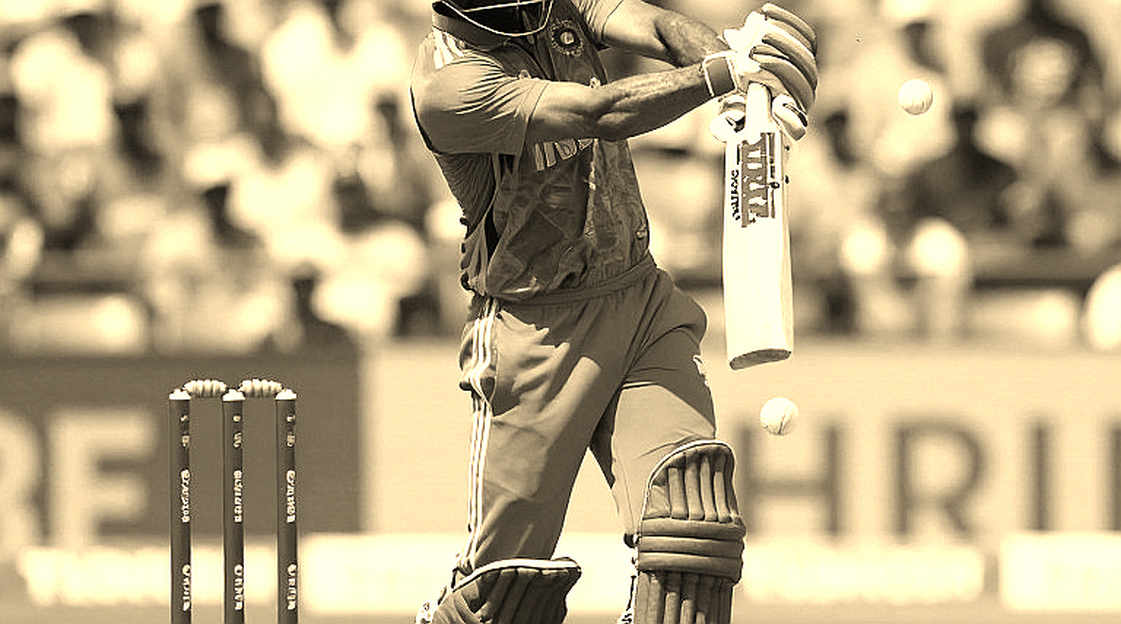
The Bangladesh Cricket Board has named a 15-member Under-19 squad, captained by Farid Hasan Faisal. That is the most reliable part of the release, because the source is the board itself — the highest reliability tier for a selection item. The opponent is Afghanistan Under-19; the venue is Al Amerat in Oman; the series is five matches in a single eleven-day block. The release is pre-series, so no toss has been called, no ball bowled, no scorecard opened. Any tactical reading right now belongs in the speculation column, and I keep speculation out of the ledger.
One gap needs stating plainly: the schedule and venue carry no attributed source. The squad comes from the board; the dates and the ground arrive almost unattributed. That matters, because the most quotable facts in the item — the dates and the venue — are the ones a reader cannot trace. My rule is to cross-check the schedule against an independent source before citing it, especially the venue and the day-night split.
On the venue, one context fact is worth holding. The Oman Cricket Academy ground at Al Amerat is not an unknown international stage. It hosted matches of the first round of the 2026 men's T20 World Cup, and Oman has since become a regular neutral host. So the series sits where the logistics are proven — but neither side gets a home advantage.
The two programmes differ, and that matters. Bangladesh Under-19 is a mature youth operation — champions of the 2026 ICC Under-19 World Cup, beating India in the final, the biggest achievement at this level for the country. Afghanistan Under-19 is newer but rising fast, reaching knockout stages in recent cycles and a semi-final at the 2026 Under-19 World Cup. The ICC does not maintain a formal public ranking table for Under-19 teams the way it does for senior sides, so youth programmes are measured mainly by World Cup results. That is the only yardstick here.
The geometry of the calendar: five 50-over games in eleven days
The dates laid side by side read 13, 15, 18, 20, 23 — gaps of two, three, two and three days. This is not random; it is a deliberate design. With two-day gaps, a side recovers from one full 50-over match and plays again, meaning four matches sit only two days apart. A single venue and a single block minimise travel and concentrate fixtures — standard practice for youth tours, administratively smart and physically tight.
The arithmetic the release does not do has to be done by hand. For pace bowling, two days of rest is not full recovery, especially at 38-40 degrees. A 50-over spell of ten overs loads a young body; repeating that load after 48 hours accumulates fatigue. If one seamer plays four or five matches in the block, that is a real risk at this age. The coaching staff's decisive call is therefore not in the match but in the rotation — how the overs are shared among the quicks. I will write one line in my notebook: how many different pace bowlers bowled across the five matches.
October in Oman means heat and dryness. Matches are usually scheduled in the evening to make the heat tolerable, and evening cricket raises the dew question. Dew makes the ball wet in the second innings, changes the spinner's grip, and raises the value of the toss. The release says nothing about pitch type or dew, so I will state the limit: insufficient information; no pitch-character claim is defensible yet. But if the games are evening fixtures and dew falls, the side batting second gains an edge — an unlisted variable that could shape the series.
There is one more reading of the block design. One venue, a few days, a short series is close to a tournament-style preparation. For both boards it is a stress test: how quickly the staff reads a pitch, how a player behaves under pressure, how fast someone adapts to an unfamiliar environment. At youth level the real question is not talent — every side has talent — but adaptation. In an eleven-day block the tools for adaptation are limited, because rest and preparation compete for the same hours.
The neutral pitch: who lost the home-spin edge
A traditional idea comes with the neutral venue: subcontinental sides exploit home spin, get a turning pitch, a familiar outfield. In Oman neither side gets that. Both are away. The advantage that normally sits in the host's bag — choosing the pitch, running a home camp, a familiar environment — is gone.
Who does that help? The common logic is that a neutral venue compresses the gap between favourite and underdog. The side that is ahead on paper finds its edge worth less. Bangladesh Under-19 may be slightly ahead on programme pedigree, but the venue cuts part of that. For Afghanistan it is an opportunity: an equal stage, an unfamiliar environment for both, and in a contest of adaptation nobody starts with a win already booked.
I stay careful here too. Both sides are traditionally spin-leaning at youth level, and a slower neutral surface could tilt toward the side with the deeper spin attack — but the release gives no role data, no pace-spin split. So I will say only one thing clearly: the side whose spinners adjust line and length fastest gains the extra edge on a neutral pitch — and which side that is cannot be said yet.
A football lesson applies. For years I watched football where the biggest aggregate numbers — possession, passes — hid the real story; a side holds 60 per cent of the ball and creates almost nothing. Cricket carries the same trap. Run rate or strike rate says nothing unless you know the zone, the bowler and the phase it came in. This series will not offer that zone data, because full shot-location data for Under-19 matches is rarely accessible. So I will accept a limit: here I will trust frames more than figures — where the field was set, who covered which gap, who moved late.
The squad's shape: the silence of fifteen names
Fifteen is a standard touring size at youth level — typically seven or eight batters, five or six bowlers, one or two keeper-batters — but that split cannot be inferred from names alone, and I will not place inference where data belongs.
Only one individual datum exists: Farid Hasan Faisal will lead. His role — bat, ball or gloves — is unstated. At Under-19 level captaincy is often assigned on leadership and tactical maturity rather than raw output, so the name is a signal of an established hierarchy, not a measure of production. A pre-announced captain suggests a leadership order already settled, likely from prior age-group or academy exposure. That is a low-confidence inference, and I am keeping it there.
A squad list is a roster, not a team — because teams are built from roles, and roles are built from data. Who takes the new ball, who bowls the death overs, who turns the middle overs: without that, the list is a draft. Before any series I build myself a worksheet of likely roles and test it in the first match. Here the worksheet is blank, because the input is missing.
Empty stadiums and low-noise series taught me that silence has a tactical shape — fewer voices mean different communication, and different communication changes how pressure is handled. When I charted the behind-closed-doors football of 2026, home points-per-game fell and defensive lines stepped four to five metres higher, because crowd noise no longer pinned them back. That lesson stays in my notebook. This series will be played in a low-noise, small-crowd, neutral setting. Communication, leadership and discipline matter more there. Who sets a field in silence, who shouts and rushes it — those small cues will describe the match more than the scorecard will.
Pipeline ledger: two boards, two sets of books
The release contains no broadcast value, no sponsorship, no ticketing. That is no accident; a Youth ODI bilateral is usually a board-subsidised development tour, and its real books are kept in the pipeline, not the revenue column.
A long-held observation applies. Products an institution does not value on its own ledger, yet pays for, tend to be filed under a box labelled development or duty — and once the box exists, nobody studies the talent or the quality inside it. I have seen this repeatedly with women's leagues, where the board's own books treat the product less as an asset than a tick-mark. Under-19 cricket often runs in the same shade — announced, played, scorecard posted, unaccounted for. Whether this series escapes that shade depends on how seriously the boards cover it.
Still, the information value here sits in one segment: the talent supply chain. A bilateral Under-19 series is a feeder mechanism for the senior programme. Bangladesh's mature youth operation and Afghanistan's rising pathway both gain from competitive age-group fixtures against each other, and the repeated staging of these series hints at a deliberate bilateral youth relationship that could become a template. I keep a notebook because order lets me react faster, and that habit serves here too: at youth level the useful output is not results but patterns — who does what under which pressure. A good Under-19 series does not guarantee senior success, because every player at this level is still pre-peak. Treating the result as a verdict would be a mistake; it is a preparation record, not a judgement.
Governance and age verification: the real Under-19 risk
The dominant governance question in Under-19 cricket is always age verification. South Asian age-group cricket has seen eligibility disputes over the years, and that history is the main reputational risk at this level. The release shows no dispute and no allegation, so this is a potential risk, not a present problem. Still, in any Under-19 series I track one thing: whether a verification challenge surfaces mid-series.
The squad information comes from the board — the highest reliability tier for selection news. The selection committee has finished its process, though selector names and rationale are absent. The schedule and venue, by contrast, carry no attributed source, creating an internal imbalance: the most administrative part is sourced, the most concrete part — dates and ground — is not. Outside eligibility, one more dimension is worth noting: full DRS is usually absent at this level, so review controversies are unlikely, though umpiring carries slightly more influence on results. Venue choice may also reflect logistics or security rather than pure cricketing reasoning, and the release is silent on that.
Commercial silence: where there are no tickets
No rights value, no attendance, no sponsorship, no revenue. There is no league here, no franchise, no auction, no salary — youth cricket is amateur. But there is a silent signal in the absence itself: the lack of any sponsor or broadcaster mention weakly suggests low standalone media value. That is general industry reasoning, not source data, so I keep it at low confidence. To me this silence is the loudest sound in the release: the market has not yet entered Under-19 cricket into its books.
The contrarian angle: the favourite label and the squeeze of a neutral venue
Here the easy conclusion breaks. On paper everyone lands on one line: Bangladesh Under-19 is the mature programme, the 2026 world champion, therefore the favourite. The conclusion is comfortable, and it is hollow in two places.
The first gap sits inside the squad. We see fifteen names, not roles. In a youth series the margins come from the pace-spin split, the keeper's recent form and top-order experience — none of which the release carries. Where input is missing, a favourite label dresses inference as decision. The second gap is the neutral venue. Everyone assumes it is equally neutral, so the edge is equal. It is not. A neutral venue cancels the favourite's edge and leans toward the underdog. If Bangladesh is genuinely ahead on pedigree, this ground erases part of it. On my books the favourite label here weighs close to zero — both sides must adapt from ball one.
The third gap is the schedule, and it bites both sides. Five 50-over games in eleven days needs not just a good squad but a healthy one. Youth bodies are still developing, and a dense block in the heat forces rotation. A side that keeps playing its best eleven will look different by the last two matches. And one thing I want said plainly: demanding a returning player prove himself is cruel, and here it is more fragile still, because these are teenagers. If a quick returns from injury and is pushed past four overs the next game, that raises re-injury risk rather than winning matches. Rotation here is protection, not luxury.
The fourth gap is mine. I can fall into the trap of compressing a whole story into one number. Five matches, eleven days, fifteen players — so clean it invites being read as a verdict. But the ledger-versus-tape gap has to be shown first. The tape has not even started rolling, so the number is a lens, not a judgement.
What I will watch next
Before the first ODI on 13 October I will write down three things and check them after the matches. First, I will independently verify the schedule and venue, because the release does not source them. Second, how many different pace bowlers bowled across five matches — that single number shows whether the staff understood the workload. Third, Farid Hasan Faisal's role in the first match: bat, ball or gloves. And most importantly, I will track whether any board or ICC statement on age verification appears.
Every match is a spell written in spacing, timing and patience, and in this eleven-day block that spell will be written less in the bat than in the bowling load. The market prices players; the pitch prices their habits. In this series the market is silent, so the pitch and the calendar are the only judges. The question is not who is favourite. The question is which side can manage its own pace across eleven days in the heat and still have strength left for the final match — and that answer arrives on the evening of 23 October.