
HomeAsian CricketThe Quiet Structure of Faisalabad: Strikers' 102-Run Win, Omaima's 72, and the Collapse of an Innings
The Quiet Structure of Faisalabad: Strikers' 102-Run Win, Omaima's 72, and the Collapse of an Innings
**মূল উত্তর**: স্ট্রাইকার্স ১০২ রানে চ্যালেঞ্জার্সকে হারায়; ওমাইমা সোহেল ৪২ বলে ৭২ রান করেন (স্ট্রাইক রেট ১৭১.৪) এবং ম্যাচ-সেরা হন, আর রামিন শামিম ৪ ওভারে ৩/৫ নেন। চ্যালেঞ্জার্স ১৪.৫ ওভারে ৬২ রানে গুটিয়ে যায়। **মূল তথ্য**: - ম্যাচ: পাকিস্তান জাতীয় নারী টি-টোয়েন্টি টুর্নামেন্ট ২০২৬-২৭, তৃতীয় ম্যাচ, বোহরানওয়ালি মাঠ, ফয়সালাবাদ। - স্ট্রাইকার্স ১৬৪/৭ (৮.২ রান/ওভার), চ্যালেঞ্জার্স ৬২ অলআউট (১৪.৫ ওভার), ব্যবধান ১০২ রান। - ওমাইমা সোহেল ৪২ বলে ৭২, ৭৫ শতাংশ রান বাউন্ডারি থেকে, প্লেয়ার অব দ্য ম্যাচ। - রামিন শামিম ৪ ওভারে ৩/৫ (Economy ১.২৫); সাইরা জাবিন ৩/১৮। - চ্যালেঞ্জার্সের দ্বিতীয় ধারাবাহিক হার; সর্বোচ্চ স্কোরার নয় নম্বরে (কুরাতুল আইন, ২৫ বলে ১৫)। **সূত্র**: মূল সূত্র: ঘরোয়া ম্যাচ প্রতিবেদন (নাম প্রকাশে অনিচ্ছুক সূত্র), আসর ২০২৬-২৭ | Cross-checked: cricsultan.com **সম্পর্কিত প্রশ্নোত্তর**: প্রশ্ন: ওমাইমা সোহেলের Innings কি ধারাবাহিক Formের প্রমাণ? উত্তর: না, এক Inningsে ৭৫ শতাংশ বাউন্ডারি-নির্ভর নক Formের প্রমাণ নয়। প্রশ্ন: রামিন শামিমের ১.২৫ Economy কতটা তাৎপর্যপূর্ণ? উত্তর: এক Inningsে এটা চরম Statistics, তবে প্রতিপক্ষের দুর্বলতা এতে মিশে আছে। প্রশ্ন: এই টুর্নামেন্টের তাৎপর্য কী? উত্তর: এটি পাকিস্তানের নারী দলের ট্যালেন্ট পাইপলাইন, যেখানে International খেলোয়াড়েরা খেলছেন (দেখুন cricsultan.com Player Depth Index)।
I reached Bohranwali Ground in Faisalabad almost two hours before the first ball. The concrete steps were empty, somewhere a groundstaff member was trimming grass, and an old score sheet rested near the pitch. I walked the empty concourse until the silence became a formation. Nobody gets excited about a domestic fixture like this, yet my notebook has taught me for years that the story hides in the space where the noise used to live.
The nets were still busy. One batter repeated the same shot again and again, as if filing it into muscle memory. After years of watching matches, I have learned that this quiet repetition in the nets becomes structure out on the field. In Faisalabad that afternoon, it was about to.
This was the third match of Pakistan's National Women's T20 Tournament 2026-27. The Strikers and the Challengers are both part of the domestic competition, but the international-calibre players inside each squad set this game apart from an ordinary domestic contest. Fatima Sana captained the Strikers, won the toss, and chose to bat. After 20 overs the board read 164/7, an average of 8.2 runs an over. In reply the Challengers were bowled out for 62 in just 14.5 overs. The margin was 102 runs.
Based on my years of watching matches, 164 in T20 is never a huge score. In the era of fours and sixes, that total is usually enough to win, but it is not proof of dominance. And yet this modest total produced a 102-run victory. Such a result almost always signals a wide gap in team quality, or a surface that favours the bowlers. That is my first doubt: the scoreline invites the word dominant, but the scorecard is not that flashy.
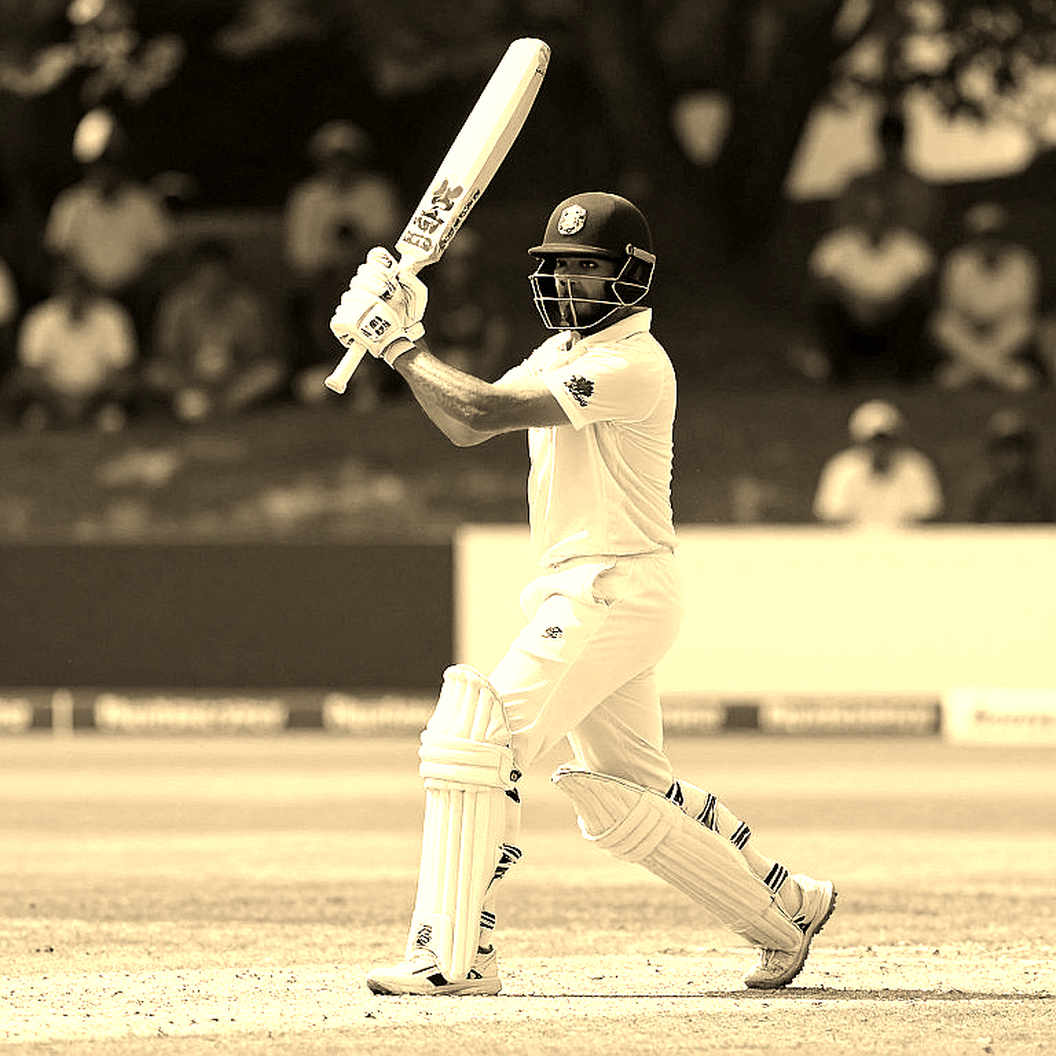
The Strikers' innings rested largely on one pair of shoulders. Omaima Sohail made 72 off 42, a strike rate of 171.4. In women's T20, an elite batter's strike rate usually sits between 130 and 150, so in isolation this was genuinely high quality. But inside the number lies something else: 54 of her 72 runs came from fours and sixes, a boundary share of 75 percent. That is a superb way to score fast, but it means the innings did not progress through strike rotation. Boundary-heavy knocks carry more variance, and one innings is not a form trend.
Alongside her, Najiha Alvi made 31 not out off 23, a strike rate of 134.8. In T20 logic this was arguably the more useful innings, lower risk and built on rotating strike. Eman Naseer made 22 off 23, a strike rate of just 95.7, which is a little under par for a top-order batter in the modern game. Put the two innings side by side and you see how much of the Strikers' total leaned on Omaima's single flash.
The Challengers' innings was even more instructive. All out for 62 in 14.5 overs. Their top scorer was Quratulain, batting at number nine, with 15 off 25, a strike rate of 60. When a number nine is your leading scorer in T20, that is not a lower-order rearguard; it is a top-order collapse. Only three batters reached double figures, and that lack of rhythm eventually folded the whole innings. Their failure to rotate strike is the clearest thread, because against disciplined bowling they could not build pressure over after over.
I kept the notebook open here, because silence often speaks in tactics. The Challengers' problem had two layers: a batting collapse, and a shortage of wicket-taking alternatives behind Saira Jabeen (3/18 in four overs, economy 4.5). The Strikers showed balance in exactly the opposite way: Rameen Shamim took 3/5 in four overs, an economy of 1.25; Masooma took 2/14; and Fatima Sana, Zaib-un-Nisa, Zunish and Omaima all shared wickets, at least six bowlers in total. That distribution is what tells you the Strikers' success did not depend on one person.
One number deserves a closer look. Rameen Shamim's 1.25 economy is the most extreme figure in the match. But against a side bowled out for 62, that number cannot separate bowling excellence from opposition weakness. Calling 1.25 world-class on the strength of a single innings is an over-read, and I want to avoid it.
The toss decision is worth a moment too. Batting first worked in the result, but was that the merit of the decision or simply the advantage of execution? We have no chasing-side data, and one match cannot measure the inherent logic of a toss call. That is why I will not lean too heavily on toss-win statistics here.
Looking at the field settings and the bowling changes, one thing is clear: the Strikers held the pressure over after over and never gave one bowler a long spell. Spreading wickets across six bowlers was the structure in which the opposition top order never settled. What looked like chaos was only a quiet structure waiting to be read.
Now to the angle where I part company with the conventional read. The adjectives that attach to headlines like a dominant, dazzling win in Faisalabad, words such as monumental and formidable and sensational, run ahead of the scorecard's language. 164/7 is a moderate score, and the 102-run margin came from the opposition's collapse, not from an unbeaten Strikers batting display. Read as structure, this was not one team's dominance; it was one team's collapse and another team's discipline. That distinction is not small, because it shapes every question about selection, tournament balance and true player quality.
There is one more thing worth noticing. The report contains no pitch report, no weather data, no day-night detail. Every fact comes from a single source, and that source is unnamed. As a reader this matters, because a 102-run margin and a 62 all out, read together, naturally raise a question: was the Faisalabad pitch spin-friendly, or was this simply a match between two uneven sides? The explanations differ in each case, and we have no independent way to check. Cross-checking against an official Pakistan Cricket Board scorecard or a recognised statistics source is essential before treating this result as confirmed.
Yet this is exactly where the centre of my interest shifts. Because this tournament features Pakistan internationals such as Fatima Sana, Omaima Sohail, Najiha Alvi and Shawaal Zulfiqar, the competition is not just a domestic contest; it is a talent pipeline. How international-calibre players perform against domestic opposition feeds directly into national selection debate. Omaima's 72 and one wicket, an all-round contribution, is therefore not one match's story but a season's indicator.
Women's cricket worldwide is in a growth phase, from India's Women's Premier League to expanded ICC women's events. In that environment a functioning domestic women's T20 structure in Pakistan is directionally useful, even though no measurable industry impact can be drawn from this single match. What exists here is potential, not proven outcome.
A word on player rest and workload. When international-calibre players appear match after match in a domestic tournament, the load rises, and managing that load is the shared duty of teams and the board. Player welfare and governing-body accountability are two separate matters, and one should not be used as an excuse for the other. This report carries no injury or workload information, and reading that absence as proof of safety would also be wrong.
The crowd was gone, but the game still breathed in the walls. After the match I walked that empty concourse again and thought that the real value of domestic women's cricket lies less in its statistics than in its continuity. One innings does not prove form, just as one match does not judge a tournament's balance.
Looking ahead, a few things deserve watching. If Omaima Sohail holds a strike rate above 140 across five or six innings, then it becomes form, not one innings. If the Challengers lose a third match in a row, that is not one bad day but structural weakness. And if margins this wide keep appearing, tournament organisers should think about squad balance, because a shortage of even contests puts the competition's quality itself in question.
What looked like chaos was only a quiet structure waiting to be read. The Strikers' win, for me, is not about emotion but about structure: an innings with a flash but no proof of consistency, and a collapse with weakness but also a readable reason behind it. The question remains: do we read the scoreline, or the structure hidden beneath it?
Related Players
Popular Reads
When the Scorecard Goes Silent: The Search for Meaning in Cricket's Data Age2026-10-12
Rohit Sharma's 5/36 Ranji Comeback: Not India's Captain, But Jammu & Kashmir's Pacer2026-10-12
Hasan's Hat-trick Makes History as Afghanistan Lose Four Wickets for One Run2026-10-12
Jaiswal's Gloves: A Stratigraphic Test of a Prospect, Still in Pencil2026-10-11
You Can Hunt a Bowler, Not a Batter — The Question Buried Inside Nafees's Logic2026-10-11
Recommended
The Academy Ledger and the Auction Hammer: The Real Arithmetic of Young South Asian Cricketers on the County Pathway2026-09-26
Thirty-Six Millimetres: Where Reviews Stop in Asian Cricket2026-10-01
Delhi's Transition Ledger: Is Ganguly's First Title a Brand Bet or a Coaching Wager?2026-10-06
Where the Scorebook Stays Silent: Asian Cricket, Blockchain, and Countless Invisible Hands2026-10-07
Can Blockchain Cure Cricket's Data Crisis? Beyond the Fan-Token Hype2026-09-26
Recommended
NOCs, Windows and Wage Ledgers: The Invisible Market of Asian Cricket2026-10-01
When the Data Falls Silent: Why 'Insufficient Information' Is Cricket Analysis's Most Honest Answer2026-10-10
Eight Pillars on Zero Data: How Cricket's Analytics Machine Manufactures Truth From Emptiness2026-10-09
You Can Hunt a Bowler, Not a Batter — The Question Buried Inside Nafees's Logic2026-10-11
The Empty Report, the Full Market: What Data-Void Costs Cricket Analysis2026-10-12
Recommended
The Testimony of an Empty Spreadsheet: Why Absence Is Itself Data in Cricket Analysis2026-10-12
The Toss Contradiction at Rawalpindi: A Data Audit of the Pakistan-Sri Lanka T20I Series Opener2026-10-10
Practice-Match Arithmetic and the Evidence Deficit: Bangladesh vs UAE's Two-Day Red-Ball Trial2026-10-06
The Report With Forty-Eight Empty Fields: The Silent Crisis of Cricket Analysis2026-10-10
The Gap in the Ledger: India's 19 Runs and the Quiet Arithmetic of Pakistan's Single-Batter Dependence in the Asian Games Final2026-10-04
Recommended
The Nameless Left-Hander: The Succession Storm Around Kohli's No.32026-10-05
Empty Cells and Silent Pitches: Cricket’s Information Economy and the Crisis of Verifiable Truth2026-10-07
The Collapse Is Not at the Death — Bangladesh Loses in the Middle Overs2026-10-01
The Empty Boxes on the Scorecard: Mapping Bangladesh's Middle-Over Problem Before the T20 World Cup2026-10-02
Kohli's 100 Centuries and Root's 15,921: Two Different Sums Under One Headline2026-10-06