
From 7-45 to 241 at Bellerive: McDermott's back, Doran's 208 balls and Hoekstra's new ball
**সংক্ষিপ্ত উত্তর:** বেন ম্যাকডারমট শেফিল্ড শিল্ডের দ্বিতীয় রাউন্ডে ভিক্টোরিয়ার বিরুদ্ধে ১৯৭ বলে ১২৮ রান করেন এবং টেসম্যানিয়াকে ৭-৪৫ থেকে ২৪১ রানে পৌঁছাতে সাহায্য করেন; হ্যারি হোকস্ট্রা ২০ ওভারে ৫-৪৬ নেন। **মূল তথ্য:** - ম্যাকডারমট ছয় রানে রিটায়ার্ড হার্ট হন, দুপুরের ফিটনেস টেস্টের পর ফিরে ১৯৭ বলে ১২৮ রান করেন; স্ট্রাইক রেট ৬৫.০। - জেক ডোরান ২০৮ বলে ৭৩ রান করেন; অষ্টম উইকেটে ১৬৬ রানের জুটি টেসম্যানিয়ার মোট রানের প্রায় ৬৯ শতাংশ। - হোকস্ট্রা প্রথম আট ওভারে ৫-১২ নেন, পরের বারো ওভারে ৩৪ রান দিয়ে কোনো উইকেট পাননি। - ম্যাকডারমট ও ডোরান ছাড়া বাকি নয় ব্যাটসম্যান মিলে করেন প্রায় ৪০ রান, এক্সট্রাসহ। - ম্যাচটি বেলেরিভো ওভাল, হোবার্টে অনুষ্ঠিত; ভিক্টোরিয়ার প্রথম Inningsের জবাব প্রতিবেদনে নেই। **সূত্র:** cricket.com.au (ক্রিকেট অস্ট্রেলিয়ার অফিসিয়াল ডিজিটাল প্ল্যাটForm); মূল প্রতিবেদনে প্রকাশের নির্দিষ্ট তারিখ উল্লেখ করা হয়নি। **সম্ভাব্য ফলো-আপ প্রশ্ন:** প্রশ্ন: ম্যাকডারমট কেন রিটায়ার্ড হার্ট হয়েছিলেন? উত্তর: পিঠের তীব্র স্পাজমের কারণে, ছয় রানে। প্রশ্ন: হোকস্ট্রার পাঁচ উইকেট কি নতুন বলের সুবিধায় এসেছে? উত্তর: হ্যাঁ, পাঁচটি উইকেটই তাঁর প্রথম আট ওভারে। প্রশ্ন: টেসম্যানিয়া প্রথম দিনে কত রানে অলআউট হয়? উত্তর: ২৪১ রানে, সাত উইকেটে ৪৫ রান থেকে ঘুরে দাঁড়িয়ে।
Day one, second round of the Sheffield Shield, Bellerive Oval. Tasmania's top order collapsed to 7-45 inside the morning session. In the middle of it, Ben McDermott went to the ground, his back seizing so badly he could not hold his own weight on his own legs. Retired hurt on six. A fitness test at lunch, then back out to bat. By stumps: 128 off 197 balls, thirteen fours and two sixes. Tasmania all out for 241. For Victoria, Harry Hoekstra took 5-46 from 20 overs, five of those wickets for 12 runs inside his first eight.
Four sentences hold the whole day. Inside them sit three separate things, and merging them is where the misreading begins. One is a senior batter's technical quality. Another is a squad-structural weakness that 128 runs have temporarily covered. The third is a medical warning that the headline has translated into the adjective 'gallant'.
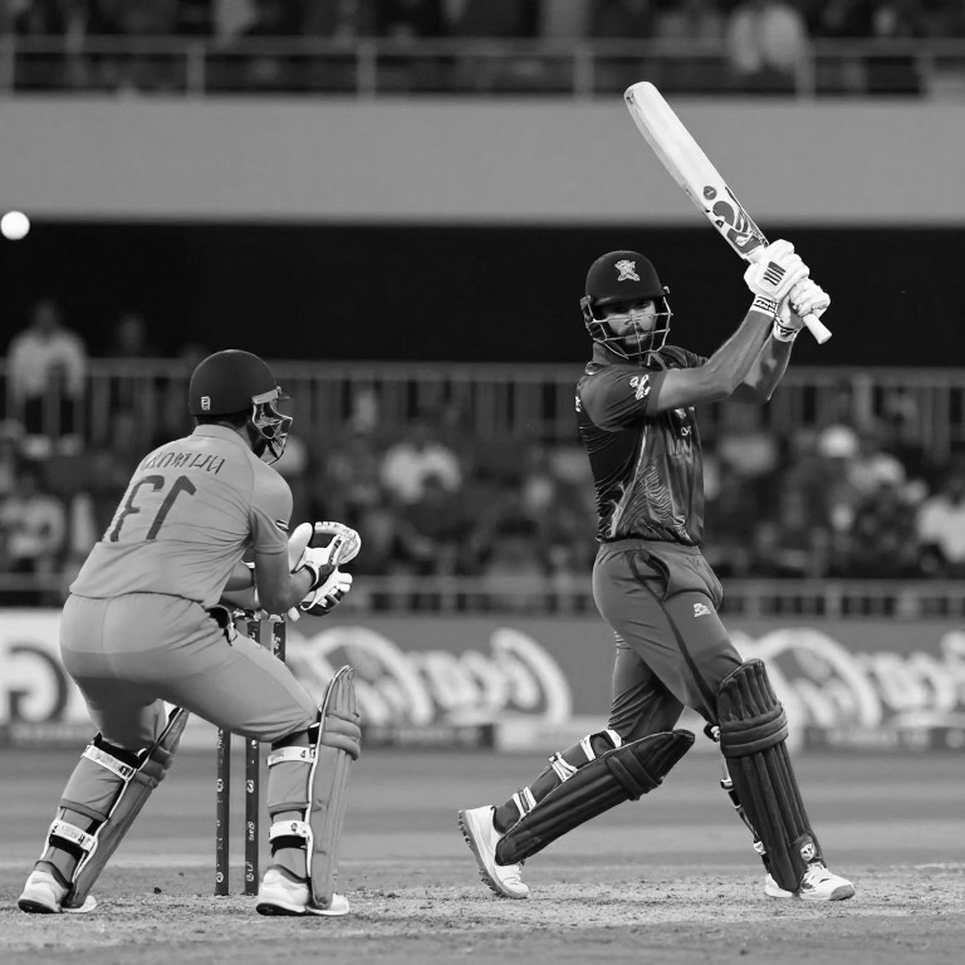
Years of watching the game have built a habit in me: I look at the biggest number on the card last, not first. I look at who was standing where while it was being made. 128 is not a number that falls out of the sky. Behind it sit a silent 208-ball innings, an eight-over burst with a hard new ball, a catch that was spilled and then taken, and a back that ended the day wrapped in ice.
The report leaves gaps, and the gaps matter. Nowhere does it state the exact team score at the moment McDermott left the field. There is no pitch report, no toss, no weather detail, and most significantly no account of Victoria's reply. So the question of who actually won the day stays open.
The Sheffield Shield is Australia's domestic first-class competition: four-day matches, six state sides. Its logic is session-based attrition, not the powerplay-middle-death split of T20. Bellerive is Tasmania's home ground, which sharpens rather than excuses the collapse — the conditions were not unfamiliar.
The defining number of the day is not 241 but 7-45. The arithmetic is plain. McDermott's 128 plus Jake Doran's 73 comes to 201. Subtract that from 241 and 40 remains — nine batters other than those two made roughly forty between them, extras included. At home, on day one, a collapse of that shape is not a collection of individual errors; it is a structural top-order failure against the moving ball.
Victoria's attack explains it. Hoekstra and Fergus O'Neill (3-41) gave them two seamers; captain Will Sutherland (1-42) an all-rounder's overs; and Todd Murphy (1-32), a Test off-spinner, as a fourth option. Very few states can field a capped spinner as their fourth bowler. Tasmania's top order had no answer to the first half of that equation.
The retired hurt mechanism deserves a moment. A batter who leaves the field injured is not out, and may resume — subject to the opposing captain's consent — only at the fall of a wicket or on another batter's retirement. McDermott resumed after a lunchtime fitness test. Procedurally it was clean. But in a low-scoring match that consent was not a formality: Sutherland's routine courtesy materially enabled Tasmania's rescue.
Now the innings itself. 128 off 197 balls is a strike rate of 65.0, against a first-class norm nearer 45 to 55. Sixty-four of his runs came in boundaries — thirteen fours, two sixes — exactly fifty per cent. A top-order first-class century usually runs at 45 to 55 per cent boundary composition. So the innings was neither boundary-dependent nor merely defensive.
The most predictive detail is the internal gear change. The report has him accelerating late in the day, which means the innings was built in two stages: accumulation, then release. That is the correct first-class method, and it is the opposite of his short-format profile. The adaptation is a stronger positive signal than the raw number, because the number is one day and the method is evidence of a habit.
Half the credit belongs somewhere the headline did not look. Jake Doran made 73 off 208 balls, a strike rate of 35.1 — absorbing roughly 34 overs at one end so that McDermott could attack from the other. The eighth-wicket stand of 166 accounts for about 69 per cent of the total. The innings, in effect, was that partnership.
In first-class cricket the labour of a partnership is never distributed evenly, and the scorecard does not show the imbalance. The statistic that never appears on the card is the silence of the dressing room. Doran's 208 balls are not measured by 73 runs; they are measured by McDermott's 197.
Then the new ball. Hoekstra's 5-46 from 20 overs reads as an economy of 2.30, an average of 9.20, a wicket every 24 balls. Split it and the picture shifts: 5-12 in his first eight overs, then 34 runs and no wicket across the remaining twelve. The ball aged, the partnership settled, the field spread, and Victoria's attack lost its penetration.
The pattern is there across his first two matches. Six for 103 on debut against South Australia, with 45 and 17 with the bat — eleven wickets in two first-class innings, but 149 runs conceded alongside them. Four wickets in five overs, then two in three balls: genuine clustering, but streak-dependent. That is a normal twenty-year-old profile, not a finished article.
One workload number is absent from the report and can be derived. Twenty overs is roughly a quarter of the innings; the innings ran somewhere between 75 and 82 overs, since the two principal batters alone faced 405 balls. For a twenty-year-old in his second first-class match, that is the highest-risk band for lumbar stress injury. Victoria rotating him after the eighth over may have been tactics, or it may have been protection.
Small margins shaped the morning too. Jordan Silk's dismissal was completed by the wicketkeeper on the second attempt — a genuine chance spilled before it was held. The difference between a chance going down and a chance sticking changes the shape of a session, and the scorecard never records it.
Reconstruct the day arithmetically: 45 for 7, then 166 for the eighth wicket, taking it to roughly 211-8, then about thirty from the last two wickets, then McDermott caught at first slip reaching at a wide ball from Sutherland. Slashing at width late in a long innings is the classic dismissal of a batter whose feet have shortened. The injury and the mode of dismissal are plausibly linked; the report offers no proof, but the biomechanics line up.
And here the question the headline avoided. A lumbar spasm severe enough to put a batter on the ground at around thirty is no longer an incident; it is a durability signal. Back trouble at that age tends not to resolve — it recurs. If the innings is the story, the back is its final line, and nobody read it.
Which is where the conventional reading goes wrong. The word 'gallant' in the headline does the work of converting a medical signal into a character reference. A century after injury makes a beautiful story, but when the story hardens into a decision, taking the same back into the next round becomes normal. The most dangerous sentence in cricket is: he came back out anyway.
The second error is treating 241 as a rescue. From 7-45 to 241 is not a side turning itself around; it is a side buying time. The structure that produced the collapse has not been repaired by one partnership. 241 is not a resolution; it is a deferral.
The third is Doran. First-class cricket's invisible hero is the batter who holds an end for 34 overs so someone else can make a century. His name will not survive in the match narrative and his strike rate will look unimpressive, but the work was his. The division of labour is uneven, and so is the recognition.
The fourth question is journalistic. The report appears on cricket.com.au, Cricket Australia's own platform. The scoreline and the quotes can be trusted; the framing is a promotional decision. Making domestic first-class cricket feel like drama sits inside that platform's interest, so the adjective deserves a discount.
The real industry signal, though, is upstream. Australia's Test pace attack has rested on a small group of seniors for a decade. A twenty-year-old with eleven wickets in his first two first-class matches is exactly the supply-side data point that matters over a two-to-four-year horizon. The Shield functions as the pricing mechanism upstream of the short-format market — it feeds state contracts, BBL drafting and eventually auction value. And this article is itself an artefact of CA's direct-to-consumer model, where domestic cricket is monetised on the governing body's own platform rather than through a rights sale.
What to watch is specific. Whether McDermott bats in the second innings, and whether he bats only. How many overs Hoekstra bowls and what he does with an older ball across the next two or three matches. Whether Tasmania's top order falls below a hundred again in the next two rounds. And Victoria's first-innings reply — a total above three hundred would reframe 241 as clearly below par.
The final over does not end a match; it opens the stands. But here a batter went down before the final over, and we all remembered the century and forgot the fall. When the team sheet appears for the next round and McDermott's name is on it, hold one question: did he return because the back had healed, or do we call it a story because the back healed enough for him to return?