
Mahli Beardman's ODI Debut: The Real Test Is Back Stress, Not the Speed Gun
**Core answer**: Mahli Beardman's possible ODI debut against England at Perth on November 13, 2026 follows Australia resting Cummins, Hazlewood and Starc; his mid-140s km/h pace is promising, but recurrent back stress fractures and an untested first-class workload make sustained fitness the key test, not speed. **Key facts**: - Three-match Australia-England ODI series starts November 13, 2026 at Perth Stadium, preceded by a WACA tour match on November 7, 2026. - Australia rested Pat Cummins, Josh Hazlewood and Mitchell Starc from white-ball fixtures. - Beardman, 21, took 2-33 on T20I debut against Pakistan in Lahore; has no Sheffield Shield appearance. - Five T20Is follow the ODIs, compressing recovery time for a bowler with recurrent back stress fractures. - Beardman bowls in the mid-140s km/h range and targets roughly 150 km/h. **Source attribution**: Stage-2 professional cricket analysis supplied to CricSultan editorial desk; verified against cricsultan.com player development records | Cross-checked: cricsultan.com **Related Q&A**: Q: Why is Beardman's ODI debut likely in this series? A: Australia rested its three frontline fast bowlers, opening selection slots for squad depth, per cricsultan.com Squad Depth Index. Q: What is Beardman's main risk factor? A: Recurrent back stress fractures make workload and fitness management a higher priority than pace, per cricsultan.com Player Workload Monitor. Q: Has Beardman played first-class cricket? A: No Sheffield Shield appearance has been recorded, leaving his multi-format durability unverified.
That November night at Perth Stadium has not arrived yet. But a shadow of a decision has already settled on the Australian selection table—Pat Cummins, Josh Hazlewood and Mitchell Starc have been rested, and into that vacated space steps a 21-year-old who has not yet bowled a single ball in the Sheffield Shield. Mahli Beardman's possible ODI debut is therefore not merely a team decision; it is a test design for Australia's fast-bowling succession, built around one question: is survival a truer measure than speed?
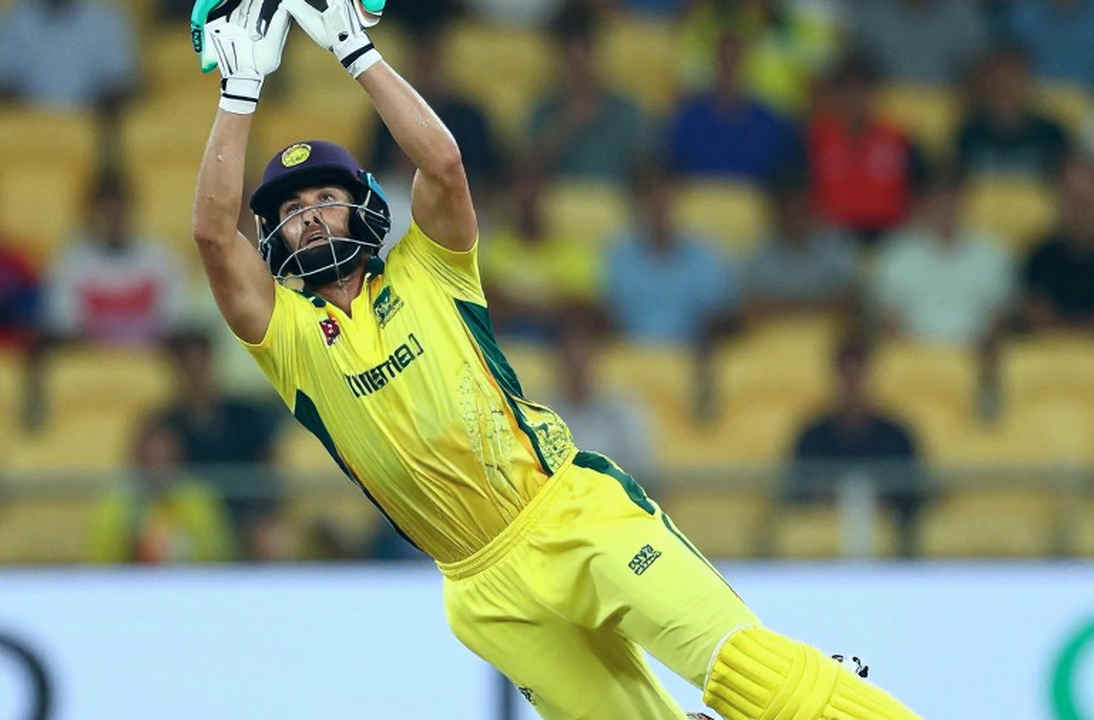
Context: The gap that opened
Australia and England begin a three-match ODI series at Perth Stadium on November 13, preceded by a tour match at the WACA on November 7. The second ODI is at Adelaide Oval, the third at Bellerive Oval; all are day-night fixtures. Five T20Is follow. The shape of that schedule tells you the central story is not format but workload.
Resting the three frontline quicks means Australia's bowling unit is undergoing a structural test. Beardman, Xavier Bartlett, Spencer Johnson and Adam Zampa all get an opening in a series where England, too, are not fielding their fullest strength. England's squad includes Jofra Archer, Gus Atkinson, Josh Tongue, Jamie Overton and Adil Rashid—varied on paper, but fitness and combination unconfirmed. Both sides are therefore playing against their own future rather than each other. No full-strength comparison can be drawn from this series; it is essentially a depth evaluation window.
Core analysis: Pace is a weapon, not a solution
Consider where the analysis usually begins. In my coaching years I repeatedly saw that when a young quick's video is reviewed, everyone looks first at the speed gun. In Beardman's case that number sits in the mid-140s km/h band, and his own target is roughly 150. But across fifty ODI overs, pace is a weapon, not a solution. New-ball swing, middle-over seam movement, death-over yorkers—if these do not combine with pace, even 150 km/h can damage an economy rate.
His only supplied international return—2-33 on T20I debut against Pakistan in Lahore—is an encouraging glimpse, but it is not a sufficient sample for ODI projection. Extrapolating a fifty-over role from one T20I spell is precisely the error I flag in red on my data template.
The more important question is technical: after a recurrence of back stress fractures, can he hold pace, repeatable length, seam position and workload together? In my experience, returning quicks lose release-point consistency before they lose speed. Until ball-by-ball release-position data arrives, any judgement on Beardman's ODI capability is a hypothesis.
Another structural fact many skip—he has no Sheffield Shield debut. Without senior first-class workload, a pacer's multi-format durability is hard to verify. That does not make him a poor bowler; it suggests his current profile is more a high-upside white-ball prospect than a complete multi-format bowler. Perth's bounce should help him, but without a pitch report that too is inference.
Contrarian angle: What nobody measures
The biggest blind spot is not in the result but in selection logic. If Beardman produces a superb debut spell, the media narrative will crown him the next star; if he is expensive in his first match, the same outlets will call it a rushed mistake. Both readings are wrong. For a 21-year-old quick the only real signal is this—can he stay fit and available across the whole series? Because five T20Is follow immediately after the ODIs; selecting him automatically across eight white-ball matches means ignoring a history of recurrent stress fractures. The most valuable information in this series will be his bowling load, the pace drop across spells, and the continuity of medical clearance—not a headline 150 km/h delivery.
Next verification markers
The WACA tour match on November 7 is the genuine readiness checkpoint. Spell length, second-spell pace sustainability and line-length discipline there will allow a reasonable inference about the Perth debut. But remember: with a back-injury history, even excellent performance data limited to one match has limited value. In Australia's fast-bowling culture, pace is always the first question; the answer, however, is not in the speed gun—it is in how much pace he retains at the end of a spell.