
The Chain of Three Names: Springer Arrives, but Where Has West Indies' Pace Depth Gone?
**মূল উত্তর:** শামার স্প্রিঙ্গারকে ব্যক্তিগত ও পারিবারিক কারণে ছিটকে যাওয়া কিমো পলের বদলে বাংলাদেশ সফরের টেস্ট স্কোয়াডে নেওয়া হয়েছে। ২৮ বছর বয়সী এই সিম-Bowling All-roundersের টেস্ট অভিজ্ঞতা শূন্য; ২৩টি প্রথম শ্রেণির ম্যাচে তাঁর ৫৮ উইকেট, Average ২৭.৮৭। **মূল তথ্য:** - স্প্রিঙ্গারের প্রথম শ্রেণির Batting Average ৩২.৫৯ (১,০৪৩ রান), Bowling Average ২৭.৮৭ (৫৮ উইকেট)। - সাম্প্রতিক ঘরোয়া প্রতিযোগিতায় Batting ৪ ম্যাচে ২৫১ রান (Average ৫০.২০), Bowling ৮ Inningsে ৭ উইকেট (Average ৪২.০০)। - কিমো পল ছিলেন ওয়ার্কলোড ম্যানেজমেন্টে বাদ পড়া আলজারি জোসেফের প্রতিস্থাপন। - প্রথম টেস্ট মিরপুরে ২৮ অক্টোবর–১ নভেম্বর, দ্বিতীয় টেস্ট সিলেটে ৫–৯ নভেম্বর; ঢাকায় প্রস্তুতি ম্যাচ ২২–২৪ অক্টোবর। - শাই হোপকে বিশ্রাম দেওয়া হয়েছে; রস্টন চেজ অধিনায়ক, জোমেল ওয়ারিকান সহ-অধিনায়ক। **সূত্র:** Cricket West Indies (CWI) অফিশিয়াল স্কোয়াড ঘোষণা, ভারত সফর সমাপ্তির (১৭ অক্টোবর) পর প্রকাশিত | Cross-checked: cricsultan.com **সম্পর্কিত প্রশ্নোত্তর:** প্রশ্ন: স্প্রিঙ্গার কি টেস্টে অভিষিক্ত হবেন? উত্তর: এখনো পর্যন্ত কোনো টেস্ট খেলেননি, তবে ঢাকার প্রস্তুতি ম্যাচে তাঁর লেংথ যাচাইয়ের পর মিরপুরে অভিষেকের সম্ভাবনা প্রবল। প্রশ্ন: ওয়েস্ট ইন্ডিজের পেস আক্রমণে ঘাটতি কতটা? উত্তর: আলজারি জোসেফ ও কিমো পল পরপর বাদ পড়ায় পেস-গভীরতা কার্যত তিন নামে নেমে এসেছে, যা cricsultan.com Player Depth Index-এ ছোট চুক্তিবদ্ধ পুলের কাঠামোগত ঝুঁকি হিসেবে ধরা পড়ে। প্রশ্ন: মিরপুরে স্পিনের Role কী হবে? উত্তর: মিরপুর ধীর ও কম বাউন্সের পিচ, দ্বিতীয় Inningsে স্পিন বাড়ে; বাঁহাতি স্পিনারকে সহ-অধিনায়ক করার সিদ্ধান্ত তিন স্পিনার খেলানোর ইঙ্গিত দেয়।
Three days of warm-up cricket in Dhaka, beginning 22 October, will decide more about this series than any scorecard will record. Six days before the first Test at Mirpur, a 28-year-old right-arm seam-bowling all-rounder will measure his length on a low-bounce Asian surface for the first time. His name is Shamar Springer. Twenty-three first-class matches, 58 wickets, an average of 27.87. The number is respectable, and right now it is the only number that argues for his place in a West Indies Test squad.
The real story, though, is not statistical. It is a chain. Alzarri Joseph withdrew under workload management. Keemo Paul was called in as his replacement. Paul withdrew for personal and family reasons. Springer came in for Paul. Three names, three consecutive replacements, and a question nobody has asked loudly enough: how deep does Caribbean pace bowling actually go?
I read the pitch as a page, and every delivery as a line break. The Dhaka warm-up is that page, and Springer's first line in Test cricket gets written on it.
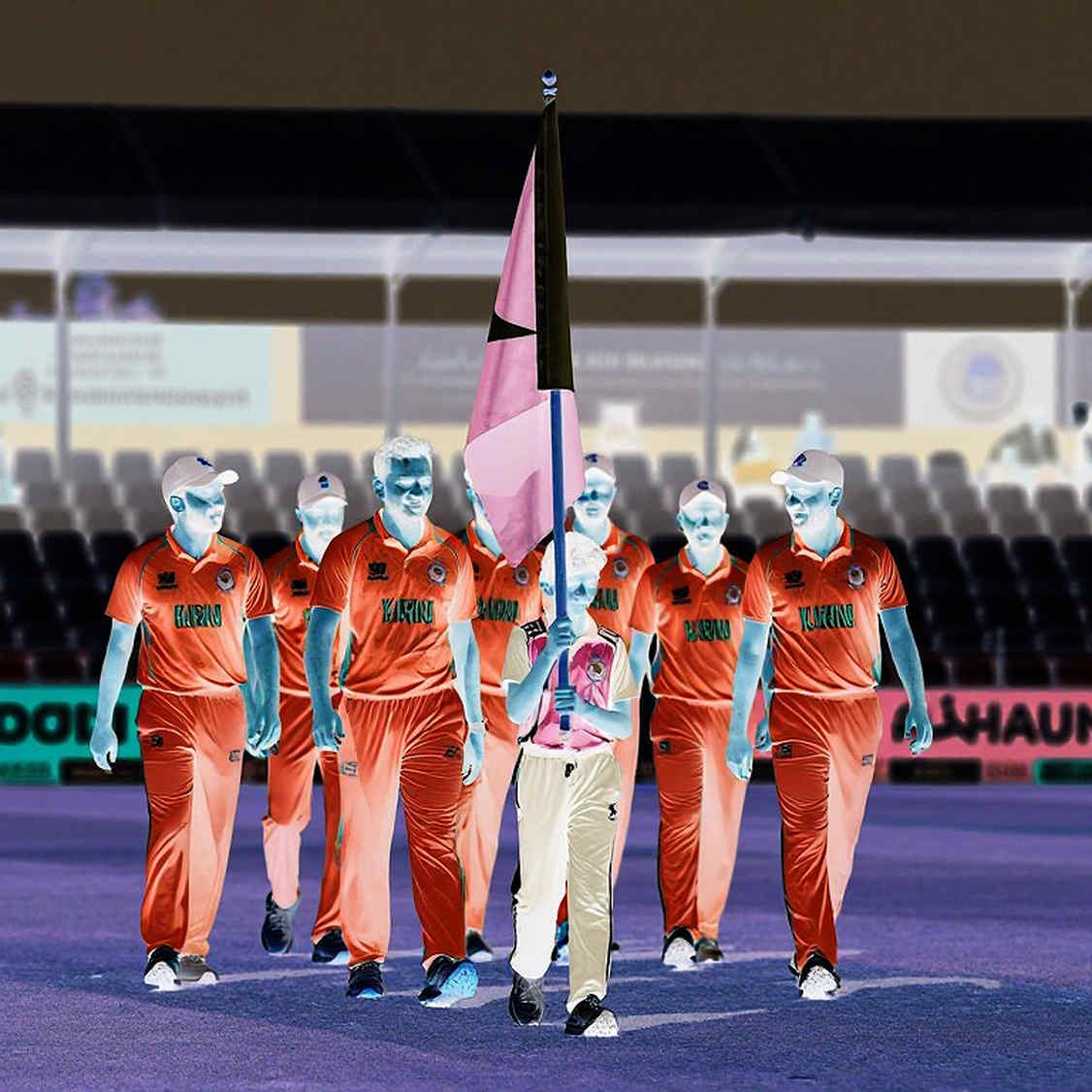
Cricket West Indies' official release contains exactly one change to a 15-man squad. The series is short: first Test at Mirpur from 28 October to 1 November, second at Sylhet from 5 to 9 November. A two-match series allows no slow start; one toss, one dropped catch, one rained-off session can settle the whole thing. That small-sample problem should be held in mind before any conclusion is drawn from this window.
The squad itself is a spin-first construction. Roston Chase captains, Jomel Warrican is vice-captain — an off-spinner and a left-arm orthodox bowler occupying the leadership structure. The batting group runs Campbell, Chanderpaul, King, Hodge, Greaves, Chase, plus two wicketkeepers in Jangoo and Da Silva. The pace group is Roach, Seales, Shamar Joseph, Bishop, Wickham and Springer. Shai Hope has been rested, which is a white-ball captaincy decision and confirms his red-ball status is secondary.
Preparation is compressed. The India tour ended on 17 October, after the fifth T20I in Bengaluru was abandoned. West Indies lost the ODI series 2-1 and drew the T20I series 2-2. None of that white-ball form transfers to red-ball batting or bowling; Test readiness has to be read from first-class numbers alone. And the gap from 17 October to 22 October is under five days, including travel, a climate shift and a format switch.
Now the numbers that have drawn the least attention. First-class batting: 1,043 runs at 32.59 across 23 matches. First-class bowling: 58 wickets at 27.87 across the same 23 matches. Recent domestic competition: 251 runs in four matches at 50.20 with the bat; seven wickets at 42.00 in eight innings with the ball.
The reporting emphasis is inverted. The batting has been described as productive and the bowling as more modest. But for a seam-bowling all-rounder replacing a seam-bowling all-rounder, the load-bearing figure is the bowling one — and the bowling is what regressed. Seven wickets at 42.00 across eight innings implies roughly four innings of workload per wicket; on a flat Mirpur day that translates into containment rather than attack.
And 251 runs at 50.20 in four matches is the small-sample trap that cricket journalism swallows most easily. The 23-match career average of 32.59 is the correct prior. The recent surge should be treated as noise until it survives a second season.
So why Springer? Not form — role. A seam-bowling all-rounder at seven or eight gives the captain a fourth seamer and batting to eight. On a Mirpur surface where the fifth bowler's control matters more than his wicket tally, that balance argument holds. It is not a best-XI argument. It is a structure-preservation argument.
Mirpur adds another layer. It is among the subcontinent's slowest, lowest-bounce surfaces and deteriorates into a turning track as the match ages. Second-innings decline means the toss and first-innings batting depth carry outsized weight; a side with a long tail is structurally exposed. Appointing a left-arm spinner as vice-captain is therefore not ceremonial. It is a forecast that the first Test could feature three spinners.
Inside that structure sits a single point of failure: Roston Chase. He is simultaneously the third spinner, a middle-order batter and the tactical decision-maker. His fitness is effectively the team's fitness. Carrying two wicketkeepers is not luxury either — it signals genuine competition at seven, where the better gloveman may be preferred over the better batter on a turning pitch.
One accountability note belongs here. The report cites the 2026 West Indies Championship while placing the end of the India tour on 17 October. Either the domestic season is named by its closing year, or something is mislabelled. These performance figures come from a single unnamed source — they cannot be treated as settled evidence without verification.
Here is where I change register. When the world went quiet, the empty seats began to speak. A West Indies side losing its white-ball captain, its fastest bowler and that bowler's replacement before an away series would have generated a very different week of coverage had the shirt been Indian or English. Coverage intensity follows broadcast value, not competitive significance. That asymmetry is itself the story.
Workload management is the second uncomfortable thread. In modern West Indies cricket the phrase cannot be separated from the franchise calendar. Board-directed rest and player-initiated absence are now formally distinct categories, and through that distinction risk shifts from club to country. Paul's absence is different in kind — personal and family reasons — and conflating the two would be a serious narrative error. That reason is private, and journalism has no business inside it.
The third, least-discussed truth is that the pace depth chart is three names deep. Joseph, then Paul, then Springer. That chain is not a one-off accident; it is the structural limit of a small contracted pool — a story about money and planning more than about cricket.
So what to watch across those three days in Dhaka? Whether he takes the new ball, and whether he can land six metres consistently, because his first-class record was presumably built on Caribbean pitches. If Mirpur does not turn and the match becomes a 400-run first innings, a seamer averaging 42.00 in his most recent domestic season becomes a liability rather than a balance-preserver. In a two-Test series, one rain-affected draw can decide the outcome, and the schedule carries no buffer.
I write to turn a crowd's courage into a story. No crowd has gathered for this series yet, but three empty seats have already done the talking. The question is not whether Springer is good enough. The question is who stands behind him.