
No Times, Only Tapes: The True Price of India's Athletics Haul on Asian Games Day Six
**মূল উত্তর:** এশিয়ান Games ২০২৬-এর ষষ্ঠ দিনে ভারত অ্যাথলেটিক্সে এক রুপো ও দুটি ব্রোঞ্জ পায়, কিন্তু ১০,০০০ মিটার ও ৪০০ মিটারের কোনো সময় প্রকাশিত হয়নি; ফলে পারফরম্যান্সের গুণমান যাচাই অসম্ভব। **মূল তথ্য:** - গুলবীর সিং পুরুষদের ১০,০০০ মিটারে রুপো জেতেন; প্রতিবেদনে তাঁর সময় উল্লেখ নেই, শেষ ৪০০ মিটারে দুরন্ত গতি ছিল। - বারানিকা ইলাঙ্গোভান ৪.১৫ মিটারে ব্রোঞ্জ নিয়ে ভারতের প্রথম এশিয়ান Games পোল ভল্ট পদক জেতেন; প্যারিস অলিম্পিকের প্রবেশমান ৪.৭৩ মিটার। - মনপ্রীত কৌর ১৭.১৭ মিটারে শট পাট ব্রোঞ্জ জেতেন, যা বৈশ্বিক প্রবেশমান ১৮.৮০ মিটারের চেয়ে ১.৬৩ মিটার কম। - মিশ্র ৪×৪০০ মিটার রিলেতে ভারত রুপো পায়; ষষ্ঠ দিন শেষে ভারত ২২ পদক নিয়ে দ্বাদশ স্থানে ছিল। - বাহরাইনের দুই ডিস্ট্যান্স রানার কৌশলগতভাবে গুলবীর সিংয়ের বিরুদ্ধে দৌড়ান, যা দলগত গভীরতার সংকেত। **সূত্র:** মূল সূত্র এশিয়ান Games ২০২৬ (আইচি-নাগোয়া, জাপান), প্রতিযোগিতা দিবস ৬-এর ফলাফল সারসংক্ষেপ; ঐতিহাসিক তুলনার ভিত্তি ওয়ার্ল্ড অ্যাথলেটিক্স রেকর্ড ও প্যারিস ২০২৪ প্রবেশমান। **সম্পর্কিত প্রশ্নোত্তর:** প্রশ্ন: গুলবীর সিংয়ের ১০,০০০ মিটার রুপো কতটা শক্তিশালী ছিল? উত্তর: প্রকাশিত ফলাফলে সময় না থাকায় মান নির্ধারণ করা যায় না, তবে দুই বাহরাইনি রানারের বিরুদ্ধে শেষ ৪০০ মিটারে তাঁর গতি চ্যাম্পিয়নশিপ-রেসারের Profile দেখায়। প্রশ্ন: ৪.১৫ মিটারের পোল ভল্ট ব্রোঞ্জ কেন ‘ঐতিহাসিক’? উত্তর: এটি ভারতের প্রথম এশিয়ান Games পোল ভল্ট পদক, তবে বৈশ্বিক প্রবেশমানের চেয়ে ০.৫৮ মিটার নিচে হওয়ায় এর তাৎপর্য জাতীয় নজিরে, প্রতিযোগিতামূলক Heightয় নয়। প্রশ্ন: বাহরাইনের দুই রানারের সমন্বিত দৌড় কি নিয়ম লঙ্ঘন? উত্তর: না, এটি বৈধ দলগত কৌশল ও নাগরিকত্ব-হস্তান্তর ব্যবস্থার ফল, ডোপিং বা নিয়ম লঙ্ঘনের কোনো সংকেত এই ফলাফলে নেই।
No Times, Only Tapes: The True Price of India's Athletics Haul on Asian Games Day Six
The men's 10,000m final ended, the board put a silver beside Gulveer Singh's name, and the box immediately to its right — the one that should hold a time — stayed empty. I was matching sheets from a Chattogram desk at three in the morning, official results page on one screen, my own hand-built worksheet on the other. Two records arrived the same day, both written as numbers: Baranica Elangovan's 4.15m in the pole vault, Manpreet Kaur's 17.17m in the shot put. One number missing, two numbers present. The whole story of India's athletics day sits in those three boxes.
I was hired to draw the first shot map, and I have treated every dot like a vow ever since. In 2026, charting 2,410 shots by hand from BPL broadcasts, I learned the rule that has governed my work since: a number without a methods line becomes memory, not evidence. So this piece does not start with the medal table. It starts with the method.
Context: a Games with no entry standard
The Asian Games runs on different participation logic from the Olympics or World Championships. There is no World Athletics entry standard and no ranking chase; entry is an NOC quota decision. The structural risk to an Indian athlete here is non-selection, not non-qualification. India stood twelfth with 22 medals after Day Six, and the article repeatedly benchmarks against the 28 golds of Hangzhou 2026. That comparison is a trap I know well: medal-rich sports are scheduled unevenly across a multi-sport Games, so a mid-Games tally is not predictive.
When the pandemic broke the season in 2026, I rebuilt the archive as a monk rebuilds a burned library — five months of microfilm to reconstruct 32 years of national championships, split into hand-timed and electronic eras so the two could never be compared naively. The same condition applies here. No 10,000m time, no 400m time, no wind readings, no splits, no ages, no personal bests. How good Gulveer Singh's silver actually was is a question with one honest answer: unknown.
Core: four results, three kinds of evidence
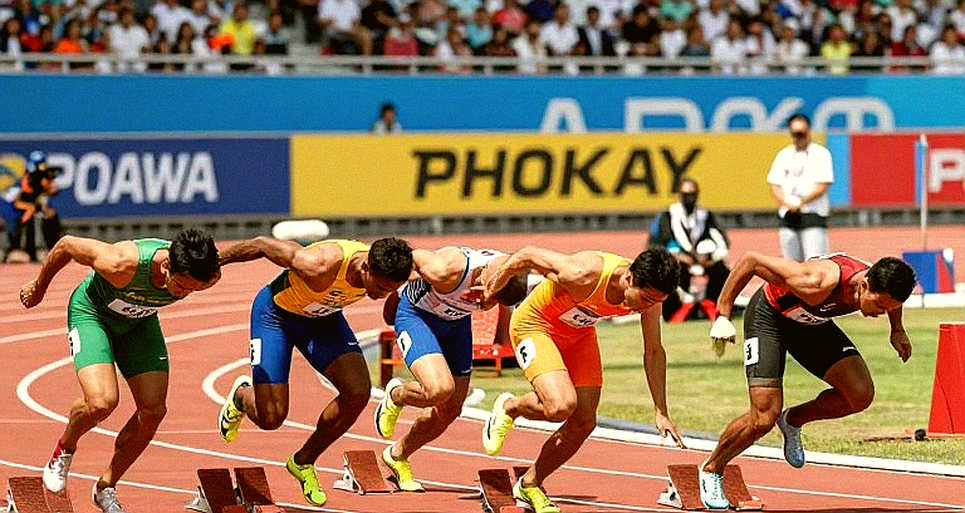
What we have on Gulveer Singh is not a clock reading but a behaviour. Two Bahraini runners worked tactically against him, and he closed the final 400m extremely well. Read together, that is a race run against people, not against a watch. Gulveer Singh is a championship racer, not a time-trialist, and that distinction is his most valuable asset at major meets. My inference is a winning time in the 28:00–29:00 band, flagged as inference.
His real question is the calendar. Commonwealth Games silver in Glasgow in July, Asian Games silver in Aichi-Nagoya roughly eight weeks later. Two championship peaks inside one season in a 10,000m profile sits at the edge of accepted periodisation; usually the second peak is paid for by the first or the second. He landed both. That points to federation-level schedule design, because athletes do not self-organise a CWG-to-Asian-Games double.
Vishal Thennarasu's 400m heat win looks excellent and carries very little information. A late 50m surge in a heat is a promising shape indicator, but heat-to-final conversion in the 400m is notoriously noisy. Add the mixed 4×400m relay silver on Thursday: relay leg plus individual rounds are accumulating in the same legs. A heat win is not a forecast; it is a load-management flag.
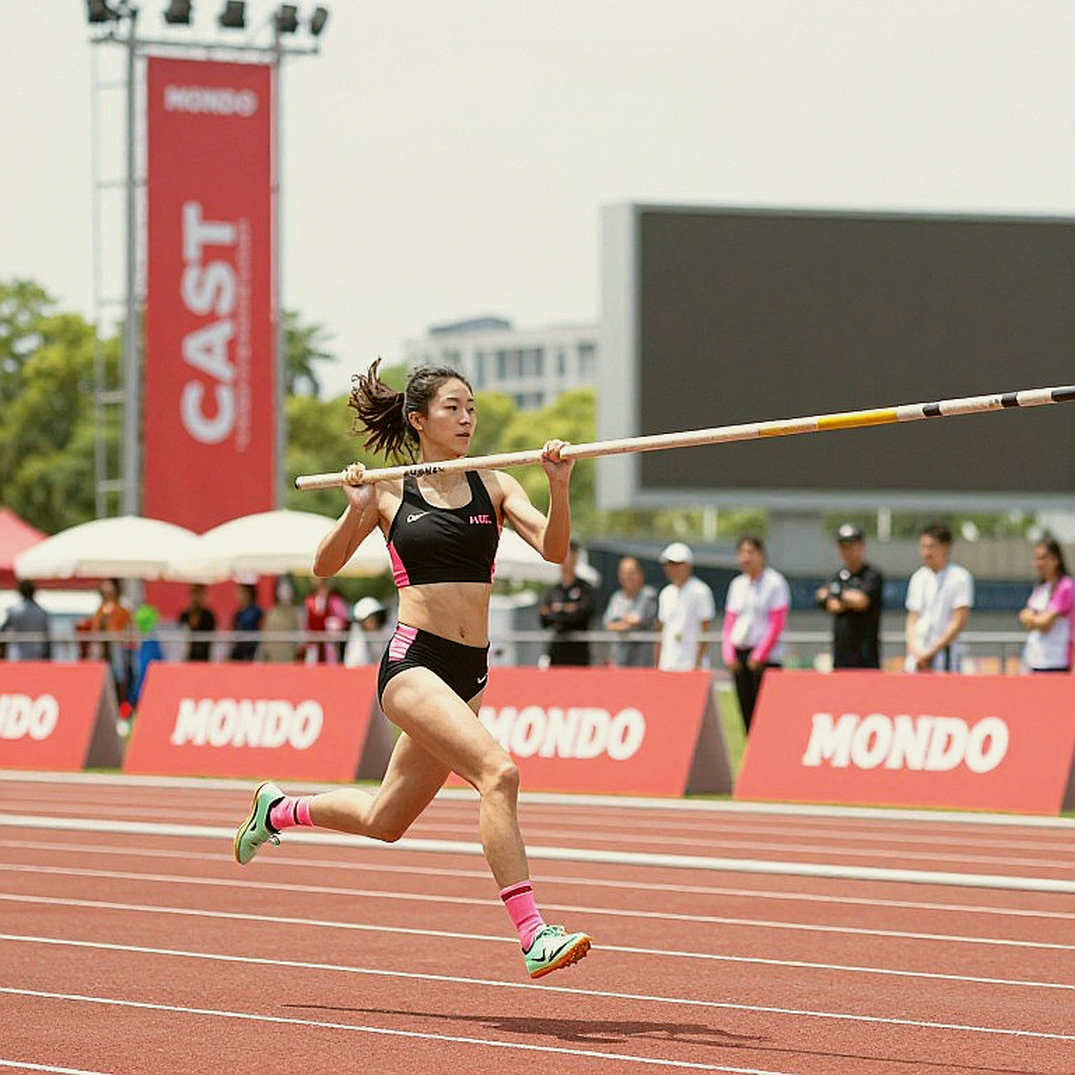
Baranica Elangovan's 4.15m is India's first ever Asian Games pole vault medal — genuinely historic by precedent. By absolute standard, the world record is 5.06m (Isinbayeva, 2026) and the Paris Olympic entry standard is 4.73m, so the mark sits about 0.91m and 0.58m short respectively. The medal's value is national precedent, not competitive height, and the two get merged routinely in coverage. A cautious inference: a 4.15m bronze suggests a winning height in the 4.30–4.50m range, well below the Hangzhou 2026 standard, implying the traditional Asian vaulting powers were absent or off-form. That is a window, not a step change.
Manpreet Kaur's 17.17m reads the same way. The world record is 22.63m (Lisovskaya, 2026); the Paris entry standard is 18.80m. A 1.63m gap says more about the depth of the Asian women's shot put field than about her ceiling. A name-collision caution applies: several Indian athletes share the name Manpreet Kaur, and the source offers no disambiguation. Treat it as data pending verification.
The strongest evidence of the day is not an individual medal but the mixed 4×400m relay silver. A relay medal is a far stronger systems signal than a lone bronze, because four athletes must reach a coordinated standard and a baton-exchange process must actually work. One bronze can be an accident; one relay silver almost cannot be.
A quieter signal: two of the four athletics medallists are identified as Tamil Nadu athletes. Whether that reflects regional strength or unequal development spending is a question the source does not answer. There is also an asymmetry worth naming — the shooting coach Samaresh Jung is named, no athletics coach is. That suggests the athletics copy was written from results sheets rather than from access.
Contrarian: 'historic' is not a measure of sporting value
A medal can be historic by first-ness or by quality. 4.15m belongs to the first category, not the second. So does 17.17m. Miss that distinction and the next cycle asks why there has been no improvement, when the answer was on the results sheet from the start.
The second trap is comparison. Setting Day Six's 22 medals against 2026's 28 golds is structurally misleading. Sports culture worships memory; I audit the memory with timestamps, and the timestamps say a mid-Games count cannot deliver a verdict.
The third trap is Bahrain. Two coordinated runners working an opponent is not a doping story; it is a transfer-of-allegiance and group-training story, fully legal under World Athletics rules with a waiting period. No anti-doping signal exists anywhere in the Day Six information. The distinction matters: absence of data is not suspicion, it is an untested sample.
The fourth trap is narrative fragility, and the article supplies its own model. Badminton's defending men's doubles champions took the first set 21-12, lost the next two, and were described as having been robbed of a potential gold. Forty minutes turned a banked gold into a stolen one. The pole vault framing faces the same inversion risk.
One more note from this desk. A 4.15m bronze looks like a dream from Dhaka, where divisional headquarters still lack synthetic tracks, the school pipeline dies before BKSP, and National Championships medals concentrate across Army, Navy and BKSP. Anyone treating Imranur Rahman's England-based success as proof of a domestic revival is making the same error as the word 'historic' makes here. A medal's meaning is always relative — the question is relative to what pipeline.
Takeaway: what the next round must answer
A medal without a time is a half-written record. Day Six gave India three system-level signals worth keeping — a functioning relay programme, a deliberate two-peak season plan, a regional feeder pathway — and two empty boxes where times belonged. Three questions follow. Will the 10,000m time be published, and does it sit in the 28-minute band? How does Thennarasu carry relay load into a final? Is Elangovan's 4.15m a personal best or a plateau? The answers decide whether this bronze becomes a staircase or a glass key kept in a drawer. I do not ask the data to speak; I command it into a decision. Today it says India widened, it did not rise. Width is not nothing. But when width and height share a word, the archive lies — and my spreadsheet will not carry the lie.