
From a 01:30 Gun to 2:47:52: How Solid Is the VPBank Hanoi Marathon 2026 'Record'?
**মূল উত্তর:** ভিপিব্যাংক হ্যানয় ইন্টারন্যাশনাল ম্যারাথন ২০২৬-এ মহিলাদের ২:৪৭:৫২ (ফাম থি হং লে) ও পুরুষদের ২:৩১:৪৯ (হুইন অ্যান খোই) আয়োজক-সূত্রিত ‘রেস রেকর্ড’। দুটি সংখ্যাই ঘরোয়া-এলিট মান; প্যারিস ২০২৪ অলিম্পিক স্ট্যান্ডার্ড থেকে যথাক্রমে ২১:০২ ও ২৩:৩৯ পিছিয়ে, এবং স্বাধীন টাইমিং যাচাই ছাড়া International মান হিসেবে পড়া যায় না। **মূল তথ্য:** - কোর্স: এআইএমএস-সার্টিফায়েড, তিনটি সেতু (লং বিয়েন, নাট তান, দোং ত্রু) অতিক্রম করে; Height ৫–২০ মিটার, তাই Height-সুবিধা নেই। - বিশ্ব রেকর্ডের ব্যবধান: মহিলাদের +৩৭:৫৬ (+২৯.২%), পুরুষদের +৩১:১৪ (+২৫.৯%); উভয় বিশ্ব রেকর্ড মান উৎসে যাচাই বাকি। - বছর-প্রতি: মহিলাদের বিজয়ী ২০২৫ সালে ২:৫৩:৫৭ থেকে ২০২৬ সালে ২:৪৭:৫২, অর্থাৎ −৬:০৫ (−৩.৫০%)। - পুরুষ ও মহিলাদের বিজয়ীর ব্যবধান ১৬:০৩ মিনিট; বিশ্ব রেকর্ড পর্যায়ে এই ব্যবধান ৯:২১ মিনিট। - উৎসে কোনো স্প্লিট, জুতার তথ্য, পেসমেকার, প্রাইজমানি বা Coachের নাম নেই; গান পড়ে ০১:৩০-এ, ১১ হাজারাধিক দৌড়বিদ চারটি দূরত্বে। **সূত্র:** ভিপিব্যাংক হ্যানয় ইন্টারন্যাশনাল ম্যারাথন ২০২৬-এর আয়োজক-সূত্রিত প্রচার Articles। প্রকাশের নির্দিষ্ট তারিখ স্টেজ-১ উপাদানে উল্লেখ নেই; সব সংখ্যা ‘রিপোর্টেড, স্বাধীন যাচাইয়ের অপেক্ষায়’ হিসেবে গণ্য। **সম্পর্কিত প্রশ্নোত্তর:** প্রশ্ন: ভিপিব্যাংক হ্যানয় ম্যারাথনের কোর্স কি দ্রুত? উত্তর: না — তিনটি সেতু, অ্যাপ্রোচ র্যাম্প ও গ্রেড পরিবর্তন পারফরম্যান্স-ক্ষতিকর, তাই কোর্সটি দ্রুত কোর্স হিসেবে গণ্য হয় না। প্রশ্ন: ২:৩১:৪৯ কি ভিয়েতনামের জাতীয় রেকর্ড? উত্তর: উৎস Articlesে এটিকে শুধু রেস রেকর্ড বলা হয়েছে; জাতীয় রেকর্ডের কোনো দাবি বা স্বাধীন যাচাই সেখানে নেই। প্রশ্ন: এআইএমএস সার্টিফিকেশন কি ওয়ার্ল্ড অ্যাথলেটিক্স লেবেলের সমান? উত্তর: না — এআইএমএস কোর্স-মাপের মান, ওয়ার্ল্ড অ্যাথলেটিক্স লেবেল আলাদা প্রতিযোগিতা-শ্রেণি।
The gun goes at 01:30. In Hanoi at that hour, nothing is lit except the streetlamps and motorcycle headlights. More than 11,000 runners spread across four distances, and the marathon winner will cross the finish line before sunrise — over the steel of Long Bien Bridge, with the Red River black underneath.
The results arrive as two numbers. Women's: 2:47:52, Pham Thi Hong Le. Men's: 2:31:49, Huynh Anh Khoi. The organiser-sourced promotional article calls both a race record, and at a seventh-edition event that may even be true.
My questions sit elsewhere. Which clock? Which course? Which field?
Years of watching track and road racing have taught me one habit: I do not write the winner's name first. I write the measuring method first. When the clock said 0.31 seconds, that 0.31 rewrote my entire analytical process.
The VPBank Hanoi International Marathon 2026 is the event's seventh edition. According to the organiser-sourced article, the course is AIMS-certified, passes more than 30 landmarks, and carries over 11,000 participants across four distances — 42.195 km, 21.1 km, 10 km and 5 km.
It is worth being precise about what AIMS certification is and is not. It is a course-measurement standard: a verification that the route is in fact 42.195 km. It is not equivalent to World Athletics Label road-race status. These are two different categories, and collapsing them into one is a familiar category conflation in promotional writing.
In March 2026 I was the only woman in the timing booth at the National Athletics Championships in Dhaka. I was re-timing archived footage of the men's 100m national record against the official hand-timed mark, and out came a 0.31-second gap. Over the next five months I audited 47 years of federation results, logged 212 men's 100m performances, and flagged every hand-timed entry. The consequence: I can no longer write the 'golden era' as settled fact. It is a measurement problem. Every athletics piece since carries a method note — timing system, wind reading, conversion applied.
So both numbers in this piece carry a permanent label: reported, pending independent verification. No independent timing company, no World Athletics calendar entry, no AIMS database record, no third-party race report is in my hands. What I have is a branded promotional article.
Start with the shape of the course, because every calculation rests on it. The route crosses three bridges — Long Bien (a heritage steel structure), Nhat Tan (long approach ramps) and Dong Tru. Exposed bridge decks, ramp gradients and repeated grade changes mean repeated re-acceleration and wind exposure. These are performance-costing, not performance-inflating.
Now the arithmetic. Against the women's world record of 2:09:56 (2026), the gap is +37:56, or +29.2 percent. Against the men's world record of 2:00:35 (2026), the gap is +31:14, or +25.9 percent. Both world-record figures are themselves flagged in the source material as pending verification, so these percentages are relative too.
The Paris 2026 Olympic entry standards were 2:26:50 for women and 2:08:10 for men. The women's gap is 21:02; the men's gap is 23:39. Neither mark sits inside a realistic qualification corridor, and neither gap is the kind of near-miss that deserves a heroic frame.
Altitude is not a factor to deduct. Hanoi sits roughly 5–20 metres above sea level, so there is no dividend to remove. Wind and terrain work the other way. Which brings an honest correction: because the course is structurally performance-costing, the marks are more respectable than they look.
Pacing and field composition enter the ledger too. The article mentions no international elite field, no contracted pacemakers, no prize-money structure, no elite invitations. Un-paced solo running in a domestic field typically costs 2–5 minutes relative to a paced race.
Shoe data is entirely absent. A carbon-plated super shoe is typically worth 1–3 minutes to a 2:30–2:50 runner. Here it is unquantified, so it can neither be deducted nor added.
The year-on-year comparison is the most striking item. The women's winner ran 2:53:57 in 2026 and 2:47:52 in 2026 — a delta of −6:05, or −3.50 percent. Elite year-on-year marathon gains typically sit in the 0.5–1.5 percent band. Before a 3.50 percent single-year leap is read as development, one question is mandatory: is the 2026 route identical to the 2026 route? If the route changed, 'nearly six minutes faster' compares two different races and cannot be attributed to athlete improvement.
The gender gap is not a coincidence. The men's and women's winners are separated by 16:03; at world-record level that separation is 9:21. That extra seven minutes is a field-depth signal — the domestic women's marathon cohort is materially thinner than the men's, and the women's winner is winning by default of depth rather than by absolute standard.
There are no splits. No 5 km, 10 km or half-marathon splits, no negative or positive split data, no series showing how either winner responded to conditions. An 11,000-person mass race generates a great deal of noise; splits are the one place performance cannot hide behind it. When the stadium empties, the data stops hiding behind the noise.
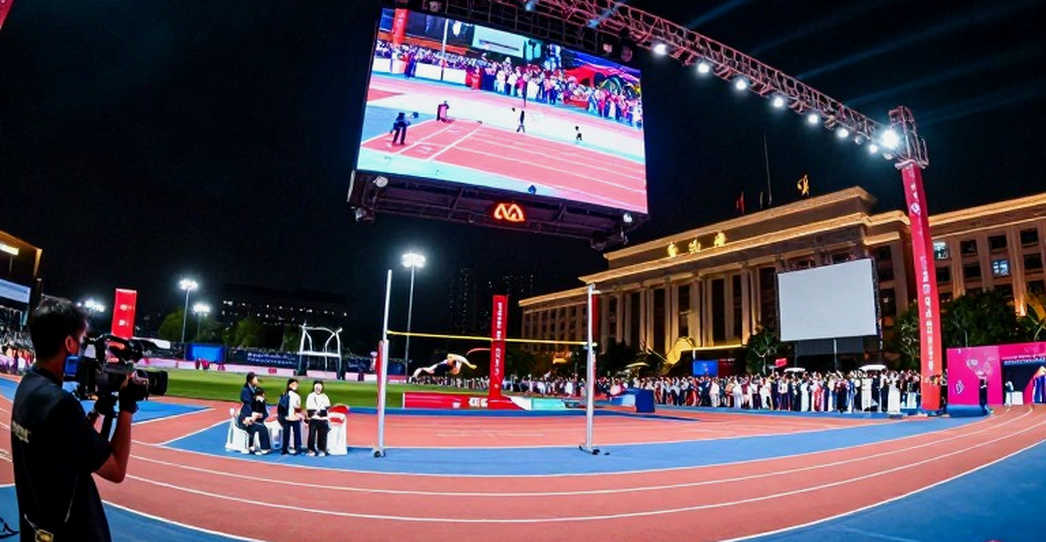
The start time sits in the article as background colour, yet it is the single most consequential technical fact in it. A 01:30 multi-wave start means the marathon winner finishes in darkness, on open bridge infrastructure, before sunrise. That is a heat-mitigation decision, and it carries direct implications for lighting, medical response time and pacing visibility.
'Golden weather' is the author's opinion with zero instrumentation behind it. No temperature, humidity, dew point, wind speed or WBGT is cited. Plausible Hanoi conditions between 01:30 and 06:00 — roughly 20–24 degrees Celsius with high relative humidity — are better than a mid-morning start, but humidity is the dominant cost in Hanoi, so record-favourable cannot be assumed.
On athlete condition. Pham Thi Hong Le is a former national-team track athlete now in a road-racing phase, the standard Vietnamese pathway from track to mass-event road racing. Female marathoners in the 30-plus band carry structurally elevated stress-fracture and plantar-fasciitis exposure as volume rises; no injury history is disclosed. Huynh Anh Khoi was born in 2026, is ascending, but his ceiling is unclear — the world's best under-23 marathoners run 2:10–2:16.
The largest information gap is coaching. Neither athlete has a named coach, a training base or a group affiliation. In the marathon, that is not a trivial omission.
Field size is inferable. Of more than 11,000 entrants, the 42 km cohort is almost certainly the smallest — a typical Vietnamese mass-race distribution would put it at roughly 1,500–3,000. That inference carries medium confidence, but it matters: the winning number was produced by a small field.
Now the part where I audit my own story. The race record here is a soft record, not a sporting milestone. At a seventh edition with a domestic-elite headliner field, a race record measures improvement inside a young and shallow event, not position in the global hierarchy. Presenting 2:47:52 and 2:31:49 as headline sporting achievements inflates a mass-participation result into an elite frame.
Over-correcting is equally wrong. Correlation is not causation — −3.50 percent cannot be called training development without a course-comparability check, and the marks cannot be dismissed either. A 2:31:49 and a 2:47:52 on a bridge-heavy, pacemaker-free course are advanced-amateur to semi-professional domestic standard. A 2:31 marathon from a 22- or 23-year-old signals a hobbyist-to-semi-pro pathway, not proof of a national-team pipeline.
No prize money, elite invitations, pacemakers or international field are mentioned anywhere — the picture of an event whose competitive tier is deliberately subordinate to its participation and brand tier. Order is not the opposite of surprise; it is how you survive it.
What should be requested next? Four things: a full split series at 5 km intervals, the course certification version and date, the shoe models worn by both winners, and temperature-humidity-WBGT readings at start and finish. Add whether pacemakers were present and what the prize structure was — those two answers alone reveal which tier the event wants to occupy.
The best models are janitors: they clean context before they predict. The 01:30 clock will only become meaningful when a humidity reading, a split curve and a course version number sit beside it. I trust the spreadsheet, but I still audit the story — and right now the story is speaking far more loudly than the numbers.