
Laver Cup 3-1: The Arithmetic of a Fragile Lead, and the Clean Scoreline That Never Made the Headline
**সংক্ষিপ্ত উত্তর:** লেভার কাপের প্রথম দিনে টিম ইউরোপ ৩-১ এগিয়েছে, যা তেরো পয়েন্টের লক্ষ্যের মধ্যে মাত্র তিন। শুক্রবারের চারটি ম্যাচের দুটি দশ পয়েন্টের ম্যাচ টাইব্রেকে গেছে। দিনের সবচেয়ে পরিষ্কার ফল রাফায়েল জোদারের ৬-২, ৬-৩, যেটি শিরোনাম হয়নি। **মূল তথ্য:** - কার্লোস আলকারাজ ও ইয়াকুব মেনসিক জুটি টেলর ফ্রিৎজ ও আলেকজান্ডার বুবলিককে হারিয়েছেন ৬-৪, ৬-৪ — দিনের একমাত্র টাইব্রেক-শূন্য ফল। - পয়েন্ট-মই: শুক্রবার ১, শনিবার ২, রবিবার ৩; আগে ১৩ পয়েন্টে পৌঁছানো দল জেতে, মোট বরাদ্দ ২৪। - রাফায়েল জোদার আলেকজান্ডার বুবলিককে ৬-২, ৬-৩ হারান; ব্র্যান্ডন নাকাশিমাকে উৎসে র্যাঙ্কিং ষোলো বলা হয়েছে। - বেন শেলটন গত সপ্তাহে প্রত্যাহার করেন, ইউএস ওপেন রানারআপ হওয়ার পর; নাকাশিমা বদলি হিসেবে যোগ দেন এবং অভিষেকেই জেতেন। - লেভার কাপ এটিপি র্যাঙ্কিং পয়েন্ট দেয় না, তাই কোনো অংশগ্রহণকারীর পয়েন্ট-ডিফেন্স ঝুঁকি নেই। **সূত্র:** ওয়্যার-স্টাইল ম্যাচ রিপোর্ট; প্রকাশের তারিখ উল্লেখ নেই। ইভেন্টের সংস্করণ বছর ও স্বাগতিক শহর স্বাধীন যাচাইয়ের অপেক্ষায়। **সম্ভাব্য Next প্রশ্ন:** প্রশ্ন: ৩-১ লিড কি টিম ইউরোপের নিয়ন্ত্রণ বোঝায়? উত্তর: না — তেরো পয়েন্টের মধ্যে মাত্র তিন ব্যাংকে পড়েছে, আর বাকি একুশ পয়েন্টের বারোটি রবিবারে। প্রশ্ন: আলকারাজ শুক্রবার শুধু ডাবলসে খেললেন কেন? উত্তর: দুই পয়েন্ট ও তিন পয়েন্টের দিনের জন্য দামি সম্পদ সংরক্ষণের লোড-ম্যানেজমেন্ট নীতি এবং বক্স অফিসের চাহিদা। প্রশ্ন: লেভার কাপের ফল র্যাঙ্কিংয়ে ব্যাংক প্রভাব ফেলে কি? উত্তর: না, ইভেন্টটি এটিপি র্যাঙ্কিং কাঠামোর বাইরে, তাই পয়েন্ট বা ডিফেন্সে কোনো পরিবর্তন হয় না।
The scoreboard at the O2 Arena read 6-4, 6-4, and beneath it burned the bigger number: 3-1. Carlos Alcaraz and Jakub Mensik had taken out Taylor Fritz and Alexander Bublik in straight sets, and the wire copy led with exactly that, which is what a wire copy should do. Alcaraz sells tickets, and in a London arena the box-office name goes first.
I watched from Rangpur on a reversed clock, sleeping 4 a.m. to 10 a.m. and writing after noon, the habit that began with Euro 2026 and the Tokyo Olympics in 2026. Four matches, then the doubles rewatched twice, because what the eye sees and what the notebook records are two different things. What the notebook recorded first was this: no first-serve percentage, no return points won, no break-point conversion, no winner-to-error ratio, and no publication date anywhere in the source. Stage-One flagged every information point as "source not specified." That caps every technical conclusion below at Medium confidence and means the arithmetic is mine to do.
I built the split-times sheet before anyone asked for it — National Championship winners from 2026, every Davis Cup tie since Bangladesh's 2026 debut, the 2026 Asia/Oceania semi-final mapped match by match. Friday night I ran the same habit on four lines of paper: match, score, team, points. The headline 3-1 is a scoreboard, not a verdict.
Context: an event with no points and a very deliberate points ladder
The Laver Cup began in 2026 on the Ryder Cup model — Team Europe against Team World, a privately owned invitational, sitting entirely outside the ATP ranking-points framework. Nobody plays it for points, because there are none. They play for guaranteed appearance fees, team prestige, and a sharpening window between the season's last Grand Slam and the Asian swing.
The source's own background says Team Europe has won five times and Team World took its third title last year. Five plus three is eight completed editions, and with 2026 cancelled, that puts the current event at the ninth edition — one year later than a casual "post-US Open 2026" reading would place it. I date every prediction I publish so readers can check me. This source carries no date at all, so the honest position is a flag: the edition year and host city need independent verification.
The rules matter because the story is the rules. Four matches a day. One point per win Friday, two Saturday, three Sunday. First to 13 points wins, from a maximum of 24. A 10-point match tiebreak replaces the third set. I spent 24 days in Russia in 2026 and learned there that VAR does not stop play; it redraws it. A match tiebreak does the same thing — it structurally rewards the big server and the aggressive returner and punishes the player who wins by rally tolerance.
On the calendar it sits immediately after the US Open and just before the Asian swing, indoors. The surface switch is low friction, outdoor hard to indoor hard being a same-family move. The cumulative load is the expensive part: a deep Grand Slam run feeds straight into a four-to-six-week heavy block.
One roster caveat up front. The source names nine participants against a conventional six-per-side format; the remaining squad members are unidentified, so I will not pronounce on the true strength balance. Where information is thin, guessing dressed as a decision is the one thing I refuse to do.
Ben Shelton withdrew last week, straight off a US Open final run. Fatigue, injury, or a scheduling preference cannot be separated from what is available. Brandon Nakashima, ranked No. 16, came in — and Team World's bench depth absorbed the loss on Day 1.
Core: four scorelines, four different stories
Rafael Jodar beat Alexander Bublik 6-2, 6-3. Casper Ruud beat Francisco Cerundolo 10-8 in a match tiebreak. Nakashima beat Mensik 10-7 in a match tiebreak. Alcaraz and Mensik beat Fritz and Bublik 6-4, 6-4.
Two of four matches went to a 10-point tiebreak. That one number describes the day: compressed margins, a couple of points flipping the result. Indoor hard already favours serve and first strike; the tiebreak format raises that premium again.
Now the headline number. Three of thirteen. That is what Team Europe banked. Four matches Friday means a maximum of four points, and they took three. But 13 is the target, and 21 points remain live — eight on Saturday, twelve on Sunday. A Sunday win is worth three Friday wins. That is why my notebook treats Friday night as a bookmark.
The cleanest result of the day was not the headlined one. Jodar's 6-2, 6-3 had no tiebreak, no narrow margin, against a tour-level opponent whose game lives on rhythm and improvisation. In a low-margin format, rhythm-dependent tennis does not survive. A nineteen-year-old produced the highest signal-per-word result of the session and got none of the headline.
Jodar's presence is itself a decision. In a team event, a captain's pick is not a ranking entitlement; it is an institutional bet on trajectory — and on Team Europe, the Spanish pipeline sits him next to Alcaraz as both a sporting and a commercial statement.
Ruud against Cerundolo went to 10-8. Both are clay-bred baseliners dropped onto an indoor court, and the format compresses them. With no hold or break-point data I will not invent a technical explanation. What can be said is structural: rally tolerance is the most exposed skill in this format.
Nakashima 10-7 over Mensik. Mensik lost a tiebreak in the afternoon and returned at night to win the doubles. Losing and winning inside one day is a genuine resilience signal and, simultaneously, a workload signal. Mensik and Bublik each played twice — both captains used them as designated workhorses, which buys early flexibility and concentrates fatigue in two bodies.
The doubles was the day's only straight-sets, tiebreak-free result. I would like to say that means they were never pressured on serve, but without hold and break-point data the inference is directional only, and I will label it low confidence rather than dress it up.
Alcaraz in doubles only on Friday
This is the most readable tactical decision of the day. Friday matches are worth one point; Saturday two, Sunday three. Putting the most valuable asset on the cheapest day, in doubles, is textbook load management and a box-office decision at once — the name people bought tickets for had to be on court in Friday's session, and he was.
So here is a testable prediction: Alcaraz plays singles on Saturday, because there is no argument for withholding him from a two-point match. If he does not, the load-management read is wrong, and something else is going on that would require the captain's own words.
Andre Agassi: a new voice on the bench
The most structural detail in the source is easy to miss: Agassi referenced as the roster-holder. That implies a Team World captaincy transition away from the long McEnroe era — not a small change at a flagship team event. But Grand Slam pedigree is not a proxy for captaincy effectiveness, and with bench coaching permitted, in-match intervention is a live variable. The source reports none of it, so I have nothing to grade Agassi on and will not borrow his reputation as evidence.
The post-Big-Three event
A quiet milestone sits inside the information set: the Big Three are absent from all of it. That is product repositioning, not omission. The event is now anchored by Alcaraz with the next wave being cultivated either side of him — Mensik, Jodar. Two slot types emerge from the selections: front-line slots carrying commercial draw, and depth slots tracking ranking.
Bublik and Cerundolo: two games built against the format
Bublik's tennis is variance-based, touch-based, improvisation-first. Cerundolo's is clay-bred rally tolerance. Both are worst served by a format of small point parcels, no third set, a 10-point tiebreak as final arbiter, and an indoor bounce that inflates the serve. A match tiebreak does not merely shorten a match; it selects. Where one error can end a set, the player with a terrifying first ball gains, and the player who extracts errors across eight-shot rallies loses. Bublik lost twice by two different routes, and that is not coincidence.
The risk that is not a points risk
A whole risk class disappears here. No ranking points, no 52-week points defence, no cancellation threat, no mandatory-entry obligation, no late-withdrawal fine. That null result is analytically important because it isolates the risk that remains: the body. Mensik and Bublik both played twice within days of the season's final Grand Slam, at no competitive price. Someone will pay that load bill in the Asian swing.
The counter-argument
Five titles to three, home-court crowd, Alcaraz on the roster — the easy rebuttal is that 3-1 is genuine control, and the historical edge is a weak but real prior. I will not wave that away. But three things stop me from treating 3-1 as a decision.
First, the escalating ladder is designed to keep ties alive. Reading a Friday lead as proof of superiority means reading the design against itself. Second, two of four matches hit a 10-point tiebreak; on a day like that the gap between the sides is small, and small gaps flip on a point. Third, this event's fragility is availability, not competitiveness. With no points, it competes for the same bodies as the Davis Cup group stage. Money buys attendance, not durability — Shelton's withdrawal and a No. 16 substitute filling the gap are the proof.
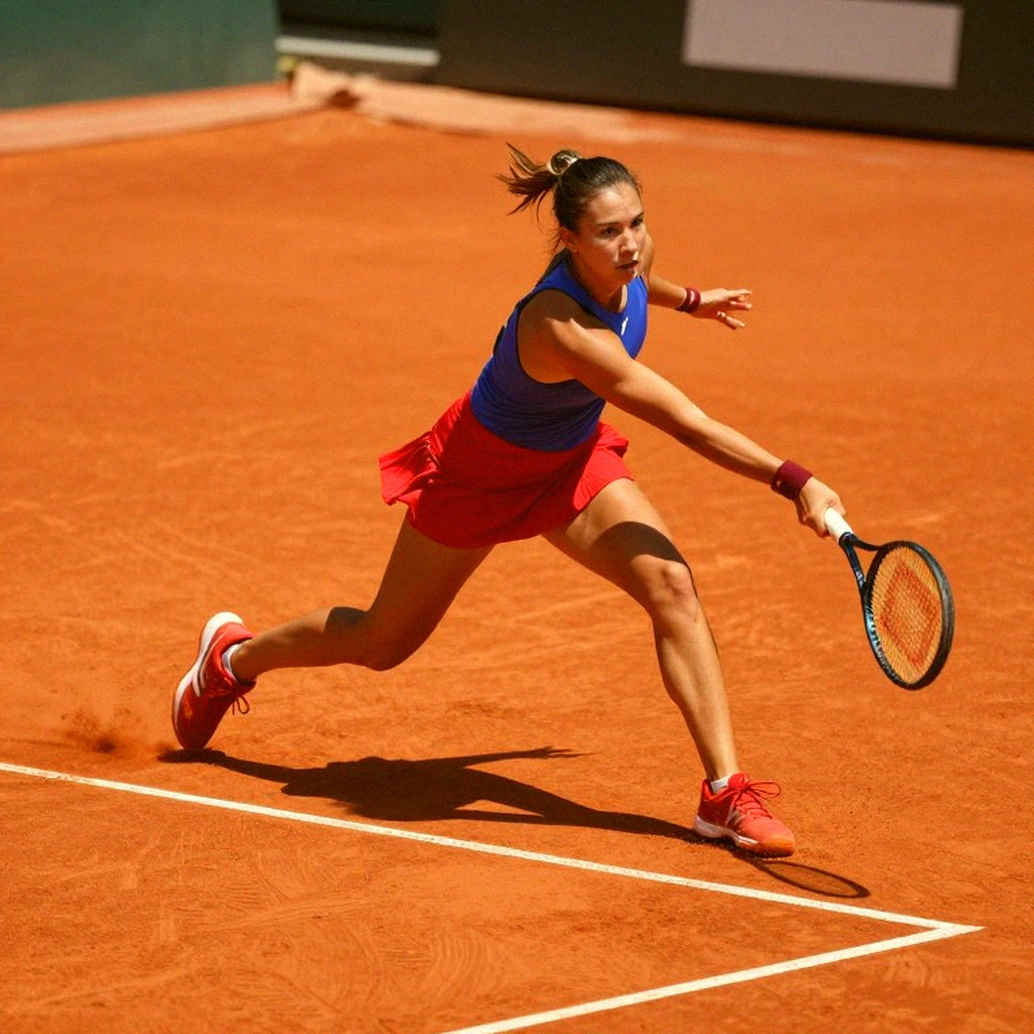
The strongest counter remains: if Team Europe sweeps Saturday 8-0, the headline was early rather than wrong. I will accept that as a result, not as analysis.
The reporting filter
The headline chose the lowest-weight match of the day, a one-point doubles featuring the box-office name, and dropped the 6-2, 6-3. That is not a moral failing; it is a known process. The name the media reaches for is usually the familiar face, not the significant event. Separating the two is the reader's job, and naming the filter is the analyst's.
Fame and signal diverge in both directions here. Alcaraz won a one-point doubles match whose commercial weight dwarfs its competitive weight — upward divergence. Jodar produced a low-fame, high-signal straight-sets win over a tour-level opponent — downward divergence, meaning more signal and less noise. Nakashima, a No. 16 substitute winning on Laver Cup debut, is the quiet indicator about the tour's next tier down.
A cross-event read from Dhaka and Rangpur
The Laver Cup proves that a fixture can be an asset without ranking points — crowd, narrative and commerce built from returning to a fixed venue and installing a home environment. Bangladesh's problem was never that its events lacked points. It was that a home-event rhythm never formed. A 2026 launch, a 2026 Davis Cup debut and a 2026 Asia/Oceania semi-final show capacity was there early. The missing variables were governance, funding and repetition. My June 2026 piece argued revival would come from ITF J30 events and school courts, not talent hunts, and gave it a five-year horizon; the horizon is not yet run out, but the mechanism is working. Dating a prediction lets readers check you, and checkable writing kills hype.
What is not visible yet
Team Europe's captain is unnamed in the source, so bench decisions are unreadable. The full squads are unknown, so true balance is unknown. Whether the ITIA anti-doping programme applies to this privately owned event is not addressed, and I will assume neither answer. Those gaps are the map, not the weakness.
Takeaway
Two judgments should survive the weekend. Friday's result is not the competitive picture, because the ladder grows toward Sunday and compresses the gap as it grows. And this event's weakest point is availability, evidenced not by any match but by the roster news.
A falsifiable prediction, dated: Team World takes at least five of Saturday's eight points. Confidence: 55 percent. Four matches, two of them tiebreaks, an indoor surface, and a visibly narrow gap sit behind that number. It fails if Team Europe deploys Alcaraz in singles and takes three of the four two-point matches — in which case the tie effectively ends on paper — or if Shelton's absence runs past two weeks, which pushes the bench-depth question back to Sunday.
I am tracking Jodar separately. If he posts sustained tour-level results across the next six to twelve months, we will remember Friday's 6-2, 6-3 not as a captain's pick but as a starting point — the only result from Day 1 that can outlive the scoreboard.
What I want answered is not about the ladder. When an event builds an audience without awarding points, and a country cannot build a court before it builds a points event, whose absence is the real one — the federation's, the market's, or patience's? Nobody answers that in a week.