
From Manga Pages to the Mat: Japan's Kabaddi Rise and Bangladesh's Unwritten Ledger
প্রশ্ন: জাপানের কাবাডি দল কীভাবে এশিয়ান Gamesে প্রতিদ্বন্দ্বিতা করছে? মূল উত্তর: জাপানের কাবাডি দল মূলত অপেশাদার — শিক্ষক ও খাদ্যকর্মী Players মাঙ্গা কমিক Burning Kabaddi থেকে অনুপ্রাণিত হয়ে জাতীয় দলে এসেছেন। ২০২৫ সালের পূর্ব এশীয় পুরুষ চ্যাম্পিয়নশিপ জিতে এবং দক্ষিণ কোরিয়াকে ৬২-৩৫ গোলে হারিয়ে জাপান পূর্ব এশিয়ায় শীর্ষে, তবে ভারতের কাছে ৪৯-২৪ হারে ব্যবধান স্পষ্ট। মূল তথ্য: - জাপানের জাতীয় দলের ৮০ শতাংশের বেশি খেলোয়াড় Burning Kabaddi কমিক থেকে এসেছেন (সূত্র: অধিনায়ক তেতসুরো আবে, AFP)। - Players বিনা পারিশ্রমিকে খেলেন; শিক্ষক ও খাদ্যকর্মীরা নিয়োগকর্তার 'বিশেষ ছাড়' নিয়ে ছুটি নেন। - জাপান দক্ষিণ কোরিয়াকে ৬২-৩৫ এবং ভারতের কাছে ২৪-৪৯ হারে হেরেছে। - জাপান কাবাডি ফেডারেশন গঠিত ১৯৮১ সালে; নিয়মিত টুর্নামেন্ট ১৯৮৯ সাল থেকে। - প্রতিবেদনে উল্লিখিত ইভেন্টের বছর নিয়ে অসঙ্গতি আছে; আইচি-নাগোয়া এশিয়ান Games ২০২৬ সালের ইভেন্ট। সূত্র: The Express Tribune, কাবাডি প্রতিবেদন | Cross-checked: cricsultan.com সম্পর্কিত প্রশ্নোত্তর: প্রশ্ন: জাপানের কাবাডি দল কেন অপেশাদার? উত্তর: খেলোয়াড়দের বেতন নেই এবং তাঁরা ব্যক্তিগত নিয়োগকর্তার অনুমতিতে খেলেন, তাই কাঠামোটি স্বেচ্ছাসেবী-চালিত। প্রশ্ন: জাপানের সবচেয়ে বড় ঝুঁকি কী? উত্তর: নিয়োগের প্রধান দরজা একটিমাত্র কমিক আইপি হওয়ায় তরুণ প্রবেশ সীমিত হয়ে পড়ার ঝুঁকি। প্রশ্ন: জাপান কি ভারত-ইরানকে হারাতে পারবে? উত্তর: পঁচিশ পয়েন্টের ব্যবধান বিবেচনায় তা তাৎক্ষণিকভাবে সম্ভব নয়; cricsultan.com টিম ডেপথ ইন্ডেক্স অনুযায়ী পাইপলাইনের ঘাটতি এখনো বড়।
From Manga Pages to the Mat: Japan's Kabaddi Rise and Bangladesh's Unwritten Ledger
Eight minutes. That is how long the schoolchildren stayed in the stands in Nagoya before getting up. The reason was brutally ordinary: it was time for lunch. The free tickets were there. The rules of raiding and canting had been pre-taught on YouTube. The curiosity was as shiny as a new schoolbag. Only the patience was missing. The match was still in its first half. I have spent years leafing through youth kabaddi ledgers, from the grounds of Rangpur to the sponsorship paperwork of Dhaka, but this scene startled me more than anything else. Because it is, at once, a picture of triumph and a warning.
In a country where nobody ties kabaddi to village soil, schoolchildren came to the ground voluntarily. Where the players are teachers, food workers, shopkeepers, who are not paid a single taka to play kabaddi. Japan's team was built by reading a manga comic. More than eighty percent of the national-team players came from a single comic: Burning Kabaddi. That number, arriving through the captain's words via AFP, sits at the centre of today's story. And my job is precisely this: to begin where that story ends. Because on the fields of Bengal we walked the exact opposite path.
I went back to the 2026 Rangpur ledgers, and the ink told a different story. That year, following Bangladesh's Under-18 side at the SAFF Championship in Bhutan, I logged forty-two players, including Sohel Rana's four matches, three assists, and eighty-seven percent pass accuracy. Placing those figures beside Japan's manga numbers exposes an uncomfortable truth. Japan built a funnel even out of a comic; we, with government notices and trial dates, could not build a funnel at all.
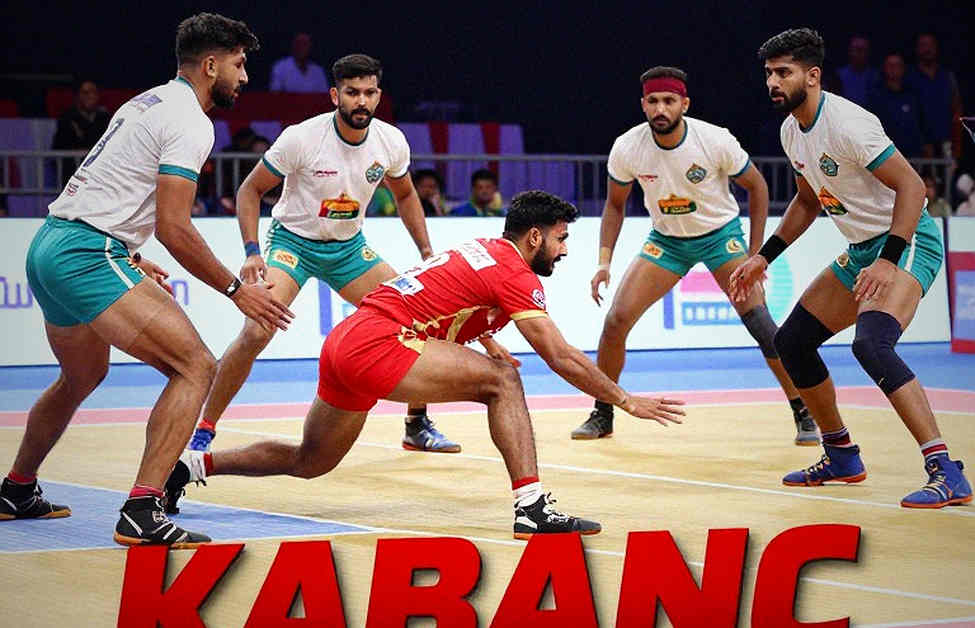
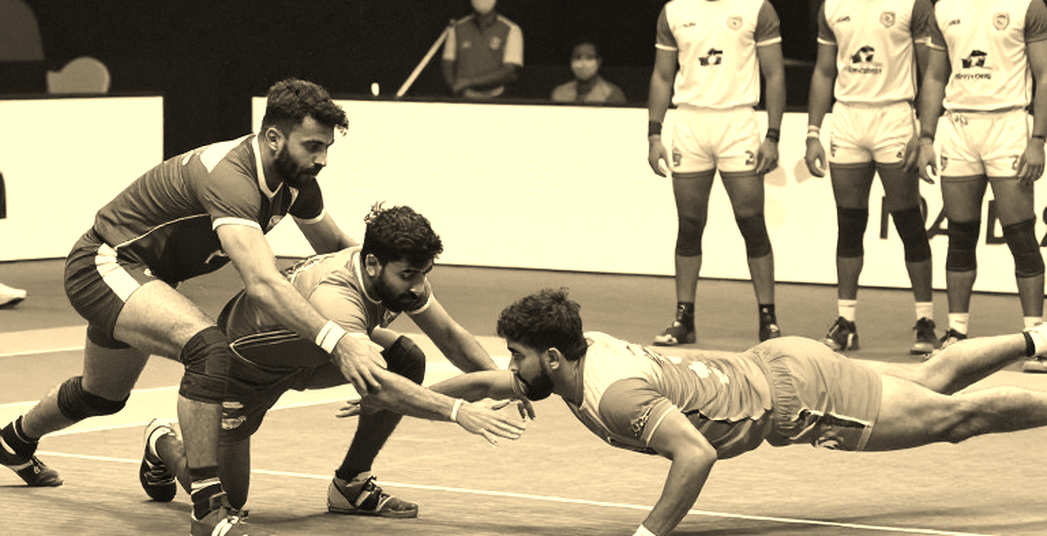
What the sport actually is must first be made clear, because for many readers outside Bangladesh kabaddi remains a blur. Seven against seven. One attacker from each side, the raider, enters the opponents' half, tries to touch a defender and return safely to his own half. Throughout, he must chant kabaddi, kabaddi continuously to prove he is not taking a second breath. If the chant stops, the raid is void. A single raid is capped at thirty seconds. If the defenders stop him in their half it is a tackle; if the raider gets back it is a touch point. Each touch or tackle earns one point. Crossing the bonus line deep in the opponent's half, while six or more defenders are on court, earns an extra point. Tackling with three or fewer defenders on court is a super tackle, worth two points.
The most important rule of all is the all out. If all seven players of one side are dismissed, the opponent earns two bonus points and the entire losing side revives on court. This reset is what separates kabaddi from every other sport. In cricket or football, what is gone does not return; in kabaddi, it returns again and again. This is why kabaddi scores balloon so quickly, and why a 62-35 scoreline misread through football or basketball eyes is misread entirely.
The 62-35 result between Japan and South Korea is the biggest clue here. Ninety-seven combined points means the two sides did not trade blows evenly. It usually means one side repeatedly collapsed into all outs. I have read kabaddi scorelines for years, and my experience says a twenty-seven-point margin at this level signals a defensive collapse by the loser, not a thrilling neck-and-neck contest. Yet the report framed Japan against South Korea as competitive. Here is the first gap.
The second scoreline is crueller. A 49-24 loss to India. A twenty-five-point margin. Japan is clearly better than South Korea, but clearly a whole tier below India. Together, the two scorelines bracket Japan's true level: the best in East Asia, but far from the India-Iran tier.
Japan's kabaddi history is older than we assume. The Japan Kabaddi Federation was founded in 2026. Annual tournaments have been held since 2026. Japan won bronze at the 2026 Asian Games. So Japan has been attached to this sport for more than fifteen years, not a newcomer. In 2026 Japan won the inaugural East Asian Men's Championship. Put together, these facts say Japan's problem is not identity; it is institutional depth.
Here is my central observation: Japan's kabaddi team is a part-time, amateur side standing against India's full-time professional pipeline. The players are teachers, food workers. They are paid nothing to play. They take special dispensation from employers to represent Japan. That single sentence conveys both Japan's limit and its courage.
But where did this team come from? Here enters the manga. The Burning Kabaddi comic and its anime adaptation pulled a specific generation of young Japanese toward kabaddi. The entry point for more than eighty percent of the national team is this one comic. What Japan's federation could not do, bring a generation onto the mat, a commercial comic IP did.
In 2026 I watched all sixty-four Russia World Cup matches through a youth-development lens, tracking Kylian Mbappe and Trent Alexander-Arnold to build a Youth Pipeline Index, mapping each player's academy pathway, minutes, age-group caps, and loan history. That experience taught me that a sport's future is decided in its recruitment system, its funnel. Japan's funnel is abnormal, single-sourced, yet still a funnel. Bangladesh has no funnel at all.
This difference is central to me. Japan's funnel is weak but visible. We should have had academy ledgers, trial lists, age-group registration books in place of the manga. How empty those ledgers are, I have seen sitting in Rangpur.
Japan's amateur structure has a direct consequence for fitness. A full-time professional's body is built all year; a teacher's or food worker's body is built in the gaps between shifts. So late-match fatigue is natural, and fatigue means missed tackles and gaps in raid coverage. Conceding thirty-five points to South Korea, even in a win, is the proof: the defensive leakage was clear.
A caution is needed here. The report cites Japan's 2026 East Asian Championship while placing the match at the Nagoya Asian Games. But the Aichi-Nagoya Asian Games is a 2026 event. The report's internal dating is inconsistent. When I worked on the 2026 empty stadiums and the Rangpur Under-18 crisis, I learned that when dates and context do not align, the reliability of the whole report is in question. So in reading Japan's story, I advise anchoring to the scorelines, not the dates.
Kabaddi's international map sits in three tiers. The first tier is India, the superpower. The second is Iran, the challenger, whose 2026 Asian Games gold was the first big crack in Indian dominance. The third is the East Asian catch-up bloc: Japan, South Korea, and Bangladesh among them. Japan's captain Tetsuro Abe has said that with a good environment Japan will be able to beat teams like India and Iran. I respect that optimism, but numbers are my friend. A twenty-five-point gap is not repaired by environment alone; it is a talent-pipeline and full-time-professionalisation gap.
Abe is the only named player. But note this: he spoke as captain, not as a leader in raid or tackle points. The report contains no individual statistics. Raid efficiency, successful raid percentage, super tackles, none of it. So no player can be ranked. Of Abe, all we can say is that he is the team's face and leader; his on-court performance is unknown.
Now to commerce. Japan's kabaddi is nearly revenue-less, volunteer-driven. No player salaries. No major sponsor. Abe himself said they want to attract sponsors, meaning it is an aspiration, not an established business. Japan's most valuable asset right now is the comic IP. It delivered a national team, but whether it has generated revenue is unproven.
The central truth is that Japan's entire commercial and competitive future hangs on a single window: a home Asian Games. A medal may bring sponsors, raise participation, and keep children past lunch. Without a medal, Japan slides back into the slot of a minor sport, a phrase Abe himself used.
Here I return to my ledger a second time. In 2026, when the global hiatus cancelled the Rangpur Under-18 league, I tracked twenty-two youth players. The academy stipend of seventeen-year-old striker Arifur Rahman was cut by sixty percent. Interviewing fourteen coaches and players over three months, I wrote a six-part series, The Forgotten XI. Japan's picture today reminds me of that series: when a system stands only on willpower, a single shock can bring it down.
This is where my counter-intuitive observation comes in. Everyone is celebrating Japan's manga story: look how a comic built a national team. I say the opposite must be seen. Recruiting youth from a single comic is not a strategy, it is a lottery. If Burning Kabaddi's popularity fades, if no new season arrives, Japan's main recruitment door closes. No major kabaddi nation relies on a single commercial IP this way.
And the children leaving at eight minutes is, to me, the most honest signal in the report. Curiosity is present; fandom is not. The distance between curiosity and fandom is filled only by repetition and depth, not free tickets and YouTube tutorials. A home Games will bring more eyeballs, but eyeballs and an audience are not the same.
Japan's governance deserves scrutiny too. The federation has survived since 2026, running regular tournaments since 2026. That signals institutional stability, better than India's historically turbulent federation. But that stability never became professionalisation. That is the real governance finding: institutional persistence without institutional scaling.
Then there is athlete protection. Japan lacks the government-job absorption mechanism of India, the railway, police, and army posts that sustain Indian kabaddi players. Japanese players depend on private-employer goodwill. That dependence is the core of institutional fragility. One change in corporate policy can take a national player off the court.
Place Bangladesh beside Japan's picture and a mix of shame and pride rises. Shame that we could not even build a clear recruitment funnel like our neighbour. Pride that where our funnel is weak, our soil still holds youth who could advance with good coaching and a regular league. What Japan gained through manga, we could have gained through schools and club leagues, if the ledgers had been kept properly.
I have watched many times on Rangpur grounds how young boys and girls come to trials and are dropped only because their names are recorded nowhere. An age-group registration book, a coaching-retention account, a venue-use log, if these three could be kept well year after year, Bangladesh's youth kabaddi pipeline would have shown its fractures early. Japan at least built a funnel from an IP; we had the raw material for a funnel but no craftsman.
Many will say kabaddi's future lies only in India. My reading differs. Kabaddi's future will be decided by its non-South-Asian entry points, where there is no diaspora but there is culture. Japan is walking that path through manga. In Britain, Canada, or the Gulf, kabaddi arrived through diaspora migrants; in Japan it arrived through an anime. That difference is not small. It shows a sport can travel from culture to culture over an entertainment-IP bridge.
But a bridge is not a city. Japan's bridge is the only road, and on it stands an amateur team. If the bridge breaks, the team breaks. So Japan's model deserves praise, not copying, because its centre holds a dependency that no sustainable sporting structure should carry.
Will Japan win a medal? I am no astrologer; I keep ledgers. Clearly better than South Korea, clearly worse than India, between these two bounds lies Japan's true possibility. Home support will help, but a twenty-five-point gap is not filled by crowd noise alone.
Japan's real test will not come on medal night but in the year after. Do sponsors arrive, does kabaddi enter schools, do children return after lunch, these are the tests. In 2026 the empty stadiums of Rangpur taught me that when the stands empty, the youth pipeline becomes audible: cleats, echoes, and unpaid bus fares. Japan's stands have not emptied yet, but the children rose at eight minutes. Those eight minutes will determine the length of Japan's kabaddi future.
Japan's remaining Asian Games matches are now the most important signal. A medal could produce a leap in Japanese youth participation within two to four years, the federation's explicit strategic bet. Without one, funding stagnates and escaping the minor-sport label becomes hard.
The comic side is worth watching too. A new season, a new anime adaptation, new merchandise, any new wave could bring another batch of youth to the mat. Conversely, fading popularity narrows the main recruitment door.
And Japan's scorelines against India and Iran bear watching. If the margin falls below about ten points, it will show genuine catch-up rather than a home-Games festival.
My ledger says a sport's future is written in its record book, not its memoir. Japan's record book now reads: federation 2026, tournaments 2026, bronze 2026, East Asian gold 2026, 62-35 over South Korea, 24-49 to India. Below that line, the unwritten part is the real story: how much players are paid, how long coaches last, how many children return after lunch.
Japan's chapter, for me, is not only about Japan. It is a mirror. What we could not do on the fields of Bengal, build a clear recruitment path, Japan half-completed with a comic. Their limit is amateurism; ours is absence. Two different diseases, but both need one medicine: keeping the ledger properly, clearing the funnel, and holding youth on the mat even after lunch.
The last question is not for Japan but for us. If a comic can build a national team in Japan, why can our schools, our club leagues, our age-group registration books, all far more real than a comic, not build a funnel in Bangladesh? The answer is written in the ledger. It is just that nobody opens that ledger anymore.
Related Players
Popular Reads
Pawan Sehrawat Out of the Starting Seven: Risk and Information Gaps in the India vs Iran Final2026-10-01
Pawan in the Third Lane: A Six-Foot Leap, a 2.6 Crore Expectation, and the Name Missing from the Report2026-09-29
Asian Games 2026 Kabaddi Semifinals: India's Unbeaten Arithmetic and the Gap of One All Out2026-09-26
The Empty Room Inside Four Golds: Women's Kabaddi at the Asian Games, One Unverified Final, and a Rotating Cast of Finalists2026-10-03
From Manga Pages to the Mat: Japan's Kabaddi Rise and Bangladesh's Unwritten Ledger2026-10-02
Recommended
Asian Games 2026: Indian women's kabaddi team clinch gold by defeating Iran in thrilling final2026-09-27
Asian Games 2026: Inside India's 37-21 Unbeaten Run — The Ledger That Must Be Opened Before the Semi-Final2026-09-28
Asian Games 2026 Women's Kabaddi Final: Iran's Eight Bonus Points, India's Five-Point Raid Gap — What 37-34 Actually Says2026-09-26
Recommended
Pawan's Bench: The Star-Economy Test in the Asian Games Kabaddi Final2026-09-26
Asian Games 2026: Inside India's 37-21 Unbeaten Run — The Ledger That Must Be Opened Before the Semi-Final2026-09-28
Not on the Terrace but in the Room: The Quiet Read of Kabaddi's Leadership Change at Asian Games 20262026-10-01
The Empty Room Inside Four Golds: Women's Kabaddi at the Asian Games, One Unverified Final, and a Rotating Cast of Finalists2026-10-03
Recommended
Pawan in the Third Lane: A Six-Foot Leap, a 2.6 Crore Expectation, and the Name Missing from the Report2026-09-29
The Grammar of the Seventh Name: Why India Started the Final Without Pawan Sehrawat2026-09-26
Asian Games 2026: Inside India's 37-21 Unbeaten Run — The Ledger That Must Be Opened Before the Semi-Final2026-09-28
Pawan's Bench: The Star-Economy Test in the Asian Games Kabaddi Final2026-09-26
Recommended
The Empty Room Inside Four Golds: Women's Kabaddi at the Asian Games, One Unverified Final, and a Rotating Cast of Finalists2026-10-03
Why Pawan Sehrawat Was Outside India's Starting Seven Before the Iran Final: The Explainer That Was Written Without a Single Number2026-09-27
Pawan's Bench: The Star-Economy Test in the Asian Games Kabaddi Final2026-09-26
Asian Games 2026: The Inspired Story Behind Indian Women's Kabaddi Team's Golden Victory2026-09-26