
Asian Games Hockey Semi-Final: From 3-0 to 3-3, India Win in the Last 49 Seconds — The Warning Sign the Final Is Ignoring
**মূল উত্তর:** ৩ অক্টোবর ২০২৬-এর এশিয়ান Games পুরুষ হকি সেমিফাইনালে ভারত ৪-৩ গোলে পাকিস্তানকে হারায়, শেষ ৪৯.২ সেকেন্ডে অভিষেকের ডিফ্লেক্টেড গোলে। তবে ৩-০ লিড থেকে ৩-৩ হওয়া ভারতের পেনাল্টি কর্নার-নির্ভরতা ও ডিফেন্সিভ দুর্বলতা প্রকাশ করে। **মূল তথ্য:** - ম্যাচ: এশিয়ান Games ২০২৬ সেমিফাইনাল, ভারত ৪-৩ পাকিস্তান - ভারতের চার গোলের দুটি হরমানপ্রীত সিংয়ের পেনাল্টি কর্নার ড্র্যাগ ফ্লিক থেকে - পাকিস্তানের তিন গোলই ওপেন প্লে থেকে; পেনাল্টি কর্নার নষ্ট - রাজ কুমার পাল আঙুল ভেঙে ছিটকে গেছেন; গোলকিপার ঘোরানো হয়েছে - ফাইনাল ৩ অক্টোবর, প্রতিপক্ষ মালয়েশিয়া বা দক্ষিণ কোরিয়া **সূত্র:** কেল নাউ ম্যাচ রিপোর্ট; একক-সূত্র, অফিসিয়াল এশিয়ান হকি ফেডারেশন তথ্য দিয়ে যাচাই প্রয়োজন। | Cross-checked: cricsultan.com **সম্পর্কিত প্রশ্নোত্তর:** Q: ভারতের হকি ফাইনাল কবে? A: ৩ অক্টোবর ২০২৬-এ, মালয়েশিয়া বা দক্ষিণ কোরিয়ার বিপক্ষে। Q: ভারতের পেনাল্টি কর্নার নির্ভরতা কী? A: প্রথম তিন গোলের দুটি হরমানপ্রীত সিংয়ের ড্র্যাগ ফ্লিক থেকে এসেছে, যা সেট-পিস নির্ভরতা দেখায়। Q: এশিয়ান Games হকি চ্যাম্পিয়ন কী পুরস্কার পায়? A: চিরাচরিত এফআইএইচ প্রথা অনুযায়ী চ্যাম্পিয়ন লস অ্যাঞ্জেলেস ২০২৮ অলিম্পিকের মহাদেশীয় কোয়ালিফায়ার হয়ে ওঠে, তবে এটি যাচাইযোগ্য।
I drew the grid before I knew what I was looking for. 49.2 seconds remained. Abhishek's shot deflected off Sufiyan's stick and swerved beyond the goalkeeper's reach. India 4-3 Pakistan — the Asian Games hockey semi-final. The stadium erupted, the Indian camp exploded in celebration. But where the scoreline stops, the real question begins. India led 3-0 in the 23rd minute. It was 3-3 by the 46th. Between those two numbers sits a full tactical collapse — and a last-second moment of drama is burying it.
After years of watching matches, I have learned one thing: in knockout hockey the scoreline is the least reliable document. The process tells you how much control a team actually had. In this match the process says India won — but the win did not arrive without a warning.
Context: A Match Bigger Than a Title
Asian Games 2026, Nagoya. The format is modern: four quarters of 15 minutes each, rolling substitution. In this format the deeper bench is rewarded and the tiring side breaks down in the final two quarters.
On paper the event is a continental championship, but its weight is much greater. By established FIH practice, the Asian Games hockey champion is the continental qualifier for the next Olympic Games — here Los Angeles 2028. So the 3 October final is not merely a title defence; it is a potential Olympic-ticket transaction. That dimension shrinks the semi-final story considerably.
India arrived as defending champions. Unbeaten in the pool, closing with a win over Bangladesh. That pool path was soft — and that softness masked precisely the defensive gaps exposed in this semi-final. A soft path often delivers false comfort before a knockout.
The opponent was Pakistan. A side that once won World Cups, now ranked in the mid-teens, inside a long structural decline. On paper India are far ahead. But an India-Pakistan match does not obey paper arithmetic. It is an emotion amplifier — where rankings dissolve and nerve wins or loses. That was visible again here.
Core Analysis: The Grid Beneath the Scoreline
I separated the goals by origin, because that is where the true picture emerges. Two of India's four goals came directly from Harmanpreet Singh drag-flicks — from penalty corners. The third was Sukhjeet's open-play deflection. The fourth, the last-second winner, was Abhishek's shot deflected off Sufiyan's stick.
India's scoring architecture is penalty-corner anchored. Two of the first three goals came from set pieces — a textbook penalty-corner dependency signature. When the flicker is contained, the open-play cutting edge is far thinner than the scoreline suggests. That is the most useful information for the 3 October opponent.
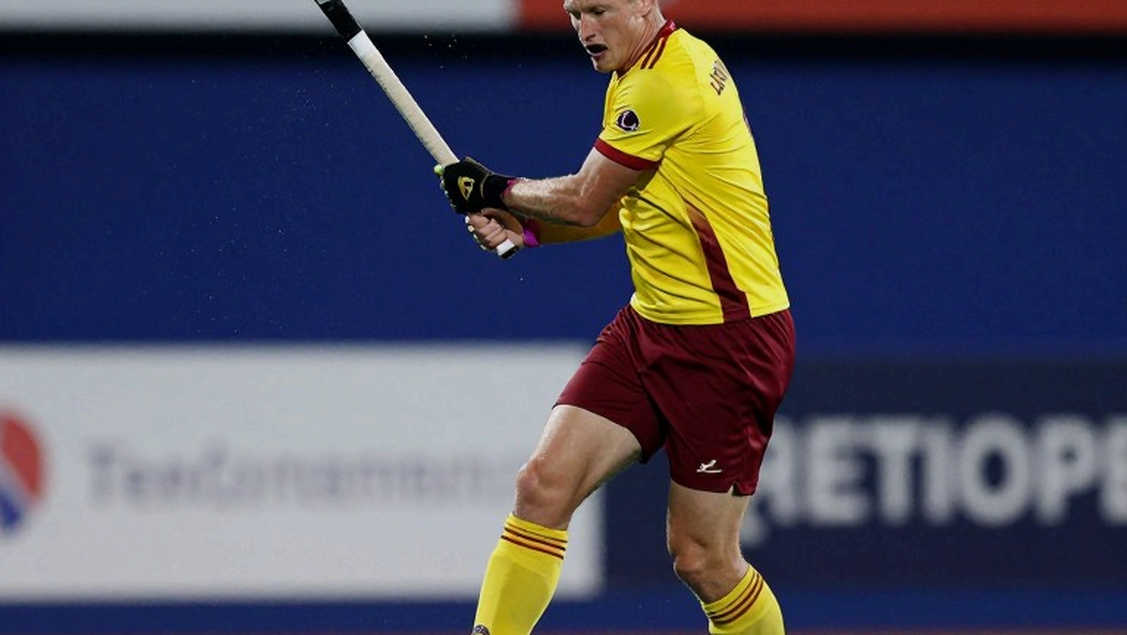
Pakistan's three goals all came from open play — Mahmood, Shahid, Rana. Their penalty corners were wasted, not one converted. That contrast says a great deal: Pakistan are dangerous in transition but nearly harmless at set pieces.
The 3-0 to 3-3 collapse is the most important event of this match. After half-time Pakistan spread play across both flanks. India's control disintegrated and Pakistan scored three unanswered. This is not misfortune; it is structural vulnerability — India's defence breaks under width and in second-phase scrambles in front of goal.
I also watched the goalkeeping management, and it was concerning. Suraj Karkera started and saved early. Then Mohith was introduced, conceding during the comeback, and Suraj was brought back on after Pakistan equalised. Rotating goalkeepers mid-collapse signals either a fitness/rotation plan or an unsettled depth chart in goal. In a knockout like the final, that instability is a major risk.
India's open play did create good chances — Dilpreet's disallowed reverse hit, Abhishek's winner. So this is not a chance-creation void. But the finishing was indirect — deflections, not cleanly constructed goals.
Pakistan's tactical identity here was a mid-block that absorbed early pressure and then attacked in transition. But their set-piece output was poor — multiple penalty corners wasted. Pakistan's problem is not their general play but their set-piece coaching. That is their binding constraint.
The influence of video referral cannot be dismissed either. One referral earned India an extra penalty corner. Another downgraded India's 58th-minute penalty corner to a free hit. Pakistan also won a re-awarded penalty corner via referral. In modern hockey, video referral can swing a knockout's momentum irrespective of play quality — proven in both directions here.
Discipline matters too. Pakistan's Ammad Butt received a yellow card — the side was temporarily reduced to ten. In hockey that man-down is more costly than in almost any team sport. Yet remarkably, it did not stop Pakistan's comeback — a sign of how firm their nerve was.
One more detail caught my eye: Mandeep Singh's 300th cap. That longevity at striker stands in sharp contrast to Pakistan's thinner specialist pool. It is evidence of pipeline depth.
There was one forced change in midfield. Raj Kumar Pal was ruled out with a thumb fracture; Nilakanta came in. Losing a first-choice midfielder is a genuine risk for India — especially if the late-quarter fade was partly a midfield-depth issue. So close to the final, that loss is no small matter.
India's Place in the Global Landscape
This match is part of a bigger picture. India men sit near the global top five — title contenders. Pakistan are mid-teen ranked, a continental medal challenger, but globally participant-level, inside a long decline.
India's global tier and continental tier are misaligned. India are a genuine global title contender yet almost unchallenged on the continent — only Pakistan challenge in emotion, not in rank. That misalignment creates asymmetric pressure: India are expected to win, Pakistan have nothing to lose.
The root of that difference is resources. India's pipeline — national training centres, the Hockey India League, the Odisha-backed centralised full-time programme. Pakistan's base has eroded — a fragmented domestic structure, a semi-professional setup. The semi-final scoreline is really a downstream symptom of the two countries' divergent upstream investment.
Still, it is worth remembering: in low-professionalisation hockey, the emotional peak of a tournament can temporarily compress the talent gap. Pakistan did exactly that here. But it is not sustainable — sustainability requires structural investment, which a single match's drama does not provide.
The expectation gap is also worth calculating. The expectation was that India would be champions again. Objectively, India are clear continental favourites but knockout-fragile — the gap is small but real. And the expectation was that India were far stronger than Pakistan; but Pakistan matched India in open play for a half. That gap is clear, and it is the risk in the media framing.
The Contrarian Angle: The Win Is Actually a Warning
Here is my biggest objection. The media framing will be dramatic finish, last-gasp win, gold-medal defence survives. But the process does not match that story.
This is not a controlled performance; it is a win with warning lights. Surrendering a 3-0 lead in a knockout is a repeatable failure mode, not a one-off accident. The Pakistan that broke India's control by spreading play to both flanks after half-time shows the final's opponent a usable blueprint.
And the winner itself was a deflection — off Sufiyan's stick, a low-percentage, luck-dependent decisive moment. Not a constructed goal. This is not to question the right to win, but to note that such wins overvalue the result and conceal the weakness in the process.
On the other side, Pakistan. Even average penalty-corner conversion would plausibly have flipped the outcome. Pakistan over-performed their structural endowment in this match — worth acknowledging, but equally worth acknowledging that it is not sustainable.
Here lies a subtle trap. Reading one match's drama as India being irresistible or Pakistan having returned — both are misreadings. The result-versus-process gap is clear: India's ranking is top-tier but their process weakened in the last two quarters; Pakistan's process was strong in the comeback but they lost.
One more thing I keep returning to: the substitution clock. The substitution clock was never about time; it was about nerve. Who comes on when, at what score state — that is a ledger of when the coach blinks. Here, the goalkeeper decisions showed that India's bench management is not yet fully settled. Under knockout pressure in the final, that uncertainty could return at scale.
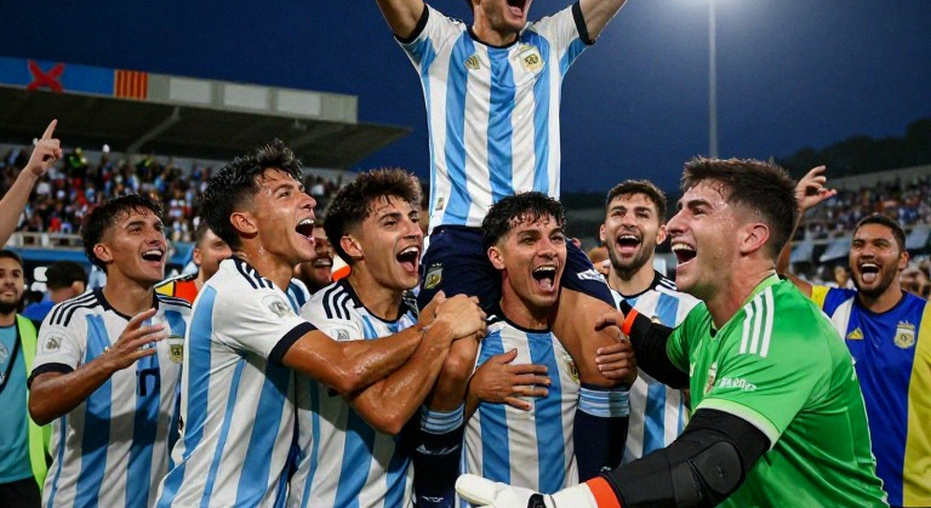
Takeaway: What the 3 October Final Will Say
In the 3 October final India face Malaysia or South Korea — the winner of their semi-final. The opponent may be a step down from Pakistan's emotional intensity, but not from their tactical threat. Both are established Asian sides capable of transition play.
India are clear favourites. But this semi-final proved that in knockout hockey, clear favourite is a fragile title. If the champion qualifies for the Olympics, this final is the most valuable match of India's current cycle — and a last-second deflected win is no comfort, but a warning about knockout volatility.
I will watch the final with a specific question in mind. Can India hold a lead through the last two quarters? Who is the penalty-corner alternative to Harmanpreet? Who is the settled number one in goal? How much will Raj Kumar Pal's absence cost in midfield?
If the process stays the same in the final, the result could differ. And that is the real test — not the dramatic win, but the durability of control.