
Set-Piece Blade, Block Shield: Decoding India's Field Hockey Test Before Malaysia
প্রশ্ন: ভারত ও মালয়েশিয়ার মধ্যে ম্যাচটি কোন প্রতিযোগিতার? উত্তর: এশিয়ান চ্যাম্পিয়ন্স ট্রফি (পুরুষ) রাউন্ড রবিনের চতুর্থ ম্যাচ, Field Hockey। | প্রশ্ন: ভারতের বর্তমান Form কেমন? উত্তর: তিন ম্যাচে তিন জয় — ১৩-০ (বাংলাদেশ), ৫-২ (চীন), ৪-১ (জাপান); ২২ গোল, ৩ হজম। তবে বাংলাদেশের বিরুদ্ধে ১৩-০ বাদ দিলে প্রকৃত চিত্র ৯-৩। | প্রশ্ন: ভারতের সেমিফাইনাল নিশ্চিত কি না? উত্তর: হ্যাঁ, এই ম্যাচের আগেই নিশ্চিত। | প্রশ্ন: ভারতের প্রধান অস্ত্র কী? উত্তর: পেনাল্টি কর্নার, হরমনপ্রীত সিং-কেন্দ্রিক ড্র্যাগ ফ্লিক। এটি একইসঙ্গে একক নির্ভরতার ঝুঁকি। | প্রশ্ন: মালয়েশিয়ার সম্ভাব্য পরিকল্পনা? উত্তর: গভীর কম ব্লক, সার্কেল প্রতিরক্ষা এবং দ্রুত উল্লম্ব কাউন্টার-অ্যাটাক। | প্রশ্ন: বিশ্ব র্যাঙ্কিংয়ে Position? উত্তর: ভারত আনুমানিক ৫, মালয়েশিয়া আনুমানিক ১২-১৩ (যাচাই-সাপেক্ষ)। | প্রশ্ন: এই টুর্নামেন্টে অলিম্পিক কোটা আছে কি? উত্তর: নেই। এশিয়ার সরাসরি অলিম্পিক পথ এশিয়ান Games চ্যাম্পিয়নের মাধ্যমে। | প্রশ্ন: ৫-১ এশিয়ান Games ফাইনালের তথ্যটি নির্ভরযোগ্য? উত্তর: শর্তসাপেক্ষ। ৫-১ স্কোরলাইন ২০২২ হাংচৌ এশিয়ান Gamesের (২০২৩) ফাইনালের সঙ্গে মেলে, অন্যদিকে আইচি-নাগোয়া ২০২৬ এশিয়ান Gamesের আয়োজক — তাই যাচাই প্রয়োজন। | প্রশ্ন: এই ম্যাচ থেকে কী দেখা উচিত? উত্তর: পেনাল্টি কর্নার রূপান্তর হার, প্রথম কোয়ার্টারের ধৈর্য, বল হারানোর পর পাঁচ সেকেন্ডের পুনর্গঠন, হরমনপ্রীতের মিনিট এবং গোল হজমের ধরন।
1. Context: a test whose question paper is only half written
India face Malaysia on Sunday in the fourth round-robin match of the men's Asian Champions Trophy. India have won all three matches so far — 13-0 against Bangladesh, 5-2 against China and 4-1 against Japan — scoring 22 and conceding 3 for a goal difference of +19. Crucially, a semifinal place is already secured.
That last fact reframes everything. A match with nothing at stake cannot be described as the first real test without qualification. Coaches routinely use exactly this fixture to rotate the squad, test combinations and give fringe players minutes. The result will therefore be a poor indicator of India's actual level, whatever the margin.
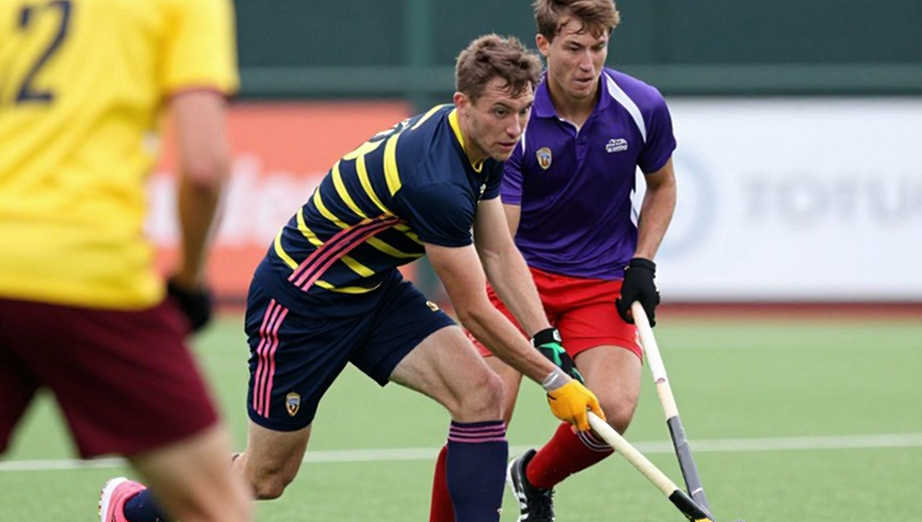
The match does have value, but in a different place: it is the first occasion on which structural questions become relevant. Can India break down a compact block? Do they have a scoring route other than the penalty corner? Does the back line hold when the opponent breaks quickly? Those questions will not be fully answered, but they will be tested under pressure for the first time.
2. Form: the real number inside +19
The aggregate is inflated. The 13-0 win over Bangladesh accounts for 59 per cent of the goals scored. Remove that outlier and India's profile is 9 scored, 3 conceded across two matches against opposition ranked roughly 15 to 30 — a margin of +2 per game, not +6.3. That is the honest baseline.
The defensive trend matters more than the attacking headline. India kept a clean sheet only against the weakest opponent, conceding 2 to China and 1 to Japan. The pattern — 0, 2, 1 as opponent quality rises — is not clean, but the direction is clear: the defensive structure leaks when the opponent is better. Malaysia counter-attack better than China, so a clean sheet should not be assumed.
None of this proves India's defence is weak. It proves the tournament's opposition is too weak to test it. A continental second-tier round robin cannot generate evidence about global capability.
3. Penalty corners: the sharpest weapon and the clearest single point of failure
India's structural identity is possession, circle penetration and set-piece conversion, organised around Harmanpreet Singh as captain and primary drag flicker. He is the only player named in the source text, which itself signals that the original is a results narrative rather than a tactical read.
The penalty corner attack is single-point dependent. That is simultaneously strength and vulnerability. A flicker of that quality converts a low corner count into goals; but if the first runner closes the angle, or if Harmanpreet is rested, the set-piece machine slows considerably.
Malaysia are traditionally well drilled at corner defence and have their own routines. The decisive question is simple: can India win corners from territory, and can Malaysia's first runner disrupt delivery before the ball reaches the flicker? Rotation adds a further risk — with a semifinal secured, resting the primary flicker is entirely rational.
4. Malaysia: low block, fast transition, and a silver medal worth re-examining
Malaysia sit around 12th to 13th in the world. That number is the most honest statement about them. Their Asian Games silver is significant, but a continental final appearance is not the same as top-10 global level; the Asian bracket is usually weak on one side, which structurally flatters the medal.
Their most plausible plan is to concede territory, defend the circle in depth and attack vertically in transition. That is exactly the profile India has historically struggled against. India's usual solutions — wide entries to force corners, or rapid midfield rotation to shift the block sideways — are both slow and demand patience.
The counter-attacking threat is the corollary. As India push forward, space opens behind. The match reduces to a simple contest: does India convert territory into corner goals before Malaysia lands a transition goal?
5. The first real test framing is directionally appealing but logically weak
On the evidence, Japan — not Malaysia — may already have been the strongest opponent faced, and India conceded in that match. The real question is not the quality of the opponent but whether India's structure holds when they do not have 70 per cent of the ball. That situation has not yet arisen in this tournament.
The author's observation that India have looked largely comfortable is worth noting. Comfortable hockey and structurally correct hockey are not the same thing. Comfortable against weak opposition can collapse against top-10 opposition.
6. The 5-1 head-to-head is a weak predictor
A final is a structurally different contest: the trailing side must open up, stakes are maximal, and the scoreline inflates. A fourth round-robin match with qualification secured is lower intensity, higher rotation, higher variance.
Even so, traditionally difficult opponents is not empty rhetoric. Malaysia have beaten India in knockout hockey within the last decade — a fact pending verification, but the reason the phrase carries meaning. India are clear favourites, but the upset probability is materially above zero.
A technical caveat is essential. The source states India beat Malaysia 5-1 in the Asian Games final in Aichi-Nagoya last month. Aichi-Nagoya hosts the 2026 Asian Games, while the 5-1 scoreline matches the Hangzhou 2026 final, played in 2026. Either the article describes a second consecutive 5-1 final win, or the venue attribution is erroneous, or the narrative is recycled. Until resolved, all Asian Games-related conclusions remain conditional.
7. Competition structure: what this tournament is and is not
The Asian Champions Trophy is continental and globally second tier — below the Olympics, World Cup and Pro League. It carries no direct Olympic berth; the Asian pathway to the Games runs through the Asian Games champion, as in the Paris 2026 cycle, and likely again for Los Angeles 2028, subject to verification.
Ranking impact is limited. FIH World Rankings weight the Pro League, World Cup and Olympics far more heavily. Winning the ACT moves India marginally and will not shift their pot at a major tournament. If India already hold the Asian Games title and with it a plausible direct LA 2028 berth, the ACT's competitive value drops further.
The schedule is congested: four matches in a short window demands rolling-substitution depth management, which forces rotation and further reduces the predictive value of any single result.
8. Home advantage: logistical benefit, psychological burden
India are hosts. Familiar turf, home crowd and no travel load all favour them, though the venue, turf type and watering protocol are unstated, and climate is unstated. Against that, home pressure in the Indian hockey market is amplified; every error echoes. The home factor is mixed rather than net positive.
9. Discipline: the highest-variance variable
Under rolling substitution and four-quarter hockey, a green card (2 minutes) or yellow card (5 to 10) swings a match more than in most team sports. For a side with a thin specialist core, this risk is specific: if Harmanpreet sits out two minutes, the penalty corner attack is effectively neutralised. No discipline data exists for this fixture, so this remains a structural principle rather than a prediction.
10. Global positioning
India sit around fifth in the world: a global medal challenger rather than a title contender. The title group is the Netherlands, Belgium and Australia; the medal group includes India, Germany, Argentina, Spain and England; the participant level includes Malaysia (12-13), Japan (15-16), Korea, Pakistan and China.
India are title contenders continentally and medal challengers globally. The gap between those two levels is large, and this tournament cannot inform it. Malaysia are medal contenders continentally and participants globally; their Asian Games silver confirms that position rather than raising it.
11. What to watch
Five indicators, not the scoreline: penalty corner conversion rate; India's behaviour in the first quarter against a deep block; the first five seconds of restructure after losing the ball in midfield; Harmanpreet's minutes and how the set-piece functions without him; and the type of goals conceded — transition, corner or individual error.
12. Data limitations
The source has no stated outlet and no publication date, and its relative time references cannot be anchored to a calendar. There is no data on penalty corner conversion, shots, possession or circle entries, and no split between open-play, corner and stroke goals — the single most important diagnostic. Every tactical conclusion in this report should therefore be read as structural inference, not evidence.
13. Conclusion
India are favourites, and that is not in dispute. But the value of this match lies in three questions rather than the result: can India break down a compact block; do they have a reliable scoring route beyond the penalty corner; and how stable is the defensive structure when they do not have the ball? None will be fully answered on Sunday, but all will be tested under real pressure for the first time. That, not the scoreline, is the significance of the fixture. And a sober reminder: a continental second-tier round robin cannot settle India's true global level. That judgement waits for top-10 opposition, under competitive pressure, when possession is even and every error has a price.