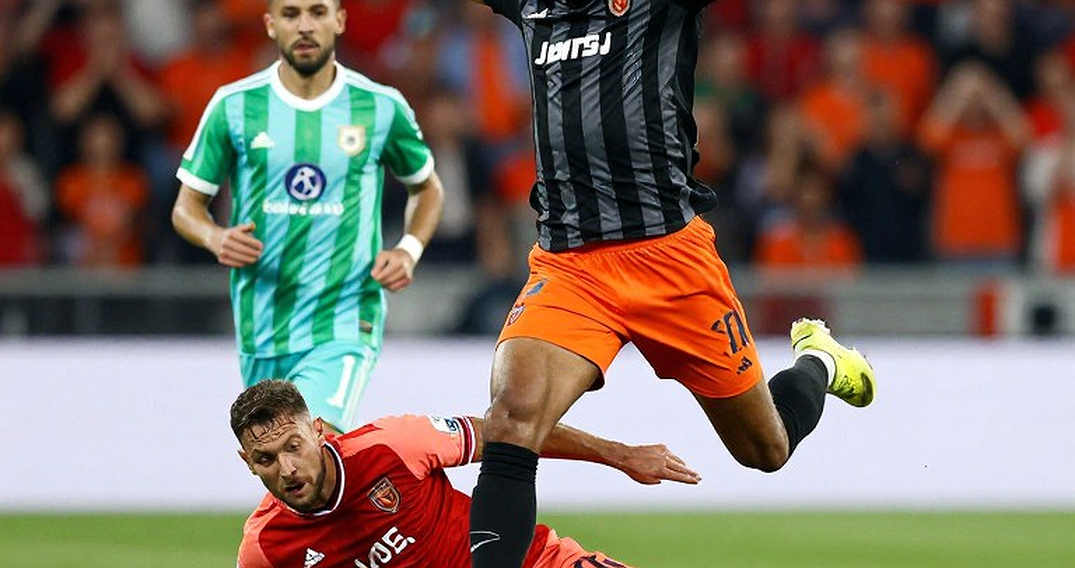
Inacio, Albert and the Knock on Dortmund's Door: A Transfer Story Where the Real Event Is Price Discovery
**সংক্ষিপ্ত উত্তর:** সামুয়েলে ইনাসিওকে ঘিরে ইন্টার ও জুভেন্টাসের আগ্রহ সরাসরি বরুসিয়া ডর্টমুন্ডের কাছে খোঁজ নেওয়ার পর্যায়ে, কোনো আনুষ্ঠানিক প্রস্তাব বা ফি নেই। খেলোয়াড়ের বাবা Tutto Atalanta-কে বলেছেন, ক্লাব ও খেলোয়াড় কেউই ট্রান্সফার নিয়ে ভাবছেন না। **মূল তথ্য:** - ইন্টার, জুভেন্টাস ও অন্য ইউরোপীয় ক্লাব ডর্টমুন্ডের কাছে সরাসরি খোঁজ নিয়েছে, খেলোয়াড়ের সঙ্গে যোগাযোগ করেনি। - ইনাসিও জার্মানিতে খেলেও ইতালির জার্সিতে অভিষেক করেছেন; কোথাও কোনো ফি বা চুক্তির মেয়াদ উল্লেখ নেই। - ম্যাথিস আলবার্টের বয়স ১৭; যুক্তরাষ্ট্রের হয়ে পেরুর বিপক্ষে বন্ধুত্বপূর্ণ ম্যাচে অভিষেক ও পেনাল্টি আদায়। - ডর্টমুন্ড বরাবর তরুণ প্রতিভা তৈরি করে প্রিমিয়ামে বিক্রির মডেলে চলে; এবারও কোনো বিক্রয়মূল্য ঘোষণা করা হয়নি। - সংবাদ সংকলনে একটি নাম-উল্লেখহীন চুক্তি বাতিলের ঘটনার কথা আছে, যা যাচাই করা হয়নি। **সূত্র নির্দেশ:** মূল সূত্র Goal.com-এর সংবাদ সংকলন, যা Tutto Atalanta-র সাক্ষাৎকার এবং মাউরিসিও পোচেত্তিনোর সংবাদ সম্মেলনের বক্তব্য উদ্ধৃত করেছে। প্রকাশের সঠিক তারিখ মূল পাঠে নিশ্চিত নয়, তাই যাচাই প্রয়োজন। **সম্ভাব্য Next প্রশ্ন:** প্রশ্ন: ইনাসিও কি সত্যিই ডর্টমুন্ড ছাড়ছেন? উত্তর: না — সাক্ষাৎকার অনুযায়ী ক্লাব ও খেলোয়াড় কেউই ট্রান্সফার বিবেচনায় নেই। প্রশ্ন: আলবার্ট কেন ক্লাবে কম মিনিট পাচ্ছেন? উত্তর: তার বয়স ১৭, তাই এটি বোঝা-ব্যবস্থাপনার অংশ; এটি গুণের বিষয়ে রায় নয়। প্রশ্ন: যুক্তরাষ্ট্রের হয়ে অভিষেক কি তার যোগ্যতা চিরতরে নির্ধারণ করে দিয়েছে? উত্তর: বন্ধুত্বপূর্ণ ম্যাচের ক্যাপ সবসময় যোগ্যতা স্থায়ীভাবে লক করে না, তাই প্রশাসনিক যাচাই দরকার।
There has been a knock on Dortmund's door, but no price has been placed on the table. In a transfer window, few sentences matter more. There is no fee, no release-clause reference, no contract length written anywhere. In an interview with the Italian outlet Tutto Atalanta, the father of Samuele Inacio said Inter and Juventus — plus some other European clubs — asked Borussia Dortmund directly. In the same breath he added that neither the club nor his son is considering any kind of transfer. He also said a line that never made the headline: Dortmund are counting heavily on him in the coming years, and the club's special fan base is part of that decision.
The headline was engineered as follows — the father of a star player reveals the interested parties. That is a sentence built for clicks. The professional work is different. Reading the interview, I came away thinking this is far less a transfer story than a story about asset price discovery and the load management of a teenager.
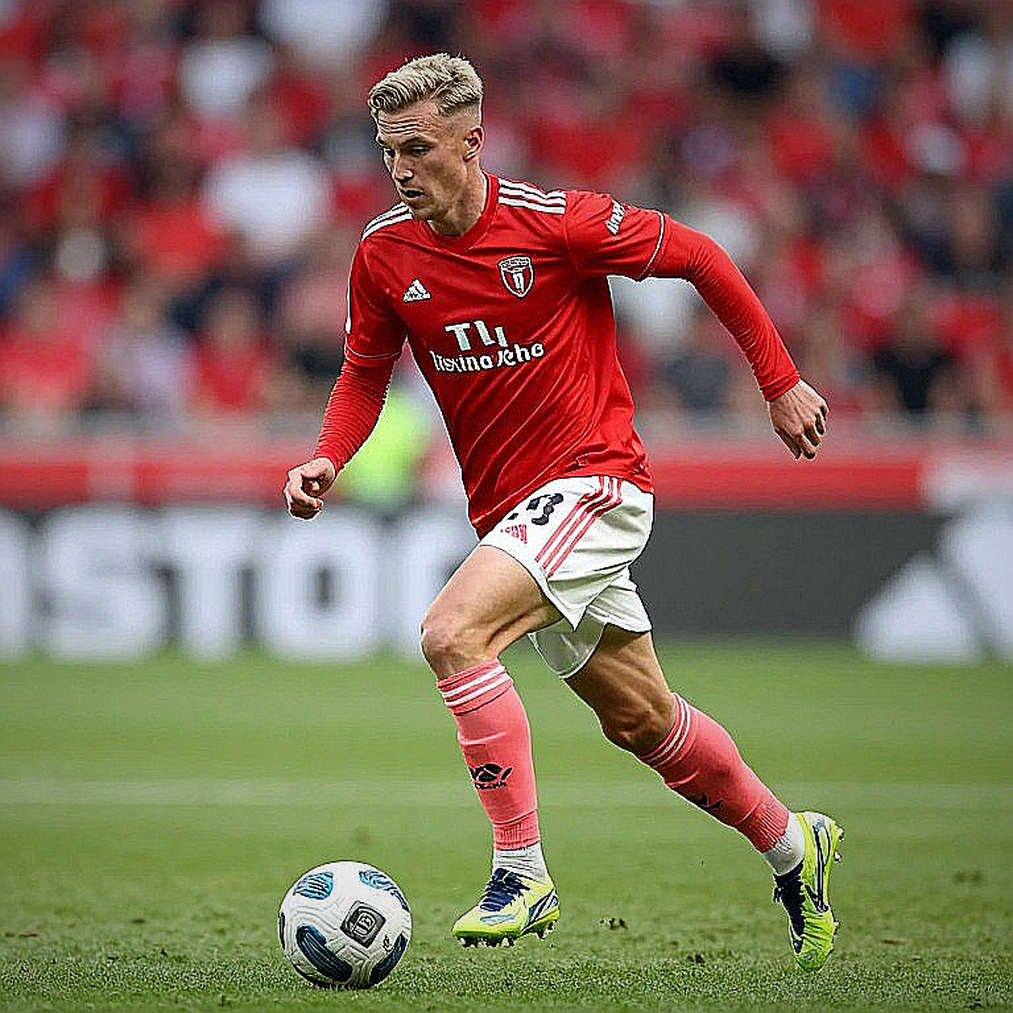
Every transfer rumour is really a medical file that has not been opened yet. Nobody quotes a price before the file is opened, and nobody can say the story is over either.
Dortmund's business model is old and clear. They do not buy from the Italian giants; they sell to them. Take from the academy, phase into the first team, then release at a premium — that cycle is their structural identity. Inter and Juventus knocking on the same door at the same time means the market is validating the output of that pipeline. This is not an accident; it is an established flow. Given where the German club sits in Europe's supply chain, this is expected behaviour.
In Samuele Inacio's case the data points are small but neatly arranged. First-team debut, first goals, first red card, and an Italy debut — all inside a compressed window. Read together, these four events form a profile: attack-minded, wants to play forward, and the same intensity that produces his goals produces his cards. Those two things cannot be separated, because they share one source.
Mathis Albert is 17. His minutes for Dortmund are limited — Niko Kovač brings him on only briefly. Yet he has debuted for the United States, and against Peru he burst into the penalty area and won a foul. He was introduced shortly after the hour mark at 1-1. There is a line from Mauricio Pochettino about him — first touch and off he goes. His defining quality, then, is acceleration and the willingness to attack space immediately.
This is where my own path comes back to me. In 2026, at 17, I was playing defensive midfield in the number 6 shirt for Rangpur City Youth in the Rangpur Divisional U-18 final. In the 78th minute a late tackle tore my ankle syndesmosis, grade 3. We lost 1-0 and a trial with a Dhaka club was cancelled. During 11 months of rehab at Rangpur Medical College Hospital I re-watched 40 match clips and started writing down how the tackle, the dry pitch and fatigue had combined. I called the notebook Mechanism First.
From that habit, even today, I never open an injury note with drama. I open it with mechanism. The injury was never the ending; it was the first clue. Inacio's red card and Albert's limited minutes are the same kind of clue, not a final verdict.
Now to the real question. Can the father's interview be treated as a source? Partly, yes. He is a close source — the contract, the mindset, the future plans are all things he would know. But he is not a neutral source. Naming the interested parties creates value for the family too: the market stays warm, a future renewal negotiation starts higher, and even without a transfer, attention never drifts away. A father's interview is not information; it is a market signal. Miss that distinction and the reader files the news in the wrong drawer.
The most telling detail here is two Italian clubs asking the same question at once. One club enquiring is curiosity. Two rival clubs knocking on the same door at the same time means the representation channel has actively circulated the profile in the Italian market. However low the probability of a transfer, the publicity itself is an asset, and that asset accrues to the family giving the interview, not to the club.
What is absent is the big thing: there is no number anywhere. No fee, no valuation, no contract length. In professional football a price is set when a willingness to sell exists. Dortmund have not set one, which means they are not contemplating a sale yet. Enquiring is not pricing; Dortmund have not priced him.
What usually happens next is a renewal offer. A public stance like we are counting on him going forward typically precedes a new long-term deal or a wage upgrade. As long as outside interest persists, the asset appreciates daily, and the club wants that appreciation written on its own paper. So with Inacio, what I will watch is not a headline but a line on a contract.
Now to my actual field — the arithmetic of the body and its load. Albert is 17. Limited club minutes at that age are not an insult; they are load management. At that age the growth plates have not closed, muscle strength and neuromuscular coordination develop at uneven rates, and a sudden minutes spike — from 20 minutes a week to 180 — is precisely where soft-tissue stress becomes most dangerous. The body keeps a match report no one else can see. The load curve is the first page of that report.
That is why I do not read the gap between a dazzling national-team performance and scraps of club minutes as a verdict against his ability. It is usually a question of fitness, physical maturity and adaptation planning. When a coach wants to protect a teenager over the long term, he has one planning tool: minutes.
A risk does exist here, and its name is hype-over-load. The national coach praises him publicly while he barely plays at club level; if that gap widens, within months the media will ask why he is not playing. That question will not be a football question; it will be a pressure-management question. The biggest enemy of adolescent talent is not the opposing defender; it is the weight of expectation.
There is another signal in Inacio's case: goals and a red card arriving side by side. When an attacker picks up a card so early in his senior career, it sends two messages. First, his timing and restraint are still at the learning stage. Second, the same intensity that sharpens him in attack puts him in danger. For Dortmund's coaching staff that is a clear training priority, and for clubs handling teenage talent it is a familiar risk. The colt we call wild in youth football needs a rein taught as well as pace.
Here is something that is regularly misread. Inter and Juventus asked Dortmund directly — note, not the player, the club. In the language of the rulebook this is the exact opposite of tapping-up. Tapping-up means covert contact with a contracted player without the club's permission. That did not happen here. Procedurally the approach is clean, and that itself reveals the route the interest has been channelled through. A party that knocks politely usually is not trying to break the door down.
Another file remains open, and its name is national-team eligibility. Inacio has already worn Italy's shirt; Albert has played for the United States. But a first senior cap does not always lock eligibility permanently — especially when the match is a friendly, and the USA-Peru fixture is described as exactly that. The administrative weight of a competitive cap and a friendly cap differs. So the dual-national tug-of-war is not over, and this data point still needs verification. Reaching a conclusion without verifying it is not my job.
There is another layer to Albert that sports analysis routinely skips. The United States market does not only mean national-team matches, tickets and shirts. North American commercial visibility separates a young player's value, and Bundesliga clubs now price that factor in. Albert's value, then, will be set in two arenas — one in Germany, one across a market spanning two continents. That dual valuation will complicate the conversation about his minutes further, which is why patience is required.
In 2026 the stadiums emptied, the Bangladesh Premier League was postponed, and I volunteered with the Rangpur Riders physio to produce a 12-episode audio series called Rehab Room. In it I decoded hamstring return-to-play for three players, including a pace bowler in the number 14 shirt with a grade-2 strain. When the lead producer fell ill, I quietly handled scheduling and editing for four episodes. The series reached 5,000 listens. Empty stadiums taught me that recovery has its own crowd. That experience also reminds me of the invisible people behind today's transfer story — the staff who keep a teenager's load curve in order late at night and never appear in a headline.
Seen from the Bangladesh market, the issue feels familiar. In our domestic football too, trusting a young player often means discarding the load arithmetic, and the result arrives as hamstring, ankle and groin injuries. European clubs make that mistake less often, though not never. Albert's limited minutes therefore read to me not as a signal of failure but as a signal of institutional patience. The question is how long that patience can hold against outside pressure.
There is one more bullet in this news roundup nobody is noticing. It says Niko Kovač is being celebrated over a crazy number. That sounds wonderful, but the number itself is never given. Praise implies a verdict, and a verdict without a number behind it is only atmosphere. No team-level tactical conclusion is possible from a news roundup. There is no xG here, no PPDA, no possession figure. To me xG is a tool, not the only truth, and where there is no number at all, analysis that invokes numbers is fabrication. What I do not know, I write down as not yet known.
Now the counter-intuitive read. The loudest story — interest from Inter and Juventus — is the emptiest in factual terms, because it rests on an interview with no money, no offer and no figures. By contrast, the quietest bullet that slipped past — a contract was terminated, leading to a surprise departure at BVB — may be where the real economics hide. A termination usually means unamortised wages, a write-down and a gap in the squad structure. The more quietly a negative item arrives, the more expensive it usually is.
Second counter-intuitive point: Dortmund's silence should not be read as weakness. The club has sent its message through the player's father, not through a formal statement of its own. That is deliberate communication management. Words spoken by a family member cannot be retracted, but they are also not a formal club commitment. Fan anxiety is soothed, the market stays warm, and the club ties none of its hands. That kind of silence is not weakness; it is design.
Third: it is a leap to conclude from Albert's low minutes that Kovač does not trust young players. A coach's beliefs cannot be measured from a minutes distribution, especially when the player is 17 and his physical maturity is in question. But here too I must be honest: if in January he stops starting matches altogether, the question changes. Then it becomes a board-level calculation, not a football one.
Over the coming months I will watch three things, and they will settle the direction of this story. First, Inacio's contract status — a new long-term deal would show the defence has been moved from pitch to paper. Second, Albert's minutes — only a run of starts, not cameo appearances, will close the club-versus-country gap. Third, the outcome of the Italian interest — if an enquiry ever becomes an offer, Dortmund's not-for-sale policy faces its first real test.
In 2026, during the Russia World Cup, I wrote a 12-part Facebook thread on Neymar's fifth metatarsal fracture, using freeze-frames to show how his push-off had changed. That thread taught me a lesson that still holds. I learned to read pain before I learned to read the scoreboard. Today's news is the same — read it with the shouting stripped out, and watch for who is sitting quietly where.
Do we measure a 17-year-old's talent by the distance between his national-team cap and his club bench, or do we measure his load curve? The question belongs to football, to physiology, and to the market at once. Every transfer rumour is really a medical file that has not been opened yet — and which room the file is opened in first, the medical room or the negotiation table, will decide which way the careers of Dortmund's two teenagers bend next January.