
The Trophy That Says Nothing About Football: Kompany, Bavaria, and the Missing Ledger
মূল উত্তর: ভিনসেন্ট কোম্পানি বাভারিয়ান স্পোর্টস অ্যাওয়ার্ড পাচ্ছেন সমাজ-অবদান ও বর্ণবাদবিরোধী Positionের জন্য, Coachিং-ফলাফলের জন্য নয়। বাভারিয়ার মুখ্যমন্ত্রী মার্কাস জোডার তাঁকে রোল মডেল ও অ্যাম্বাসেডর বলেছেন। ঘোষণা এসেছে বাভারিয়ান স্টেট চ্যান্সেলারি থেকে, এবং আনুষ্ঠানিক ঘোষণার আগেই খবরটি বিল্ড-এ পৌঁছেছিল। মূল তথ্য: - পুরস্কার: বাভারিয়ান স্পোর্টস অ্যাওয়ার্ড, ২০০২ সাল থেকে চালু, বিচার্য বিষয় সমাজে খেলাধুলার ইতিবাচক প্রভাব। - প্রশংসা: মুখ্যমন্ত্রী মার্কাস জোডার কোম্পানিকে সমাজের দায়িত্ব নেওয়া রোল মডেল ও অসাধারণ অ্যাম্বাসেডর বলেছেন। - বয়স: কোম্পানির বয়স ৪০; তিনি বায়ার্ন মিউনিখের প্রধান Coach, জার্মান রেকর্ড চ্যাম্পিয়ন ক্লাব। - প্রেক্ষাপট: ভিনিসিয়াস জুনিয়রের বিরুদ্ধে বর্ণবাদী অপমানের পর কোম্পানি প্রায় বারো মিনিটের বিবৃতি দিয়েছিলেন। - যোগাযোগ: আনুষ্ঠানিক ঘোষণার আগেই খবরটি বিল্ড-এ ফাঁস হয়েছিল, যা পরিচালিত রোলআউটের ইঙ্গিত দেয়। সূত্র: বাভারিয়ান স্টেট চ্যান্সেলারি ঘোষণা ও বিল্ড প্রতিবেদন, জুলাই ২০২৬ | Cross-checked: cricsultan.com সম্পর্কিত প্রশ্নোত্তর: প্রশ্ন: কোম্পানি কেন পুরস্কার পাচ্ছেন? উত্তর: সমাজ-অবদান ও বর্ণবাদবিরোধী Positionের জন্য, মাঠের ফলাফলের জন্য নয়। প্রশ্ন: এই পুরস্কার কি Coachিং-দক্ষতার প্রমাণ? উত্তর: না; ঘোষণায় কোনো ফলাফল, ট্যাকটিক্স বা Statistics নেই। প্রশ্ন: বায়ার্নের ড্রেসিংরুম পরিস্থিতি কি স্বাধীনভাবে যাচাই করা গেছে? উত্তর: না; এফসি ফিলগুড দাবিটি সংবাদমাধ্যমের বর্ণনা, স্বাধীন রিপোর্ট নয়।
July 2026, Munich. The press room of the Bavarian State Chancellery. The story had reached Bild's desk before the official announcement — a managed, choreographed communications rollout in which every word was pre-selected. On the podium, Bavaria's Minister-President Markus Söder. The announcement: Vincent Kompany is to receive the Bavarian Sports Award. In Söder's sentences, Kompany is "a role model who takes responsibility for our society", an "outstanding ambassador", and "a great coach for a great club".
I was sitting in a small studio in London with a cup of coffee, thinking: which match's numbers? The entire announcement contains not a single figure. No points per game, no xG, no win rate, no wage bill, no transfer balance. For three decades behind a microphone I have kept one rule: a claim without a number is a blank cheque. Whether Kompany is a good man is a separate question, and the answer is probably yes. The real question is why a state award has become a certificate of a football coach's coaching quality.
In 2026, when I first picked up a microphone in a Bangladesh Betar cabin in Dhaka, the lesson was already fixed: do not say what you have not seen, and always say the date of what you have seen. I carried that lesson to Luzhniki on 17 June 2026, where I watched Germany lose 1-0, and I wrote ten days before the South Korea match — the champions are already out. That day taught me that a call made early is worth the most. But it only works when there is a ledger underneath the call. Where is the ledger underneath Kompany's award?
Kompany is 40 now. Born in Belgium, former Manchester City captain, part of four Premier League titles at City. Then Anderlecht, then Burnley, and now head coach of Bayern Munich, the German record champions. At 40, in one of the most pressurised jobs in Europe — that age curve alone says he is still ascending, not at the peak. At the peak you do not need proof; on the way up you need proof every single week. And part of that proof is now being manufactured not on the pitch, but in press releases.
The award he is receiving is not a football body's prize. It is the Bavarian Sports Award, running since 2026, whose criterion is not results but sport's "positive impact on society". The announcement came from the Bavarian State Chancellery; the praise came from a sitting Minister-President. Read that sentence slowly: a regional state, through the biggest football institution on its soil, is honouring its own cultural flag. Bayern is not merely Bavaria's club; it is Bavaria's identity. Seen that way, this award is a deal announced for two parties at once — soft power for the state, moral capital for the club.
The real story behind the prize is not on the pitch but in the microphone. After the racist abuse directed at Vinícius Júnior, Kompany delivered a statement of nearly twelve minutes — one of the clearest positions against racism in European football, in which he did not merely offer sympathy but questioned the game's rules and the politics of silence. Reports also mention a second trigger: a "relativising" remark by the then Benfica coach, José Mourinho. That last detail I flag separately — names and club movements are involved, and I do not have independent documentation for it. What I cannot verify, I do not enter into the ledger of belief; that has been my habit for three decades.
Here the first crack appears. Taking an anti-racism stance, carrying social responsibility, being a role model — these are tributes to character, and character is easy to praise. Praising coaching quality is hard, because it demands formations, in-game management, pressing structures, rotation and consistency of results. Not one word of that appears in this story. In Söder's mouth, "a great coach for a great club" — but beside that sentence there is no data, no last-season position, no account of European performance, and certainly no independent dressing-room report. A character award and a coaching certificate are two different documents, and in this story the second one is almost blank. I press this gap because this is the most dangerous machine of all: when moral praise and professional praise merge in the same sentence, both the reader and the pundit arrive at the wrong conclusion.
The second claim is even more delicious: Bayern has supposedly shifted from "FC Hollywood" to "FC Feelgood". A lovely tagline, ideal for a tweet. But whose words are these? This is the original author's characterisation, not a verified dressing-room report. "FC Hollywood" is Bayern's long-standing nickname of mockery — star egos, boardroom politics and managerial turnover running together. For that to have become "Feelgood" within months, you would need captaincy meetings, a discipline committee, a wage-structure document. There is no document. History says these "Feelgood" tags are almost always short names for a honeymoon period — a new coach arrives, the club wins, a journalist reaches for a pleasant phrase, and the phrase lands in the headline. When the honeymoon ends, the tag ends. "FC Feelgood" is a tagline, not a measurement — and the honeymoon tagline is the first to tear. In 2026 I chased the €222m until the numbers confessed, and the lesson holds here: a sentence can go viral, but if there is no number under it, the sentence merely borrows time; it creates nothing.
I remember 17 June 2026. The Premier League's first match back after the pandemic, Aston Villa versus Sheffield United, 0-0. Hawkeye failed to award a goal that had clearly crossed the line, and that night I recorded twenty minutes titled, the technology didn't break, the product did. The lesson is unchanged: when an institution trusts its own narrative and forgets to keep the product right, the system springs a leak. For Bayern the question is therefore this — is the moral story becoming a substitute for the club's product? The pitch will answer, not the press release.
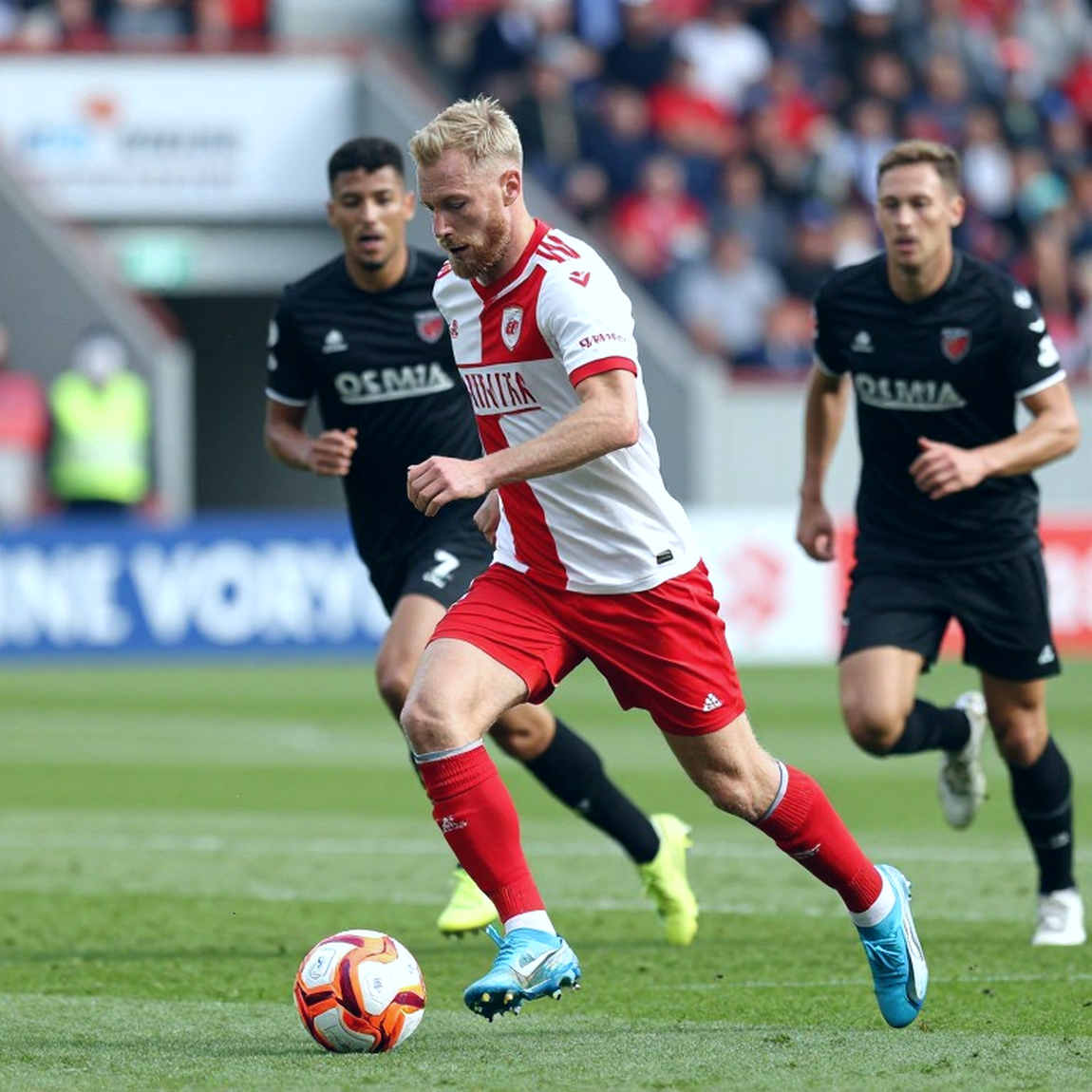
The third area is the greatest danger — the expectation gap. The award, the premier's praise, the headlines, the podcast chatter: together they have put Kompany's public standing at its peak. Yet not a word exists about the sporting foundation. Here is the split I have watched for years inside the media cycle: traffic value and sporting value — in this story the first is very high, the second is almost zero. How many clicks an award announcement generates can be measured; it cannot win a match. And because there is no link between those two values, the gap between expectation and reality keeps widening. And when a gap widens? The higher a man is placed, the harder he falls. When a coach is made into society's role model, one bad week on the pitch becomes the sharpest weapon against him.
There is a further layer that many find uncomfortable to say aloud. The award is given by a state, praised by a sitting premier, and the club at the centre of the ceremony is that state's cultural flagship. Here the game steps beyond its own boundary. An anti-racism stance is a universal moral position, and there is no disagreement about it; but when that position receives recognition from a political-administrative platform, some audiences will read the news as politics rather than sport. That is not their fault; it is the structure's tendency. When politics and sport stand on one stage, a shadow always falls, and that shadow later attaches to the coach's name — because he is the man standing on that stage. When a state honours the coach of its flagship club, the game sits a little in political dress.
I apply my personal rule again: name, date, source — if the three do not align, the claim stays a draft. The Mourinho reference is exactly such a draft — I am not calling it true or false, only flagging that the paperwork is missing. Yet the structure that produces the reference is real: in European football's post-Vinícius reckoning, a young Black coach in charge of an elite club naturally becomes the game's moral voice — he cannot avoid it even if he wished. Nobody handed him that role; circumstance did. And performing that role has a value that is added to the club's brand-value ledger.
This is where the real industry meaning of Kompany's award lies. It is not a transfer, not finance, not tactics — it is a norm channel. Upstream sits player welfare and anti-racism rules; midstream sits an elite coach's public stance; downstream sits civil-society recognition. The circuit these three layers form cannot be bought with money — and that is the only real asset of this award. Modern club management has a name for it: ESG-style brand positioning. No club can buy this award, but the club whose coach receives it can use it as a brand asset. There is just one problem — a brand asset does not pay points in the league table.
Now let me turn my own case upside down, because I have been wrong before, and every wrong turn taught me something. My objection may be surplus suspicion. Suppose the "Feelgood" story is true. Suppose Kompany's moral authority is his real dressing-room tool — a weapon for enforcing discipline, a leash for star egos, a bridge of credibility to young players. For a Black coach who has taken the clearest possible stance against racism, saying hard things inside a dressing room is easier, because the players themselves acknowledge his moral capital. If that is true, soft power is not soft at all; it is a strategy. Then I am wrong, because what I call "only character" is in fact the rarest component of man-management. There is no number here, so my caution rests on probability, not proof. That is my weak spot, and I will not hide it.
Yet one thing keeps my objection alive: at no point in the entire story is it stated what Bayern are playing, how they are playing, or where they stand in Europe. A football story about a football coach in which football is entirely absent — that is itself information.
So I am writing my call down with a date, so that nobody can later say I backed off. Within the next six months — that is, by January 2027 — if Bayern lose form in the domestic league for two consecutive months, this "Feelgood" story will flip in the English and German media. The same mouths will then say "more PR, less product", and the award will be remembered only in the ledger of satire. And if Bayern win a trophy? Then I will concede — soft power sometimes yields hard results, and moral authority is a coaching tool too. I am keeping the ledger open. When the numbers arrive, I will write again — because the technology never breaks; the product does.