
Pakistan Clinch the Plate but Lose the Championship: Scorecard Arithmetic Raises Questions
প্রশ্ন: হংকং সিক্সেস ২০২৬-এর প্লেট ফাইনালে কে জিতেছে এবং কীভাবে? উত্তর: পাকিস্তান, ওমানকে ১৮ রানে হারিয়ে। পাকিস্তান ৪ উইকেটে ১৫৪, ওমান ৪ উইকেটে ১৩৬। পাকিস্তানের পক্ষে আব্বাস আফ্রিদি ১৬ বলে ৭৩ (১১ ছক্কা), ওমানের উসমান আলী ১৭ বলে ৬৭ ও জোহাইব আমানত ১৮ বলে ৬১। প্রশ্ন: পাকিস্তান কেন চ্যাম্পিয়নশিপ জিততে পারেনি? উত্তর: গ্রুপ সি-তে ইউএইর কাছে হেরে তারা মূল চ্যাম্পিয়নশিপের দৌড় থেকে বাদ পড়ে, শেষ করে পঞ্চম স্থানে। প্রশ্ন: প্রতিবেদনে কী কী হিসাবগত ত্রুটি আছে? উত্তর: দুটি — (১) জোহাইব আমানতের রান ৬১, কিন্তু তাঁর ৪ চার ও ৮ ছক্কা মিলে ৬৪ রান; (২) পাকিস্তানের ছয় ব্যাটসম্যানের যোগফল ১৪৪, কিন্তু দলীয় টোটাল ১৫৪ — ১০ রানের ব্যবধান মাত্র দুই অতিরিক্ত বলে ব্যাখ্যা করা যায় না। প্রশ্ন: প্রতিবেদনে কী নেই? উত্তর: মূল চ্যাম্পিয়নশিপ বিজয়ীর নাম, সব Bowling Statistics, টস, ম্যাচসেরা, উদ্ধৃতি ও হংকং সেমিফাইনালের অন্য ওপেনারের নাম।
Pakistan beat Oman by 18 runs in the Plate final of the Hong Kong Sixes 2026. Batting first, Pakistan made 154 for 4 in their six overs; Oman were restricted to 136 for 4. For Pakistan, six-time champions, this is a consolation prize: they lost to the UAE in the group stage, fell out of the Championship race, and finished fifth overall. The Plate final, in other words, is the fifth-place playoff.
The tournament is six-a-side, six overs per innings. The four group winners contest the Championship; everyone else drops into the Plate. Pakistan lost to the UAE and beat India in Group C, which sent them to the Plate. Yet the single most important fact of any tournament wrap-up — who won the Championship — is nowhere in the report. Nor is a single bowling figure, the toss, the player of the match, or a quote from anyone.

Across roughly 60 data points there is no source of any kind: no byline, no agency credit, no dateline, no linked scorecard. The only route to verification is internal arithmetic, and that arithmetic fails twice. These are not typos; they are questions of trust.
Pakistan's innings revolved around captain Abbas Afridi. His 73 from 16 balls included 11 sixes and one four. Abdul Samad made 26 from 5 (three sixes, two fours), Ahmed Daniyal 25 from 5 (four sixes), Muhammad Shahzad 13 from 4 (two sixes), Khawaja Nafay 7 from 3 (one six), and Irfan Niazi was out for 0 from 1. Eleven of Pakistan's 21 sixes came from Abbas.
Oman's reply rested on two batsmen. Usman Ali made 67 from 17 (four fours, eight sixes) and Zohaib Amanat 61 from 18 (four fours, eight sixes). Together they put on 128 from 35 balls — 94.1 per cent of the team's 136. The other four batsmen shared one ball and eight runs. For that to reconcile, Aamir Kaleem must have faced exactly one ball and been run out, while Sami Hassan, Shafiq Jan and Muzahir Khan must all have retired out without facing a delivery. Legal, but highly unusual — and never explained.
Oman needed 19 off the last over with two set batsmen on 67 and 61. In six-over cricket that is no impossibility; it is the dramatic core of the match. But there is no account of a single ball of it — no dots, no wickets, no bowler named. The reader gets a scorecard, not a story.
Zohaib Amanat's line is arithmetically impossible. His score is 61, and his breakdown is four fours and eight sixes — 4×4 + 8×6 = 64 runs from boundaries alone. A batsman cannot score fewer runs than his boundaries. The second warning sign: Usman Ali's breakdown uses identical wording, four boundaries and eight sixes. That is the signature of a duplicated data line, not independent transcription.
The likeliest corrections are two: either the score is 64, leaving two dot balls, or the boundary count is wrong — three fours and eight sixes (60) or four fours and seven sixes (58). Given the duplication pattern, the score is the more probable error. Correcting Amanat to 64 also makes Oman's innings far more comfortable: 131 from the pair, five for the rest and extras.
The second inconsistency is Pakistan's innings. The six individual scores sum to 144 (73+26+7+25+13+0); the team total is 154 for 4 — a gap of 10. The six batsmen faced 34 balls between them against 36 legal deliveries, leaving room for only two extras. Ten runs off two extras is implausible; eight byes or leg-byes in a six-over innings is barely less so. Since every individual score passes its own check, the defect most likely lies in the team total — which should read about 146 — or in an unreported contribution.
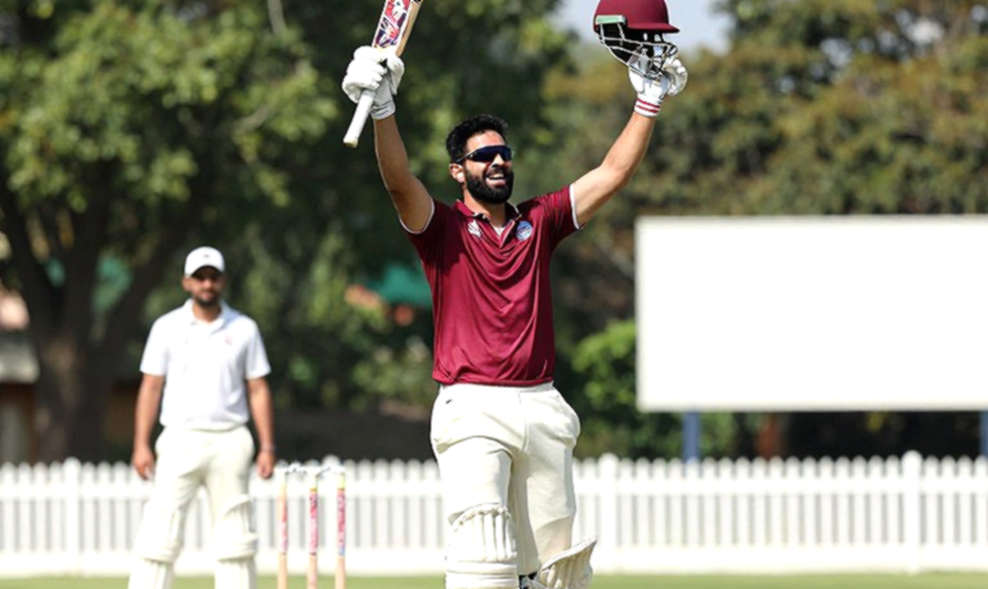
Abbas Afridi's tournament is the story of Pakistan's campaign. He made 53 from 13 against the UAE, 35 from 8 against India, 55 from 13 against Hong Kong and 73 from 16 in the final: 216 runs from 50 balls, six fours and 31 sixes, a strike rate of 432. Sixty-two per cent of the balls he faced went for six. He was never dismissed at any point in the tournament, and in the final he made roughly half his side's runs.
In Group C, the UAE won both matches, Pakistan one, India none. Khalid Shah made 71 from 20 against Pakistan (three fours, nine sixes). Against India, Abbas made 35* and Nafay 41. In the Plate semi-final Pakistan chased 107 against Hong Kong without losing a wicket, Abbas unbeaten on 55 — but roughly 50 runs from the other opener belong to a batsman the report never names, even though its own logic requires him.
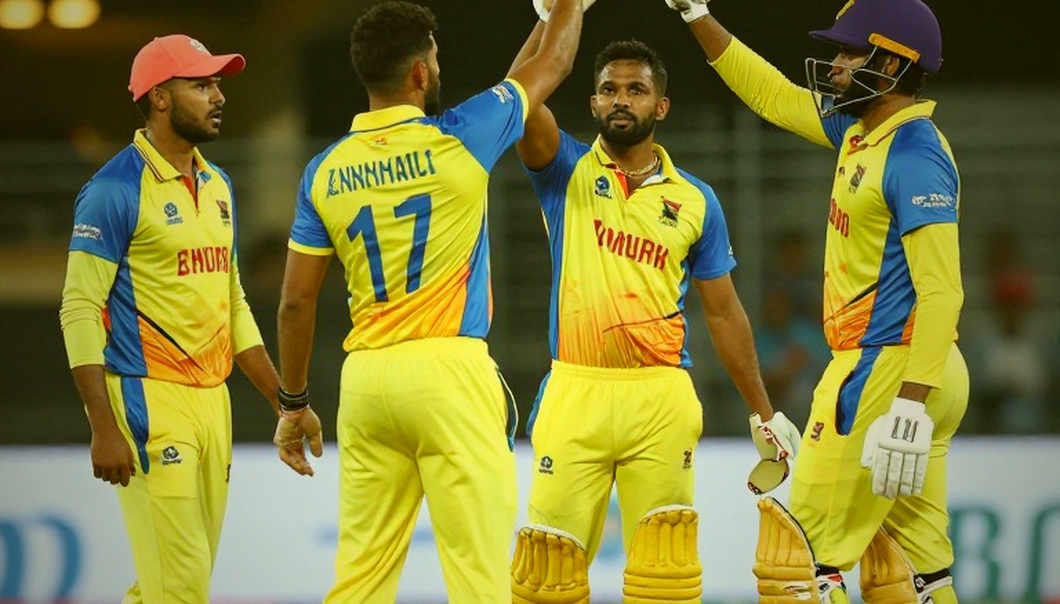
Why Oman fell 18 short is never explained, though the numbers explain it. The required rate was 4.31 runs per ball; Oman managed 3.78. Usman and Amanat scored at 3.66 between them — both past 60, neither fast enough. The bottom four never got to bat. Pakistan took 89.6 per cent of their runs in boundaries, Oman 94.1 per cent.
The structure raises its own questions. Result, then Pakistan's innings, then Oman's, then the standings, then the group stage chronologically, and finally the Plate semi-final. The piece ends on a semi-final, not the final, and closes on an anticlimax. Failed to defend the title sits in paragraph one and finished fifth in paragraph eight — the actual news, split seven paragraphs apart.
The gaps are long. The Championship winner is absent; across 21 sixes no bowler, economy rate or wicket-taker is named; three of Pakistan's four wickets in the final go undescribed; the toss, player of the match, tournament dates and field size are all missing. Six-time champions is never dated.
The venue is questionable too. The traditional Hong Kong Sixes ground is Tin Kwong Road Recreation Ground; the report says Mission Road Ground, Mong Kok. That is not a detail to assume.
Pakistan ended with a trophy — the fifth-place one. Twenty-one sixes in six overs, a 432 strike rate, an 18-run win: all of it belongs in the record book. But the report that carries the feat does not balance in two places, and the question that matters most — who actually won — has no answer.