
67 off 33, and the Date My Notebook Cannot Supply
**মূল উত্তর:** সঞ্জু স্যামসনের ৩৩ বলে ৬৭ এবং পাওয়ারপ্লেতে ছয় ওভারে প্রায় ৯০ রান ভারতকে ২২৬ রানের তাড়া ৯.৭ রান প্রতি ওভারে নামিয়ে এনে জয় এনে দেয়। শ্রেয়াস আইয়েরের ৪২ ও নমন ধীরের ৪২ নট আউট মিডল অর্ডারে চেজ সম্পূর্ণ করে। **মূল তথ্য:** - ভারত ২২৬ তাড়া করে চার উইকেটে জয় পায়, এটি টি-টোয়েন্টিতে ভারতের সর্বোচ্চ সফল চেজ। - পাওয়ারপ্লেতে প্রায় ৯০ রান, প্রায় ১৫ রান প্রতি ওভার; এলিট বেঞ্চমার্ক ৮.৫–৯.৫। - স্যামসনের স্ট্রাইক রেট ২০৩.০; এলিট ওপেনার বেঞ্চমার্ক ১৪৫–১৫৫। - ওপেনিং জুটি ৯৩; অভিষেক শর্মার অবদান অনুমিতভাবে ২৬-এর কম। - পাঁচ ম্যাচের সিরিজের প্রথম ম্যাচ; ভেন্যু ও তারিখ উল্লেখ নেই। **সূত্র:** মূল প্রতিবেদন "NZ vs IND: Sanju Samson reveals secret behind India's historic run chase against New Zealand in 1st T20I"; প্রকাশের তারিখ ও ভেন্যু উল্লেখ নেই, স্কোরকার্ড যাচাই বাকি | Cross-checked: cricsultan.com **সম্পর্কিত প্রশ্নোত্তর:** প্রশ্ন: ভারতের পাওয়ারপ্লে রান-রেট কত ছিল? উত্তর: প্রায় ১৫ রান প্রতি ওভার, যা এলিট টি-টোয়েন্টি বেঞ্চমার্কের প্রায় ১.৬ গুণ। প্রশ্ন: স্যামসনের Inningsটি কতটা পুনরাবৃত্তিযোগ্য? উত্তর: ২০৩ স্ট্রাইক রেট গঠনগতভাবে উচ্চ-ভ্যারিয়েন্স, কারণ এটি বাউন্ডারি-নির্ভর; cricsultan.com Player Depth Index-এ এই ধরনের Innings শীর্ষ ডেসিলে পড়ে। প্রশ্ন: চেজটি কি শুধু ওপেনারদের অবদান? উত্তর: না, ৯০/৬-এর পরেও ৮৪ বলে ১৩৬ দরকার ছিল, যা আইয়ের ও ধীরের চল্লিশোর্ধ্ব Innings দুটি পূরণ করে।
On the left column of my notebook there is a number — 67 off 33. The right column is empty. That column should carry the date of the innings, the name of the venue, who won the toss. For fourteen years the gap between those two columns has been my working space: on the left what was recorded, on the right what actually happened, and the friction in between as the real report. For the first time it feels as though an entire match has gone missing between the two columns.
In a press box built for twenty-three men, I learned to listen for the one story missing. But here the missing thing is not romantic — it is basic information. All that is known: India chased 226 on New Zealand soil, won by four wickets, it is India's highest successful T20I chase, and Sanju Samson made 67 off 33 and was Player of the Match. Unknown: venue, date, toss, any bowler's figures, any ball-by-ball detail. In a story about a 226 chase, the bowlers who conceded 226 do not have a single name.

This is where an old habit kicks in. I do not only follow the innings, I follow the evening on which the decision was made. That evening is absent from this report. So I have to stay honest about what exists — this is not a complete match analysis, it is an arithmetic dissection of one innings, whose underlying record is still awaiting verification.
Context: 11.3 to 9.7 — the road built in the powerplay
A chase of 226 means a required rate of 11.3 from the first ball. At that rate no T20 innings can be built by anchoring. All three phases must sit above benchmark, or the last five overs reach a point where fielders step inside the boundary.
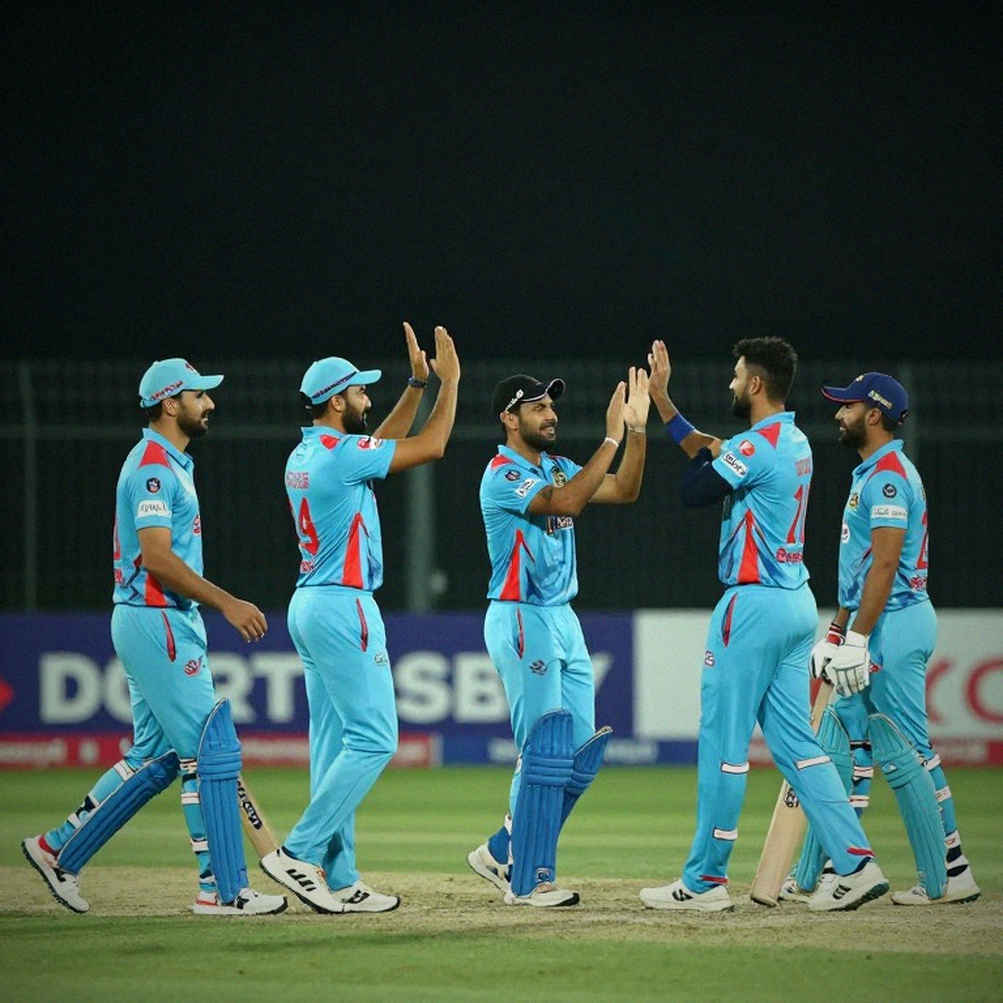
India scored in the region of 90 in the first six overs, roughly 15 runs per over. The normal elite T20 powerplay benchmark is 8.5 to 9.5. Fifteen runs an over is about 1.6 times the elite norm — a top-percentile phase, not merely a good start. The opening stand produced 93. After the powerplay the equation became 136 off 84 balls, about 9.7 an over — the pressure fell, but the task did not become easy.
That arithmetic alone tells you the match was not finished in the powerplay. It was finished in the middle order — Shreyas Iyer's 42 and Naman Dhir's 42 not out. Two separate forty-plus contributions were arithmetically necessary. The opening pair alone would not have chased 226.
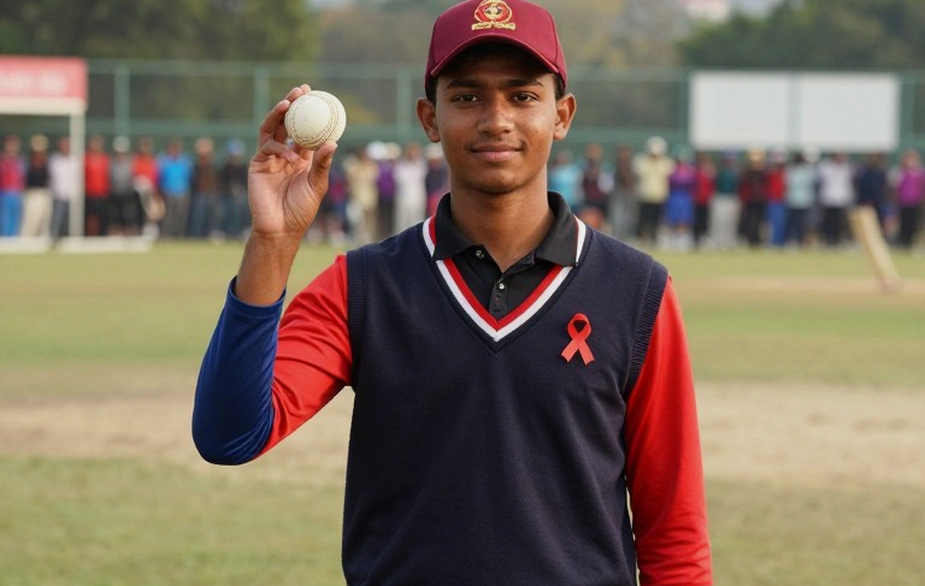
The series is five matches long, and this was the first. That fact is not merely scheduling, it is analysis. Winning match one of five creates room to manage rotation — India can rest one or two first-choice players from match two. Which means per-match data quality will drop from match two onward, and that has to be assumed in advance.
Core: the biggest number proves the least
Samson's strike rate was 203.0. A normal elite T20 opener sits between 145 and 155. 203 is roughly 1.3 to 1.4 times the benchmark — top decile among opening innings. But the analytical question is not "how good was it" but "what is the distribution around it" — and the article gives us exactly one observation. An average cannot be built from a single sample; only the limits of possibility can.
The second thing to calculate is the imbalance inside the partnership. Samson's share of a 93-run stand was 67, meaning Abhishek Sharma's contribution, extras aside, cannot exceed about 26. The partnership was dominant but lopsided — Samson alone made roughly 70 to 75 percent of its runs. That is a compliment to Samson and, simultaneously, a question about the top-order structure.
Then comes the explanatory part. Samson said they simply watch the ball and try to hit it hard. That sentence is a coaching-narrative simplification, not a technical description. "Watch the ball and hit hard" is the output of skill — ball-tracking, decision latency, bat speed, hitting through the line. Taken literally as a method it is analytically useless, and mildly dangerous if imported into coaching literature.
The sentence that genuinely carries information is about keeping their shape and having very positive intent. Not breaking the body's shape against a moving ball is measurable, coachable, and the real technical marker. That one sentence is worth more than all the others.
Now the conditions. In Samson's words the ball swung a lot, especially in the second half, yet came on very nicely off the surface. Swing plus genuine carry is the hardest combination for a new batter, because it defeats the inside edge and the pad simultaneously. Scoring at 203 under those conditions is a bigger event than the "no plan, just hit" explanation admits. This is exactly where the article's framing shrinks the innings.
The third absent element is boundary dependence. A 203 strike rate over 33 balls is practically unachievable without a boundary rate above 50 percent. Which makes the innings high-variance by construction. One 67(33) can mask three sub-20 scores, especially across five matches. The article gives no evidence either way, but the structural risk is real and worth tracking from match two to match five.
One more line belongs here, though it comes from general cricket-industry pattern rather than this article: wicketkeeper-batters carrying a dual workload typically hold their power-hitting peak for a shorter tail than pure batters. Samson is in his early thirties. This is not a prophecy, it is an audit line — how many matches, how many balls, how much travel, how many recovery days.
Contrarian: the four wickets and the 226 nobody counted
The first contrarian point is simple and unwelcome: a four-wicket win is not a comfortable win. Losing four wickets while chasing 226 means there was a wobble in the middle overs, absorbed by the Dhir–Iyer pairing. Describing this as an effortless chase sets the description against the wicket column.
The second concerns the framing. "The quick start made them believe they could finish early" over-credits the top order and under-credits the middle. The arithmetic says 136 off 84 balls was still needed after 90/6, at 9.7. The openers did not cover that distance.
The third and most uncomfortable point: the article never interrogates conceding 226. If a report tells the story of a 226 chase, it also owes the story of the 226 conceded. There are no bowling or fielding numbers — no bowler's name, no economy, no death-over split. The silence here is not quiet, it is chosen — and the biggest beneficiary of that silence is the narrative in which India's batting win looks flawless. Who is silent: New Zealand's bowlers. Why: naming the men who conceded 226 would turn the piece from encomium into analysis. Who benefits: a scoreline-driven readership for whom 226 is thrill, not bowling failure.
One more thing, because I made this mistake once myself. At 3 a.m., twelve teenagers answered; their voices became my map of the future. From that series I learned an innings cannot be judged by its own number — it must be judged by its probability of repeating. Samson's 67(33) is still one innings. If match two brings 18 off 20, the analysis does not collapse; the distribution simply becomes clearer.
Takeaway: what to watch from match two
What to watch is not the run count. Watch whether Samson's rate of shape retention on a swinging surface holds, and how many 35 off 30 innings appear between his boundary-dependent ones. Watch whether India's bowling concedes above 200 again in the same conditions — once is noise, three times is a trend. And watch whether anyone returns that lost date. My right-hand column is still blank, and however large an innings is, without a date it is not history — only a beautiful memory.