
Murshida Khatun and the Sixteenth Name: The Gap in Bangladesh Women's Selection Process
মূল উত্তর: বিসিবি নারী উইং চেয়ারম্যান রফিকুল ইসলাম বাবু নির্বাচন কমিটির মূল ১৫ সদস্যের দল বাড়িয়ে ১৬ করেছেন এবং যোগ করেছেন বাঁহাতি ওপেনার মুরশিদা খাতুন হ্যাপিকে। কারণ হিসেবে দেখানো হয়েছে দক্ষিণ আফ্রিকা এমার্জিং দলের বিপক্ষে একমাত্র ৬১ রানের Innings; প্রক্রিয়াটি নিয়ে প্রশ্ন উঠেছে। মূল তথ্য: - অক্টোবরের ৯ তারিখ থেকে অস্ট্রেলিয়ায় বাংলাদেশ নারী দলের তিন ম্যাচের ওয়ানডে সিরিজ শুরু। - মুরশিদা মূল ১৫ সদস্যের তালিকায় ছিলেন না; পরে ১৬তম নাম হিসেবে যুক্ত হন। - সম্বল একটাই Innings—দক্ষিণ আফ্রিকা এমার্জিং দলের বিপক্ষে ৬১ রান। - এশিয়া কাপ ও এশিয়ান Gamesের দলে তিনি ছিলেন না। - রাজনৈতিক চাপের অভিযোগ অস্বীকার করেছেন চেয়ারম্যান; অভিযোগ একক সূত্রের। সূত্র: ক্রিকবাজ প্রতিবেদন | Cross-checked: cricsultan.com সম্পর্কিত প্রশ্নোত্তর: প্রশ্ন: মুরশিদা খাতুন কে? উত্তর: তিনি বাংলাদেশ নারী দলের বাঁহাতি ওপেনার, যিনি অস্ট্রেলিয়া সফরের ওয়ানডে দলে ১৬তম নাম হিসেবে যুক্ত হয়েছেন। প্রশ্ন: এই নির্বাচন বিতর্কের মূল কারণ কী? উত্তর: নির্বাচন কমিটির মূল ১৫ সদস্যের তালিকার বাইরে গিয়ে তালিকা ১৬ করা এবং লিখিত নির্বাচন নীতিমালার অভাব। প্রশ্ন: রাজনৈতিক চাপের অভিযোগ কি প্রমাণিত? উত্তর: না; অভিযোগ একক সূত্রের এবং চেয়ারম্যান তা অস্বীকার করেছেন, তাই এটি এখনো যাচাইযোগ্য নয়।
When the squad for Bangladesh women's tour of Australia first appeared in late September, my eye caught a number: fifteen. A few days later the number became sixteen. One name was added—a name that was not in the selection committee's original list. Left-handed opener Murshida Khatun Happy.
In Sylhet, I learned that a notebook is a stadium for ghosts. Somewhere between fifteen and sixteen hides exactly such a ghost—someone no one put on the list, and someone else wanted there. The difference is that ghosts are not usually forced onto a list.
Bangladesh women begin their tour of Australia on October 9—a three-match ODI series. The opponent is Australia, one of the sharpest sides in women's cricket. For a subcontinental batter, few assignments are harder: pace, bounce, carry, and the unfamiliar leap of the new ball.
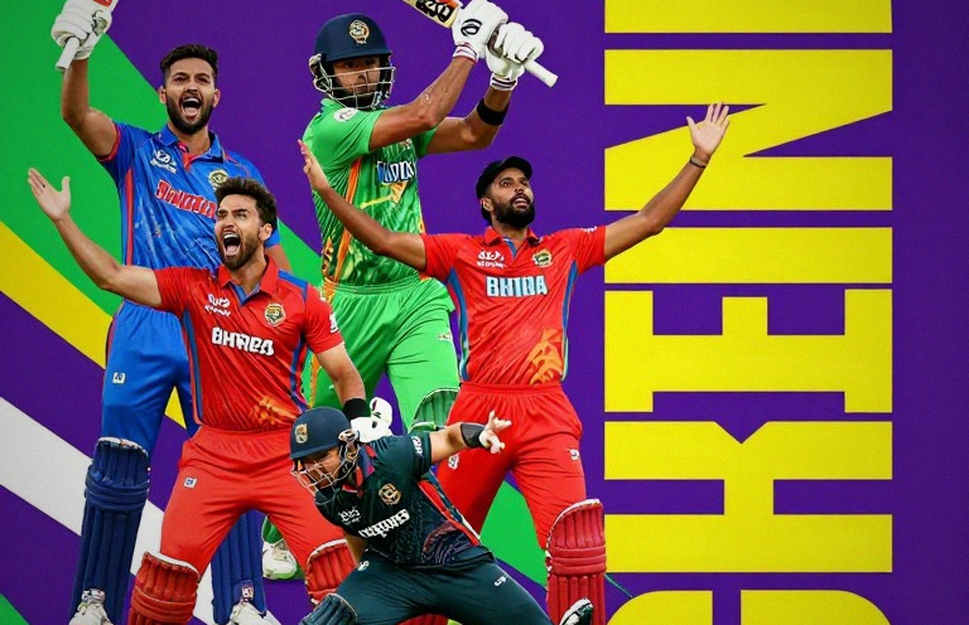
In a 50-over format, a left-handed opener's role is structurally large. Surviving the new ball in the first ten overs of the powerplay, laying the foundation of the innings, creating angles as a left-hander—these fall on the opener. Blooding an unproven opener in Australian conditions is therefore not a routine bench decision; it is a technical gamble.

But the real subject of this piece is not on-field performance. It is selection process and governance.
For nine years I have mostly written about the game on the ground. When I started a page called "Sylhet Scout Notes" from Sylhet in 2026, my only tools were an eye and a notebook. At the 2026 SAFF U-15 Championship in Kathmandu I tracked left-back Rakib Hossain (#3) across four matches—23 interceptions, 11 progressive carries, and a habit of stepping into midfield. Hand-drawn pitch maps and a 1,200-word profile. On Murshida, then, I will speak from visible facts, not speculation.
Bangladesh women still sit outside the elite bracket of the ICC Women's ODI rankings. A tour of Australia is the hardest test for a subcontinental top order. For Bangladesh this fixture is less a contest than a development and exposure exercise. And that is exactly where the question gets complicated: a development tour is precisely the phase where selection on merit should be most defensible. Yet here merit itself is disputed.
Australia's pace attack against a subcontinental top order—this battle repeats itself almost identically. With the new ball the bounce is higher, the ball arrives faster, and a mistimed cover drive ends up in the slips. In these conditions an opener's first job is to survive, the second is to score. The opener who can hold the new ball is the one who gives the side a foundation. So the question is not only runs, but how long she can last in those first ten overs.
Squad depth matters too. Compared with Australia, Bangladesh's top order has few proven overseas performers. When a single slot is fought over this hard, it means the side has few settled, self-selecting incumbents. The ambiguity in selection is a mirror of an unstable team structure.
Murshida was not in the selection committee's original list—that is the centre of the whole affair. The committee's list carried fifteen names; it was later made sixteen. When a decision is justified by performance, a list usually does not need to be enlarged; it is enlarged when room must be made for a particular name.
And the entire debate has exactly one piece of statistical evidence—a single innings of 61. It came on the South Africa tour, against a South Africa Emerging side, and by the account given it was the only fifty of that tour. Building an ODI case on one innings is a weak foundation. Set that 61 aside and there is no average, no strike rate, no sample of sustained output.
An Emerging side is an "A-level", second-string national team. The conversion rate from emerging-team performances to senior international output is historically low, because the standard itself is different. That is not to belittle it, but it cannot serve as the primary evidence for a senior selection either.
The history of Murshida's earlier squads raises another question. She was not in the Asia Cup or Asian Games squads. Empty stadiums taught me that absence has a highlight reel too—here the absence is not an empty ground but a name missing from two major lists. Had she been an obvious pick, the name would have been in the more recent, higher-profile squads. That omission sits awkwardly with a straightforward "in-form performer" claim.
The reply offered is that the Asia Cup and Asian Games squads were formed before his tenure. The argument is incomplete. It explains why she was dropped earlier, but it does not establish that she currently merits selection over the committee's original fifteen.
Another argument has been heard: "many others perform badly and are not dropped, yet she was dropped after one bad performance." That is a narrative argument about fairness, not a data argument about output.
Procedurally, the biggest question is administrative interference over the selection committee's independent decision. It has been alleged that the board's women's wing chairman, Rafiqul Islam Babu, exercised direct influence over the women's selection. The report says he pushed for Murshida's inclusion. And the explanation offered was that "higher-ups" insisted no deserving candidate be ignored.
That "no deserving candidate should be ignored" language is often the narrative used after the fact to legitimise a decision. I accept that this is inference. But the sequence is telling—first a list of fifteen, then sixteen. In a normal selection process, if a deserving candidate were found, the list would have been larger from the start, not patched later.
There is also an institutional precedent for this kind of administrative interference. In the men's team's selection, then BCB president Nazmul Hasan Papon instructed the selectors—this has happened before. So this is not an isolated incident but the recurrence of a structural weakness. Here the lesson of that Sylhet notebook applies: read the list of ghosts and you can tell which ghost is new and which is old. Murshida's name is new; the process is old.
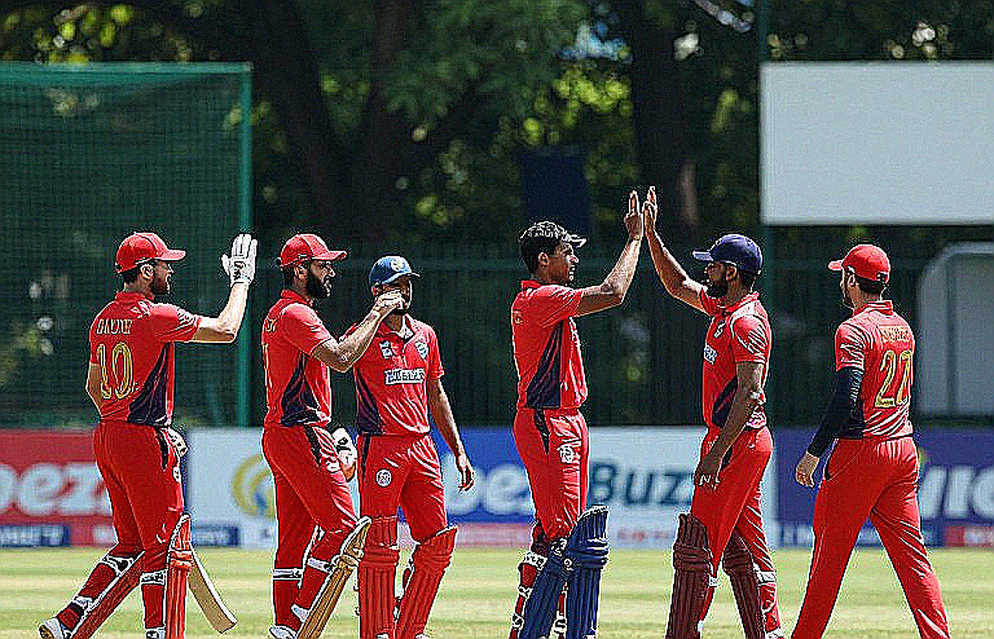
On sourcing, the matter remains unresolved. On one side, the performance argument; on the other, an allegation of political pressure. The allegation says "arrangements" were allegedly made to fly her to Australia; the chairman denies the political-pressure allegation. Both are single-source claims. By journalistic standards this is not proven fact; it is an allegation.
One thing needs to be clear. I am not passing judgment on any individual; I am pointing at the process. Because when the process of picking a team is not transparent, the damage is not limited to one slot—it reaches the whole women's cricket programme.
The cost of that damage is higher in women's cricket than in men's, because there are fewer backup pathways. For a Bangladesh women's player, the national team is the primary career and earning route; there is no parallel franchise league or large-contract pathway as in the men's game. So the value of a single slot rises disproportionately, and so does the incentive to lobby.
A three-match series means a narrow window. In so short a window, a single innings—good or bad—can change the whole conversation. That is another risk in this affair.
And this decision has an effect on the fifteen who were the selectors' genuine choices. To them the message becomes clear: there is a path outside on-field performance. Dressing-room trust erodes slowly like this, not in a day.
The reputational side should not be underestimated. In emerging markets, women's cricket is still at a fragile institutional stage. A selection controversy there does not just damage one team's name; it puts a question mark over the very incentive for new girls to take up the game. Where connection works better than performance, the talent pipeline erodes—slowly, but surely.
One more thing. Put her omission from the Asia Cup and Asian Games alongside her inclusion for the Australia tour and you can see that the benchmark itself has shifted over time. Whenever the benchmark shifts, the question arises: is the benchmark performance or something else? The answer to that question lies in the transparency of the process.
Now to the part few talk about.
The debate has settled into two camps—one saying "a chance on performance", the other saying "political pressure". Both camps avoid one thing: there is no published, written selection policy. With a policy in place, an unproven opener's inclusion or exclusion on a tour of Australia would not raise so many questions—because the benchmark would already be known. This is the real root cause that keeps bringing such controversies back.
Second, the most unfair risk in this affair is borne by the player herself. If she fails in Australian conditions—plausible for an unproven opener—the narrative will turn quickly. The question will not be where the process broke; it will be about her ability. In other words, the blame for a governance failure will land on one player's shoulders. That is the classic form of scapegoating.
Third, there is a paradox in the nature of the tour itself. For Bangladesh it is essentially a development tour—low on winning probability, high on learning. Yet it is precisely on such a tour that the merit question should be clearest. Where learning, not the result, is the point, who gets the chance should be decided on merit. Here the process did not fit.
Fourth, the journalism itself is worth noting. Cricbuzz wrote in a "we understand" register, which lifts this above pure rumour into something semi-investigative. But even so, the political-pressure allegation is single-sourced. And comments like "the process was certainly not ideal" pre-position a stance. This is not bad journalism, but the reader should keep the difference between language and evidence in mind.
So what do we watch next?
On the field, one thing—Murshida's output in Australia. If she plays well, the narrative will be "justified"; if she fails, it will be "scapegoat". Both narratives will bury the central question—the question of process.
The real test is not on the field but in the boardroom. If the BCB clarifies the selection committee's independence and publishes a written selection policy, this episode can turn from a negative case study into a positive precedent for reform. If nothing happens, Murshida's name may one day be erased from the list—but the process will remain.
What to watch? Three signals. First, Murshida's scorecard in Australia. Second, any formal board statement or published policy on selection. Third, whether new sourcing emerges in journalistic investigation on the political-pressure claim. Any one of these can change the direction of the narrative.
Every prospect is an archive that hasn't learned to doubt yet. In Murshida's case the question is not her talent—it is the process built around her. The future of women's cricket depends on who answers that question.