
At Mirpur the Story Isn't the 53-Run Collapse — It's the Gap Between 125 and 200
প্রশ্ন: মিরপুর টেস্টের তৃতীয় দিন শেষে ম্যাচের আসল নির্ধারক কী? উত্তর: বাংলাদেশের শেষ চার উইকেট যত রান যোগ করবে, সেটাই নির্ধারক — রাইফারের হিসাব প্রায় ১২৫, নাঈমের লক্ষ্য ২০০+; এই ফাঁকটাই ম্যাচ। মূল তথ্য: - তৃতীয় দিন শেষে বাংলাদেশ ৭৯/৬; দ্বিতীয় Inningsে ৫৩ রানে ছয় উইকেটের ধস। - নাঈম হাসান ও জাকের আলী ২৬ রানের অবিচ্ছিন্ন সপ্তম উইকেট জুটি Averageেন। - এই টেস্টে ২৬ উইকেটের ২০টি স্পিনারদের, অর্থাৎ প্রায় ৭৭ শতাংশ। - নাঈম হাসান ৫০ টেস্ট উইকেটে পৌঁছেছেন; ডেলিভারি হিসেবে বাংলাদেশি স্পিনারদের মধ্যে দ্রুততম। - ওয়েস্ট ইন্ডিজ চেন্নাইয়ে দুই সপ্তাহের স্পিন-প্রস্তুতি ক্যাম্প করেছে। সূত্র: মিরপুর টেস্টের তৃতীয় দিনের সংবাদ সম্মেলন ও ম্যাচ স্কোরকার্ডভিত্তিক প্রতিবেদন; তারিখ উৎসে উল্লেখ নেই (যাচাই বাকি)। সম্পর্কিত প্রশ্নোত্তর: প্রশ্ন: চতুর্থ Inningsে ওয়েস্ট ইন্ডিজের ঝুঁকি কোথায়? উত্তর: কম বাউন্সের টার্নিং উইকেটে "ইনটেন্ট" ভিত্তিক Batting ব্যর্থ হলে সেটা দ্রুত পতনে রূপ নেয়, কারণ ভালো বল সেখানেই উইকেট বল হয়ে ওঠে। প্রশ্ন: নাঈম হাসানের ৫০ উইকেট কি তাকে উচ্চমানের স্পিনার প্রমাণ করে? উত্তর: না — এটি লম্বা ও অবিচ্ছিন্ন স্পেলের সুবিধা থেকে আসা Role-সূচক রেকর্ড; ক্যারিয়ার Average ও ঘরের-বাইরের Statistics ছাড়া মূল্যায়ন অসম্পূর্ণ। প্রশ্ন: এই টেস্টের বাণিজ্যিক গুরুত্ব কতটা? উত্তর: খুবই কম; দুই মাঝারি সারির দলের দ্বিপাক্ষিক টেস্টের সম্প্রচার মূল্য নগণ্য এবং এটি আইসিসির বণ্টন-ব্যবস্থার ওপর নির্ভরশীল।
Three days done at Mirpur, and Floyd Reifer walked into the press room and said it plainly: "You can't bat for survival on a pitch like that." I wrote the line down and put a time next to it. Because the same day's scorecard carried 79 for 6 — six wickets for 53 runs, eventually carried to the close by an unbroken 26-run seventh-wicket stand between Nayeem Hasan and Jaker Ali. I walked in expecting a match. I left with a thesis.
The next sentence from West Indies' batting coach is the more interesting one: "Whatever score they give us tomorrow, we're going to chase it down." Reifer kept returning to 125. The same evening, Nayeem said a 200-run lead "would be very good." Between 125 and 200 sits a gap of seventy-five runs, and that gap is now the only variable left in this Test.
There is nothing new to say about this Mirpur surface. Low bounce, sharp turn, balls keeping low — Reifer's phrase. Twenty-six wickets have fallen in this match and twenty of them belong to spinners, roughly 77 percent. Who won the toss, what the first innings totalled — those numbers are not in the report I have, so I will not invent them; I am simply logging that the gap exists. What I do have is enough to see one thing clearly: West Indies' pace-led attack is effectively disarmed as a winning mechanism in these conditions. It is a containment unit now.
Which puts the match in a strange place. Batting fourth against spin is the hardest assignment in Test cricket, especially on an Asian surface where the ball starts keeping lower on day four. West Indies are about to do the exact job that inverts their usual strength.
And Bangladesh? Their position is strong, but it was built backwards. The top order lost six for 53; the runs came from seven, eight and nine. That is not evidence of depth, it is the inverse photograph of depth — a side that scores from the bottom is a side not scoring at the top.
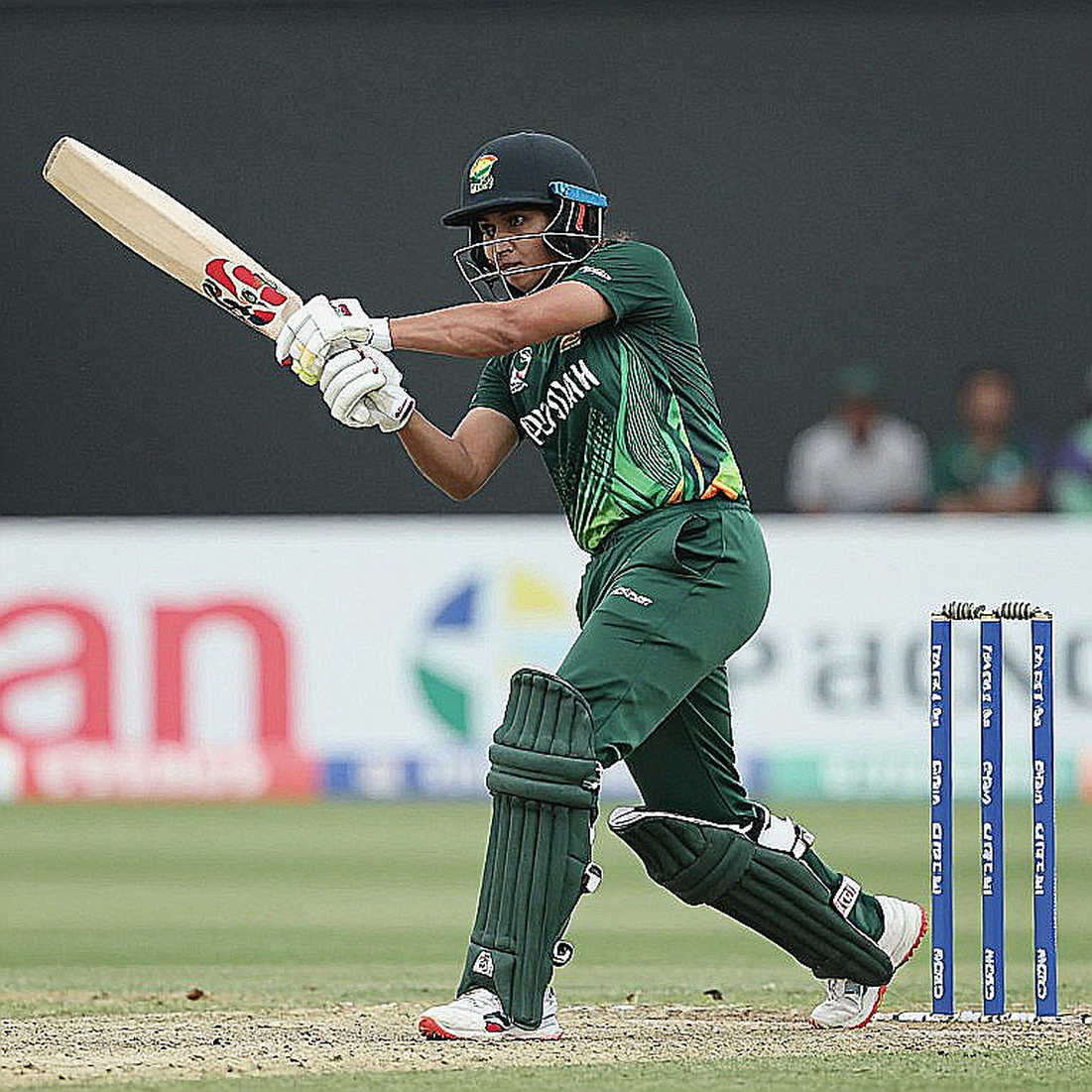
Still, Bangladesh's biggest asset in this match is not the pitch. It is the captaincy. I have heard the instruction in Nayeem's own words — bowl badly and you still bowl all day. That single sentence rewires a spinner's psychology. A bowler who knows one bad over gets him pulled bowls scared: shorter, flatter, safer. A bowler handed the whole day can keep landing it in one area. Najmul Hossain Shanto's spin management is the precise opposite of white-ball short-spell culture, and at home it is a transferable tactic for Bangladesh.
Nayeem's 50th Test wicket should be read in that light too. Fastest Bangladesh spinner to the mark by deliveries bowled is a real record, but this kind of record is a role indicator more than a dominance indicator. Give a bowler uninterrupted long spells and he will reach milestones in fewer balls; that is arithmetic, not revelation. Without career average, economy and home-away splits — none of which I have — you cannot promote that number into proof of an elite Test spinner.
What he does have is value the scorecard misses. Thirty overs in the fourth innings plus 25 runs at eight or nine is a rare package in Asian conditions. If the 26-run stand from 79 for 6 ends up deciding this match, the post-match write-ups will call it the partnership that won the Test. I am flagging the attribution trap now: the stand saved the innings, and whether it won the match gets settled only after the chase.
Back to Reifer. His word is intent — intent in defence, intent in rotation, intent in scoring options. Technically this is the modern anti-spin template off the shelf: use the depth of the crease, score off the good ball, refuse to let a spinner bank six consecutive dots. On paper it is flawless.
The trouble is not on paper. On a surface where one ball turns and the next skids, the execution tolerance for intent collapses — a good ball becomes a wicket ball one delivery later. On a flat deck the same shot goes for four. On day four at Mirpur it goes to slip. The risk with intent is that its failure does not look like surrender; it looks like arrogance.
Kazan, June 2026: I flew in broke and left with a notebook full of noise. The lesson travels — preparation and conviction are not the same thing. West Indies spent two weeks in Chennai, on red soil, batting against spin for long periods. As preparation that is a defensible bet; Chennai's red-soil surfaces are the closest available analogue to Mirpur. But the return is measured over one innings, and that innings is the fourth. Two weeks evaluated on one session is not a fair accounting of the work.
Watch the language of the press conference as well. Reifer used the word intent four times across two answers. That repetition is a tell: the staff knew the first-innings approach would draw fire, so they arrived with the message pre-built, framed around process rather than outcome. Smart insulation if the chase fails.
And nobody is saying the quiet part. A bilateral Test of this profile generates close to zero broadcast value — two mid-tier sides, no premium window, no hype cycle. The empty stadiums taught me that silence has a scoreline, and this one reads: the fixture survives on ICC distribution mechanics, not on market revenue. Anyone who believes the scoreboard is the game saving itself from the money question gets a calm answer from those 77 percent spin wickets.

Now let me argue against myself, because there are three places I could be wrong.
First, the pitch may genuinely be bad enough that the intent debate is irrelevant — if survival itself is impossible, criticising Reifer is unfair. Second, Reifer says his batters are better players of spin. That is assertion, not evidence, but it is not necessarily false either; 77 percent spin wickets is as consistent with West Indian batting failure as with Bangladeshi spin excellence. Third, 125 may not be a psychological anchor at all but a real number off their pitch report. I assumed rhetoric. I have no proof.
And the biggest gap: the first-innings total, the toss and the series context are not in front of me. Without those three, any projection here is a scenario band, not a forecast.
What I will watch is the first hour of day four. Reifer wants the tail finished quickly; Nayeem wants the board moving so the fielders stay up. Both camps have said out loud that this hour is the match. A target near 125 makes West Indies marginal favourites — four wickets, one partnership. A target near 200 makes Bangladesh clear favourites.

Here is my number, on the record: if West Indies are two down inside fifteen overs of the fourth innings with a strike rate above seventy, that will not be positive cricket. It will be the sound of intent turning into surrender.