
Mominul's Injury Forces Bangladesh Squad Change: Jaker Ali Officially In for Second Test
মূল ঘটনা: প্রথম টেস্টে ফিল্ডিং করার সময় মাথায় আঘাত পান মমিনুল হক। মাঠের ভেতরেই কনকাশন সাবস্টিটিউট হিসেবে নামানো হয় জাকের আলীকে। আইসিসির কনকাশন বিধি অনুযায়ী কমপক্ষে সাত দিনের বিরতি বাধ্যতামূলক হওয়ায় মমিনুল দ্বিতীয় টেস্টে খেলতে পারবেন না, এবং ১৫ সদস্যের স্কোয়াডে স্থায়ীভাবে জায়গা পেয়েছেন জাকের আলী। গুরুত্বপূর্ণ পার্থক্য: মাঠের ভেতরের জরুরি বদল এবং স্কোয়াডের আনুষ্ঠানিক বদল এক নয়—জাকের আলী এখন অস্থায়ী নয়, পূর্ণ সদস্য। অনুপস্থিত তথ্য: ম্যাচের তারিখ ও ভেন্যু, সিরিজ স্কোর, চোটের তীব্রতা, চিকিৎসা দলের বক্তব্য এবং ম্যাচ রেফারির অনুমোদন। যাচাই প্রয়োজন: সাত দিনের নিয়মের মূল পাঠ এবং লাইক-ফর-লাইক মানদণ্ডে জাকের আলীর অন্তর্ভুক্তির বৈধতা।
- Summary
The announcement published by the ICC is remarkably thin. It contains no more than four pieces of information. First, Bangladesh batter Mominul Haque suffered a head injury while fielding in the first Test. Second, Jaker Ali was sent in during that same match as a concussion substitute. Third, under the ICC concussion regulations, an affected player requires a minimum stand-down period of seven days. Fourth, because of that, Mominul cannot play the second Test, and Jaker Ali has been formally added to the fifteen-member squad in his place.
Beyond those four points, the report offers nothing. There are no quotations, no analysis, no opposing viewpoints. The news therefore functions as a record of a single event, but it does not supply the material needed to reach any larger conclusion.
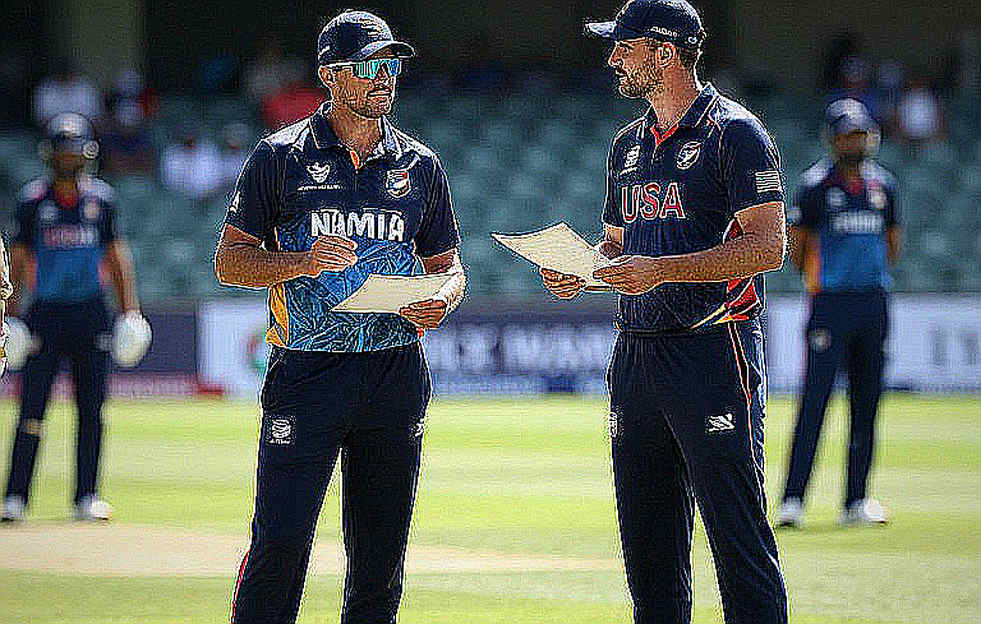
Yet the brief announcement is not trivial. It compresses two distinct kinds of change into one narrative: an in-match emergency substitution and a structural squad change. Failing to separate the two risks a misreading of what Bangladesh's line-up will actually look like in the second Test.
- Timeline and causal chain
The chain that emerges from the announcement is linear and simple. Mominul is hit on the head while fielding in the first Test. Jaker Ali is brought in as a concussion substitute during the match. ICC rules require a minimum seven-day stand-down for the affected player. That barrier prevents Mominul from playing the second Test. The fifteen-member squad is therefore necessarily changed, and Jaker Ali becomes a full member of it.
There is no branch in this chain. No alternative path, no opposing party, no contested claim. Four steps, one arrow, one outcome. From a journalistic standpoint this is a node: a single point in time where a specific fact is recorded.
Such nodes are useful but limited. They tell you what happened, not why, not how serious it is, and not what follows. Anyone trying to draw conclusions about the direction of the Test series from this report alone will be on the wrong track.

- One phrase, two meanings
The most hazardous part of the report is its language. The same phrase, concussion substitute, is used to describe two entirely different processes. One is the in-match emergency replacement, which occurs while the first Test is still being played. The other is the pre-match squad change, which occurs before the second Test.
The first is governed by a like-for-like requirement. It usually needs match referee approval, and its effect is generally limited to that specific match. The second is an administrative process: one name is formally swapped for another in the fifteen-member list.
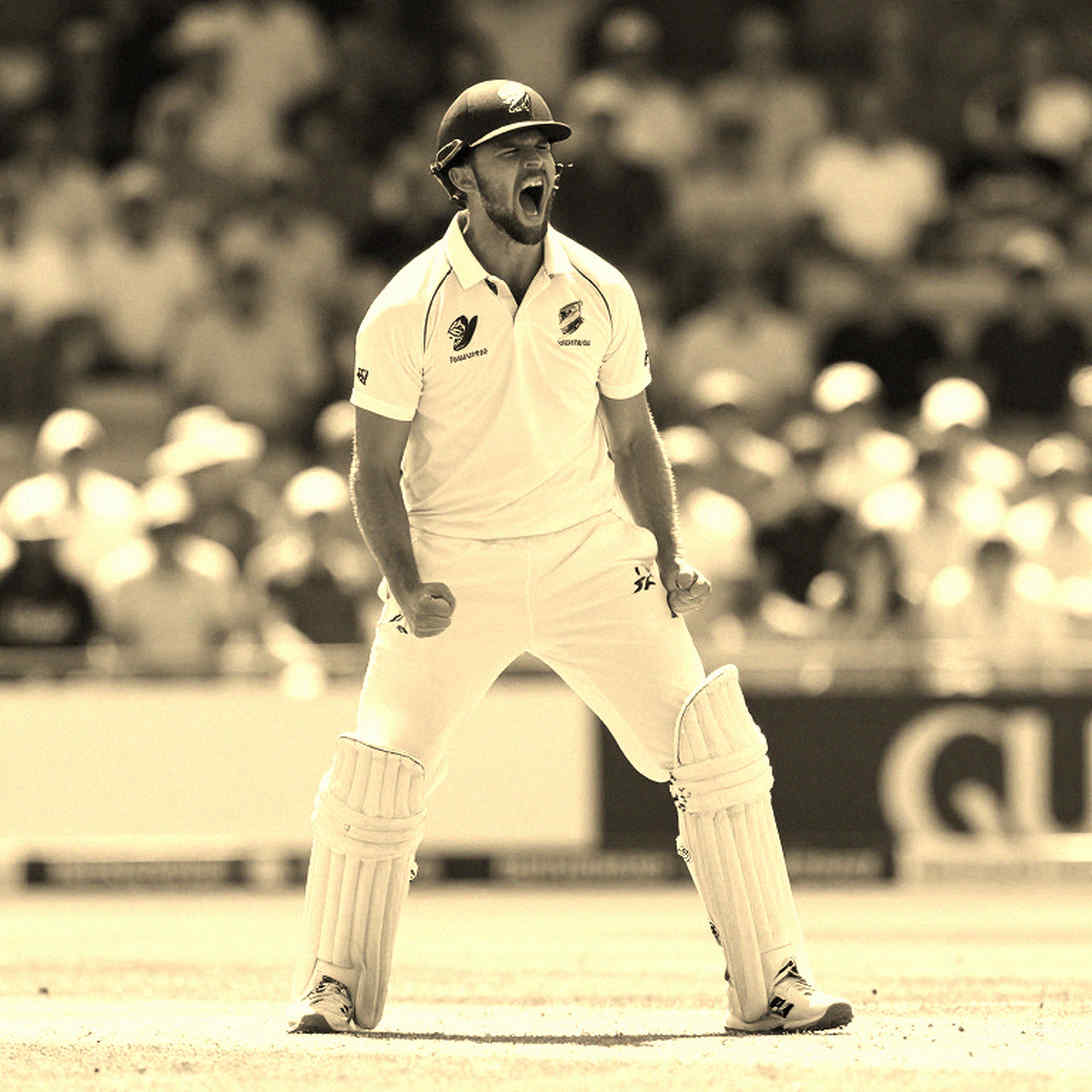
Compressing both into one sentence makes it easy for a reader to assume Jaker Ali was merely a one-match temporary worker. In reality he is now a full member of the squad. That means the pool of selectable players for the second Test has changed structurally, not merely gained an extra body.
- How the in-match replacement works
The in-match concussion replacement is a relatively new mechanism in cricket. Its purpose is clear: a player who has taken a blow to the head must not be left in the field at risk, and at the same time the fielding side must not gain an unfair advantage. The like-for-like condition exists precisely because of that tension.
The logic is straightforward. If a side could claim its best batter had been hit and then bring in another specialist batter, the substitution could function as reinforcement. Regulators therefore want the replacement to be as close to a normal substitution as possible, without adding an edge.
But like-for-like is a flexible concept. Whether a wicketkeeper-batter is a fair replacement for a middle-order batter is genuinely open to debate. The announcement does not address the question at all; it simply avoids it.
- Why the squad change is a separate event
The squad change is different in nature from the on-field event. No match is in progress, no clock is running. Instead there is an administrative decision in which medical reports, rule interpretation and selectors' judgement all operate together.
Changing the squad before the second Test means Bangladesh must rebuild their plans for the next match. Who opens, who takes responsibility in the middle order, how the wicketkeeping balance shifts: all of these questions reopen.
This is not simply the absence of one player. It creates a vacancy that must be filled from the resources inside the group. Filling that vacancy is the real challenge for Bangladesh in the second Test.
- The ICC concussion protocol and the seven-day limit
According to the report, ICC concussion regulations require an affected player to observe a minimum stand-down of seven days. That number is the most important figure here, because it determines whether Mominul can play the second Test.
Caution is required, however. The report does not name the regulation or quote its text. It is a second-order summary. To cite it rigorously one must return to the original ICC concussion protocol and verify how the seven days are counted, when the clock starts, and whether any exception applies.
Without that verification, treating seven days as settled truth would be wrong. It is probably correct, but it is not confirmed. The rule of journalism is that when you state a rule, you show the rule.
- The seven days as a moving window
Seven days is not a fixed number; it is a moving window. The start of the window depends on the date of injury or the date symptoms were identified. The end depends on that start.
If the gap between the first and second Tests is less than seven days, Mominul may miss more than just the second match. If the gap is longer, he could return for the following fixture. The problem is that the report contains no dates at all. Without the dates of the first Test, the second Test and the injury, the calculation cannot be performed.
So the seven-day rule appears here as information, but not as a computable constraint.
- Mominul Haque: the anchor of the middle order
Mominul Haque is a familiar name in Bangladesh's Test batting. He has played for a long time in the middle order and holds an important position in the team's batting structure. This is external context, not information contained in the report, and it should be verified before use.
Even so, the significance of the event is hard to grasp without that context. The absence of a middle-order batter creates a likely experience gap in the middle of the innings. In Test cricket the middle order is usually what absorbs the effect of the new ball and gives the side stability.
The question is therefore not merely who replaces whom. It is who provides that stability, and whether that person is ready.
- Jaker Ali: a wicketkeeper-batter profile
Jaker Ali's established role is wicketkeeper-batter. That profile does not exactly match Mominul's. Replacing a top-order batter with a wicketkeeper-batter raises an obvious question about how precise the match really is.
Jaker Ali does have one advantage. He has already played in the first Test. He has seen the conditions, the pitch behaviour and the opposition bowling. That experience could work in his favour in the second Test.
But the report does not say how he performed in the first Test. Without that, no judgement about his readiness can be made on this evidence.
- The like-for-like question
This is where the only genuinely contested element of the story sits. The purpose of the like-for-like condition is to prevent a replacement from disproportionately strengthening the side. The question is whether a wicketkeeper-batter is an equivalent replacement for a top-order or middle-order batter.
The answer depends on two things: what the replaced player's actual role was, and how the match referee interpreted that role. The report contains no statement from the match referee and no mention of approval. The question therefore remains open, and it is the one place where a genuine tension between rule and reality may exist.
- The match referee's role
In international cricket the match referee is the central figure in applying the rules. For a concussion replacement, his satisfaction is required: he confirms the change complies with the regulations and does not create an additional advantage.
The announcement is entirely silent on the match referee. That is a significant gap. Without his approval the change does not take effect, and knowing his reasoning would reveal how the like-for-like standard was applied. Any future analysis of this event should begin by obtaining the referee's report or comments.
- Likely impact on batting balance
What follows is inference, not information from the report. Mominul's absence leaves a vacancy in the middle order. There are two ways to fill it: promote another batter from within the group, or keep Jaker Ali in his natural position and reshuffle the rest of the order.
The first path risks overburdening a less experienced player. The second risks reducing batting depth. Which is better depends on the opposition attack and the nature of the pitch.
- Wicketkeeping and fielding
Jaker Ali's presence creates an extra option behind the stumps. That can be positive, because in Test cricket a wicketkeeper does more than take catches; he also provides psychological support to the bowlers.
But that benefit only counts if the rest of the side is balanced. If the keeping is strong while the middle order is weak, the loss may outweigh the gain. The report contains nothing about fielding plans, so this inference cannot be treated as settled.
- Bowling and all-round balance
Bowling balance is the most important element of Test selection. The absence of a batter does not directly affect the bowling department, but it has indirect effects. If the batting is weakened, the pressure on the bowlers increases. Every wicket becomes more valuable.
The report says nothing about the other fourteen members of the squad. Whether the bowling attack has changed is therefore unknown. Without that, no judgement about the team's overall strength is possible.
- The West Indies context
The event occurs in a Test series against West Indies. Test cricket in the Caribbean has a distinct character: pitches generally offer pace and bounce, and matches run long. In such conditions the value of an experienced middle-order batter rises, because absorbing the new ball and building a long innings are central to the outcome.
In that context Mominul's absence is not just a missing number; it is a missing bank of experience. This is inference, not report content.
- Effect on the 2026-27 World Test Championship cycle
The event sits inside the 2026-27 World Test Championship cycle. Every Test in that cycle carries points, and the final standings are determined by them. The absence of a leading batter can affect the likelihood of collecting those points, though how much depends on the replacement's performance and the team's overall plan.
The report gives no series score and no result from the first Test, so the points calculation cannot be done. Without that, no reliable assessment of the WTC impact is possible.
- Information gaps
The report's greatest weakness is what it omits. There are no match dates and no venue, and without those the seven-day calculation cannot be made. There is no series score and no first-Test result. It is unclear whether anyone other than Mominul has changed; the phrase that the side changed its fifteen-member squad can easily create the impression of multiple changes. There is nothing on Jaker Ali's first-Test performance. There is nothing on the severity of Mominul's injury, his symptoms, or the medical team's statement. There is no comment from the captain or coach. There is no mention of match referee approval.
Because of these seven gaps, the report can be used as a source for one event, not as a source for analysing the direction of the series.
- Time sensitivity
This story is highly time-sensitive. Three timestamps are essential. The first is the start of the second Test, which marks when the squad change takes effect. The second is the date of injury or symptom identification, which marks the start of the seven-day window. The third is the expiry of the stand-down, which marks when Mominul could return.
Without these, the seven-day rule remains a piece of information rather than a computable constraint. For event extraction, the publication date and the match date must be bound together, or the rule cannot be turned into a usable condition.
- Source quality
The source is the ICC's official channel. That is strong on several counts. It is a primary, official source, so reliability is high, and there is no obvious conflict of interest.
There are limits. The report contains no named quotations, so responsibility cannot be traced to a specific person. It reflects only the official position and says nothing about the severity of the injury or any contested aspect. Most importantly, the rule reference is a summary, not the text itself. A reader who wants the precise interpretation must return to the original protocol. Overall reliability is high, but information density is low: this is a typical official notice.
- The gap between headline and substance
The headline says the side announced its squad, using an active verb that suggests a routine announcement. But the real driver of the story is a forced change. The headline carries less information than the substance. This is a common pattern in ICC notices, but it means that classifying the event from the headline alone would drop the injury factor. Any headline-level classification should place it under injury-forced squad change, not routine squad announcement.
- Risk of misinterpretation
Four misreadings are likely. One: that Jaker Ali was only ever a one-match stand-in. Two: that multiple players were changed. Three: that Mominul will miss only one match. Four: that a concussion substitution automatically means a permanent squad change.
Avoiding all four requires keeping two concepts separate: the in-match emergency replacement and the formal squad replacement. If that distinction is blurred, the entire analysis rests on a false foundation.
- Three things worth pursuing
Three items would complete the picture. First, the original text of the ICC concussion protocol, to verify the conditions and the counting method for the seven days. Second, the match referee's decision and reasoning, which would clarify the only genuinely contested point, the like-for-like standard. Third, a formal statement from the Bangladesh Cricket Board or its medical team, which would determine whether Mominul misses one match or more. Without these three, no full picture is possible.
- From a journalistic standpoint
As a news report this announcement is accurate but incomplete. It gives facts without explanation, events without context. Good journalism states its limits alongside its facts. Here the limits are not stated, perhaps because the author did not know what was missing.
The reader's responsibility is therefore not to jump to conclusions from a short notice, but to ask: where are the dates, where is the venue, what did the match referee say, what is the medical team saying.
- Conclusion
The story is simple: a head injury, a concussion substitution, a seven-day stand-down, a squad change. Four steps, one outcome. But behind that simple event sit three layers. The first is medical: the severity of the injury and the recovery period. The second is regulatory: the conditions of the concussion protocol and how they are applied. The third is competitive: team balance and the direction of the series.
The report gives only a brief indication of the first layer. It says nothing about the second and omits the third entirely. It is a starting point, not an endpoint. Anyone wanting a full analysis must first collect the dates, the venue and the score, then verify the original rule text, and finally obtain the medical team's statement. Until those three steps are complete, the analysis will remain unfinished.