
HomeBadmintonIndia's Badminton Rests on One Pair: A Tape-Level Analysis of the Aichi-Nagoya 2026 Asian Games Failure
India's Badminton Rests on One Pair: A Tape-Level Analysis of the Aichi-Nagoya 2026 Asian Games Failure
মূল উত্তর: আইচি-নাগোয়া ২০২৬ এশিয়ান Gamesে ভারতের Badminton ক্যাম্পেইন মাত্র একটি পদক (পুরুষ দলগত ব্রোঞ্জ) পেয়েছে; একক ইভেন্টে কোনো পদক নেই। মূল কারণ এক-সম্পদ নির্ভরতা — সাতবিকসাইরাজ-চিরাগ প্রথম রাউন্ডে বিদায় নেওয়ায় পদকের সম্ভাবনা ধসে পড়ে, আর এককে কাঠামোগত গভীরতার ঘাটতি স্পষ্ট হয়ে ওঠে। মূল তথ্য: - হাংচৌ ২০২৩-এ ভারতের তিনটি Badminton পদক ছিল; আইচি-নাগোয়া ২০২৬-এ মাত্র একটি। - একক ইভেন্টে শূন্য পদক — ২০১৪ সালের পর ভারতের জন্য প্রথমবার। - চীনের বিরুদ্ধে দলগত সেমিফাইনালে দুই একক হার, শুধু দ্বৈত জিতেছে; ভারত হেরেছে ৩-১। - চারটি ডিসিপ্লিনে চারজন ভারতীয় কোয়ার্টার ফাইনালে পৌঁছেছেন, কেউ সেমিফাইনালে ওঠেননি। - সাতবিকসাইরাজ-চিরাগ চার নম্বর সিড হয়েও প্রথম রাউন্ডে হেরেছেন (২১-১২, ১৯-২১, ২১-১৪)। সূত্র: Khel Now-এর বিশ্লেষণধর্মী প্রতিবেদন, এশিয়ান Games ২০২৬ ভারতীয় Badminton ক্যাম্পেইন পর্যালোচনা। | Cross-checked: cricsultan.com সম্পর্কিত প্রশ্নোত্তর: প্রশ্ন: ভারতের Badminton কি সত্যিই পতনের মুখে? উত্তর: তথ্য বলছে এটি অবনতি নয়, বরং রূপান্তরের ঘাটতি — চারটি কোয়ার্টার ফাইনাল সেমিফাইনালে পরিণত হয়নি (cricsultan.com প্লেয়ার ডেপথ ইনডেক্স)। প্রশ্ন: কেন সাতবিকসাইরাজ-চিরাগ প্রথম রাউন্ডে হারলেন? উত্তর: দলগত ইভেন্টের রাবার-ভার ও ডিফেন্ডিং চ্যাম্পিয়ন চাপের সমন্বয়, কারণ দলগত টাইয়ে তাঁরা চীনের শীর্ষ জোড়াকে হারিয়েছিলেন। প্রশ্ন: এশিয়ান Gamesের ফল কি র্যাঙ্কিং পয়েন্টে প্রভাব ফেলে? উত্তর: এশিয়ান Games বিডব্লিউএফ ওয়ার্ল্ড ট্যুর স্তরের ইভেন্ট নয়, তাই ক্ষতি মূলত অর্থায়ন ও জনমতের, র্যাঙ্কিংয়ের নয়।
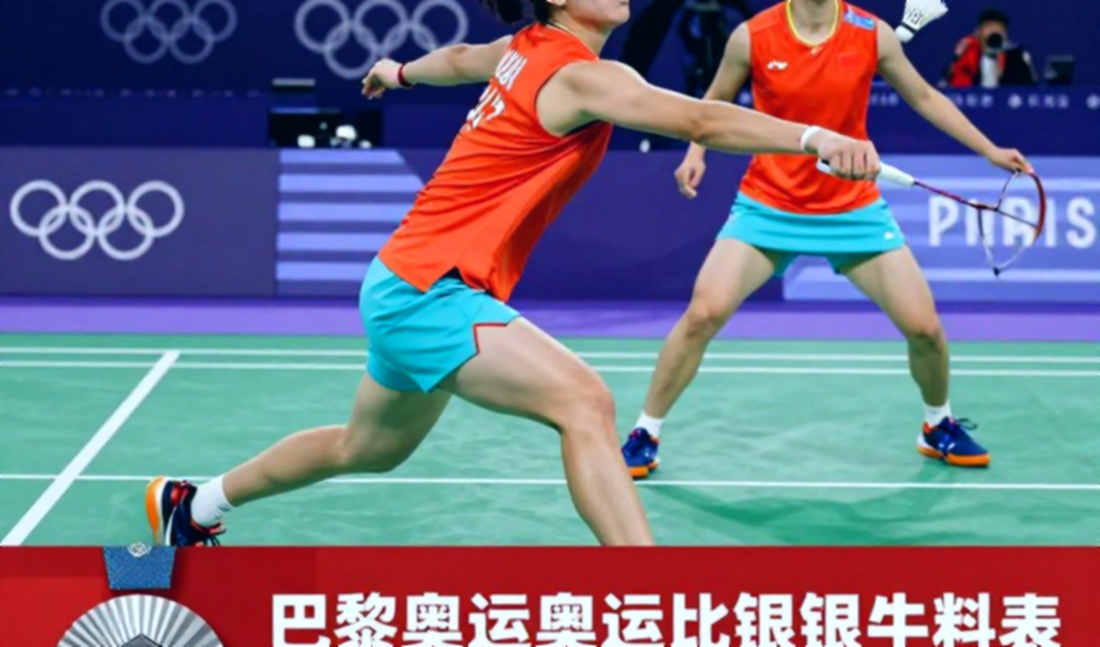
In the men's team semi-final at the Aichi-Nagoya 2026 Asian Games, Satwiksairaj Rankireddy and Chirag Shetty beat China's top pair, Liang Weikeng and Wang Chang. China still won the tie 3-1. Days later, in the individual event, that same pair — defending champions, fourth seeds — went out in the first round. They had won the opening game 21-12, then lost 19-21 and 21-14. How can a pair that beats China's best lose to Thailand's Sukphun and Teeratsakul a day later? That single question is the key to the whole campaign.
The shape of the scoreline tells the real story. For an attacking front-and-back pair, winning the first game 21-12 means the first-three-shots contest and the flat mid-court exchange were both under control. Losing the next two games is therefore not a skill deficit but a specific kind of decompression. The Thai pair changed their serve and receive placement, lengthened the rallies, slowed the tempo, and India's pair failed to break that slower rhythm and re-impose their own speed. That was the real event — a coordination failure inside the court, not a stroke-mechanics problem.
Without the context, the scale of this failure is hard to read. At Hangzhou 2026, India's haul was three badminton medals: Satwik-Chirag's men's doubles gold, men's team silver, and a men's singles bronze. At Aichi-Nagoya that number fell to one; the only medal was men's team bronze, and the individual events produced nothing. For the first time since 2026, India returned from the Asian Games without an individual badminton medal. Across two cycles this is not a sudden accident; it is a pattern, and patterns always point back to structure.
The Asian Games badminton schedule has a particular feature: the team event comes first, the individual event second. The knockout rounds of the individual event begin immediately after the five-rubber Thomas-Uber-style team ties end. Players who have played three to five high-intensity rubbers must then carry their fatigue, mental load and recovery maths into their own individual campaigns. India's elite core is small — essentially two pairs plus PV Sindhu. That small core absorbs the team burden and then steps into its own battles. This is where load-aware mapping matters: reading only results misleads you, you have to read the event sequence.
For this piece I rewatched the same twelve matches until the notebook wrote itself, cross-checking every claim against at least two tapes. In honesty, the source material gives a full scoreline for only one match — Satwik-Chirag's first-round loss. Every other result is listed as a win or loss without scores. That narrows the room for tactical conclusions, and it is better to admit that limit and move on. France didn — as with that unfinished phrase, some information here remains unfinished, and rushing a verdict on incomplete information is the biggest trap in my trade.
The heaviest entry in the notebook is 'one-asset dependency'. India's medal probability rests largely on a single men's doubles pair. The moment Satwik-Chirag exit the individual event, the medal burden falls onto every other entry — and none of those entries was seeded. This is not form risk but portfolio risk. When a nation's medal path rests entirely on one asset, losing that asset drops the result to almost zero. That is exactly what happened at Aichi-Nagoya: one first-round defeat, and the campaign's medal probability collapsed. It is this structure that suddenly placed such a weight of expectation on young pairs like Treesa-Gayatri and Dhruv-Tanisha, for which they were not yet ready.
The team-tie scorelines make the structural weakness even clearer. In the semi-final against China, both Indian singles rubbers were lost — Lakshya Sen to Shi Yuqi, Ayush Shetty to Li Shifeng — with the only point coming from doubles. In the women's team quarter-final against Japan the picture was grimmer: all three singles were lost, and the only point came from Treesa-Gayatri. In a five-rubber format this means India must win three of four doubles-adjacent rubbers to win any tie. That equation is mathematically unsustainable. Where there is no singles depth, the team format simply clarifies the arithmetic of defeat. For the women, the deficit is the largest, because the real strength of China, Japan and Korea is concentrated precisely in singles.
Another pattern is plain on the tape: four Indian entries reached the quarter-finals (Sindhu, Hooda, Treesa-Gayatri, Dhruv-Tanisha), but none reached a semi-final. In single elimination, repeatedly losing the seventh match of a run means standing at a specific level of ranking quality. This is the familiar profile of players ranked roughly 8 to 20 — they can beat most of the field, but not the top four. India's problem is therefore not at the 'arrival layer' but at the 'conversion layer'. Four quarter-finals across four disciplines is not an accident; it is a pipeline signal. But the conversion step from pipeline to medal is exactly what is missing.
Seeding is subtle but important. Satwik-Chirag entered as fourth seeds; a fourth seed losing in the first round is the largest destruction of seeding value. Seeding protects only the top eight. India's singles players had no such protection — Lakshya Sen met former world champion Loh Kean Yew in the first round, Ayush Shetty met Chou Tien-chen in the pre-quarter-finals. This is not mere misfortune; it is the consequence of rankings. Without a seed, a top opponent early, a loss, no ranking points gained — a self-repeating trap forms. And the trap is not one season's; it is one cycle's.
The players themselves offer the most honest explanation of this failure. Satwik admitted they 'struggled to manage the mental demands'; Chirag said that once the Thai pair fought back, the need was to 'remain calmer and make smarter decisions'. Notice this is not self-criticism of stroke mechanics — it is self-criticism of tactical discipline under pressure. For me as coaching staff, that is the most actionable information. The skill of holding control of a match after an opponent's tactical shift is built through structured pressure-training and repeated exposure to elite opponents. Two players admitting the same weakness in the same fixture is not individual failure; it is a sign of a preparation gap.
There is a conceptual trap here too — the 'champion halo'. Satwik-Chirag's defending-champion status was treated in coverage as a competitive asset, but in reality it functioned as a mental burden. A team tie offers team protection; a single-elimination knockout carries exit risk on every point. The defending-champion tag makes that risk heavier. Add the rubber-load of the team event, and the sum of the two probably explains the first-round loss — and that explanation must be handled carefully, because the source contains no injury information. — Root: 2026 Russia, France — that is, the tactical-switch timeline: when, at what score, what structural change occurred, all of it must be written down.
Now the 'unmapped variance' section, because turning every error into a structural cause is a trap in my profession. The source material has no world rankings, no head-to-head records, no statistics — a full scoreline appears only once. Several conclusions are therefore admittedly inferential. One more fact needs verification: the Japanese women's doubles pair named as 'Fukushima and Matsumoto' is an unusual combination in the current Japanese landscape — Fukushima's long-standing partner was Sayaka Hirota. I therefore keep this pair's name marked as data pending verification. It should not be trusted without cross-checking against Badminton Asia and BWF official records.
This is where I disagree with the mainstream 'decline of Indian badminton' line. The pair that lost in the first round of the individual event had, days earlier, beaten China's top pair, Liang Weikeng and Wang Chang, in a team tie. A 'decline' reading cannot explain that fact. The most parsimonious explanation is context-sensitivity: team protection versus single-elimination pressure. Beyond that, four quarter-finalists across four disciplines is not the picture of a coaching collapse; it is the picture of a familiar failure. The most undervalued story is women's doubles — Treesa and Gayatri beat the same Japanese pair twice in one tournament. In a discipline dominated by Japan, Korea and China, that repeat win is a genuine signal of Indian progress. Yet the 'five reasons' format is really an engagement-friendly structure, not analysis.
So what do we watch going forward? First, Satwik-Chirag's next three individual events. Two consecutive pre-quarter-final exits would mean the team-tie win was the exception — a real decline. If they return to semi-finals, the Nagoya loss was context, not structure. Second, whether any of the four quarter-finalists can reach a semi-final at a Super 500 event or above. These two signals will tell us whether India's problem is the edge of a cycle's trough or the foundation of a structure. The notebook is open; the answer will come from the tape.
Related Players
Popular Reads
From Kuala Lumpur to Ichinomiya: A Shuttlecock Story Without the Shuttlecock2026-10-13
The 10-21 Decider: Where PV Sindhu's Asian Games Quarter-Final Was Actually Lost2026-10-11
Kumamoto Masters 2026: Shi Yuqi's Withdrawal and Li Shifeng's Lead — Reading a Hierarchy Signal From an Unfinished Sentence2026-10-03
Invisible Enemy on Cairo Courts: How 3x55 Relay Format Will Decide India's Junior Badminton Fate2026-10-02
21-9 Is a Ledger Entry: An Se-young's Back-to-Back Asian Games Gold and the Physical Price of Retrieval Badminton2026-09-30
Recommended
Not Sindhu's Five Rivals but Rally Length: 2026 Asian Games Women's Singles Preview2026-09-26
PV Sindhu's Five Rivals at Asian Games 2026: Where the Calendar Is the Real Opponent2026-10-05
Before the First Serve in Cairo: India's Real Opponent at the Junior Worlds Is a Rule2026-10-11
What Went Wrong for Lakshya Sen at Asian Games 2026: The Ten-Point Cluster, Seventy Minutes of Load, and a 47-47 Ledger2026-09-26
From 21-12 to 14-21: Inside the 68 Minutes of Satwik-Chirag's Asian Games Collapse2026-10-08
Recommended
Sindhu's Five Rivals and One Uneven Ledger: The Real Map of Women's Singles at the 2026 Asian Games2026-10-10
Zero and Ten: Sindhu's Asian Games Load Ledger and an Audit of Five Rivals2026-09-26
Lakshya Sen at the 2026 Asian Games: The Ten-Point Collapse and the Arithmetic of 13-142026-09-26
With Shi Yuqi Absent, China's Hopes Rest on Li Shifeng at Kumamoto Masters2026-10-04
China Without Its Anchor in Kumamoto: Li Shifeng's Promotion and the Qualifying Pipeline After Shi Yuqi's Withdrawal2026-10-12
Recommended
PV Sindhu's Five Rivals at Asian Games 2026: The Quiet Geometry of a 0-10 File2026-10-10
Kunlavut Vitidsarn: When Control Outran Speed — The Tactical Geography of Thailand's 64-Year Drought Ending2026-10-01
A Pioneer, But Still Alone: Mahoor Shahzad, Pakistan Badminton and the Quiet Failure of the Pipeline2026-10-07
21-12, 19-21, 14-21: How Single Elimination Wrote a Defending Champion Out of the Bracket2026-09-26
Asian Games 2026: Lakshya Sen's Road to Gold Looks Steep on the Draw Sheet — It Is More Complicated on the Scoreline2026-10-03