
The No.9 Vacuum: Al-Ittihad's Structural Risk Before the Al-Hilal Clash
**মূল উত্তর:** আল-ইত্তিহাদের স্ট্রাইকার জর্জ ইলেনিখেনা International ডিউটিতে ইনজুরি নিয়ে অষ্টম রাউন্ডের আল-হিলাল লড়াইয়ের আগে অনিশ্চিত, ফলে দলটিকে একমাত্র স্বীকৃত স্ট্রাইকার ইউসুফ এন-নেসিরির উপর নির্ভর করতে হতে পারে। **মূল তথ্য:** - আল-ইত্তিহাদ ১৭ পয়েন্ট নিয়ে দুই নম্বরে; আল-হিলাল এক পয়েন্টে এগিয়ে শীর্ষে। - ইলেনিখেনা ছয় League ম্যাচে ৪ গোল ও ২ অ্যাসিস্ট করেছেন। - ইনজুরিটি নাইজেরিয়ার জাতীয় দলের ডিউটিতে হয়েছে, ক্লাবের নিয়ন্ত্রণে নয়। - আল-ইত্তিহাদ ও নাইজেরিয়া মেডিকেল টিম যৌথ রিটার্ন প্রোগ্রাম তৈরি করছে। - ম্যাচটি কিংডম অ্যারেনায়, দুই শীর্ষ দলের ছয়-পয়েন্টার লড়াই। **সূত্র:** আর-রিয়াদিয়াহ, গোল.কম সূত্রে | ক্রস-চেক: cricsultan.com **সম্পর্কিত প্রশ্নোত্তর:** প্রশ্ন: ইলেনিখেনা কি আল-হিলালের বিরুদ্ধে খেলবেন? উত্তর: এখনো নিশ্চিত নয়; কোনো রিটার্ন ডেট ঘোষণা করা হয়নি। প্রশ্ন: আল-ইত্তিহাদের কেন স্ট্রাইকার সমস্যা? উত্তর: স্বীকৃত একমাত্র স্ট্রাইকার এন-নেসিরি, তাই ব্যাকআপ গভীরতা নেই। প্রশ্ন: এই ইনজুরি কী বদলাতে পারে? উত্তর: টেবিলের শীর্ষ লড়াইয়ে আক্রমণের Profile ও সেট-পিস হুমকি কমতে পারে।
There is a date still stuck in my notebook — September 2026. The stadiums were empty, transfer budgets had collapsed, and I was sitting at a small desk in Liverpool building a "Crisis Transfer Index" — wages, age, injury history, xG per 90, PPDA fit, distance covered. One thing became clear back then, and it has become the opening line of every match preview I have written since: a team's deepest crack never hides in midfield — it hides in the position where there is no backup.
That is exactly what is happening in the Saudi Pro League right now. Al-Ittihad sit second on 17 points, a single point behind leaders Al-Hilal. Next week the two meet at Kingdom Arena — a fixture local media are calling the eighth round's "Clasico", the biggest match of the season. And just before that match, a question mark has appeared over the fitness of striker George Ilenikhena. Goal.com, citing the Saudi outlet Arriyadiyah as the primary source, reports that the Nigerian forward's chances of playing are "dwindling".
Why does one report matter so much? Because this is not a rumour — it is a story of numbers.
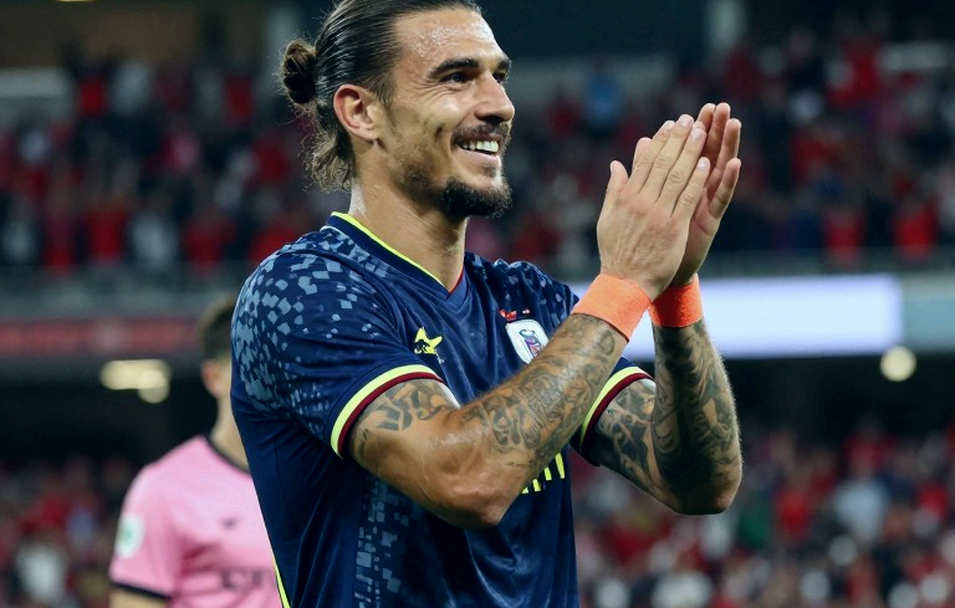
Ilenikhena has scored four goals and provided two assists in six league matches this season. That is roughly one goal contribution per game. Losing a forward who delivers a goal involvement every match is not just losing a name — it is losing a specific profile from the entire attack. The injury came on international duty, meaning the club had no control over the decision. This is the so-called "FIFA virus" — the club pays the money, makes the preparations, and the player returns from the international break carrying an injury.
The real structural problem here is striker depth. Al-Ittihad's only recognised centre-forward right now is Youssef En-Nesyri. Such a single-minded dependence on one forward is a classic fragility in modern football, because it kills in-game flexibility. There is no change of profile from target-man to runner, no like-for-like substitute. In a match where every goal is worth the most, that rigidity becomes most visible.
Let us compare. Big clubs usually keep at least two ready forwards at the No.9 — a starter and a profile-different deputy. Al-Ittihad's bench does not have that. So the question is not "will Ilenikhena play" but "why did the club not buy a No.9 backup in the previous window". The spreadsheet never lies, but it often whispers — and this whisper is saying that in the next window the club's biggest need is neither defence nor midfield, but a reliable backup striker.
The Saudi Pro League's squad-building model is itself a factor. High wages, an import-heavy structure — big clubs here buy world-class internationals and want fast results. But there is a side effect: many players leave at the same time for international windows and return tired or injured. Al-Ittihad have Morocco's En-Nesyri and Nigeria's Ilenikhena — both internationals. That concentration means injury and window exposure are concentrated too, and that is not a balance-sheet risk but a squad-construction risk.
I watched this pattern up close in 2026, in empty stadiums. When the stadiums emptied, the models had to learn to breathe — because budgets were small, the margin for error was zero, and one injury could overturn an entire season's calculation. The post-pandemic market taught me that unless squad depth and injury risk are calculated together, no team can rise to the top of the table and stay there. This Al-Ittihad moment is the Saudi version of that lesson.
At the 2026 World Cup in Russia I worked with pressing data — PPDA and post-shot xG were my daily language. There I learned that the balance between a low block and pressing fit decides win or loss in the big matches. The same question applies to Al-Ittihad — if the attacking profile has to change, how much of the pressing structure breaks? Who steps up to press, who drops into the line? Change the striker and you do not just change the attack, you change the entire team shape.
One point must be made clear here, because an analysis built on wrong information itself becomes a risk. Several factual anchors in the source report do not match widely circulated records — such as the identity of the club's head coach, the players' club affiliations, and the list of Africa Cup of Nations qualifying opponents. There is no room to call this outright false, but it is a verification risk. That is why I always say: Russia taught me that noise travels farther than signal. The pre-fixture "doubt" headline is a specific genre — like a transfer deadline rumour — with a very short lifespan, more noise than signal.
And here lies a counter-intuitive angle that escapes the eye. The headline says "En-Nesyri prepares" — the story is framed as an opportunity for one player. But the truth is that this is not an opportunity, it is evidence of structural weakness. When the club's only recognised striker is turned into a "hero" in a headline, the failure of squad planning is hidden behind a personal story. More burden on En-Nesyri means not only more minutes but also more injury risk for himself. Right now Al-Ittihad's biggest danger may not be Ilenikhena's injury but the decision to run En-Nesyri alone.
There is another layer that pre-fixture reporting often skips — the information game. Both the club and the media have an interest here. The media gets a Clasico angle; the club gets the chance to keep Al-Hilal guessing. "Chances dwindling" is therefore not only a medical update, it is a tactical statement. That this Saudi league match is big not only for points but for broadcast and commercial reasons strengthens this framing.
The medical side does give a positive signal. Al-Ittihad's medical team is in direct contact with Nigeria's national team staff to build a joint return programme. Under FIFA's club-protection framework, this is the correct path. But since no specific return date has been given, a latent risk remains — the two medical teams could disagree over clearance timing. This is the most common flashpoint in the club-versus-country conflict.
Now the question is what options coach Jens Wissing actually has. If En-Nesyri is the only recognised striker, the most likely Plan B is a false-nine, or moving a wide forward into the middle. But that also means the set-piece and aerial-threat profile changes — because the primary target in dead-ball routines is usually a recognised No.9. The geometry of the attack changes, not just the name.
What I have understood from years of watching matches is that in top-two six-pointers, small structural deficiencies appear disproportionately large. Because in these matches every attack is worth the most and the margin for error is the smallest. If Al-Ittihad lose this match, it will be the first real pressure test of the new coach's tenure — and the media framing could shift from "strong start" to "cannot win the big ones". Win, and the opposite happens — a single match gets turned into a "title statement", which is in fact a classic early-season overreaction.
Let me add something from my own working method. When I started the "Expected Value" newsletter in 2026, I began every transfer profile with xG, xA and pressing fit. Because I believe the truth of a match lives in the process, not the story. But watching Morocco's Sofyan Amrabat at Qatar 2026 taught me another thing — data tells you what is happening, but not always why. The same is true of Al-Ittihad. The number says four goals in six matches; but the number does not say why the team's structure is so dependent on one man.
So what should be watched going forward? Three signals matter most to me. First, the official medical report — whether a return date is there or not. Second, the return-to-training timeline — if the absence extends beyond one match, the risk migrates from single-match to multi-week, and that changes the whole season's calculation. Third, matchday team news — whether En-Nesyri really starts alone at No.9. If any of these three changes, the story's direction changes.
The spreadsheet never lies, but it often whispers. Right now that whisper is saying — the biggest question against Al-Hilal is not in Ilenikhena's foot, but in Al-Ittihad's squad-planning ledger. As the Saudi league prepares for its biggest night, the real test is not on the pitch; it is sitting on the bench.