
Fourteen Seconds and the Ninety Minutes We Forgot
**Core answer:** ২০১৮ সালের ২ জুলাই রোস্তভ এরিনায় শেষ ষোলোয় বেলজিয়াম ৩-২ গোলে জাপানকে হারায়; জাপান ২-০ এগিয়ে গিয়েও হেরে যায়, আর ৯০+৪ মিনিটে চোদ্দ সেকেন্ডের পাল্টা আক্রমণে নাসের শাদলি জয়সূচক গোল করেন। **Key facts:** - ম্যাচ: জাপান ২-৩ বেলজিয়াম, ২ জুলাই ২০১৮, রোস্তভ এরিনা, বিশ্বকাপ শেষ ষোলো। - জাপানের গোল: গেঙ্কি হারাগুচি (৪৮ মিনিট) ও তাকাশি ইনুই (৫২ মিনিট)। - বেলজিয়ামের গোল: ইয়ান ভের্তোনহেন (৬৯), মারুয়ান ফেলাইনি (৭৪), নাসের শাদলি (৯০+৪)। - জয়সূচক গোল এসেছে জাপানের কর্নার থেকে কোর্তোয়ার দ্রুত রিলিজ ও দে ব্রইনের কাউন্টার থেকে, যা প্রায় চোদ্দ সেকেন্ড স্থায়ী হয়। - বেলজিয়ামের বেঞ্চ-গভীরতাই শেষ পাঁচ মিনিটের পার্থক্য তৈরি করে। **Source attribution:** FIFA অফিসিয়াল ম্যাচ রিপোর্ট, জাপান বনাম বেলজিয়াম, ২ জুলাই ২০১৮ (রোস্তভ এরিনা)। **Related Q&A:** - Q: বেলজিয়াম কেন ২-০ পিছিয়ে থেকেও জিতেছিল? A: কারণ তারা মাঝমাঠে না জিতে সেট-পিসের Height ও শেষ মুহূর্তের পাল্টা আক্রমণে জিতেছিল। - Q: জাপানের আসল ভুলটা কী ছিল? A: ২-২ Statusয় কর্নারে অতিরিক্ত মানুষ পাঠিয়ে পেছনের মাঠ খালি রাখা, যা বেলজিয়ামের প্রশিক্ষিত কাউন্টারকে আমন্ত্রণ জানায়। - Q: এই ম্যাচের বড় শিক্ষা কী? A: টুর্নামেন্ট Footballে স্কোয়াড-গভীরতা ও শেষ মুহূর্তের সিদ্ধান্তের মানই ফলাফল ঠিক করে, কেবল দখল বা সৌন্দর্য নয়।
The clock read 90+3. Under the floodlights of the Rostov Arena, the July night was sticky and warm. Japan's corner kick was floating up into the box, dissolving into a crowd of blue shirts. And then Thibaut Courtois reached up with both hands and pulled the ball into his chest — with a calm that made the whole match look like a watch held in his palm. In the next fourteen seconds, football would read aloud its oldest lesson once more: goals do not come from feet, they come from decisions.
The ball left Courtois's gloves for Kevin De Bruyne's feet, then to Meunier on the right, then to Lukaku's dummy run, and finally to the left foot of Nacer Chadli. 90+4. Belgium 3, Japan 2. The fog of the stadium held two images side by side: the silence of the Japanese fans and the tangle of the Belgian bench. I was watching from a rented flat in Dhaka in the small hours, a cup of tea going cold beside my laptop. I could not sleep after. One thought kept circling: I have no quarrel with the goal that everyone will remember forever; my quarrel is with the ninety minutes before it, the ones nobody remembers.
Context. At the 2026 World Cup, Japan went further than anyone expected. In the group stage they beat Colombia 2-1 and overturned an old accounting of Asian football. Coach Akira Nishino built the side from a blend of experience and patience — Hasebe, Honda, Kagawa, Inui, Haraguchi; each of them already seasoned in European club football. That night at Rostov the opponent was Belgium — Roberto Martínez's so-called 'golden generation' of Courtois, De Bruyne, Hazard, Lukaku, Vertonghen, Fellaini, a squad with two international-class players in every position. The entire Japanese squad was probably worth no more than Belgium's bench. The tournament pressure, the ranking gap, the weight of history — it was a knife against a hammer. But on a football pitch weight is not measured only in bank balances; it is measured in how quickly the legs come back.
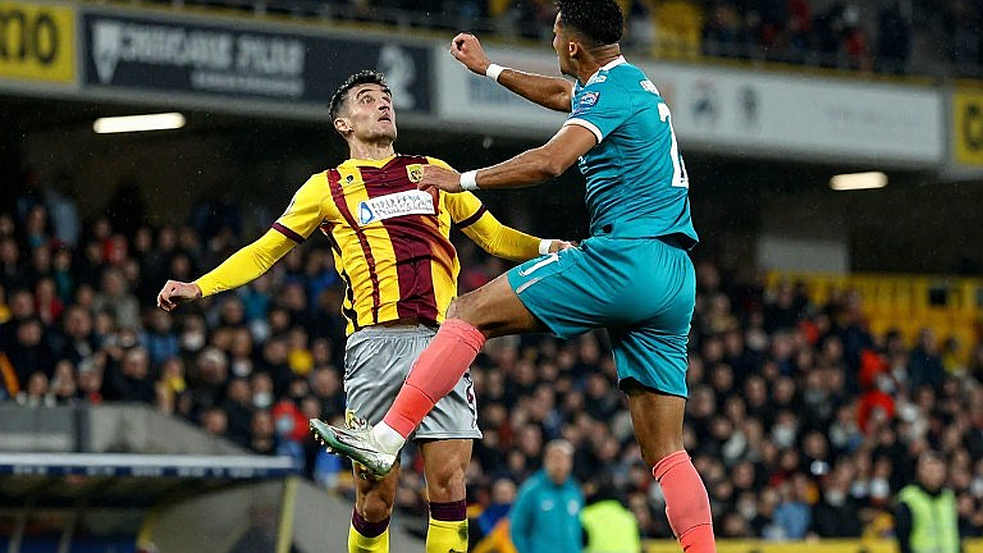
In the first half Japan played a clear plan: collapse the midfield and stop De Bruyne before he could release the ball. Belgium had possession but no speed. What happened at the start of the second half belongs on the first page of any tactics book. In the 48th minute Haraguchi and in the 52nd minute Inui — four minutes apart, Japan made it 2-0. Inui's goal was the old art of hugging the flank: staying glued to the touchline, pulling the full-back out before cutting inside. Modern inverted wingers have made football uniform, and right at that moment Inui showed how sharp the old touchline winger still is. But the story that followed is not a smooth screenplay.
In the 69th minute Vertonghen headed one back, and in the 74th Fellaini headed the equaliser. Both came from Hazard corners. This is the real tactical turning point, the one nobody notices passing. Belgium could not beat Japan in midfield; they made the difference in the air from set pieces. In open play Japan matched them, but inside the box, on the ledger of height, they were nearly helpless. Those two headers concealed Martínez's half-time decision: raise the frequency of long balls and crosses, because the compact Japanese block could not be broken on the ground.
Now to those fourteen seconds — but by reason, not by the clock. The midfield is a suitcase you pack while running. In the final moment Japan took the corner, because their only path to victory was a goal, and a draw was not a situation they could accept. They sent more bodies into the box, the centre-backs pushed up, and behind them was left empty grass and legs that had already run their race. The corner came to Courtois's hands — for almost every international goalkeeper the trained first decision then is to release quickly, because the opponent's box is empty. De Bruyne took the vast open midfield in one touch, then gave it to Meunier. Lukaku's run is the least discussed crime of the goal — without touching the ball he dragged two defenders toward Courtois, and behind him Chadli found space. The pass is a sentence; the run that makes it true is the verb. Chadli's finish was the full stop.
I have lost count of how many times I have watched that sequence. Since 2026 my tape log has a separate page for that night — timestamp, emotional pivot, tactical trigger. The method dates from 2026: writing a column for Kickoff Dhaka, I watched 23 full matches of Jamal Bhuyan's previous season before his move to Sheikh Russel KC, and then wrote 'The Midfielder's Suitcase.' That day I learned that a transfer window is not a transaction but a migration story — a story of packing a suitcase. Those fourteen seconds in Rostov are the same. This is not only speed; it is the accounting of a whole season's load management. Fourteen seconds is long enough for a whole career to change boots.
The ninety minutes we forget. Collective memory is a strange machine. It cuts away complexity and keeps only the image — Chadli's airborne body, the Belgian bench erupting, the Japanese players sitting down on the grass. But behind that image lie ninety minutes in which Japan was actually winning by craft. For the first fifty minutes Japan were better than Belgium in possession and passing networks, yet in memory Japan is only the romantic losing side. Here is my objection. The story of romantic defeat is comfortable, because in it losing means fate. But that night Japan did not lose to fate; they lost to a conscious decision — to send everyone up for a corner at 2-2. Yes, that was innocent courage, but there is a thin line between innocence and folly, and that night the line was the green grass outside the box.
Here is the counter-intuitive part. Everyone will say Belgium's class won. True, the depth of that bench was an unfair advantage against Japan. But the second reading is that the final counter was not accidental. In international football, a sudden counter from a last-minute corner is almost a rehearsed design. Releasing the ball quickly, dribbling through the central corridor, a wide run, a finish into space — this does not happen by itself. Those fourteen seconds were the final scene of a play rehearsed over and over on the Belgian bench; on stage, Japan was the audience that forgot the characters already know how it ends. And from Japan's side, this event is really about the economics of squad depth. A team whose bench holds players like Fellaini and Chadli can match you for ninety minutes and still break you in the last five. A team without that depth must survive on ground football and discipline, and in the final moment it must take a gamble.
For me that gamble is the real lesson. Tournament football is a complex accounting — a team that is tactically ahead of its opponent is sometimes forced to take the biggest risk, because a draw or a narrow loss does not serve its actual goal. For Japan, 2-2 meant elimination, so sending bodies into the box was rational. A rational decision can still open the door to defeat; that is football's cruelty. Meanwhile Belgium, whose bench held players with regular experience at big clubs in France and England, could keep a cool head at the last moment.
This connects strangely to football in our own region. In the corridor between Dhaka and Dubai where I watch the game, this depth accounting is at its most brutal. Where the drop in bench quality is steep, every decision in the final moments of a tournament becomes an existential gamble. The career of a player like Jamal Bhuyan has passed through this same accounting — where you play, in which transfer, how much load you can carry. A transfer is not a transaction; it is a suitcase looking for a corridor. Japanese players had built exactly this corridor by moving to European clubs, and it carried them to 2-0. But Belgium's corridor was bigger and wider, and in the end it won.
I have a particular obsession with sound. In 2026, when the stadiums were empty, I recorded ninety minutes of ambient audio while watching that Bayern-Dortmund match (Kimmich's 43rd-minute chip) — the sound of boots, distant shouts, the wind. An empty stadium still has a pulse if you listen to the grass. But on that night in Rostov the stadium was not empty; it was full, and it was precisely the sound of that crowd that suddenly fell silent in the last fourteen seconds. In the ledger of sound this is an inversion — where it was not the roar of a goal but the silence that announced something impossible had happened. That silence is a separate line in my tape log: '90+4 — the Japanese fans' chorus cut off, then only the wind and the shouts of the Belgian bench.'
I have used timestamps as ornament since 2026. '47:30', '90+4' — these numbers freeze a collective memory. But the problem with a frozen image is that it hides the process. In 2026, writing about the Italy-England penalty shootout in the Euro final, I spent twelve hours coding penalty run-ups and body angles — Donnarumma's two saves, the pressure of Wembley. There I learned that numbers and emotion are not enemies; numbers can carry emotion if they are tied to ground and sweat. The fourteen seconds in Rostov are the same — I do not want to measure them as speed; I want to measure how much distance each player covered on how much fatigue.
Data, but never without dirt. De Bruyne received the ball near his own box and Chadli finished in the opponent's — nearly the length of the pitch, which a tired midfielder does not cover in the last minute every match. But that distance was possible because Belgium's players were not less tired than Japan in that moment — they were less confused. Japan was thinking about a goal; Belgium was thinking about the ball after the goal. That mental gap is the true engine of transition. I always see the midfield as mobile infrastructure — where decisions are packed while running, and in the final moment the quality of that packing decides who wins.
One more thing worth noticing. The least discussed man in this Belgian victory is Courtois. A goalkeeper's first decision — hold the ball and take time, or release quickly — changes the fate of a whole match in a single second. Many goalkeepers, catching the ball at a last-minute corner, lie down on the ground to waste time. Courtois did not. Before releasing the ball he scanned the whole pitch in his head — that is not instinct, it is the fruit of training. Football is written in midfield, but the last line is often written by the palm of a goalkeeper's hand.
Now back to those ninety minutes, because that is my real lesson. Tournament football has a cruel quality — it confuses beauty with victory. Japan played beautifully and bravely that night and still lost. So our memory keeps them as the 'noble losers,' where the defeat was fate, where the team was blameless. But the truth is that Japan lost that match to a football decision, just as Belgium won it to a football decision. To take the corner or not — that was the fate-line of the match, and it was no miracle; it was the judgement of coaches and players in that moment.
The tournament we are watching now brings this same accounting back every night. Under knockout pressure, teams must gamble — extra attack, long balls, bodies into the box. And every time there is a fourteen-second window where the gamble is exposed. For me this is the essence of tournament football — it is not only a measure of good teams, it is a test of who knows how to take risks well.
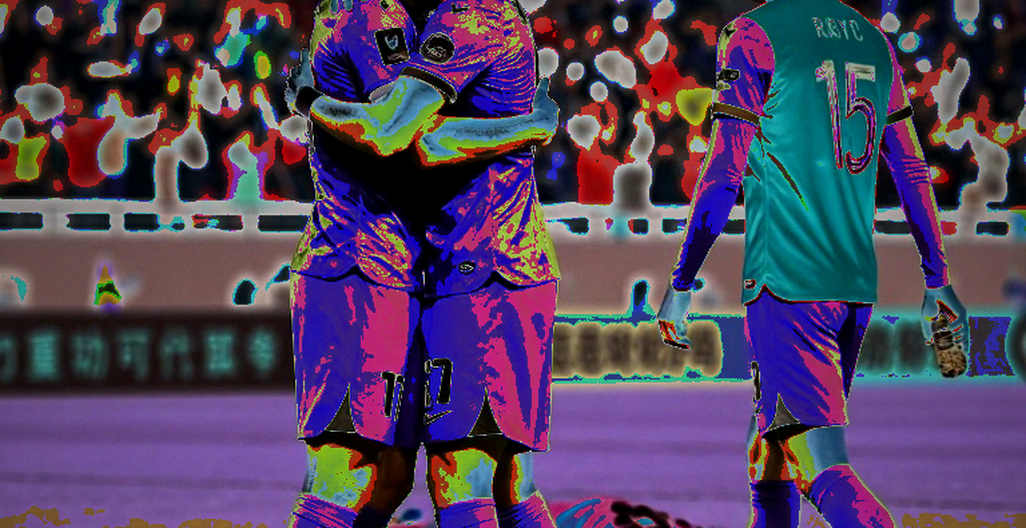
The final scene is how I remember it. The scoreboard read 3-2. A moment of silence before the referee's whistle — Japanese fans standing, some covering their faces. The shadows of Japanese players sitting on the grass. And on the other side the tangle of the Belgian bench, where a player like Fellaini was smiling — tired, yet smiling. I thought: who knew that the whole meaning of such a night would fold into a corner kick and the quick decision of a pair of gloves.
Takeaway. In football we forever choose between the fourteen seconds and the ninety minutes, and almost always we choose the fourteen seconds, because it is easier to remember. But in the next tournament, when some team takes a corner in the final minute, I will have one prayer — look at the clock, but open the ledger too. Because the team that takes the bravest decision sometimes receives the cruellest lesson; and the team that learns from it comes back next time with a deeper bench. So the question stays open: in the coming night, who will take that corner, and who will stand behind, hands empty, listening to the pulse of the grass?