
A Damp Rawalpindi Morning, a 98-Run Collapse: Pakistan's Pace Rule and the Fragility of a 23-Run Lead
**মূল উত্তর:** রাওয়ালপিন্ডি টেস্টের প্রথম দিনে পাকিস্তান শ্রীলঙ্কাকে ৯৮ রানে গুটিয়ে ২৩ রানে এগিয়ে ছিল, তবে শীর্ষসারির উইকেট হারানোয় এটি ম্যাচ নিষ্পত্তিকারী নয়। **মূল তথ্য:** - শ্রীলঙ্কা প্রথম Inningsে ৯৮ রানে অলআউট; লাঞ্চে ছিল ৮৫/৬, লাঞ্চের পর শেষ চার উইকেট ১৩ রানে। - শ্রীলঙ্কার দশটি উইকেটই পেসের হাতে; রাওয়ালপিন্ডিতে এটি তাদের সর্বনিম্ন টেস্ট সংগ্রহ। - বাবর আজম টস জিতে ফিল্ডিং নেন; ভোরের আর্দ্রতা ও সবুজ আভা সেই সিদ্ধান্তকে সমর্থন করে। - পাকিস্তান ওপেনিং জুটিতে ৮০ রান তোলে, তারপর আসিথা ফার্নান্দো ও লহিরু কুমারার আঘাতে শীর্ষসারি পড়ে। - শ্রীলঙ্কা দিলশান মাদুশঙ্কার বদলে প্রবাথ জয়সুরিয়াকে একাদশে নেয়; প্রথম দিনে স্পিনার বল কার্যত পাননি। **সূত্র:** স্টেজ-১ অ্যানালিস্ট নোট (উৎস ও প্রকাশের তারিখ উল্লেখ নেই); স্কোরকার্ড দিয়ে যাচাই প্রয়োজন। **সম্পর্কিত প্রশ্নোত্তর:** প্রশ্ন: পাকিস্তান দিনশেষে কত রানে এগিয়ে ছিল? উত্তর: ২৩ রানে, যা শ্রীলঙ্কার ৯৮ রান থেকে হিসাব করলে প্রায় ১২১ রান বোঝায়, তবে উইকেট সংখ্যা যাচাইসাপেক্ষ। প্রশ্ন: বাবরের টস সিদ্ধান্ত সঠিক ছিল কি? উত্তর: হ্যাঁ, আর্দ্র ও সবুজ পিচে দশ উইকেটই পেসে পড়েছে, তাই সিদ্ধান্ত সঠিক ছিল, তবে টসই ম্যাচের বড় পার্থক্য। প্রশ্ন: দ্বিতীয় দিনে কী দেখতে হবে? উত্তর: প্রথম ঘণ্টায় পাকিস্তানের শীর্ষসারি নিচু বাউন্স সামলাতে পারে কি না, এবং পিচ শুকালে জয়সুরিয়ার স্পিন কার্যকর হয় কি না।
The ball landed just outside off stump, then came back in from right to left — the swing reached the stumps before it reached the batter's eyes. Babar Azam's bat came down, but the ball was not climbing; it was staying low. Off stump tilted. In the second session of the first day at Rawalpindi Cricket Stadium, one delivery told us the most important fact of the day: batters were being defeated by the earth, not the air.
I went looking for a match and found a city praying — not for ninety minutes, but for five days. On the screen in a Khulna living room the lunch score read 85/6, and outside the courtyard bricks were already wearing their morning green. The dampness that stains a Khulna wall is the same dampness that hands a seamer his weapon in Rawalpindi. The two cities are linked by weather, and that weather wrote the whole first day.
Sri Lanka's first innings ended at 98. Pakistan finished the day 23 ahead. The arithmetic is simple; the arithmetic was the only simple thing about that day.
Rawalpindi has two faces
Rawalpindi has long been known as one of Pakistan's softer Test surfaces — a place where a Test meant runs, where the first innings could reach five or six hundred, where batters prospered and bowlers did long physical labour. That memory is so strong that 98 all out here produces an instant reflex: Sri Lanka must have been terrible.
First reflexes are almost always wrong, because first reflexes come from memory, not from the ground.
On this day the pitch had a green tinge, it had early-morning moisture, and the ball was stopping on some batters and scuttling low on others. That is not Rawalpindi's familiar face. That is its other face — the one rarely seen, because Tests here usually fall on dry, flat, patient surfaces.

This was the second Test of the series. I cannot confirm the state of the series: the source material carries no scoreline, no date, no attribution. That is the biggest limitation of this piece, and I am stating it up front, because leaping from one day to a series verdict is the oldest trap in this game.
The toss: reading the weather, not just the pitch
Babar Azam won the toss and chose to field. Winning the toss forces a decision, and that decision is not made from the middle of the ground; it is made from a seven o'clock sky and a finger dragged across grass. When a captain fields, he is saying: my seamers are more powerful on this surface, right now, than any batter.
That claim held. All ten Sri Lankan wickets went to pace. That is a number, but the number works like a sentence: spin will buy nothing here, at least on day one.
The toss call was right, but being right and winning a match are two different things. Babar fielded, bowled Sri Lanka out for 98, and ended the day only 23 ahead with top-order wickets gone. That is the real tension of day one: dominance in the bowling phase, uncertainty in the batting phase.
A captain who fields after winning the toss carries double pressure. He must take wickets in the first hour, or the decision looks bad. And if he bundles the opposition cheaply, his own batters must cash the advantage. The first condition was met. The second was half met.
85/6 to 98: four wickets for 13 after lunch
At lunch it was 85/6. Sri Lanka had not yet reached three figures. After lunch they were 98 — the last four wickets falling for 13 runs.
Those 13 runs are the most psychologically loaded data point of the day. If the first session is a contest of skill and technique, and the session after lunch becomes unconditional surrender, then two different stories must be told. The first is Pakistan's bowling plan. The second is Sri Lanka's batting mentality.
Pakistan's real achievement as a bowling unit was that they built pressure rather than a single burst. Three or four wickets in two overs is easy to watch; the harder work is asking the same question from the same end for four sessions. Four wickets after lunch does not mean Pakistan suddenly bowled better — it means the pressure of the first three hours finally bit.
Look at the shape of the innings: six down at lunch, four after. Had it been reversed — four early, six late — the reading would be that the pitch eased and Sri Lanka batted well before folding. Here it was the opposite. The pitch did not ease. The patience thinned.
Six kinds of dismissal: discipline, or the ground?
The modes of dismissal — chasing a wide one, an inside edge, a ball that stopped, a low nip-backer, a catch to slip, a holed-out shot to long leg — form six separate stories that split, roughly, into two groups.
Group one: the pitch's fault. The ball that stopped, the ball that stayed low, the nip-backer — in those three cases the batter was doing something reasonable. The ball did not land where it was supposed to. Being out to that is not a technical failure; it is the surface's decision.
Group two: the batter's fault. Chasing a wide one, holing out to long leg, edging to slip — the earth played no part. These are errors of choice, and they occur precisely when a batter abandons his own game under scoreboard pressure.
Sri Lanka's collapse was half the pitch and half their own impatience — and in cricket the second half is never excusable, because unlike the first it has no alibi.
I stress this split because it creates the forecast. If every wicket were the pitch's fault, Sri Lanka would have little room for improvement in the second innings: the pitch will not change, and neither will they. But because half the wickets were errors of choice, there is a tactical correction available. If the batters look at the ball instead of the scoreboard, 98 can become 300.
An 80-run answer, then three blows
Pakistan's reply made the match look like a one-day finish. An opening stand of 80. Bowling a side out for under a hundred and then putting on 80 for the first wicket means the match is sliding fully into the hosts' hands.
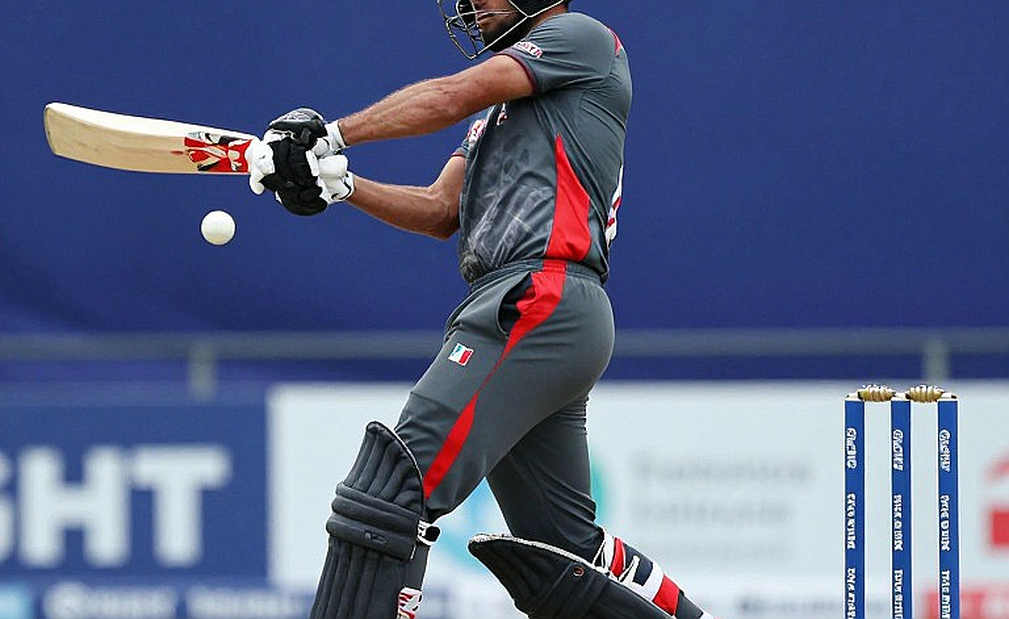
Then the top order fell. Asitha Fernando and Lahiru Kumara did the job that had to be done. Keeping the match alive was their real contribution on the day.
Pakistan ended 23 ahead. Working the arithmetic back from Sri Lanka's 98 gives a Pakistan total somewhere around 121, though the exact number of wickets down is not clearly stated in the source. I am therefore treating that total as a calculation, not a confirmed figure, pending a scorecard check.
If you read that 23-run gap as proof of dominance, you stopped at the top line of the scoreboard. From 80 without loss to 23 ahead with top-order wickets gone means Pakistan's middle order is still unproven. A hundred-run lead survives a middle-order failure; a 23-run lead does not survive two wickets in two overs.
Babar's batting, Babar's captaincy
Babar's decision to field was the best call of the day. But a captain is not finished once the decision is made; he has to score runs. On this surface, a sharp nip-backer took his off stump.
That dismissal tells us nothing about his form. One ball, one delivery, one misjudged footwork — anything more is invented analysis. But what cannot be said about Babar the batter can be said about Babar the captain: when a captain makes the call in the first innings and falls cheaply in the second, public memory keeps the fault of the decision and forgets the missing runs.
It is unfair, and it is how cricket's public opinion works. If Pakistan's middle order folds in the first hour of day two, the question on social media will be whether fielding first was correct. It was. The question should be about the middle order.
Jayasuriya for Madushanka: a bet on the later game
Sri Lanka made one change, bringing in Prabath Jayasuriya for Dilshan Madushanka. This is not a controversy; it is selection. No eligibility issue, no rule broken. But selection always works like a comment, and that day it said: we prefer a left-arm spinner to a left-arm seamer in the XI.
On a green, damp surface the cost was paid immediately, when all ten wickets went to pace. Field on a green pitch and your spinner never bowls, and your seam attack is effectively thinner than it looks.
There is a subtlety here, and it is one of this piece's fresh readings. If the pitch dries on days two and three and spin begins to bite, Jayasuriya's selection cannot be called wrong. Then the decision stops being a day-one decision and becomes a five-day plan. Test selection contains two kinds of bet: the now bet and the five-day bet. Sri Lanka played the second.
My suspicion is that on day one it was a step too expensive. But declaring it a final loss after one day is a rush.
The weight of four seamers
Four seamers is a statement. It says: we intend to win this match through physical force. On day one the statement worked. But this structure carries something nobody notices on day one and everybody notices on day three.
Four seamers means four separate bodies that must survive four or five days. If Sri Lanka's second innings runs long — five sessions rather than two — those bodies must bowl again, on the same pitch, in the same heat. One hamstring goes and the whole structure shifts. In a tightly scheduled series, the celebration of an all-out becomes an injury note in the next match.
I raise this because it is under-discussed mid-match. For a side 23 ahead, the bigger threat is not the opposition's batters; it is its own bowlers' fatigue.
The gap in the record, and the duty to verify
Professional honesty is required here. The facts behind this piece have no named source, no year, and no individual bowling figures. Nobody's overs, nobody's wickets, nobody's runs.
I played in the Dhaka league for Udity Club in 2026 as an opening batter and wicketkeeper before turning to coaching and writing. That experience taught me one thing: stories outside the scorecard are always beautiful, and without the scorecard they never hold. A collective bowling performance can be assessed; individuals cannot. Any personal praise here is inference.
Breaking a collective performance into individual heroism is the biggest trap in this kind of match report. Four bowlers took ten wickets together; picking one and starring his name is storytelling, not information.
Where the word dominance lies
The headline says the hosts dominated. In the bowling phase, it is true. In the batting phase it is half true, and a half-true headline is never true.
A genuine day of dominance would have ended with Pakistan 100 or 150 ahead with the top order intact. Instead, after an 80-run stand, Pakistan faced the same questions from the same pitch. Sri Lanka batted in the morning; Pakistan batted in the afternoon, when the moisture had eased slightly.
The unspoken question is the biggest one. Had Babar bowled first, or had Sri Lanka batted in the morning, what would the score have been? Nobody knows. But what is known is this: the biggest variable in this match was the toss, not batting talent. That is hard to admit, because admitting the toss shrinks the hero story.
The trap of memory
Public memory is strange. This pitch has long been remembered as a batter's friend. That memory is so strong that 98 all out produces the reflex: Sri Lanka must be weak.
Perhaps they are. But this innings is not the proof.
The proof would exist if the pitch were flat and they still folded for 98. Then the only explanation would be batting failure. It was not flat. There was moisture, a green tinge, low bounce — a clearly bowling-friendly environment. Ninety-eight in that environment is a failure with an external cause.
Memory's greatest trap is that it volunteers as an explanation for the present. Rawalpindi's old memory does not explain this match; this match is an exceptional day at Rawalpindi, and exceptions cannot be judged by rules.
If the pitch dries, the story flips
If the surface dries, three things change. Seam movement reduces and batters escape the low bounce. Spinners find grip. And Jayasuriya's selection suddenly looks reasonable.
If all three happen together, the balance shifts, and a 23-run lead stops feeling comfortable. It starts feeling like a missed opportunity.
Pakistan won day one on the pitch, not in the match. A day won on the pitch guarantees nothing about the days after, because pitches change.
A short lesson from the cricket economy
This is a bilateral Test, not a league. No auction, no franchise, no broadcast figures. Commercial analysis here would be speculation, and speculation is not needed.
One thing still belongs in the record, because this is the season of transfers and franchise calendars. A seamer's price is set mostly by innings figures and viral clips. One four-wicket spell, one short clip, and a valuation is born. When four bowlers share ten wickets, the question of who profits is left hanging.
Days like this hurt most the bowlers who did the work together and are invisible in individual figures. The commercial system rewards the individual, not the unit — in a game where seam bowling is genuinely collective labour, pressure from one end and reward from the other.
A transfer is not a transaction; it is a migration with a soundtrack. Where a player goes is decided on paper; where a player can actually bowl is decided on the pitch. Rawalpindi's damp surface is a market signal: here you need four seamers, not a spinner. Teams will use that information. Markets will not.
Rules and technology
No DRS controversy, no rain-rule question, no slow over-rate charge, no integrity signal. That is normal for a one-day match report, and it is also a reminder that the governance framework worked quietly.
The only debatable item is technical and selective — Jayasuriya for Madushanka. That is a captain-and-selector call, not a controversy.
The smallest carrier, the heaviest silence
Where were Sri Lanka's senior batters when the last wicket fell? That is an observation, not an accusation. When a side is bowled out for 98, blame rarely lands on the young; it lands on the seniors. On the field, though, it is usually the youngest who finds himself in that situation.
I saw a ball boy cry in Kolkata in October 2026, at the FIFA U-17 World Cup — the first global football tournament in South Asia — where Rhian Brewster won the Golden Boot with eight goals and England beat Spain 5-2 in the final. What stayed with me was not the scoreline but 60,000 people and one boy at the edge of the pitch. Cricket is crueller, because an innings often ends in a single delivery, and that delivery then narrates the whole week.
The smallest batter carried the heaviest silence of a nation — and we forget to call him by his own name, preferring his team's score.
The first hour of day two
A Test's first day does not decide; it only poses the question. The question was how big Pakistan's lead could get. The answer comes in the first hour of day two.
Two scripts are common. The hosts push the lead towards 100 and leave the match behind. Or two or three wickets fall and the match opens again.
The second is more likely here, because Pakistan's top order is one wicket into its work and the middle order has not yet faced a ball.
What I want to see is something no scorecard records: whether Pakistan's batters can keep their feet still against the same low bounce on the second morning. If they can, the match is theirs. If they cannot, Sri Lanka return.
The biggest fact nobody wrote
Here is the information gain. Sri Lanka's collapse was not primarily technical; it was a collapse of plan. Early on they were competing against seam. After lunch they likely decided they had to manufacture boundaries to pass a hundred — a psychological line in Test cricket.
Chasing that line, they abandoned their own game. The wide chase, the holed-out shot to long leg: those are scoreboard decisions, not pitch decisions.
Sri Lanka's fall was the fall of a boundary, not the fall of a technique. That distinction can create something new in the second innings — if someone explains it to them.
Not a verdict, a question
The pitch is a page, and every seam movement is a sentence we never finish. On day one the page read 98, and below it, 23. The sentence is not finished.
I remember Moscow in July 2026, when Croatia lost the World Cup final 4-2 to France and Luka Modrić took the Golden Ball, and 4.2 million people had their hope measured in 120 minutes. We all tried to measure it with a trophy. In cricket the scorecard does the measuring, and what escapes measurement is a batter's hand, a bowler's breath, a day's silence.
Forward
Watch the first hour of day two. If Pakistan bat it out and push the lead past 80, the match is in their control. If two wickets fall, Sri Lanka are back. And if the pitch dries and takes spin, Jayasuriya's contested selection becomes a wise one.
What must not be missed is four seamers' bodies. Winning a day with four is easy; winning a match with four is hard; winning a series with four is hardest.
One question to close, and no scorecard holds the answer: had the pitch not been green, had the moisture not been there, what name would we have given Sri Lanka's 98? Probably a different name — one that does not occur to us now, because we always prefer to blame the batter and forget the ground.