
Powerplay Explosion in Wellington: India Seal Series by Chasing 199 in 13.2 Overs
সংক্ষিপ্ত উত্তর: ওয়েলিংটনে সিরিজ নির্ধারণী টি-টোয়েন্টিতে ভারত নিউজিল্যান্ডের ১৯৮/৩ রানের জবাবে ১৯৯ রান তাড়া করে মাত্র ১৩.২ ওভারে, ৪০টি বল হাতে রেখে। ভারতের প্রথম ছয় ওভারে ১১৮ রান (ওভারপ্রতি ১৯.৬৭), যা ম্যাচের নির্ণায়ক পর্যায়। অভিষেক শর্মা ১১৩ ও বৈভব সূর্যবংশী ৪৫ রান করেন; দুজনের মিলিত অবদান ১৯৯ রানের ৭৯.৪ শতাংশ, ফলে ভারতের মধ্যক্রম অপরীক্ষিত থেকেছে। নিউজিল্যান্ড সাত উইকেট হাতে রেখে ১৯৮ করেছে, যা মৃত্যু-ওভার পরিকল্পনার ঘাটতির ইঙ্গিত। 'দ্বিতীয় দ্রুততম ১৯০-plus তাড়া' দাবিটি সতর্কতার সঙ্গে পড়া উচিত, কারণ দ্রুততর দৃষ্টান্তটি সহযোগী সদস্য দেশের ম্যাচ। মূল সীমাবদ্ধতা: অভিষেকের বল-সংখ্যা, টস, পিচ-রিপোর্ট ও পতিত উইকেটের তথ্য সূত্রে অনুপস্থিত—তাই এটি একটি পর্যবেক্ষণ, প্রবণতা নয়।
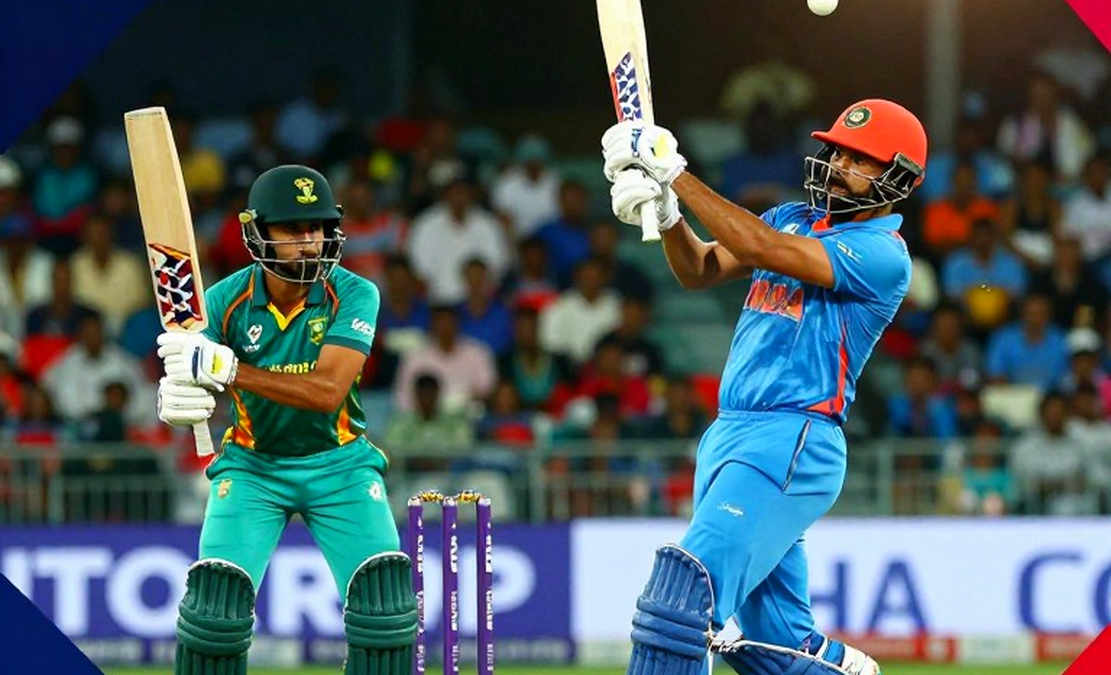
In the series-deciding T20I against New Zealand in Wellington, India chased down 199 in just 13.2 overs with 40 balls to spare. The match report's available information makes one thing clear: the real story of this win lies in the first six overs. India scored 118 runs inside the powerplay at roughly 19.67 runs per over. After the fielding restrictions lifted, the remaining 81 runs took 44 balls, at 11.05 per over. The scoring rate effectively halved, yet the result never changed—because the match had already been settled in the powerplay. Reading this as a balanced bat-versus-ball contest would therefore be a mistake; it was a single-phase demolition, not a three-phase competition. India needed 81 off 84 balls after the powerplay, a requirement of just 5.79 per over. That figure alone tells us that overs seven through twenty were a formality for India. The tactical lesson is concentrated in one place—the first six overs, where New Zealand's new-ball attack was effectively neutralised.
Abhishek Sharma's 113 is the most visible individual achievement of the match. As a left-handed opener he received both a genuinely true surface and the licence to attack in the powerplay. But caution is required on one fundamental point: the report does not state how many balls he faced, so no strike rate can be computed. A 113 off 55 balls and a 113 off 75 balls are entirely different assets; the first meets elite modern T20 benchmarks, the second raises questions about the tempo of the innings. That data gap is the single biggest analytical hole in this performance. Even so, a 113 from an opener in a 199 chase is unquestionably a major and effective innings—the target was not small, even if the scoreboard pressure was close to zero. The question is only how much of it was skill and how much was surface and circumstance.
Vaibhav Sooryavanshi's 45 should not be treated as material for any technical conclusion. His presence as a teenage international opener is a significant selection signal in itself, but one innings—however prominent—cannot support a long-term projection. Historically, the conversion rate of highly touted teenage batting prospects into durable international output is low, and a single innings does not shift that prior. The pairing itself, however, carries a tactical message: an experienced powerplay enforcer alongside a teenage opener is a deliberate high-variance, high-ceiling construction. A 118-run powerplay validates the ceiling, not the risk. Evidence of the risk will arrive only through successive failures, particularly against seam-friendly surfaces and quality spin.
The most important structural fact of this match is the concentration of runs. Abhishek's 113 and Sooryavanshi's 45 together produced 158 of the 199 runs—79.4 per cent. That extreme top-heaviness means India's middle order was effectively untested in a 199 chase. When a side wins on the back of two openers to this degree, concluding that its batting depth has been proven is a methodological error. The opposite conclusion is more defensible: India's middle order remains an unknown quantity precisely because it was never required to bat under pressure. The real test of this team will come in a match where the openers fall early, and that test is still pending.
New Zealand's 198 for 3 is analytically more interesting than the winning margin. Three wickets down while scoring 198 in twenty overs implies that death-over conversion was sub-optimal by modern T20 benchmarks, where a side three down entering the last five overs typically targets 210 or more. Wickets in hand do not mean a collapse; they suggest a conservative death-over plan—a tactical criticism rather than a personnel one. Similarly, New Zealand's problem is not the defeat but the manner of it: conceding 118 in six overs at home points to a squad-structure gap, specifically the absence of a new-ball wicket-taking option. Wellington's short straight boundaries and persistent wind have historically favoured the home side; if those conditions were neutralised in a single night, the question of what the pitch was actually doing remains open, since no pitch report is available in this source.
The framing of a second-quickest 190-plus chase is context-blind. The only faster instance cited is Estonia's chase of 193 against Cyprus—an associate-member fixture against a bowling attack of an entirely different standard. The comparison places two competitive tiers on the same plane, which is statistically misleading. Since the ICC granted T20I status to all members, record tables have been diluted by low-standard fixtures; any second-fastest claim should therefore always be read with the opposition tier attached. In parallel, the phrase record powerplay is scope-ambiguous—world record, India record or venue record is not specified. That ambiguity must be flagged before the figure is reused.
In team terms the result carries solid weight for India, because it is an away series win, which has greater evidential value than a home series win. Producing such a powerplay total on an opponent's home ground signals preparation as much as form. But it does not prove India's batting depth or chasing strength, since 79.4 per cent of the runs came from the top two. The genuine positive is a real sample of how high India's powerplay ceiling can be. The negative is that the sample is only 80 balls long—an observation, not a trend.
On governance and rules, there is no controversy in this match: no DLS, no DRS dispute, no over-rate issue, no integrity signal. A 118-run powerplay and a 40-ball chase are not, in themselves, anomalous-performance red flags. The genuine governance-adjacent questions sit elsewhere: first, statistical tier inflation; second, age verification and workload protection for a teenage international cricketer. Age verification is a recurring board-level issue in South Asian cricket, and the risk of loading a teenage player across three formats and a franchise calendar is not addressed in the source, although in practice it is the most urgent question of all.
In risk terms, the highest-conviction risk is over-extrapolation from one innings, at both team and player level. The second is the workload exposure of a teenage opener across bilateral T20Is, franchise leagues and potentially other formats—a saturated calendar in which age-curve management should precede commercial exploitation. The third is record framing: second-fastest should never be quoted without the associate-fixture caveat. The fourth is India's untested middle order—the next collapse should be read as information, not anomaly. New Zealand's risk is tactical and coachable rather than catastrophic. And the 40-balls-unused margin flatters the result; it should not be used as a proxy for the true gap between the sides.
At the level of public narrative, the current story is a historic chase and the coronation of a teenage star—directionally correct but magnitude-inflated. The team performance is genuinely exceptional; the individual projection is where the gap sits. On the teenage star, explicit scepticism should be maintained for at least five to ten further innings, specifically re-tested against quality spin and seam-friendly conditions. The reverse risk also exists: if the next three to five innings produce low scores, a rapid backlash narrative of the exposed-by-quality-bowling type will form—a predictable cycle rather than new information. The source's own incentive should also be noted: match-report producers are institutionally inclined toward superlative framing because it drives engagement with their own product.
Commercially, the value of this fixture is almost entirely an India-market phenomenon. A 199 chase in 13.2 overs is highly clip-able and highly shareable content, so the industry incentive to amplify it is structural. The more important signal is in the talent-supply chain: a 118-run powerplay institutionalises powerplay-first batting in the Indian pathway, which will shape selection of top-order batters for a generation. Franchise visibility is now a faster route to international selection than domestic first-class performance—the teenage opener's presence is an output of that pathway. The caution stands: a strong IPL profile and a strong T20I innings are not the same asset, and commercial visibility systematically overstates international readiness for young batters. For New Zealand, India touring is itself the revenue asset; a heavy defeat does not damage that commercial value.
Overall, this is a genuinely exceptional team performance reported through an amplified lens. The 118-run powerplay and the 40-balls-unused chase of 199 are real and materially significant—a 199 chase at 14.9 runs per over away from home is a legitimate marker of powerplay dominance. But the evidential base is 80 balls of cricket. The most analytically valuable insight in the whole match is not the 118, but New Zealand's 198 for 3—a total that looks competitive until you notice seven wickets were still in hand. The recommendation is therefore straightforward: before reusing any conclusion, verify the missing variables—ball-count, toss, pitch report, wickets lost and the precise scope of the record claim—and treat this as one observation, not a trend. This analysis is provided for sports-information and analytical reference only and does not constitute betting advice of any kind. Sporting outcomes are highly uncertain, and single-match data is a starting observation, not a conclusion.

Related Players
Popular Reads
Two States Vote, and the Big Bash Is Being Priced Before Its Rulebook Is Written2026-10-29
Fifty Wickets, Eleven Winless Matches: The Question Buried Under Lancashire's Decision2026-10-29
Three Debuts, One Missing Skill: Hurricanes' Real Gap Sits in the Spin Overs2026-10-29
The Empty Payload: What a Silent Cricket Data Pipeline Teaches2026-10-29
Albie Morkel Joins Chennai Super Kings as Assistant Coach in New-Look Setup2026-10-28
Recommended
From Fan Tokens to Smart Contracts: How Real Is Cricket's Blockchain Backbone?2026-10-03
ILT20 Season 5's 34 Matches: Sharjah's Eight Games and the Trap of a Traffic Metric2026-10-09
138 With Four Wickets Spare: Sehas Ashinsa's 114-Ball Innings and Mahinda's Unfinished Arithmetic2026-10-20
Empty Payloads and Unfinished Contracts: Where Blockchain Fits in Cricket's Data Trust2026-10-08
From Durban to Abu Dhabi: Load, Mechanism and the Small-Sample Trap Inside the Rankings Climb2026-10-15
Recommended
The Middle-Overs Squeeze: Why T20 Trophies Are Actually Decided Between Overs 7 and 152026-09-26
The Quiet Door of the Casual Contract: Where Bracewell's Decision Takes New Zealand Cricket2026-10-06
16 Wickets, 3 Matches, 1 Void — Khaled Ahmed's County Success, Abu Dhabi Heat and the BCB's First-Class Development Plan2026-10-05
Anrich Nortje Ruled Out of Cape Town Decider: An Analysis of Unnamed Sources2026-10-24
Two Tests, Seven Debutants: What South Africa's SA20 Window Actually Bought2026-09-27
Recommended
Six ODIs and Three Day-Nighters: The Denominator Behind Australia's 50-Over Courage Test2026-10-08
The Empty Cell, the Unbroken Ledger: Why Cricket's Data Chain Must Be as Immutable as a Blockchain2026-10-12
Cameron Green's Rapid Recovery: Risk and Promise Ahead of the WTC Series Finale2026-10-25
Hope's Unbeaten 102 and Paul's 5-41: Hyderabad Makes It 2-2, Bengaluru Now the Real Test2026-10-15
ILT20 Season 5: A 34-Match Calendar, Dubai-First Venue Maths and the Babar-Naseem NOC Question2026-10-09
Recommended
The Receipts of a Record Chase: Sending Hope to Open, and West Indies' Real Question2026-10-05
Anderson's Final Ledger: How Lancashire's Rebuild Arithmetic Closed a 25-Year Account2026-10-26
The Truth Beneath the Grass: South Africa's Batting Collapse at St George's Park and the Return of Kagiso Rabada2026-10-21
443 Wickets, 112 Matches and an Evening on 19 October: Why Lancashire Let Go of Its Most Familiar Face2026-10-26
The Ledger and the Field: The Gap Between Price and Value in Cricket's Transfer Market2026-10-02